
Key Takeaways
A marble dining table can be a lasting centrepiece, but the right choice depends on more than colour and price.
- Decide whether natural or engineered marble suits your household.
- Measure the room, access route and seating needs before ordering.
- Check the base, slab, finish and production details together.
- Allow for delivery, installation, maintenance and possible site constraints.
- Treat natural variation as part of the stone, not as a flaw.
Understand the different types of marble dining tables
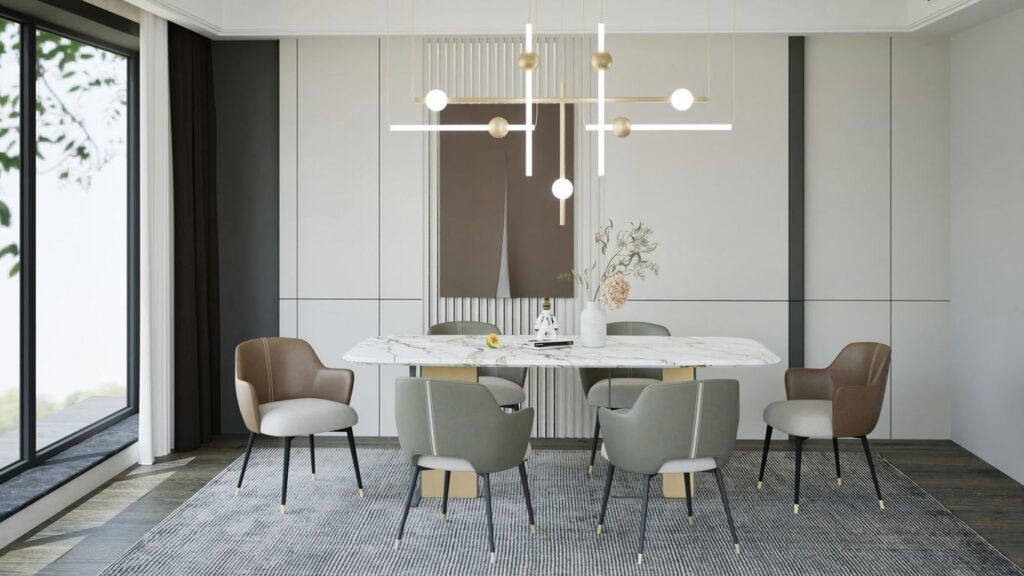
Marble is available in a wide range of tones, patterns and finishes, so two tables of the same size can feel entirely different in a room. The material also has practical characteristics that should be understood before a purchase is approved. For a marble dining table singapore home, the most useful starting point is to compare the stone itself, rather than choosing from a photograph alone.
Natural marble versus engineered marble
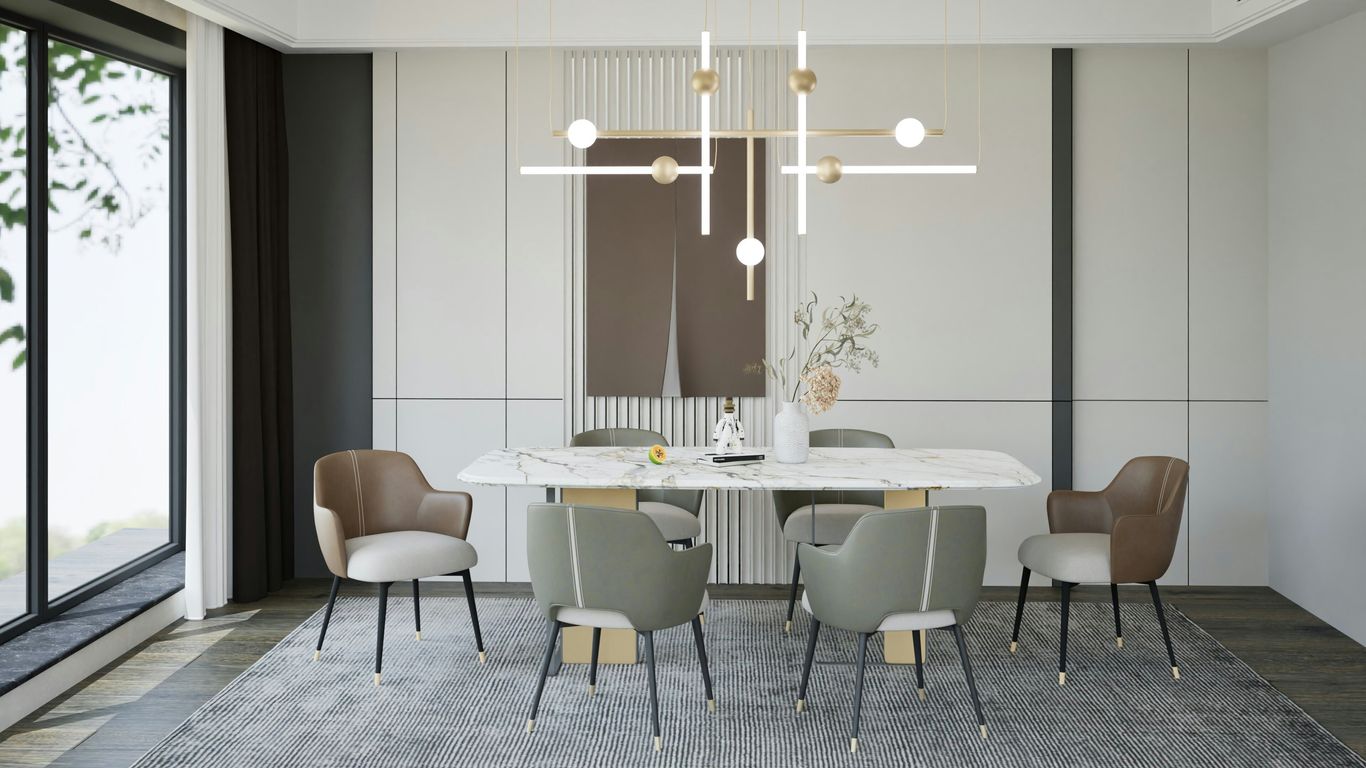
Natural marble is quarried stone with its own veining, mineral marks, tonal shifts and porosity. No two slabs will be identical, and a sample can only indicate the general direction of colour and movement. Engineered marble is manufactured from processed materials, so it may offer more predictable visual consistency, though its appearance and care requirements depend on the particular product.
Geoscenic Stone makes made-to-order furniture and architectural pieces in marble, travertine and onyx, with each piece produced to an approved drawing. That factory-to-order approach means the selected material, dimensions and finish are confirmed for the individual project rather than treated as interchangeable stock.
Popular marble varieties and their visual differences
White marbles can make a dining room feel light and calm, while darker stones create more contrast and visual weight. Cream, beige and green varieties often sit comfortably with timber and natural textiles; strongly veined stones can become the room’s principal feature. Ask to see the actual slab or a representative selection, since a small sample rarely shows the full rhythm of the veining.
A useful conversation covers the acceptable range of tone, figuring and mineral marks. Natural variation is not a manufacturing error, but it should be discussed clearly so the finished table feels considered rather than surprising.
Honed, polished and leathered finishes
A polished finish reflects more light and usually gives colours a deeper appearance, but it can also make marks more visible. Honed marble has a softer, low-sheen surface that suits relaxed interiors, while a leathered finish adds subtle texture and can reduce the visual prominence of minor handling marks. The finish affects both the way the slab looks and the way it should be cleaned.
Request finish samples in the room’s actual lighting if possible. Daylight, warm evening lamps and overhead lighting can each alter how a surface reads.
How marble compares with wood, glass and sintered stone
Wood brings warmth and can be refinished, but it responds differently to moisture and heat. Glass gives a lighter visual effect and shows less material variation, although fingerprints and impact remain practical considerations. Sintered stone is a manufactured surface with its own performance profile and design possibilities, while marble offers geological depth and a naturally cool touch.
The best choice is the one that matches the way the table will be used. A formal dining room may prioritise visual drama, whereas a busy family space may place more emphasis on daily care and tolerance for marks.
Choose the right dining table size and shape
A beautiful table can still feel wrong if circulation is tight or chairs cannot be pulled out comfortably. Measure the dining zone as an active space, including chair movement and walkways, rather than measuring only the empty floor between walls. In Singapore homes, lift dimensions and corridor turns deserve attention too.
Matching table dimensions to your dining area
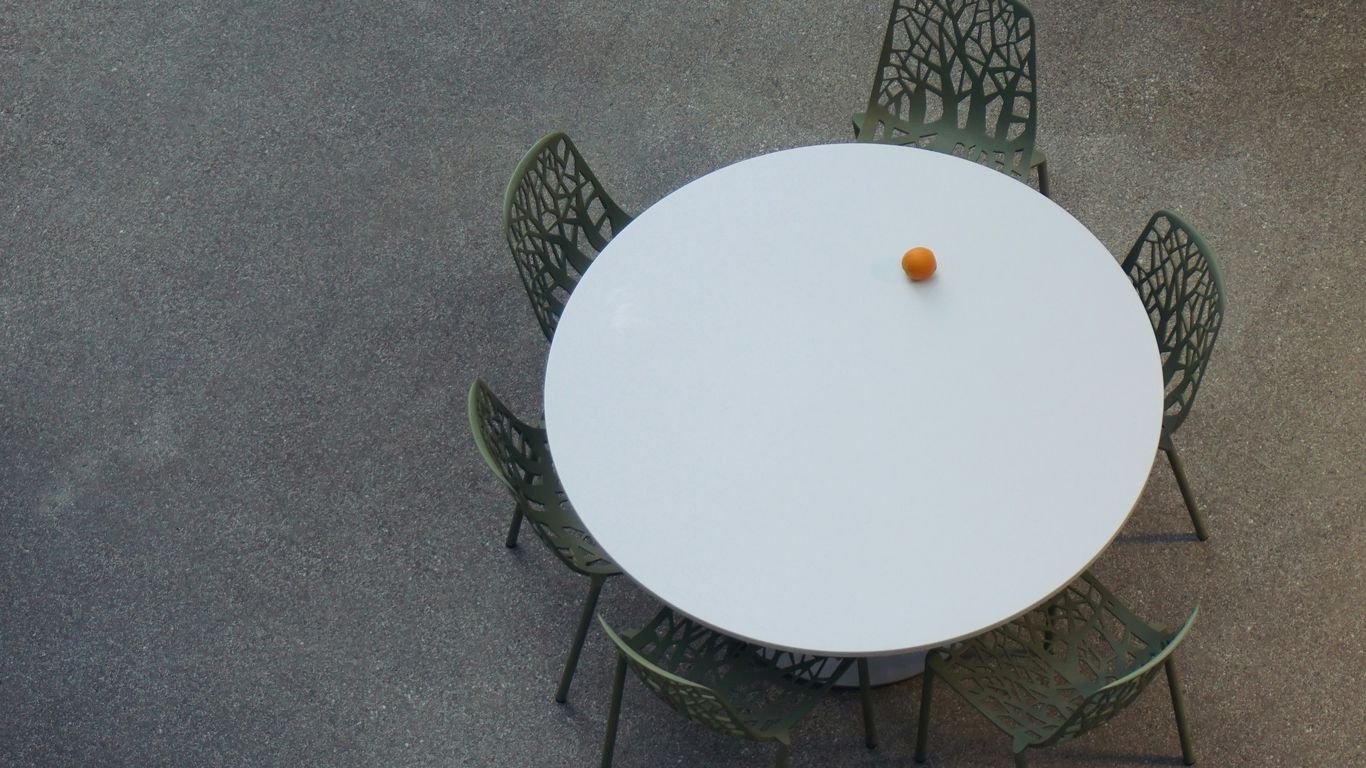
Start with the clear room dimensions, then allow space around the table for chairs and passage. A large top may look impressive in a showroom but overwhelm a compact apartment once people are seated. Mark the proposed footprint with masking tape or flattened cardboard before committing; it is a simple way to test scale.
Also consider doors, sideboards, windows and pendant lights. The table should leave enough visual and physical breathing room for the rest of the room to work.
Round, rectangular, oval and square table layouts
Rectangular tables are efficient for larger groups and often align neatly with long rooms. Round tables encourage conversation and can improve circulation around corners, while oval tops soften the footprint of a rectangular layout. Square tables suit balanced rooms but can become awkward if the proportions are too large for the available walkway.
Shape should follow both the room and the social use. A round table may be especially effective where several routes cross the dining area, while a slim rectangle can make better use of a narrow plan.
Seating capacity and comfortable spacing
Nominal seating counts are only a starting point. Chair width, armrests, table legs and place settings all affect comfort. As a practical guide, allow generous personal space along the table edge and avoid placing a chair directly against a base or pedestal obstruction.
For a quick planning check, note these details before discussing a quotation:
- The number of regular diners and occasional guests.
- Chair width, including arms where relevant.
- Required clearance behind pulled-out chairs.
- Position of table legs, pedestal supports or trestles.
This small exercise often reveals that a slightly smaller top provides a better everyday experience. It also gives the maker clearer information than a requested seating number alone.
Checking doorways, lifts and access routes in Singapore homes
A stone top can be heavy and difficult to manoeuvre, particularly when the route includes a narrow lift, sharp corridor turn or staircase. Measure the entrance, lift door, lift interior and the tightest turn, and confirm building delivery rules with the management office. Do not assume that a piece that fits through the front door will also pass through the lift.
Provide photographs or a simple access sketch when requesting a quotation. Site access, packing and installation requirements may affect the final cost and programme.
Select a practical table base and construction
The base does more than hold the top up. It controls legroom, affects the visual balance of the room and must distribute the stone’s weight safely. A good design considers the slab, supports, fixings and floor together rather than treating the base as a decorative afterthought.

Comparing pedestal, trestle and four-leg bases
A pedestal base keeps the perimeter relatively clear and can work well with a round or oval top. Trestles suit longer tables and can create a strong architectural profile, though their position should be checked against chair legs. Four-leg bases are familiar and stable, but the corners and leg placement may limit seating flexibility.
Think about how people sit, not simply how the base looks from above. A visually light base can still be uncomfortable if it occupies the same space as a diner’s feet.
Choosing materials that complement marble tops
Timber softens stone and can support warm, natural interiors. Powder-coated or stainless steel elements create a more precise, contemporary impression, while stone bases can produce a quiet monolithic effect. Mixed materials are often successful when one finish is allowed to lead and the others remain restrained.
Colour matching is not always necessary. A considered contrast between a pale slab and a darker base can make the veining clearer, while closely related tones create a calmer composition.
Stability, weight distribution and everyday safety
The top should sit securely without unnecessary movement, and the base should remain stable when someone leans lightly against the edge. Ask how the weight is distributed, how the top is connected to the frame and whether the floor needs protection. Sharp corners, uneven feet and an overhanging slab deserve particular attention in homes with children or frequent entertaining.
The finished design should also account for cleaning access beneath the table. Stability is a structural matter, but it is experienced in small daily actions such as pulling out a chair or wiping the floor.
Coordinating the table with your interior design style
Marble can suit minimalist, contemporary, classic and warm natural interiors because the stone’s character changes with its surroundings. A heavily veined top may need simpler chairs and lighting, while a quiet slab can support more expressive upholstery or joinery. For further inspiration on warm minimalism and Japandi rooms, see this interior style guide.
Keep the whole composition in view: flooring, wall colour, dining chairs, lighting and adjacent storage. The table should belong to the room, not appear as an isolated showroom object.
Set a realistic budget for a marble dining table in Singapore
The quoted price of a marble table reflects more than the visible top. Stone selection, dimensions, thickness, edge treatment, base construction, packing, delivery and installation can all affect the total. A useful budget therefore begins with a complete specification, not a single catalogue figure.
Factors that influence the price
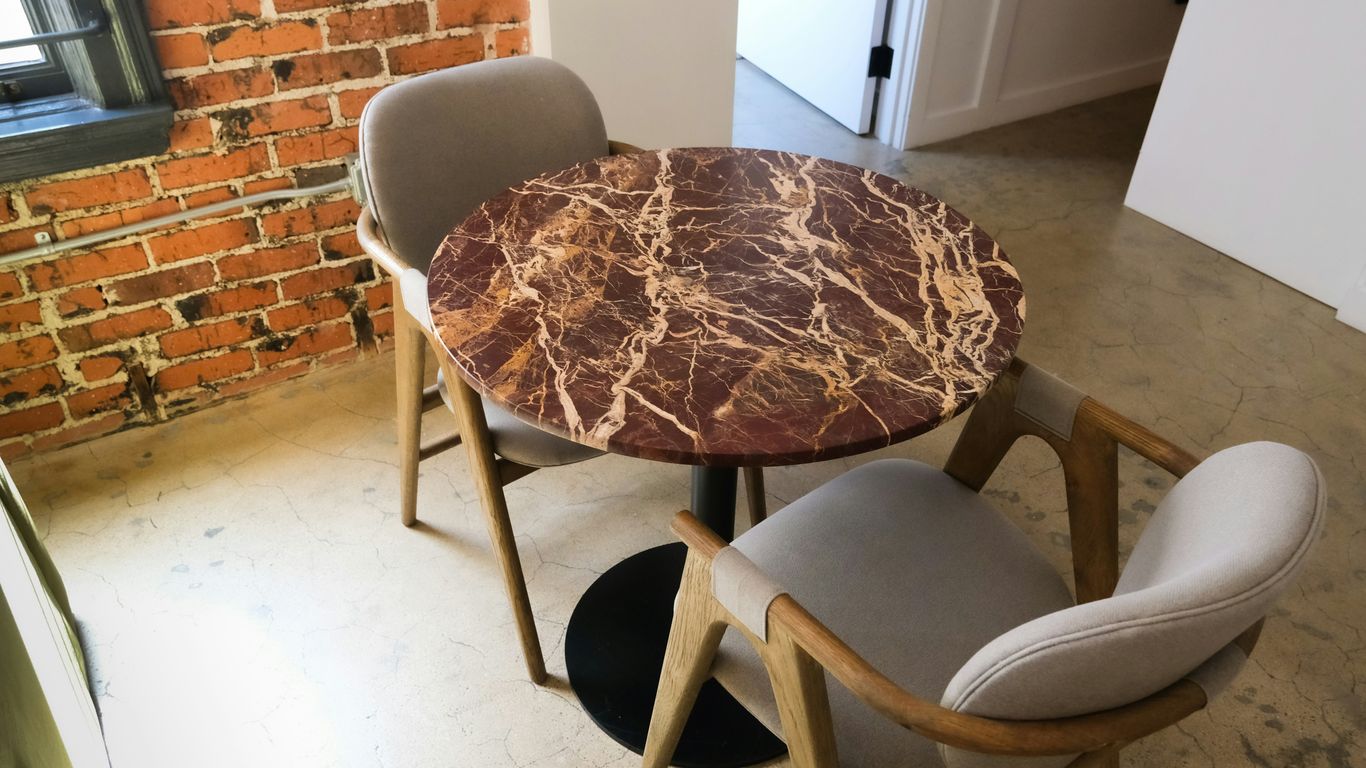
The stone’s rarity, slab size, pattern, thickness and amount of fabrication all influence cost. Complex edges, curved forms, recessed details and concealed fixings require additional work. The base may also involve separate fabrication, finishing and assembly.
For made-to-order work, the quotation should identify what has been allowed for. Geoscenic Stone accounts for the individual piece, weight, packing, destination, site access and any installation requirements when preparing a quotation, so these details should be discussed early.
Ready-made versus custom-made tables
Ready-made furniture can simplify selection when standard dimensions and finishes suit the room. Custom-made work allows the top, base, edge, finish and dimensions to respond to a specific interior, but it requires more decisions and a longer planning process. Neither route is automatically better; the right one depends on the space and the level of control required.
For projects with unusual access or a precise architectural brief, a factory-to-order process can be particularly useful. Geoscenic Stone produces pieces from an approved production drawing, with material selection, cutting, finishing, inspection, packing and delivery treated as connected stages.
Delivery, installation and site access costs
Ask whether delivery, lifting, assembly, protection of floors and installation are included in the quotation. In Singapore, building booking requirements, restricted delivery windows and difficult access can add coordination work even when the distance is short. A heavy stone top may also require more than a standard two-person delivery.
Record the access assumptions in writing. If the route, floor level or installation method changes, the cost and programme may change as well.
How to assess value beyond the headline price
Value is easier to judge when the specification and service are transparent. Compare the actual slab, construction method, finish, packing standard, delivery scope and after-sales process rather than comparing only table dimensions. A lower initial figure may not include the same level of fabrication or site coordination.
A clear drawing is especially useful because it turns a general idea into something measurable. It should show dimensions, stone, finish, edge details, base arrangement and any required drillings before production begins.
Evaluate quality before you buy
Quality is best assessed through a combination of material review and construction detail. Look at the stone in person where possible, but also ask how it will be supported, finished, inspected and packed. A polished photograph cannot answer those questions by itself.
Inspecting the marble slab for colour and veining
Stand back from the slab as well as viewing it close up. Check the overall tone, direction of movement and balance of prominent marks, then discuss which features are acceptable for the finished piece. Natural stone may include pores, mineral inclusions and tonal changes, and these should be understood before approval.
If a particular vein or area matters to the design, ask whether the production drawing can indicate the intended orientation. This reduces ambiguity without promising an identical appearance to a sample photograph.
Checking thickness, edging and surface finishing
Thickness affects visual weight, edge durability and the relationship between the top and base. Inspect the edge for a consistent profile and ask how corners will be softened or detailed. Run your hand across the surface to understand whether it is polished, honed or textured, but remember that tactile quality should be considered alongside the care routine.
The finish should be consistent with the stone and the intended use. A dining table needs a surface that looks appropriate under changing light and can be maintained realistically.
Assessing the frame, joints and base construction
Look beneath the top as carefully as you look at it. Check whether joints are clean, feet are level and the structure feels rigid without unnecessary bulk. Ask how the stone is secured and whether the design allows for safe handling during delivery and installation.
A well-made table should feel resolved from every angle, including the underside. This matters even more when the base is visible through open chair spacing or a glass-like interior scheme.
Questions to ask Singapore furniture retailers
Before paying a deposit, ask for clear answers about the stone source or selection process, final dimensions, finish, edge, base, delivery route and installation scope. Also ask what happens if the selected slab differs from the showroom sample. For a made-to-order commission, approval of the production drawing is a useful point at which to confirm the details.
If you are comparing a showroom example with a custom piece, remember that the photographed table may not be the table that is eventually produced. The material and specification should be reviewed as their own order.
Plan for Singapore’s climate and daily maintenance
Singapore’s humid climate does not make marble unsuitable, but it does reward sensible routines. Marble is porous and can react to acidic substances, standing moisture, heat and abrasive contact. The aim is not to keep the surface untouched; it is to prevent avoidable damage and respond promptly when spills occur.
How humidity, spills and heat affect marble
Humidity is part of normal indoor life, while spills are the more immediate concern. Citrus juice, wine, vinegar and some cleaning products can mark calcareous stone through etching, even when a stain is not permanent. Hot cookware and rough ceramics can also create localised damage or scratches.
Use coasters, placemats and trivets where appropriate, especially during long meals. Wipe spills rather than allowing them to sit, and avoid dragging objects across the surface.
Cleaning products and routines that are safe for marble
For routine cleaning, use a soft cloth with clean water or a cleaner specifically labelled as suitable for marble. Avoid abrasive powders, strong acids, bleach-based mixtures and generic products that leave a harsh residue. Test any new product in an inconspicuous area only after checking its instructions.
A simple daily routine is usually preferable to occasional aggressive cleaning. General marble care guidance can also be compared with these stone cleaning notes, while the exact finish and sealer instructions should take priority.
Preventing stains, etching and scratches
Prevention is mainly about creating small habits around the table. Use felt pads beneath accessories, lift serving pieces instead of sliding them and keep damp items from standing on the surface for long periods. A textured or honed finish may make minor marks less conspicuous, but it does not make marble impervious.
Do not use a sealer as a substitute for care. Sealing can provide additional resistance, but it cannot stop acids from reacting with the stone or protect against impact damage.
When sealing and professional restoration are needed
Whether and how often a table should be sealed depends on the marble, finish, use and previous treatment. Ask the maker or a qualified stone professional for advice rather than applying a general household sealer without checking compatibility. Deep stains, chips, etching or uneven refinishing may require professional assessment.
Keep records of the stone and finish supplied with the table. That information makes future maintenance and restoration decisions more accurate.
Make the final purchase with confidence
The final decision should bring together appearance, dimensions, construction, budget and service terms. Take time to compare like with like, and do not approve a drawing until the details reflect the room and the intended use. A calm, documented process is usually more valuable than a rushed discount.
Comparing showroom, online and custom-order options
A showroom allows you to see scale, texture and finish directly, while an online listing may make early research faster. Custom ordering offers greater control but requires careful communication about drawings, material selection and tolerances. When reviewing photographs, treat them as references rather than guarantees of identical veining or tone.
For a project with specific dimensions or access constraints, Geoscenic Stone can work from an approved drawing and coordinate the production stages for the individual piece. That is different from selecting a finished warehouse item, and the decision process should reflect that distinction.
Reviewing warranties, returns and after-sales support
Read the terms before placing an order, especially where the table is made to measure. Clarify what is covered, how natural variation is treated, what happens if transit damage occurs and which maintenance issues are excluded. Confirm the process for reporting a problem and the timeframe for doing so.
A clear after-sales conversation is a sign that practical ownership has been considered. It should cover both the furniture and the conditions of delivery and installation.
Confirming lead times, delivery and installation details
Ask when material selection, drawing approval, fabrication, inspection, packing and delivery are expected to occur. Confirm whether building access bookings, lifting equipment, assembly and removal of packaging are included. Lead times can change if the specification or approval is delayed, so record the assumptions behind the programme.
Do not rely on a verbal estimate alone. A written quotation and approved drawing give everyone a shared reference point.
Using a final measurement and specification checklist
Before committing, check the room measurements against the table footprint, chair clearance and access route. Then review the specification line by line so that visual expectations and practical terms match.
A final review should confirm:
- Overall length, width, height and seating intention.
- Marble selection, orientation, thickness and finish.
- Edge profile, base material, fixings and floor protection.
- Delivery address, access conditions, installation and quotation inclusions.
Once these points are agreed, request a quotation with the relevant drawings, measurements and access information. The more complete the brief, the easier it is to evaluate the proposal fairly.
Request a Stone Quotation
If your room requires a specific size, stone, finish or access plan, contact Geoscenic Stone with your measurements and project requirements for a made-to-order quotation.
Conclusion
A marble dining table is best chosen as a complete piece of furniture: stone, finish, base, dimensions, access and care all matter. By confirming those details before production and allowing for natural variation, you can choose a table that feels distinctive while remaining practical for everyday Singapore living.
Frequently Asked Questions
Is marble suitable for a dining table in Singapore?
Yes, provided it is selected and maintained with its porosity and sensitivity to acids, heat and abrasion in mind. Prompt cleaning, suitable protection and realistic expectations help preserve the surface.
Which marble finish is easiest to live with?
There is no universal answer. Polished, honed and leathered finishes each have different visual and tactile qualities, so the most suitable option depends on the room, lighting, use and level of visible marking you are comfortable with.
How much space should be left around a dining table?
Allow enough room for chairs to pull out and for people to walk behind them without squeezing past. The required clearance depends on chair size, circulation routes, sideboards and the shape of the table.
Is a round or rectangular marble table better for a small room?
A round table can improve movement around corners, while a narrow rectangle may use a long room more efficiently. Marking both footprints on the floor is a useful way to compare them before ordering.
Can a marble dining table be made to a custom size?
Many stone furniture makers offer made-to-order work, subject to the slab, structure, fabrication method and access conditions. Confirm the final dimensions and details in an approved production drawing.
How do I prevent stains and etching on marble?
Wipe spills promptly, use coasters and trivets, avoid acidic or abrasive cleaners and do not slide rough objects across the surface. Ask for advice about sealing based on the particular stone and finish.
What should I check before delivery?
Confirm the table dimensions, lift and doorway measurements, building delivery rules, installation scope, floor protection, packaging removal and quotation inclusions. A written access plan can prevent avoidable delays on delivery day.