Made to Order

Headquartered in Singapore. Made to order for projects worldwide.
Made-to-order stone furniture and architectural pieces, developed in Singapore and produced directly with our specialist manufacturing network.
Headquartered in Singapore. Made to order for projects worldwide.
Browse by form
Travertine · Marble · Onyx
Every piece begins with a slab or block chosen for its colour and movement. Natural stone varies, veining, tone and porosity shift from block to block, and that variation is the point. We confirm the character of your material before cutting begins.
A layered limestone formed by mineral springs, travertine reads warm and matte, with natural pitting that can be left open or filled before honing. Beige travertine anchors much of the collection — coffee tables, trays, vases and basins — and takes a soft, tactile finish rather than a mirror shine.
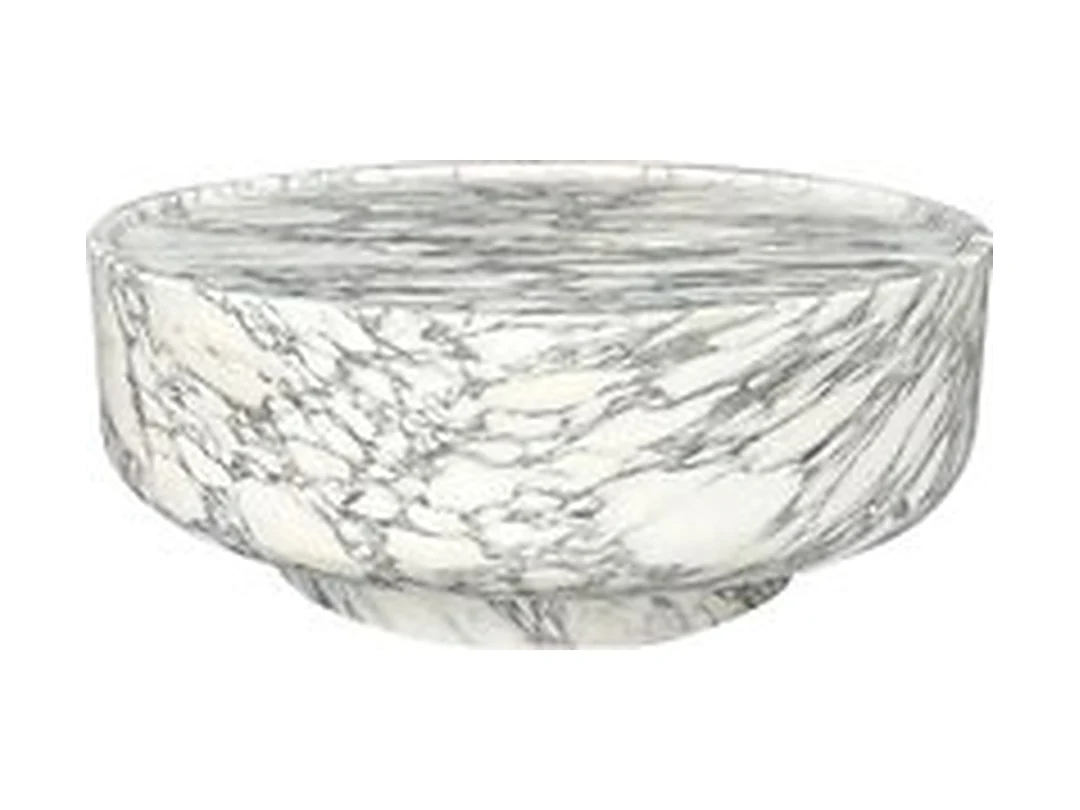
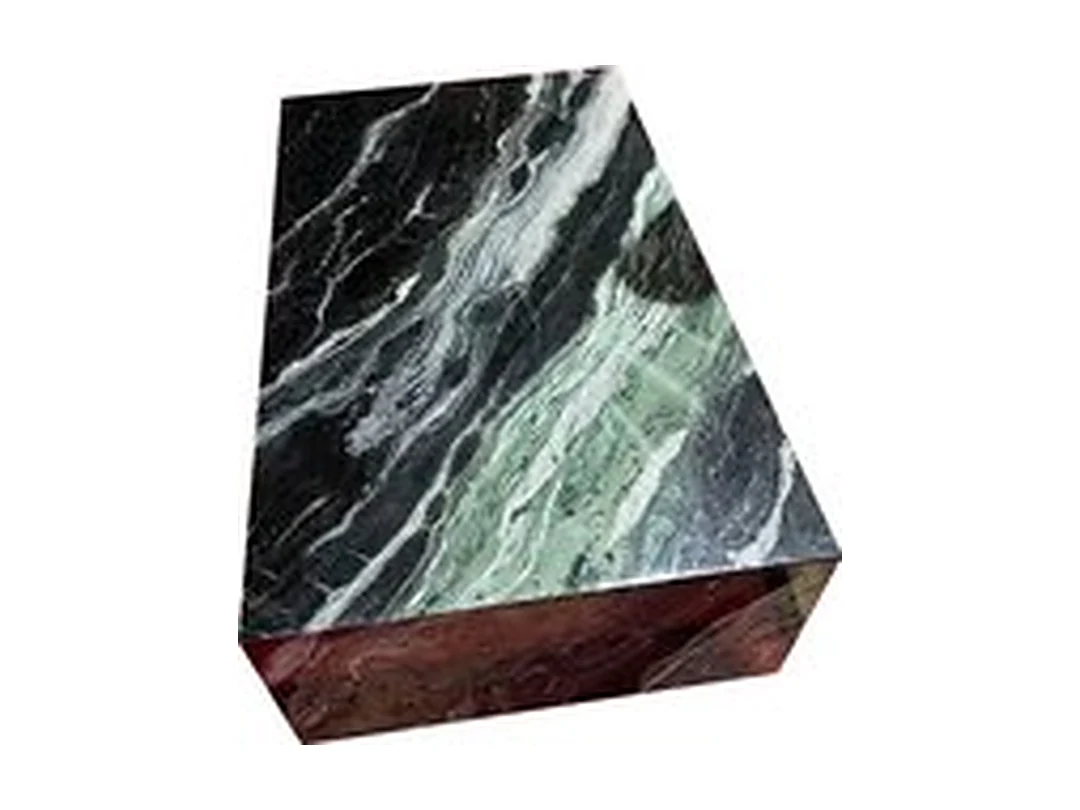
From the open grey figuring of Arabescato and Carrara to the deep greens of Verde Alpi and the violet drama of Calacatta Viola, marble carries movement no two blocks repeat. We select slabs for colour and vein direction against your piece, and confirm the material with you before cutting.
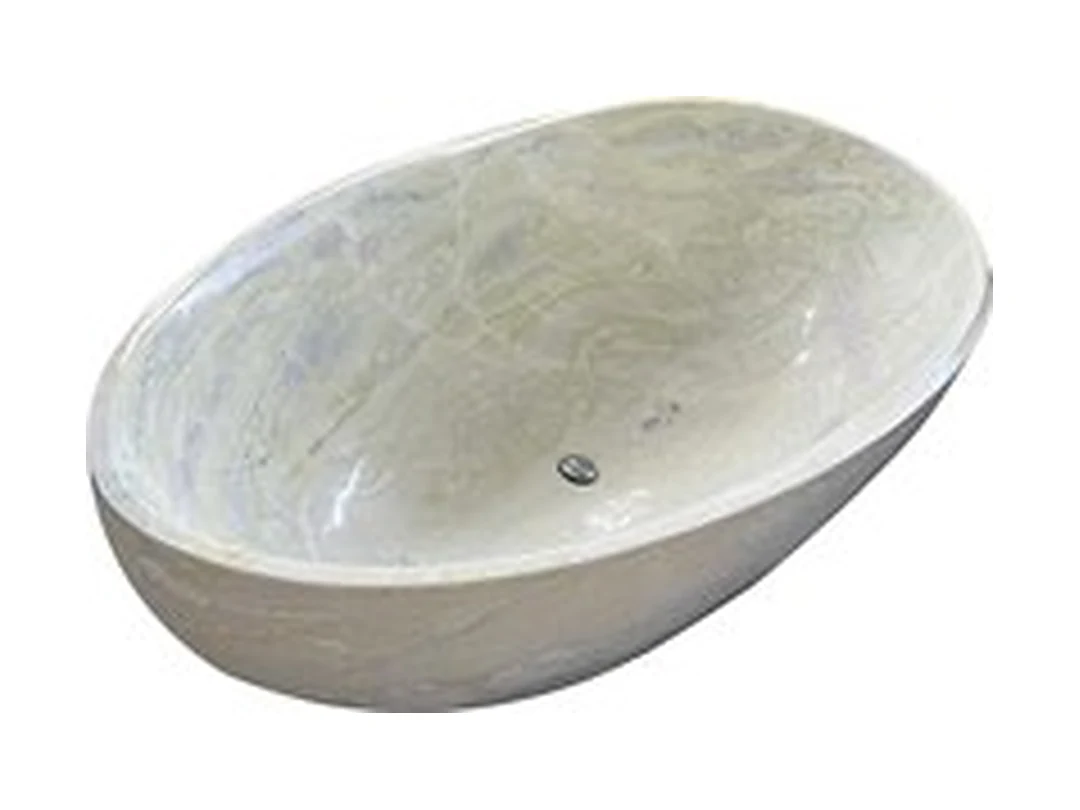
Onyx is banded and translucent — light passes through its edges and pools in its colour. We use it sparingly, for basins and objects where its softness can be protected and its glow does the talking.
Factory to order
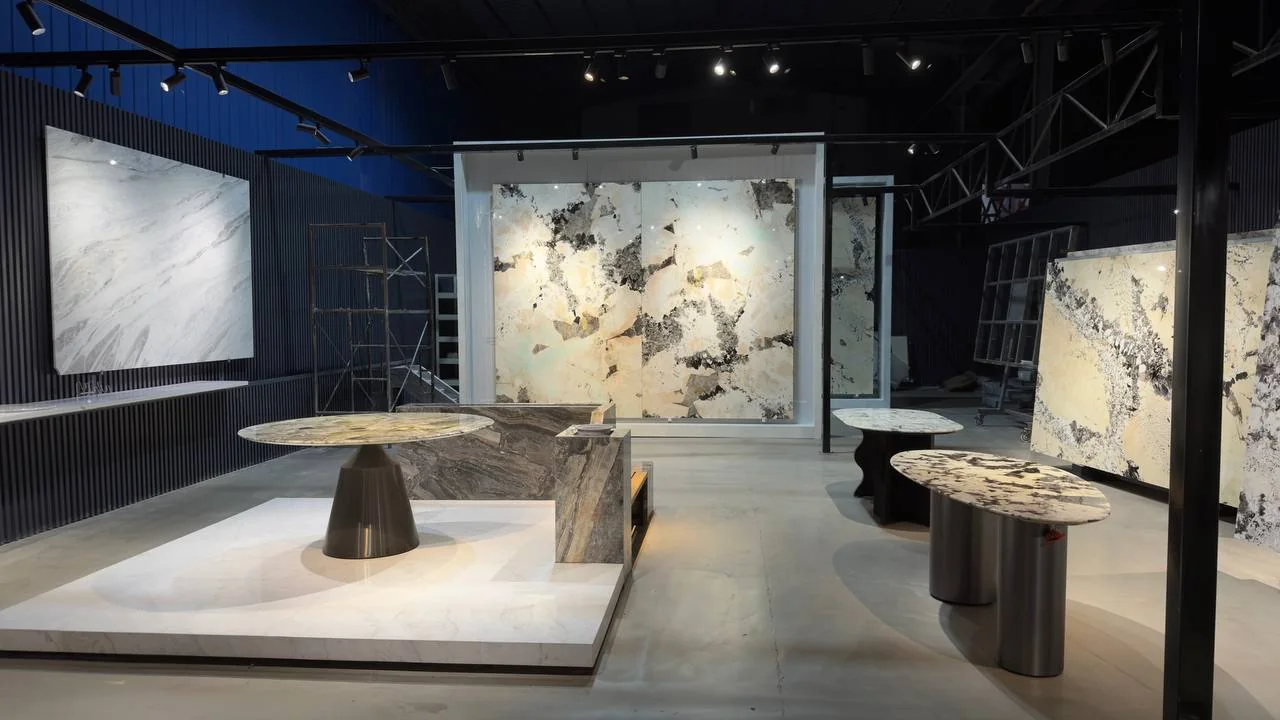
Geoscenic Stone works factory-to-order. Nothing is pulled from a warehouse shelf: each piece is cut, formed, finished and packed against an approved drawing, then delivered to your project.
01
You describe the piece, the dimensions your space needs, the stone direction and the destination.
02
Production, packing and delivery priced separately for your configuration and address.
03
Dimensions, tolerances, stone, finish, edge and drillings on one document you approve before anything is cut.
04
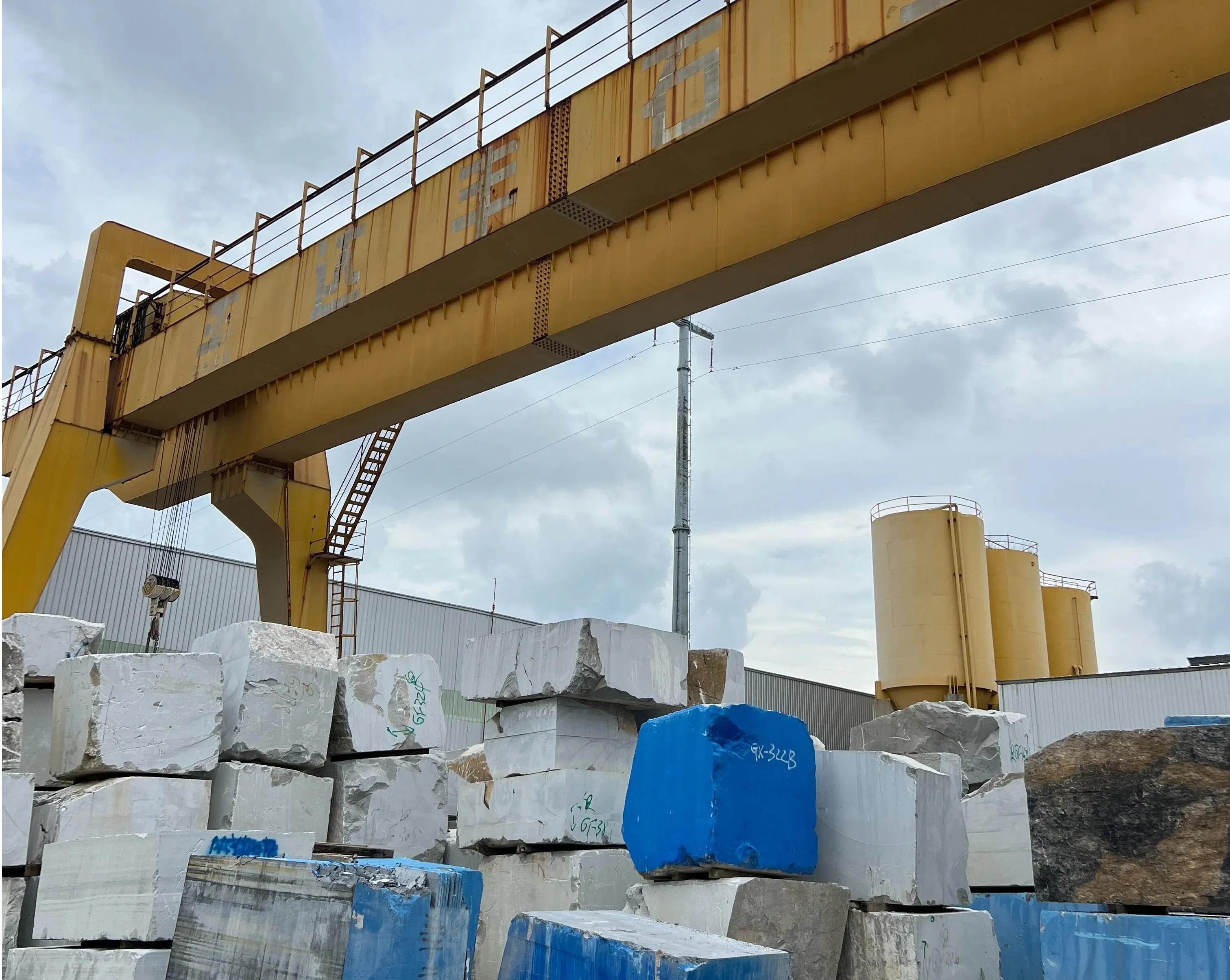
A slab or block is chosen for colour and movement against your piece; veined material is photographed for your confirmation.
05
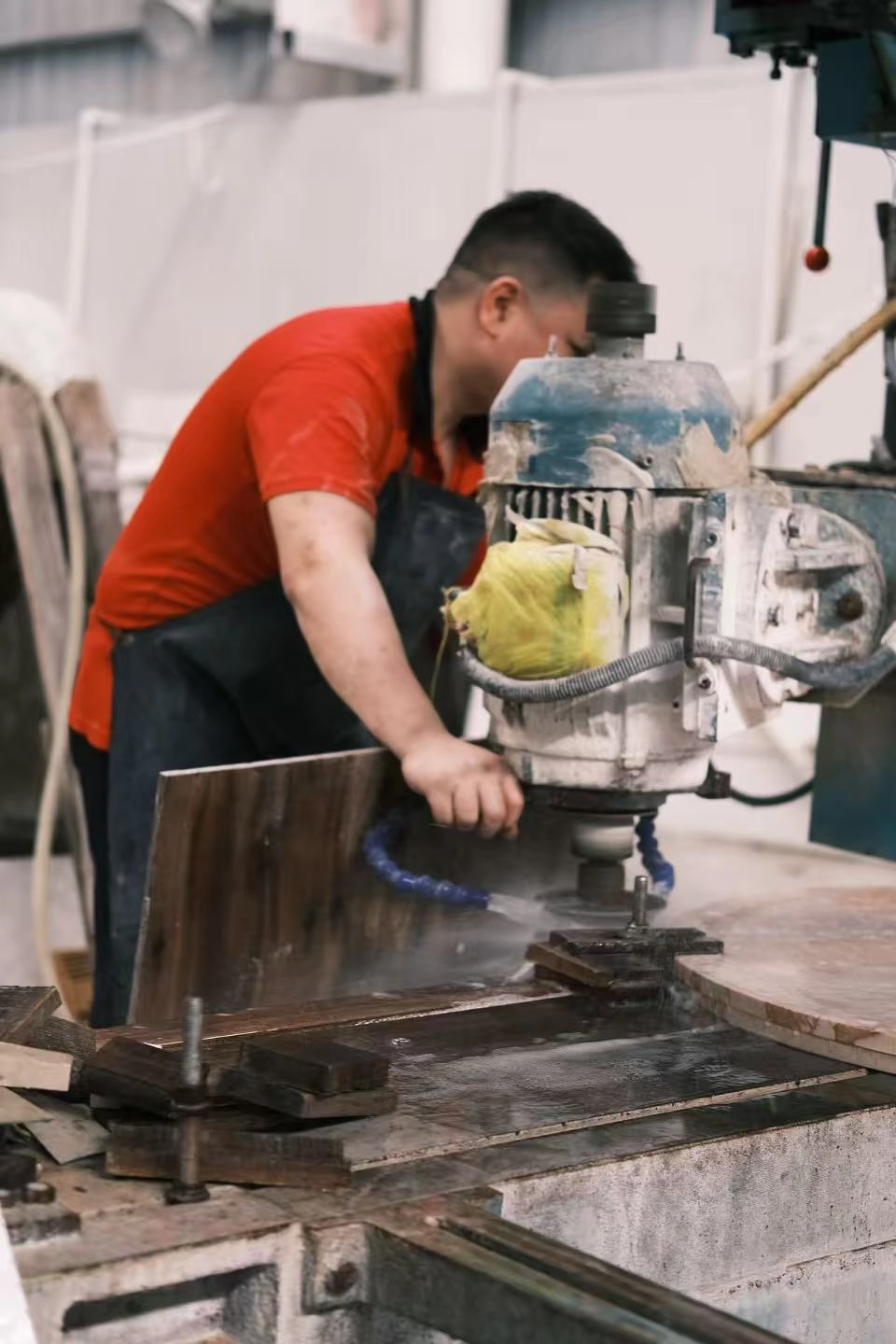
Bridge saws take the primary cuts with water suppression; shaped work is cut to the drawing.
06
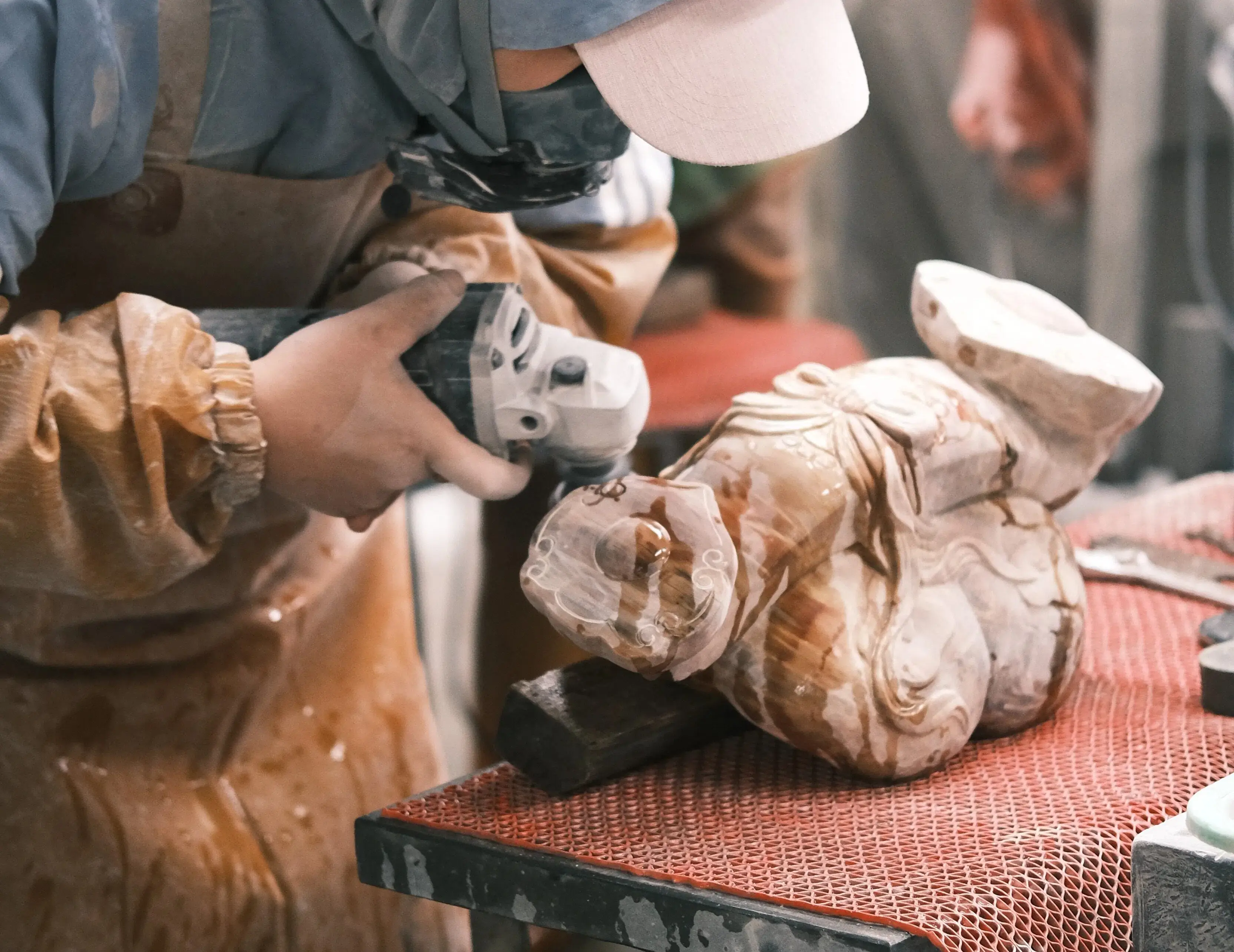
Curves, hollows and profiles are formed; basins are cored and drilled to the stated positions.
07
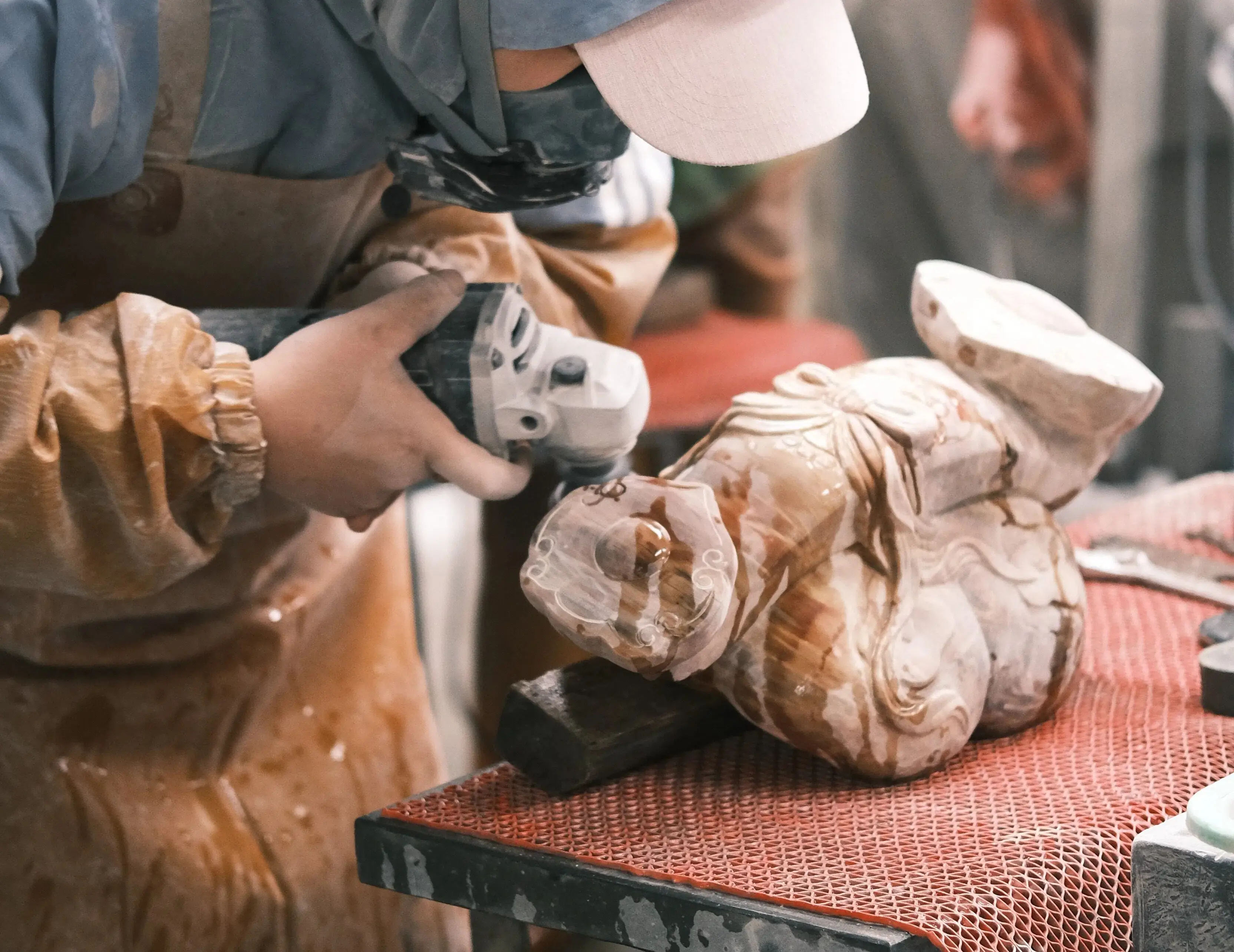
Edges are profiled and surfaces honed or polished; hand work refines what machines rough out.
08
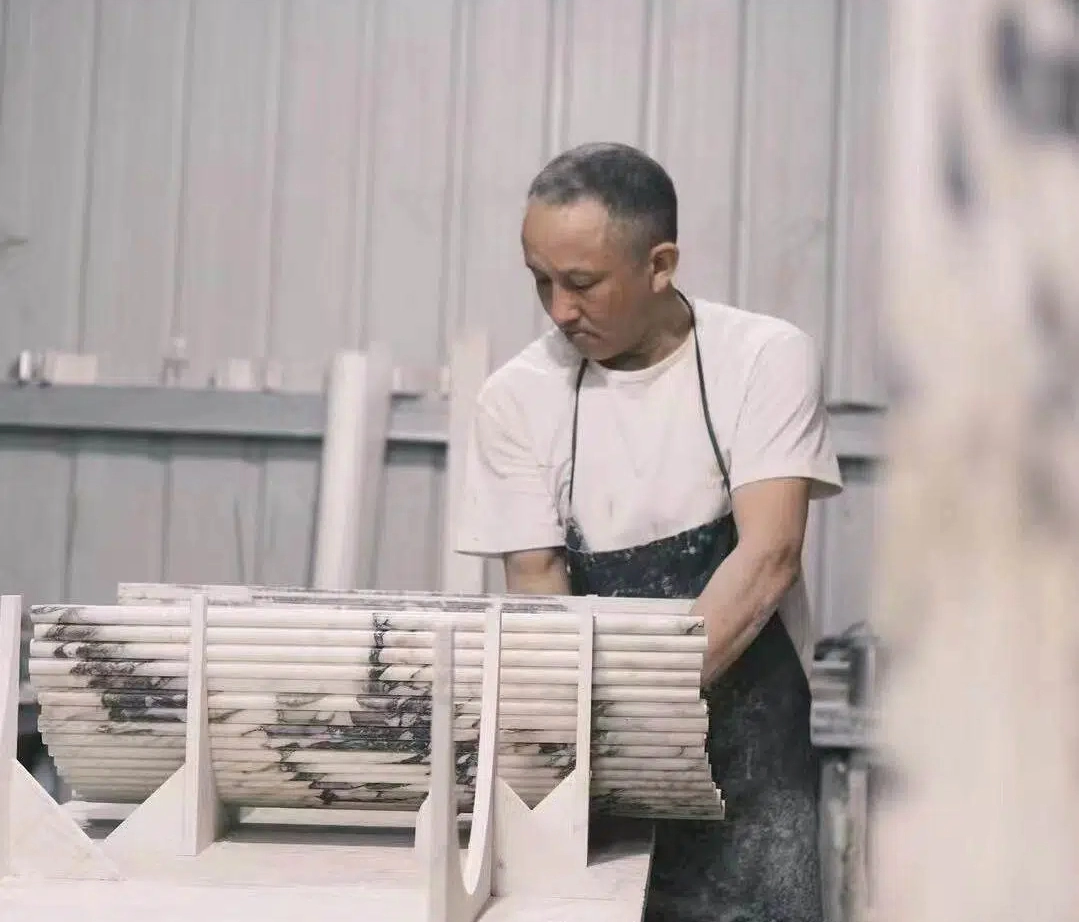
The piece is assembled as it will stand, measured against the drawing and inspected in raking light.
09
Faces protected, edges padded, components braced in an individual timber export crate.
10
Freight to your destination at the service level you chose, kerbside, to the door, or placed in the room where available.
Editors’ selection
Made to Order
Made to Order
Made to Order
Made to Order
Made to Order
Made to Order
Made to Order
Residences, hotels, restaurants, retail spaces and developments, we produce to your dimensions, your stone and your drawing, and coordinate delivery to site.
Every quotation is prepared individually, sized to the piece, its weight, packing, destination, site access and any installation requirements. Duties and taxes are only ever included where your quotation says so.
Pieces for the Singapore are made to order and imported for your project. UK import duties and VAT are set out in your quotation, nothing is included unless your quotation says so.
Request a Destination-Specific Delivery EstimateRooms & projects
FAQ
It means nothing you order exists yet. When you confirm a piece, we prepare a production drawing showing dimensions, stone, finish and edge profile, and cutting only begins once you approve it. Your table or basin is then cut, formed, finished and inspected as a single job, packed in its own crate and shipped to your project. There is no warehouse of finished stock and no substitution from a shelf: the slab is selected for your order, and the drawing you sign is the contract the factory works to. The approach takes longer than buying from stock, but it is the reason every dimension, stone choice and finish on this site can be adjusted rather than merely selected.
Yes, dimension changes are the normal case, not the exception. The measurements listed on each product page are reference dimensions from the design, and most forms can be lengthened, shortened, raised or deepened within the structural limits of the stone. Tell us the size you need in the quotation form, or send a sketch or plan, and we respond with a revised drawing showing exactly what will be produced. Some changes carry consequences worth knowing about, a longer unsupported span may need a thicker top or an extra support, and very small pieces sometimes cost nearly as much as standard ones because the cutting work is similar. We flag anything like that on the drawing before you approve it.
No, and it shouldn’t. Natural stone varies from block to block: veining direction, the density of figuring, background tone and small mineral marks all shift between slabs of the same named stone. The photograph shows the design and one expression of the material, your piece will share the form, finish quality and stone type, but its pattern will be its own. For pieces where the veining matters most, such as dining tops and consoles, we can share images of the actual slab or block selected for your order before cutting begins, so the character of your material is confirmed rather than assumed. Treat variation as the value of the material, not a defect of it.
Yes, request material samples through the sample request page and we will arrange cut samples of the stones you are considering, typically small format pieces showing colour, figuring and the finish you have in mind. Samples are the honest way to judge a stone: screens flatten texture and shift colour, and a honed travertine reads completely differently in hand than in a photograph. For veined marbles, remember that a small sample cannot show the movement of a full slab, so for large tops we supplement samples with photographs of the actual slab proposed for your piece. Sample costs and delivery are confirmed when you request them, and are credited against orders where our quotation says so.
Lead time is confirmed on your quotation rather than promised generically, because it depends on the piece, the stone and the finishing involved. A tray and a bathtub are not the same job: one is cut and finished in days of work, the other is hollowed, thinned and refined over a much longer schedule, and block availability for less common stones adds time before cutting even starts. What we can say categorically is how the clock runs: production is scheduled after you approve the drawing, the quotation states the expected production window for your specific piece, and shipping time is quoted separately by destination. If you have a fixed installation date, tell us in the enquiry, we plan backwards from it.
Yes, international delivery is the default, not an add-on. Each piece is packed and individually crated for export, and we quote delivery specifically for your destination based on the piece’s size and weight, the packing required, the shipping method and the access at your address. Depending on the piece and the market, options can include door-to-door freight, delivery to a local agent, or collection arrangements your side. Import duties and taxes belong to the destination country and are only included when your quotation explicitly says so; otherwise they are payable by the receiver. Give us your city and postcode in the quotation form and the delivery section of your quotation will be specific rather than estimated.
Every piece travels in its own protective crate. Stone is strong in compression but unforgiving at edges and corners, so packing is built around that: surfaces are protected, edges and corners padded, and components braced inside a timber crate sized to the piece so nothing can shift in transit. Multi-part pieces such as a top and base are packed so the components cannot contact each other, and hardware or fixings travel labelled inside the same crate. Crates are made for export handling, forklift access where weight requires it, and your quotation notes the approximate crate size so you can check doorways, lifts and delivery access at your end before the piece ships.
Installation is quoted separately and only where we can genuinely coordinate it, it is never silently included. Many pieces need no installation at all: a side table or tray is placed, not installed. Heavier and connected pieces are different: dining tables may need on-site assembly of base and top, basins need plumbing connection by your contractor, and bathtubs need route planning, positioning and waste connection. In the quotation form you can tick “installation coordination requested” and describe the site; we then tell you exactly what we can arrange for that destination and what remains with your own contractor. Either way, every piece ships with the placement and assembly information the person doing the work will need.
Simply, and regularly. Day to day: wipe with a soft cloth and warm water or a pH-neutral stone cleaner, and avoid anything acidic, vinegar, lemon, aggressive bathroom sprays, because acids etch calcium-based stones like marble and travertine. Wipe spills promptly rather than letting them sit, use boards and coasters under wine, citrus and hot cookware, and lift objects rather than dragging them across a honed surface. We recommend a penetrating sealer on dining tops, basins and other hard-working surfaces, reapplied periodically depending on use. The Care & Maintenance page covers sealing, stain response and finish-specific guidance in more detail, and every delivered piece includes care notes for its specific stone and finish.
Constantly, trade and project work is a core part of the business rather than a sideline. For designers and architects we work from your drawings and finish schedules, supply specification details, arrange material samples for client presentation, and keep one point of contact across multi-piece orders. For hospitality and development projects we quote in project quantities, sequence production against fit-out programmes, and pack for consolidated freight. Trade terms, project pricing and the way we handle revisions during design development are set out through a trade account enquiry, use the Trade & Professional page, tell us about your practice or project, and we will respond with how we would run it.
No formal minimum applies to made-to-order pieces, a single tray and a twelve-table hospitality order are both accepted. What a minimum-free model honestly means is that very small orders carry proportionally more of the fixed costs: crating and international freight for one small object can approach the cost of the object itself, which is why smaller pieces often make most sense added to a larger order or grouped together. If you are ordering a single small item, say so in the enquiry and we will quote the realistic delivered cost up front, and where grouping items would meaningfully reduce your freight per piece, we tell you rather than leaving you to discover it later.
Quotations are prepared individually and itemise the piece, packing and the delivery option you choose, so you can see what each element costs before committing. Made-to-order work is normally paid in stages: a deposit confirms the order and schedules production after drawing approval, with the balance due as set out in your quotation, commonly before dispatch. The exact stages, percentages and accepted payment methods are stated on the quotation itself rather than assumed from this page, because they can vary with the piece, the destination and project terms. Nothing goes into production before the drawing is approved and the deposit stage is met, which protects both sides: you approve exactly what will be made, and production time is reserved for a confirmed order.
Custom and made-to-order pieces are produced specifically to your approved drawing, so they generally cannot be returned for change of mind the way stocked goods can, a table cut to your dimensions has no shelf to go back to. That makes the approval stage the real protection: check dimensions, stone and finish on the drawing carefully, and ask questions before signing off. Separately, your statutory rights are not affected, if a piece arrives damaged or does not match the approved specification, document it on delivery and contact us; inspection, claims and remedy are covered by the Returns, Cancellations & Custom Orders policy and your quotation terms. Cancellation before production starts is treated differently from cancellation after cutting begins, and the policy explains both.