
Key Takeaways
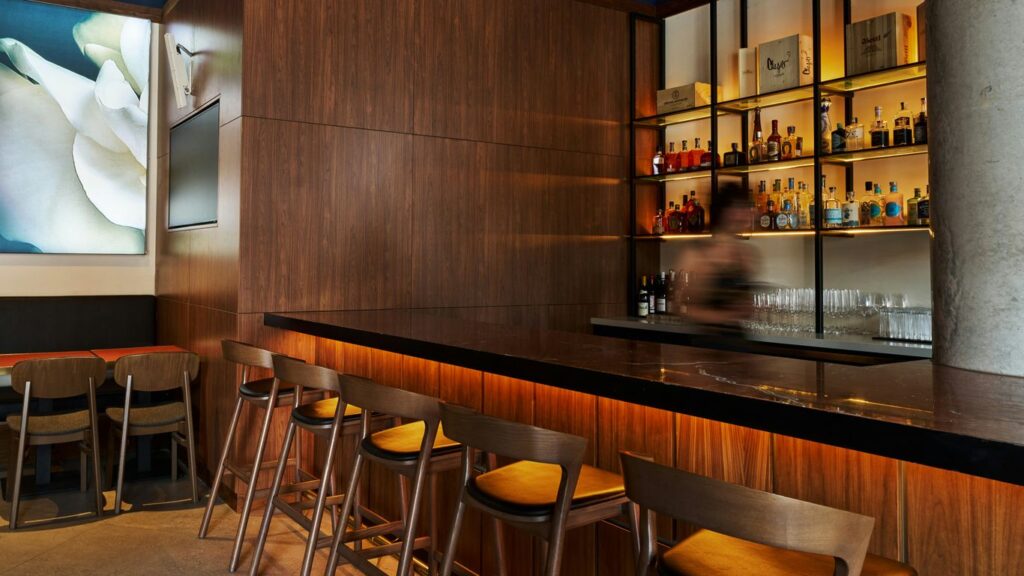
Onyx is a naturally translucent stone whose colour, veining and depth make every piece individual. Used thoughtfully, it can bring a quiet glow or a strong sculptural presence to a room.
- Onyx works especially well for consoles, coffee tables, plinths and other statement pieces.
- Backlighting should reveal the slab’s character without creating glare or distracting hotspots.
- A full-slab review is essential because tone, veining, porosity and mineral marks vary naturally.
- Bespoke dimensions, supports, edges, packing and installation access should be resolved before production.
- Regular sealing, careful cleaning and sensible daily use help preserve an onyx surface.
Understanding onyx as a furniture material
Onyx furniture is valued less for uniformity than for depth and movement. The stone can appear almost quiet in daylight, then become luminous when light passes through it. That changing character makes it particularly effective where a piece of furniture is also intended to act as an architectural or decorative feature.
Natural stone is never a printed surface. Its composition, formation and finish affect how it looks from different angles, so an early design conversation should include the intended atmosphere as well as the practical use. A useful comparison is the way extracellular matrix describes structure and local conditions in a completely different context: the surrounding framework influences how the whole is experienced.
What onyx is and why it is translucent
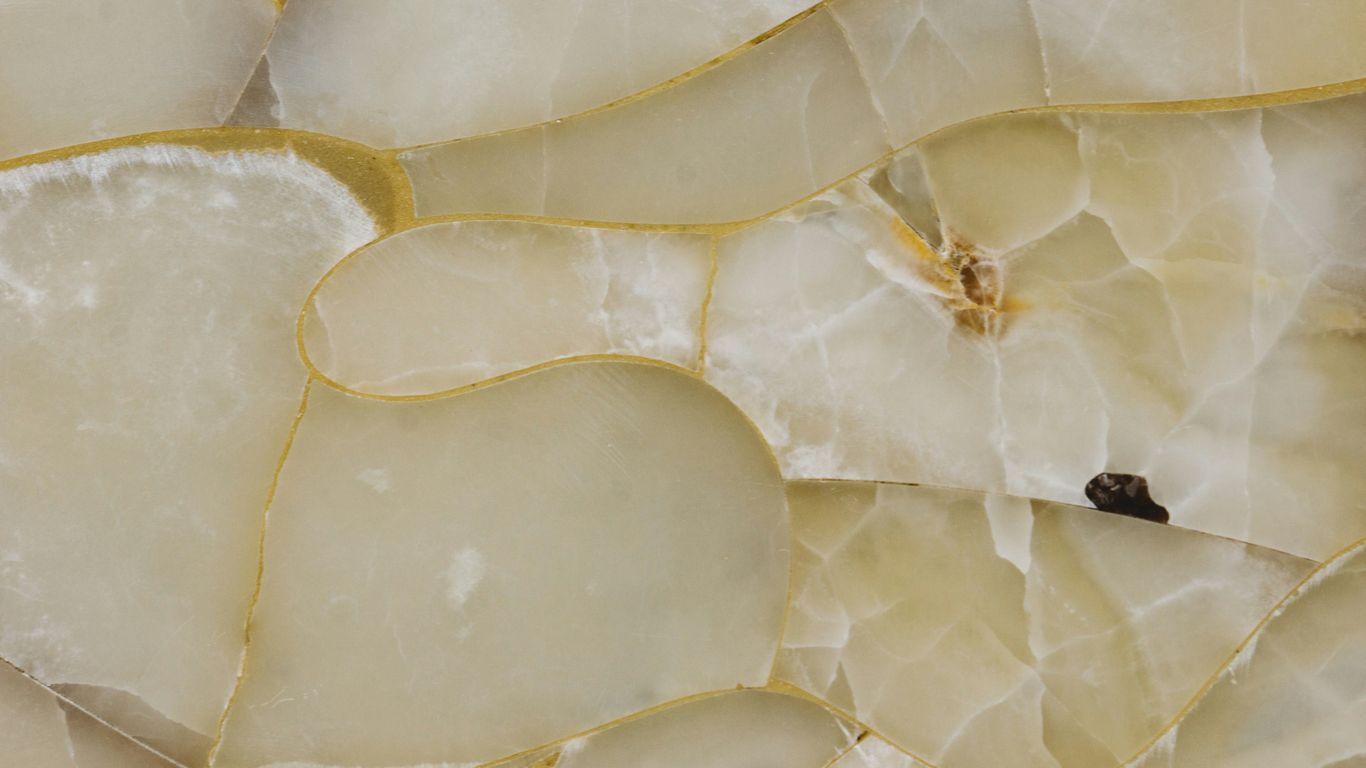
Onyx used in interiors is a banded stone formed from mineral-rich deposits. Its relative translucency allows some light to travel through thinner sections, particularly where the material is pale, fine-grained or less visually dense. The effect is not identical across every slab, and the amount of light passing through depends on thickness, colour, structure and preparation.
This is why onyx can feel layered rather than simply coloured. A warm cream slab may show cloudy bands, while a green, honey or rose-toned piece can reveal different degrees of depth. The stone’s appeal lies in that variation, not in a perfectly even glow.
How colour, veining and pattern vary between slabs
Two slabs from the same general stone family can look notably different. Veins may run in one direction, break into pools of colour or form broad cloud-like areas. Small mineral marks, fissures, pores and changes in tone are part of the natural material and should be assessed in relation to the scale of the finished piece.
For a tabletop or console, ask to see the full slab where possible rather than relying only on a small sample. The proposed cut lines can then be considered alongside the direction of the pattern, so the most expressive areas are used deliberately and not lost in trimming.
The difference between onyx, marble and other natural stones
Marble generally offers more familiar veining and a stronger visual range, while onyx is often chosen for its softer bands and ability to transmit light. Travertine tends to bring a more porous, textural and grounded quality. Harder stones such as granite or quartzite may be preferable where heavy everyday use and high resistance are the first priorities.
The choice should follow the furniture’s role. A frequently used dining surface has different demands from a decorative pedestal, bar front or softly lit wall panel. For a broader comparison of natural-stone properties, stone material comparisons can help frame the decision without treating one material as universally superior.
Strengths and limitations of using onyx in furniture
Onyx offers visual depth, a distinctive pattern and the possibility of a gentle illuminated effect. It can give a relatively simple base an architectural presence, especially when the edge, thickness and support are designed as part of the whole. Material character matters more than a promise of visual consistency.
Its limitations are equally relevant. It can be sensitive to staining, scratching, heat and impact, and translucent sections require careful support and lighting design. A considered specification therefore balances beauty with location, frequency of use, maintenance expectations and the practicalities of fabrication.
Choosing the right onyx furniture for a room
The best onyx furniture is proportionate to its setting and clear about its purpose. A small console can provide a concentrated moment of colour, while a large table may become the room’s dominant visual element. Begin with circulation, sightlines and use, then consider how much pattern the room can comfortably carry.
Room photographs are helpful, but dimensions and access matter just as much. Record door widths, lift sizes, stair turns and the position of other furniture before approving a design. A piece that looks balanced in a drawing still has to arrive and be placed safely.
Onyx tables, consoles and occasional furniture
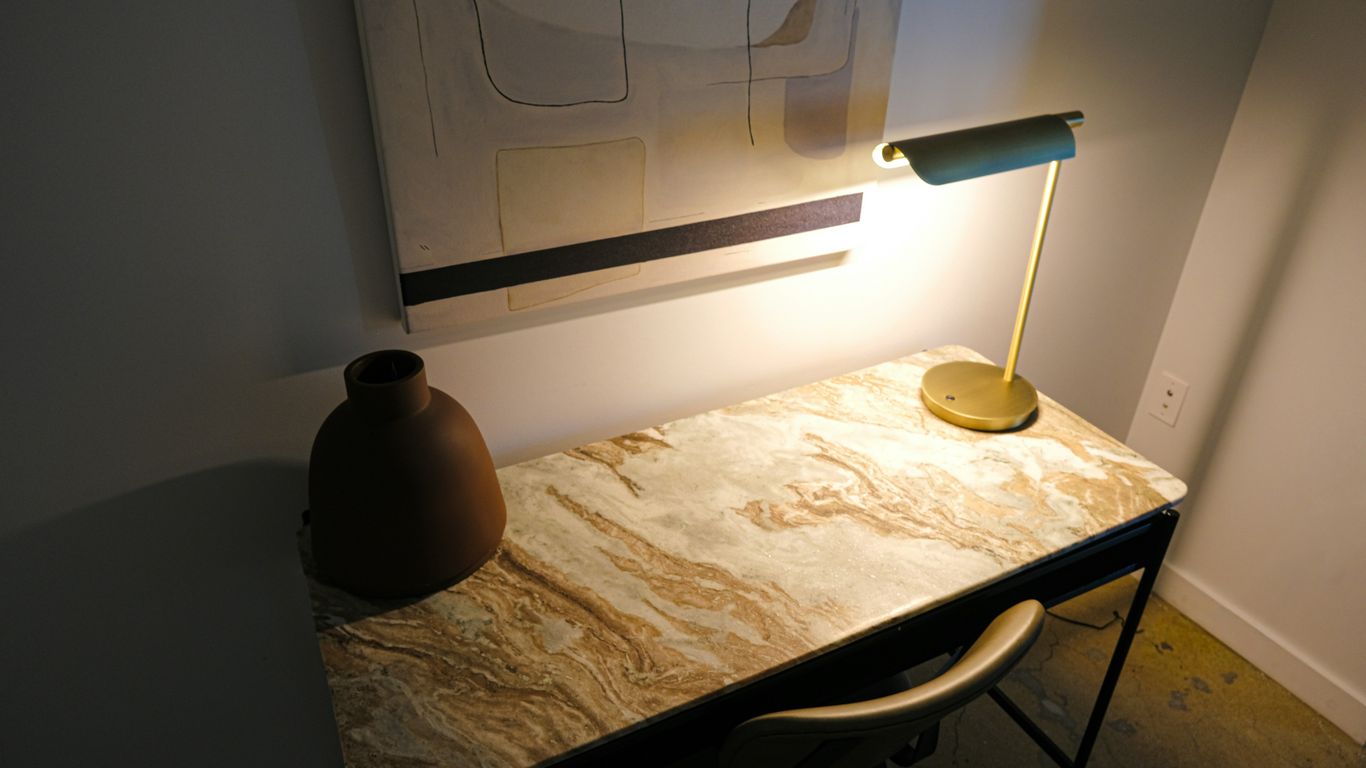
Coffee tables, side tables, consoles and plinths are often good introductions to onyx because they allow the stone to be appreciated without making every surface in a room visually intense. A console in an entrance hall can catch daylight and provide a calm focal point, while a small occasional table can repeat a tone found elsewhere in the scheme.
The intended use should guide the finish and detailing. A decorative console may permit a more delicate edge, whereas a coffee table needs enough clearance, stable support and a surface that can tolerate regular contact with objects.
Statement pieces for living rooms, bedrooms and entrance halls
In a living room, an onyx coffee table can sit between softer upholstery and darker timber. In a bedroom, a pair of bedside tables or a single illuminated panel may introduce warmth without competing with the bed. Entrance halls often suit a console because the stone can be seen from several directions as people move through the space.
The strongest statement is not always the largest one. A carefully selected slab, restrained base and generous surrounding space can make a smaller piece feel more intentional than a crowded arrangement of decorative objects.
Matching slab thickness, scale and shape to the space
Thickness affects both visual weight and structural planning. A slim top may appear elegant but needs suitable support and careful handling; a thicker edge can make a compact piece feel substantial. Rounded, rectangular, oval and irregular shapes each influence circulation, sightlines and how the pattern is read.
Before finalising dimensions, compare the piece with the room’s ceiling height, nearby joinery and walking routes. A useful specification also records the top thickness, overall height, edge profile, base footprint and any required cut-outs, rather than describing the design only as a general size.
Selecting colours and veining to suit an interior scheme
Choose the slab after considering the room’s permanent elements: flooring, cabinetry, wall colour, metalwork and upholstery. Pale onyx can sit comfortably with warm neutrals, while stronger amber, green or reddish tones may need more visual space. Veining direction can either echo linear furniture or provide a deliberate contrast.
Natural variation means the approved piece will not be interchangeable with a photographed example. The responsible approach is to agree the character being sought, inspect the available material and accept that the final slab will retain its own pattern.
Using lighting to enhance translucent onyx
Lighting can change onyx from a solid surface into something closer to a glowing screen. That transformation is most successful when it supports the room rather than becoming a spectacle in its own right. The position of the light source, the thickness of the stone and the surrounding finishes all affect the result.
A lighting plan should be resolved alongside the furniture design, not added after fabrication. Access for drivers, ventilation, wiring and future maintenance needs to be considered before the stone is fixed.
How backlighting reveals the stone’s natural patterns
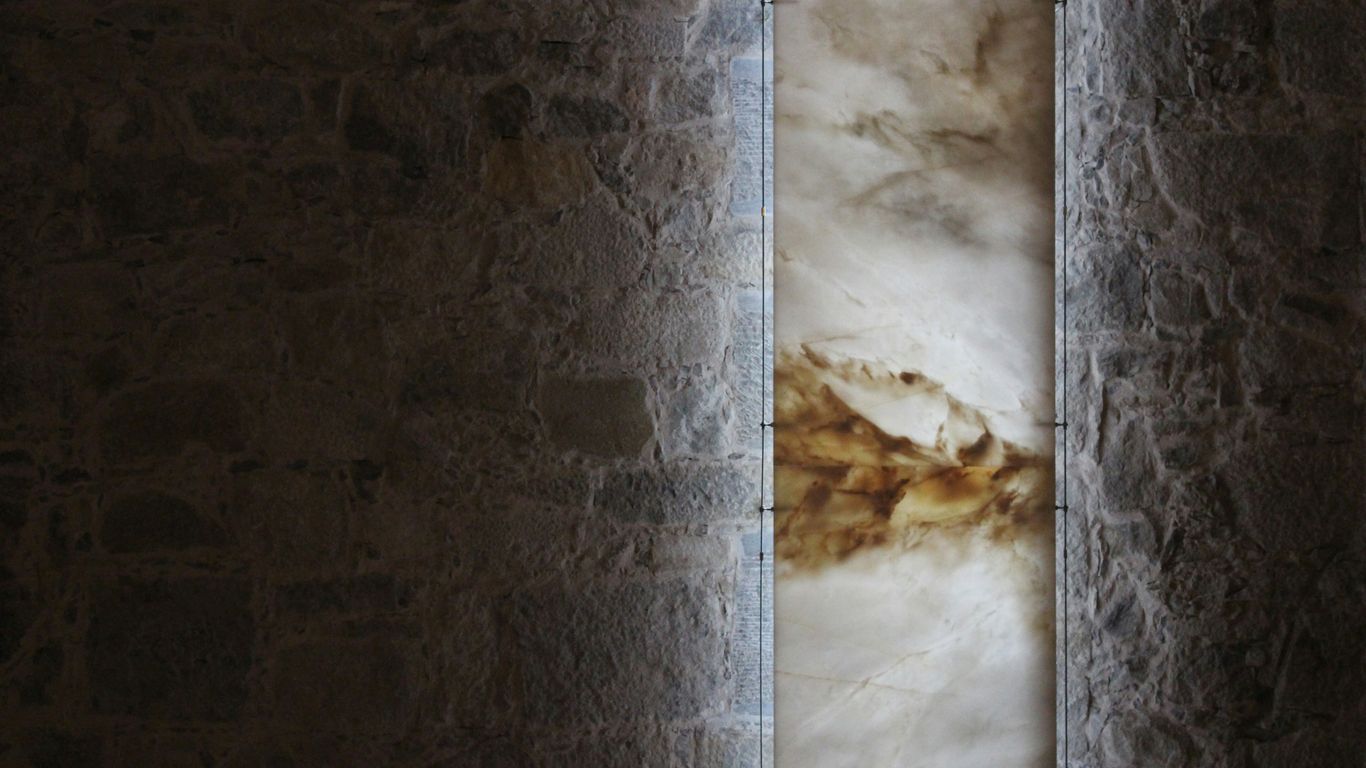
Backlighting tends to reveal bands, cloudy areas and changes in density that may be subtle in ordinary daylight. The slab becomes a visual field, so the orientation of the pattern matters. A fabricator can often help identify which areas will transmit light most evenly, but the final effect still depends on the selected piece.
Backlit onyx furniture is particularly effective in bar fronts, console tops, wall-mounted features and carefully supported table elements. The light should make the stone legible rather than flattening it into a single bright panel.
Choosing LED systems for even, low-heat illumination
LED systems are commonly considered because they can provide controlled illumination with relatively little heat compared with older light sources. The specification should cover colour temperature, dimming, driver location, access and the spacing of the light source behind the stone.
A test panel or sample assembly is worthwhile when the piece is large, strongly veined or intended for a hospitality setting. It can reveal uneven brightness before the final stone is cut and make it easier to agree the desired warmth.
Integrating lighting into bases, tops and wall-mounted pieces
A lit base can make a top appear to float, while concealed lighting behind a wall-mounted slab can give a feature a softer architectural edge. Each arrangement requires a different approach to support, cable routing and access. The stone must be held securely without creating visible pressure points or shadows.
The drawing should show the relationship between stone, frame, diffuser, driver and fixing points. Where electrical work is involved, coordinate with the relevant project specialists and local requirements rather than assuming that the furniture maker will cover every site installation task.
Avoiding glare, hotspots and overly dramatic effects
Uneven spacing between LEDs and stone can create bright spots, particularly on pale or thin sections. Reflective floors and polished adjacent surfaces may add glare. Dimming, diffusion and a carefully chosen colour temperature usually produce a more comfortable result than simply increasing brightness.
The aim is a surface that rewards attention. If the glow dominates the room from every angle, the stone’s natural pattern can become secondary to the lighting equipment.
Designing with onyx furniture in different interiors
Onyx can be formal, quiet, contemporary or theatrical depending on what surrounds it. Its success in a scheme depends on editing: a room needs enough restraint for the stone to be seen, but also enough texture and warmth to keep it from feeling isolated. Consider the piece as part of a material conversation rather than as a decorative object placed at the end.
The same slab can read differently beside pale plaster, dark timber, brushed metal or patterned fabric. Scale, illumination and the amount of visible support all alter its character.

Creating a focal point in contemporary spaces
Clean-lined rooms give onyx room to speak. A simple top with a disciplined base can become a focal point without relying on excessive ornament. In an open-plan interior, the piece can also help define a zone, marking a seating area or transition without building a full partition.
Keep the surrounding composition relatively clear. A few well-chosen objects, rather than a collection of competing accents, allow the stone’s veining and translucency to remain visible.
Adding warmth and contrast to minimalist rooms
Minimalism can sometimes become visually cool, particularly when it relies heavily on pale surfaces and hard geometry. Honey, cream or softly coloured onyx introduces variation without requiring a busy pattern. Timber, wool, linen and aged metal can reinforce that sense of warmth.
Contrast is useful when it is measured. A dark base may sharpen a pale slab, while a light wall can make a deeper onyx tone appear more luminous. The balance should support daily comfort, not only a strong photograph.
Incorporating onyx into classic, boutique and hospitality interiors
Classic rooms can use onyx in restrained details such as a console, drinks table or fireplace surround, provided the profile relates to the existing architecture. Boutique interiors may take a more expressive approach, using illuminated tops or sculptural forms to establish a memorable identity. Hospitality projects need to consider sightlines, cleaning routines, durability and replacement planning as well as visual impact.
For project teams, a custom stone furniture guide is a useful companion when translating an atmosphere into dimensions, finishes, supports and transitions. The same discipline applies whether the setting is a private residence, restaurant or hotel.
Balancing statement stone with wood, metal and textiles
Stone feels more inviting when it is balanced by tactile materials. Timber can soften a strong pattern, metal can clarify the edges and textiles can absorb some of the hardness of a polished surface. These choices also affect the perceived temperature of the room and the way light is reflected.
A practical palette might include one dominant stone, one supporting hard material and two or three softer textures. This creates enough variation to feel layered without making the onyx compete with every surrounding finish.
Planning a custom onyx furniture piece
Custom work begins with a brief that is specific enough to draw and flexible enough to respect the slab. State the furniture type, intended use, overall dimensions, finish, edge treatment, lighting requirements and destination. Then resolve the design through drawings and material review before production begins.
A factory-to-order process is particularly suited to this stage because each piece can be developed around an approved drawing rather than selected as interchangeable warehouse stock. Geoscenic Stone describes made-to-order marble, travertine and onyx furniture and architectural pieces produced from a chosen slab for a project’s dimensions and finish.
Working with the slab before finalising the design
The slab should be reviewed as a whole, with proposed cuts and pattern direction considered before the shape is fixed. This may influence the size of a top, the position of a seam or the decision to use a particular area as a visible edge. It is also the point to discuss natural marks and acceptable variation.
A drawing can show intent, but it cannot replace material inspection. Confirm the selected stone, finish, thickness and orientation in writing so the design team and fabricator are working from the same reference.
Choosing suitable supports, frames and edge profiles
Onyx needs a support strategy that distributes loads and suits the visual language of the piece. Bases may be timber, metal, stone or a concealed frame, but their footprint and fixing method must be compatible with the slab. Edge profiles range from crisp and minimal to softened, stepped or more sculptural treatments.
The edge is often where the stone’s depth becomes most apparent. It should therefore be designed with the viewing distance, lighting conditions and risk of impact in mind, rather than chosen as an isolated decorative detail.
Accounting for weight, stability and installation access
Stone is heavy, and a large finished piece may require specialist handling even when its individual components are manageable. Check floor conditions, lift capacity, door openings, stair geometry and the route from unloading point to final position. Stability also depends on the base, centre of gravity and how the piece will be used.
Project preparation should include a clear installation sequence. General renovation guidance, such as renovation planning advice, is relevant here because access, dust, noise, change orders and final checks can affect the wider programme even when the furniture is made off site.
Coordinating fabrication, lighting and electrical requirements
Lighting, sockets, cable exits, drivers and control systems should appear on the production information. Confirm who supplies each component, who makes the electrical connection and who tests the installation at the destination. Do not leave these decisions to the packing stage.
For complex work, the drawing should be reviewed by the designer, fabricator, lighting specialist and site team. The aim is not only a beautiful object but a coordinated one that can be packed, delivered and installed without improvised alterations.
Caring for and protecting onyx furniture
Onyx rewards careful use rather than anxious avoidance. The surface should be treated as a natural stone with particular sensitivities, not as a maintenance-free substitute for glass or engineered material. Simple habits usually make the largest difference.
Care instructions should be supplied with the finished piece and adapted to its finish. A polished surface, honed surface, illuminated element and porous detail may not all respond in exactly the same way.
Sealing onyx and reducing the risk of staining
A suitable sealer can reduce the speed at which liquids penetrate, but it does not make the stone immune to staining. The required product and reapplication interval depend on the stone, finish and use. Ask for the recommended treatment before applying a retail sealer.
Spills should still be blotted promptly, especially near drinks, cosmetics, food and coloured liquids. Coasters and trays are useful where a piece is likely to receive repeated wet or oily contact.
Cleaning products and methods to use or avoid
Use a soft cloth and a mild, pH-neutral stone cleaner, following the product instructions. Avoid abrasive pads, scouring powders, strong acids, bleach-based mixtures and aggressive household descalers. When uncertain, test a product on an inconspicuous area or ask the fabricator first.
Routine dusting is preferable to repeated heavy cleaning. Wipe rather than scrub, and remove grit before moving objects across the surface.
Protecting surfaces from heat, moisture and scratches
Hot cookware, damp plant pots, unglazed ceramics and gritty ornaments can all mark a stone surface. Use trivets, mats, felt pads and coasters where appropriate, and lift objects instead of dragging them. Keep standing water away from joints, edges and areas containing electrical components.
Daily usability should be part of the original design discussion. A decorative side table may tolerate different behaviour from a dining table used several times a day by a busy household.
Repairing chips, marks and damage professionally
Small chips, scratches and dull patches should be assessed before attempting repair. Colour matching, filling, honing, polishing and edge rebuilding require specialist judgement, particularly where the stone is translucent or backlit. A local repair may improve the appearance without making the area completely invisible.
Do not use household filler or abrasive tools as a first response. Photograph the damage, note how it occurred and consult a qualified stone professional who can explain the likely result and limitations.
Evaluating the cost and long-term value of onyx furniture
The price of an onyx piece reflects more than the area of stone. Material selection, slab yield, cutting complexity, edge work, reinforcement, bases, lighting, packing, delivery and installation can all contribute. A fair comparison therefore needs equivalent specifications rather than a single headline figure.
A project quotation should distinguish what is included from what depends on the destination or site. This is especially important for international work, where weight, protective packing, access and local installation arrangements may affect the final cost.
What affects the price of onyx furniture
Key variables include the chosen slab, thickness, amount of waste, pattern matching, shape, finish, number of components and complexity of the support. Backlighting adds its own requirements for diffusers, LEDs, drivers, wiring and access. Unusual dimensions may also influence packing and handling.
When comparing quotations, ask whether the figures refer to the same stone character, finish, edge profile, delivery point and installation scope. A lower figure may simply exclude an element that another quotation has itemised.
Comparing bespoke pieces with ready-made designs
Ready-made furniture can offer a faster route when dimensions and appearance are already suitable. Bespoke work is more appropriate when the room has unusual proportions, a precise material brief or demanding access conditions. It also allows the design to respond to the actual slab rather than treating a catalogue image as a guarantee.
For made-to-order work, Geoscenic Stone sets out a factory-to-order approach in which the piece is cut, formed, finished, inspected and packed for a specific project. That model requires more decisions from the client, but it can provide a closer fit between the furniture, the room and the approved drawing.
Assessing durability, maintenance and everyday usability
Long-term value is partly visual and partly practical. Consider how often the furniture will be used, whether spills are likely, who will clean it and how easily damaged components could be accessed. A dramatic illuminated console may be excellent value in a lobby or entrance, while a less delicate finish may be wiser for a family coffee table.
A realistic assessment also includes care, potential repairs and the consequences of moving the piece later. For budgeting discipline, even unrelated planning guidance such as IT budget planning illustrates the value of listing recurring and one-off costs separately.
Buying responsibly and checking stone provenance
Ask where the stone was sourced, how the slab was selected and what information can be provided about its chain of supply. Responsible purchasing also means understanding the limits of the material rather than asking for an identical repeat of a photograph. Natural variation should be documented as part of the approval process.
Project teams should record the approved slab, finish, dimensions, tolerances, packing method and delivery responsibilities. Clear records reduce misunderstandings and support accountability across fabrication, transport and installation. They also help keep the human demands of site work visible; broader construction mental health guidance is a reminder that safe programmes depend on people as well as materials.
Make the stone specific
If you are considering an onyx table, console or architectural feature, speak with Geoscenic Stone about the slab, dimensions, finish, drawing requirements and destination conditions. A considered quotation can then address the individual piece rather than treating a natural material as a standard product.
Conclusion
Onyx furniture works best when its translucency, natural variation and practical limitations are considered together. With an appropriate scale, carefully controlled lighting, sound support and a clear care plan, translucent stone can become a lasting part of an interior rather than a short-lived visual effect.
Frequently Asked Questions
Is onyx suitable for everyday furniture?
It can be suitable for selected everyday pieces, especially when the design, finish and location reflect its sensitivity to staining, scratching, heat and impact. High-contact uses need more care than decorative or occasional furniture.
Does all onyx transmit light?
No. Translucency varies with colour, density, thickness, structure and preparation. A full-slab review or sample test is the best way to understand how a particular piece may respond to backlighting.
Should onyx furniture always be backlit?
No. Backlighting is optional. Onyx can be appreciated in daylight through its colour, veining and depth, and an unlit piece may suit a quieter interior scheme better.
How should onyx be cleaned?
Use a soft cloth and a mild, pH-neutral stone cleaner. Avoid abrasive materials, strong acids, bleach-based products and aggressive descalers, and follow any care instructions supplied for the specific finish.
Can an onyx slab be used for a dining table?
It can, but the design should address support, edge protection, sealing, heat, spills and daily handling. The household’s routine should be considered before selecting a particularly delicate finish or pattern.
How do I choose the right onyx colour?
Start with the room’s flooring, joinery, upholstery, wall colour and metal finishes. Review the full slab where possible, since veining and tone can differ substantially from a small sample.
What should be agreed before ordering custom onyx furniture?
Confirm the stone, slab orientation, dimensions, thickness, finish, edges, supports, lighting, tolerances, packing, delivery scope, access and installation responsibilities in an approved drawing or quotation.