
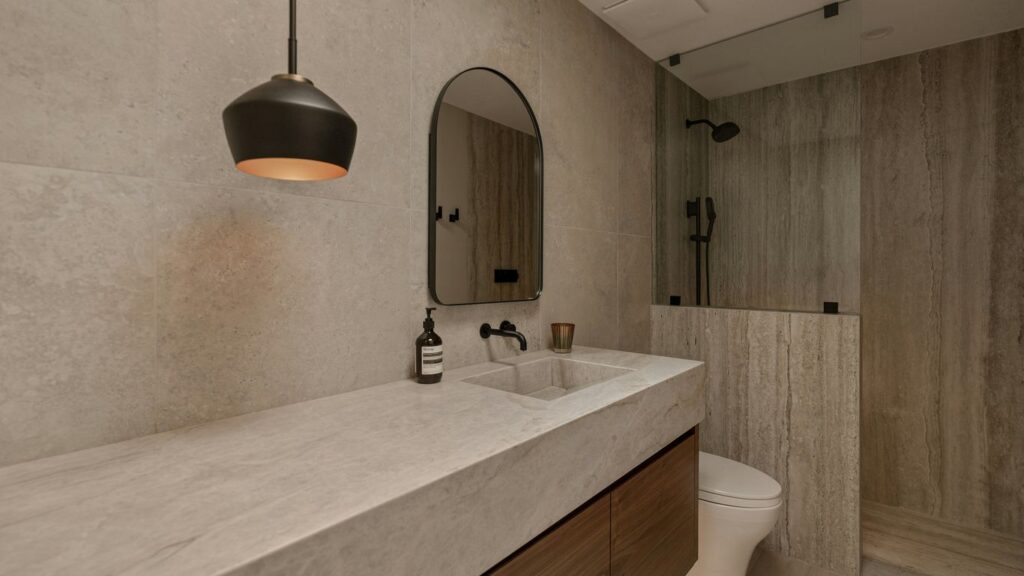
Key Takeaways
A stone basin can give a Singapore bathroom a strong sense of material character, but it needs thoughtful specification and care.
- Marble offers distinctive veining but needs protection from acids and staining.
- Travertine brings warmth and texture, including natural holes and tonal variation.
- Weight, plumbing, support and access should be resolved before fabrication.
- A honed or polished finish changes both the appearance and maintenance routine.
- Made-to-order work is useful when dimensions, stone selection and drillings need to be confirmed for a particular space.
What a stone basin is and why it suits Singapore bathrooms
A stone basin is formed from natural stone, either as a carved bowl or as a designed piece made from selected slabs or blocks. Unlike a mass-produced ceramic basin, it carries the texture, mineral marks and tonal shifts of the material from which it is made. In a humid bathroom, that visual weight can balance cool tiles, metal fittings and pale joinery. The right choice depends as much on construction and maintenance as on appearance.
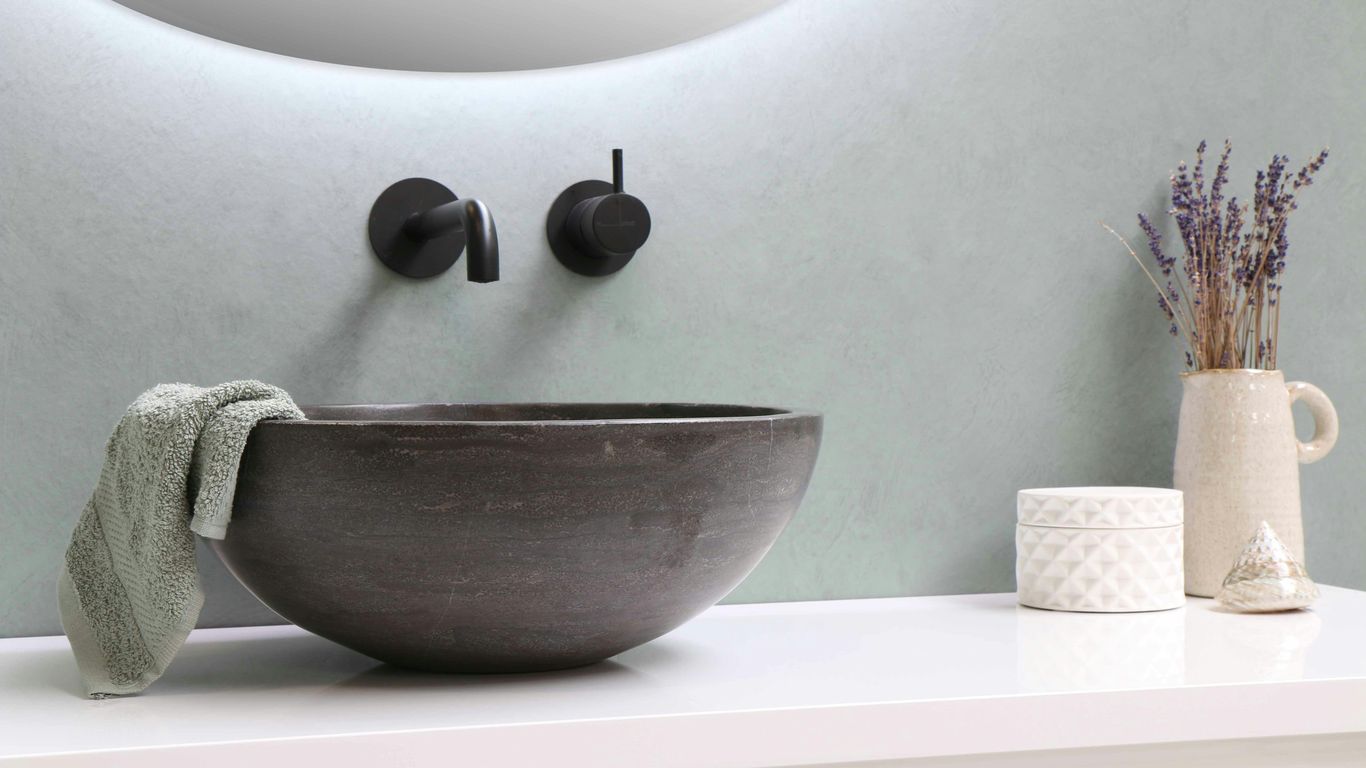
How stone basins differ from ceramic and sintered stone
Ceramic is generally uniform, comparatively light and familiar to most installers. Sintered stone is an engineered material made for consistent performance and appearance, while natural stone has pores, mineral variation and a surface that may change subtly from one piece to another. A stone basin therefore needs more careful selection and sealing advice, rather than being treated as a direct visual substitute for ceramic.
The visual appeal of natural variation
The attraction is often found in details that cannot be repeated exactly: a vein that shifts direction, a cloudy patch of colour or a small mineral inclusion. These are part of the material rather than flaws to be removed. A useful reference is this natural granite basin, where variation in tonality, texture and shade is part of each individual piece. Samples and approval drawings help set expectations, but they cannot make a natural surface uniform.
Where stone basins work best in residential and commercial spaces
A stone basin can suit a powder room, a primary bathroom, a hotel washroom or a restaurant’s guest toilet. It tends to work especially well where the basin is visible as an object, such as on a floating vanity or a quiet stone counter. In a busy commercial setting, the specification should give equal weight to cleaning frequency, impact risk, replacement planning and the availability of suitable maintenance products.
Key limitations to consider before buying
Natural stone is not maintenance-free, and its response to water, soap, cosmetics and cleaning chemicals varies by type and finish. A heavy bowl may also affect the counter, cabinet and wall structure, particularly when it is installed on a slim or floating vanity. The material needs a practical brief, covering daily use, tap location, waste access, ventilation and the desired appearance after years of use.
Marble basins: elegance, patterns and practical considerations
Marble remains popular because it combines a refined surface with geological variation that makes every basin individual. White marbles can make a small room feel brighter, while darker or warmer varieties give a more enveloping effect. The same veining that makes marble appealing can also influence how marks, splashes and joins are perceived. A bathroom marble piece should therefore be selected with both the slab and the intended viewing distance in mind.
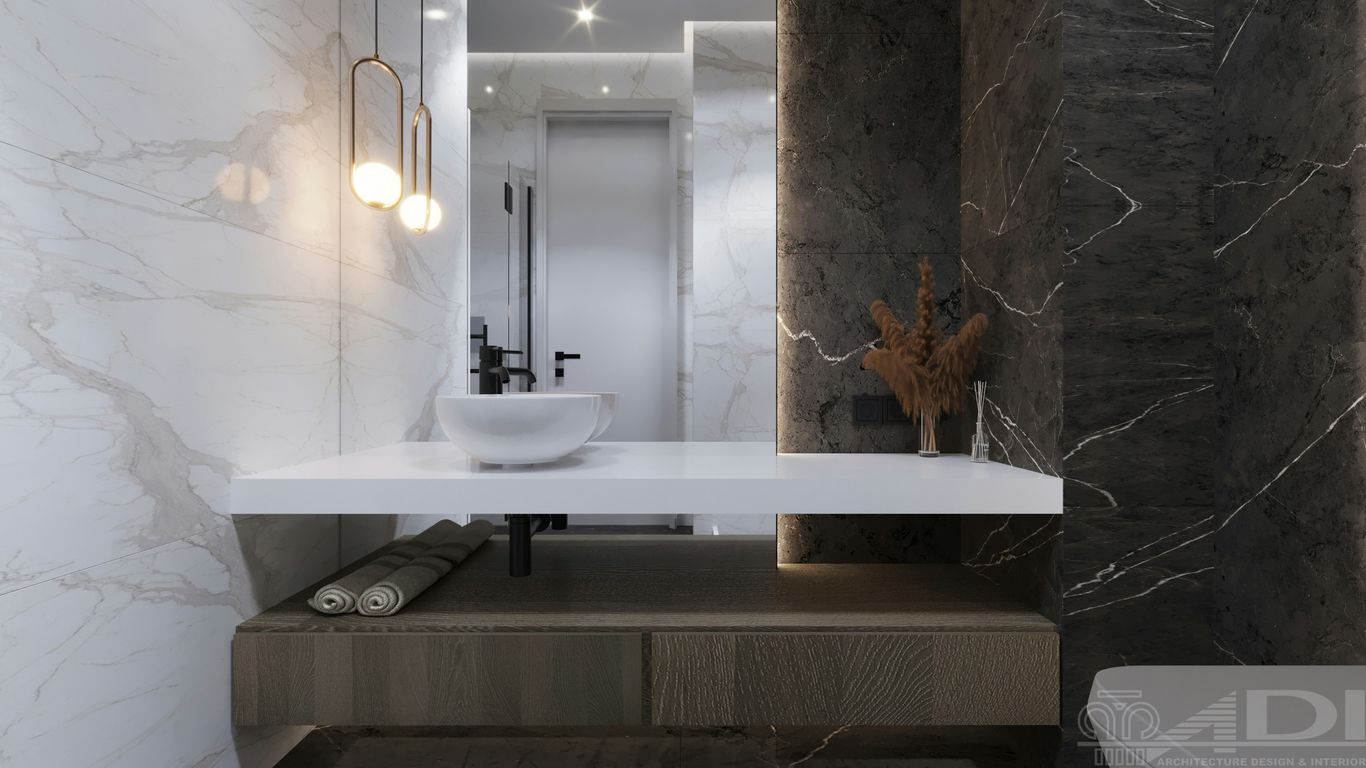
Common marble types and their appearance
Carrara is often associated with a pale ground and softer grey veining, while Calacatta may have stronger, more pronounced lines. Emperador and other brown-toned marbles create a warmer, more graphic look. Names are useful as a starting point, but individual blocks can differ substantially, so a physical sample or a carefully documented selection is more informative than the name alone.
Porosity, staining and sensitivity to acidic products
Marble is porous to varying degrees and can absorb coloured liquids if spills are left unattended. Acids such as vinegar, lemon-based cleaners and some descaling products can etch calcareous stone, leaving a dull patch rather than a removable stain. Cosmetics, hair dye and strongly pigmented soaps deserve particular care around a pale basin. Sealing reduces absorption but does not make the surface impervious.
Honed versus polished marble finishes
A polished finish reflects light and can make veining appear sharper, but water marks and etching may be more noticeable on its reflective surface. Honed marble has a softer, low-sheen appearance that often feels relaxed and hides minor changes more gently. Neither finish removes the need for sensible cleaning; the decision is mainly about touch, reflection, visual depth and how readily everyday marks will show.
When a marble basin is the right choice
Marble is a strong choice when the basin is intended to be a focal point and the owner is comfortable with natural variation and considered care. It can be particularly effective in a restrained bathroom where the stone supplies most of the visual interest. For broader context on selecting stone, finishes and practical use in Singapore, this guide to made-to-order marble furniture offers related considerations that also apply to basin specification.
Travertine and other natural stone options
Travertine has a warmer, more tactile presence than many pale marbles. Its open pores, filled voids and softly layered colour can make a basin feel architectural without being severe. Other stones bring different balances of hardness, porosity, translucency and pattern. Rather than choosing by colour alone, compare the stone’s structure with the demands of the room.
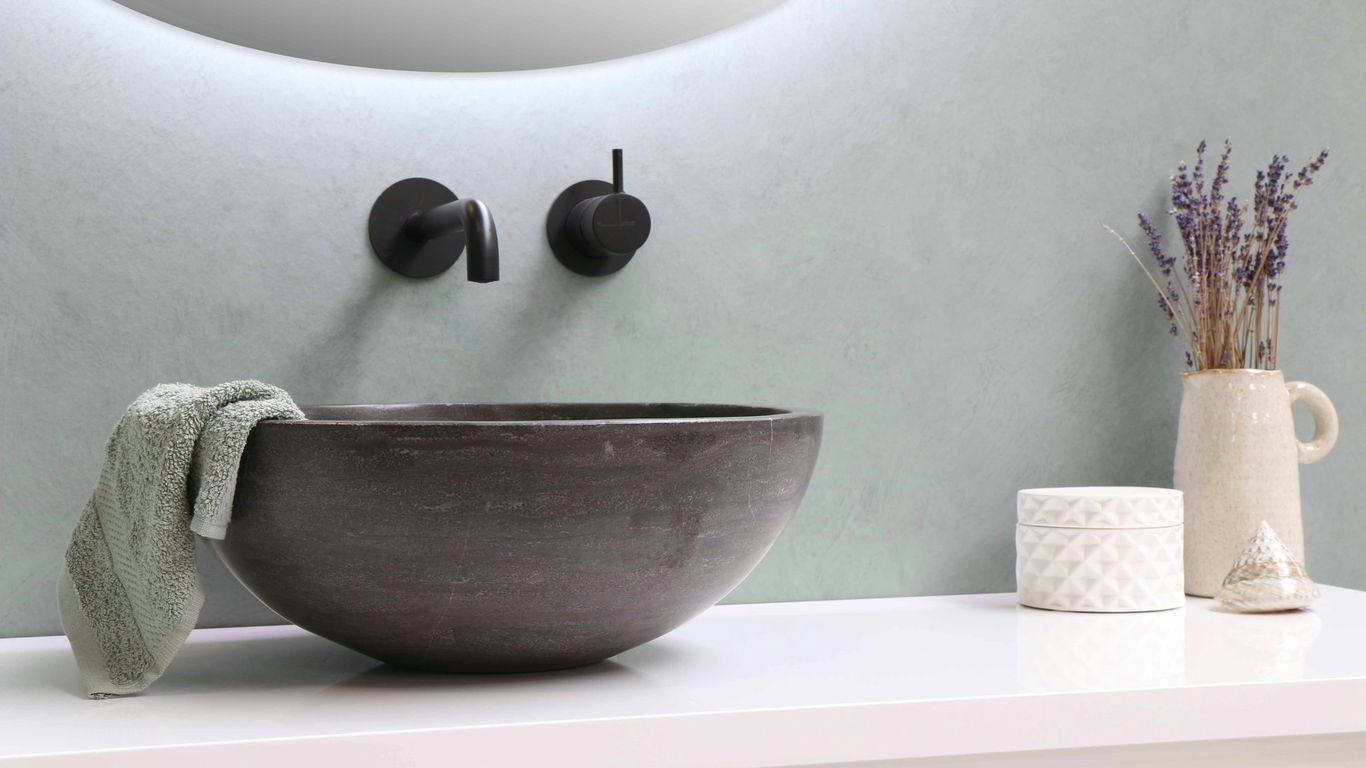
Travertine’s texture, holes and warm colour palette
Travertine commonly ranges from ivory and cream through beige, honey and deeper earthy tones. Its holes may be naturally open, filled during finishing or expressed as part of the design, depending on the intended surface. A filled and honed basin has a quieter appearance, while more visible voids reinforce a rustic, geological character. Ask how the holes have been treated before comparing samples.
Granite, limestone and onyx compared
Granite is usually dense and hard, with granular patterning and a broad colour range. Limestone can have a calm, matte appearance but may be more sensitive to scratching, staining and acids depending on its composition. Onyx is prized for translucent colour and dramatic markings, although it often calls for a more deliberate placement and lighting strategy. These are general tendencies, not guarantees for every variety.
Solid-stone versus carved and composite basins
A solid-stone basin is shaped from a substantial piece of natural material, so its weight and internal structure need to be allowed for. “Carved” describes the forming process rather than a separate stone category; a carved basin may still be made from marble, travertine, granite or another stone. Composite basins use a manufactured mixture and may provide more consistent dimensions, but they should not be described as having the same natural patterning as a solid stone piece.
How stone origin affects consistency and durability
Quarry location, block selection and the part of the block used can influence colour, veining, pore structure and the presence of mineral marks. Even within one named stone, two pieces may not match exactly. For a project with several basins, confirm whether visual coordination is required and how samples will be approved. Production planning is easier when the acceptable range of variation is discussed before cutting rather than after delivery.
Choosing the right stone basin for a Singapore bathroom
The best basin is proportionate to the room, comfortable to use and compatible with the vanity beneath it. Singapore bathrooms often combine compact footprints with frequent water exposure, so a beautiful bowl can feel awkward if its projection, tap position or splash pattern has not been considered. Draw the basin, tap and user clearance together rather than selecting each item separately. This is also the stage to decide whether a quiet neutral stone or a more assertive pattern should lead the room.
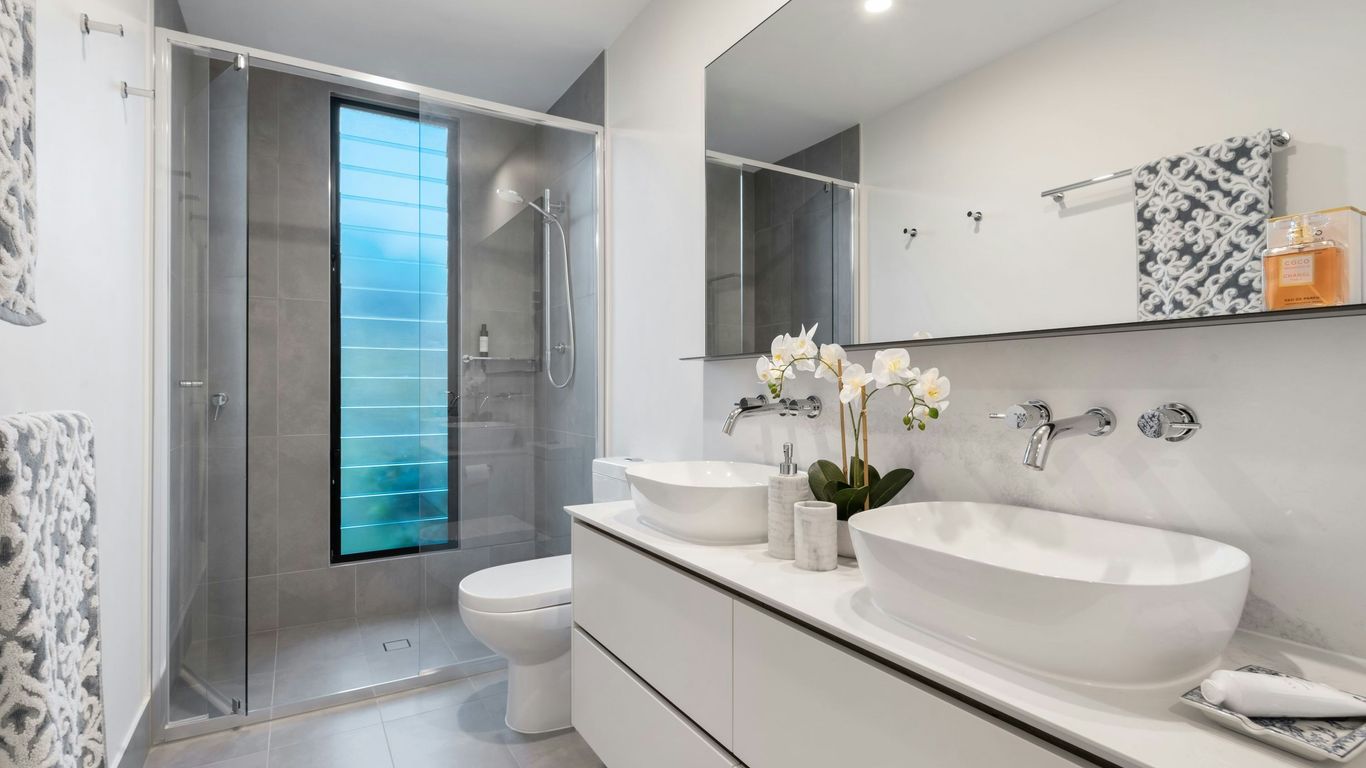
Selecting the size, depth and bowl shape
Measure the available width, front projection and clearance to walls, mirrors and shower screens. A shallow basin may look elegant but can create more splash if the tap stream lands too near the rim, while a very deep bowl can be uncomfortable in a compact vanity. Round, oval, rectangular and softly irregular shapes each affect usable counter space and the way water moves towards the waste.
Matching the basin to vanity units and countertop layouts
A vessel basin leaves the counter visible and can become a sculptural feature, but it raises the finished rim height. An undermount or integrated arrangement produces a quieter profile and may simplify wiping around the edge, subject to the stone and fabrication method. Cabinet doors, drawer fronts, traps and service access all need to be coordinated with the bowl before the countertop is cut.
Coordinating stone colours with tiles and fittings
Look at stone samples beside the actual tile, grout, wall paint and tap finish rather than under showroom lighting alone. Warm travertine can sit comfortably with brushed brass and timber, while a cool marble may work better with chrome, nickel or painted cabinetry. The aim is not to match every surface exactly; a controlled contrast usually gives the basin more definition.
Accounting for humidity, ventilation and water exposure
Humidity does not automatically damage every natural stone, but persistent moisture, poor drying and unsuitable cleaning can increase problems over time. Provide ventilation, allow the counter to drain properly and avoid details that trap standing water around the rim. A practical care schedule should be agreed with the supplier, especially for porous marble or travertine.
Installation requirements for a stone basin
Installation begins well before the basin reaches the bathroom. The approved dimensions, finished height, tap drilling, waste position and access route should be clear to the fabricator, installer and site team. Natural stone can be repaired in some circumstances, but correcting a misplaced drilling or an unsupported counter after delivery is far more disruptive. Geoscenic Stone describes its work as factory-to-order, with pieces cut, formed, finished, inspected and packed for a specific project, which makes drawing approval an important part of the process.
Checking weight, support and wall-load limitations
A natural stone bowl can weigh considerably more than a comparable ceramic basin. Confirm the basin, countertop, brackets, cabinet and fixings as one load path, particularly for a wall-hung vanity. Site conditions, wall construction and access should be checked by the relevant project professionals; a drawing cannot substitute for a structural assessment where one is required.
Choosing countertop, undermount and vessel installation
A countertop vessel is visually direct and usually keeps the bowl easy to see, while an undermount installation places more emphasis on the counter edge and the quality of the cut-out. A semi-recessed option can help when projection is limited. The choice affects finished height, cleaning access, tap placement and the appearance of the junction, so it belongs in the design discussion rather than being left to the installer.
Planning tap, waste and overflow compatibility
Check whether the basin includes an overflow, whether the waste is slotted or unslotted, and whether the tap is wall-mounted, deck-mounted or installed through the basin. Tap reach and spout height should be tested against the bowl shape to avoid water striking the side or splashing beyond the rim. Confirm thread sizes and access to the trap before the cabinet is closed.
Preventing leaks around joints and plumbing connections
The basin should sit on a level, properly prepared surface, with compatible sealant used at the intended junctions. Silicone is not a substitute for accurate cutting, stable support or correctly tightened plumbing. After installation, run water through the system, inspect the waste and trap, and check below the counter before the vanity is put into regular use.
Cleaning and maintaining a natural stone basin
Maintenance is mostly about using mild products consistently and dealing with spills before they sit on the surface. Natural stone should not be treated like a disposable finish, but it also does not need complicated daily rituals. Rinse away soap residue, dry areas that remain wet and follow the stone supplier’s advice for the selected finish. The routine should be simple enough that everyone using the bathroom will follow it.
Everyday cleaning products and techniques
Use a soft cloth or non-abrasive sponge with a pH-neutral stone cleaner, then rinse and dry the basin. Avoid scouring powders, wire pads and unapproved acidic or alkaline products. Do not leave bottles, wet cloths or metal objects sitting on the rim for long periods, as trapped moisture and residue can mark some stones.
Sealing schedules for marble and travertine
Sealing frequency depends on porosity, use, the original sealer and the way the basin is cleaned. A heavily used hotel washroom may need a different review cycle from a lightly used guest bathroom. Instead of following a fixed calendar blindly, ask the supplier how to test the surface and when resealing is recommended. Sealer reduces absorption; it does not prevent etching or make poor installation harmless.
Removing soap marks, limescale and everyday stains
Fresh soap marks can often be removed with a neutral cleaner and a soft cloth. Limescale is more difficult because common acidic descalers may etch marble and other calcareous stones, so use a stone-safe product and test it in an inconspicuous place first. For coloured stains, identify whether the mark is oil-based, organic or metallic before choosing a treatment rather than scrubbing at random.
Repairing chips, scratches and surface wear
Small chips and scratches may be repairable by a stone specialist, although the result depends on the stone, location, depth and finish. A polished repair may reflect differently from the surrounding surface, while a honed repair can have a softer transition. Photograph the damage, stop using aggressive products and seek advice before attempting a home repair kit.
The video placeholder can be used alongside a care demonstration, but written instructions from the stone supplier should remain the reference for the particular basin. Different stones and finishes respond differently, even when they look similar at first glance.
Buying a stone basin in Singapore
Buying locally gives a project team the opportunity to discuss dimensions, material selection, finishing and site conditions in the context of Singapore construction. A ready-made basin may simplify selection, while a factory-to-order piece can be shaped around a specific vanity, tap layout or design drawing. Neither route is automatically better; the right choice depends on tolerances, programme, access and how much control the project requires. Allow time for approvals rather than treating the basin as a last-minute accessory.
Comparing custom-made and ready-made basins
Ready-made basins can be convenient where standard dimensions suit the room and the available finish is acceptable. Custom work is more appropriate when the bowl must coordinate with a stone top, unusual wall condition, several matching units or a particular drilling layout. For a made-to-order piece, confirm what is included in the approved drawing and how natural variation will be assessed before production.
Questions to ask Singapore suppliers and fabricators
Ask which stone is proposed, how the surface will be finished, whether the basin is sealed and what support is required. Also ask how dimensions are measured, how drillings are confirmed, how the piece is packed, and who is responsible for installation and final plumbing. Geoscenic Stone makes made-to-order marble, travertine and onyx pieces for specified dimensions, finishes and stone choices, so a quotation should be read as a project-specific document rather than a generic shelf price.
Evaluating dimensions, finish quality and warranties
Request a dimensioned drawing showing the overall size, bowl depth, wall thickness, tap holes, waste and overflow where applicable. Inspect samples for consistency of finish, but remember that a sample cannot represent every vein or mineral mark in a future piece. Warranty terms should explain what is covered, for how long and whether installation, misuse, staining or natural variation is excluded.
Understanding delivery, installation and total costs
A realistic budget may include stone selection, fabrication, edge work, drilling, packing, delivery, site access, installation and plumbing. Weight and the route into the property can affect handling requirements, particularly for upper floors or restricted lifts. Geoscenic Stone prepares quotations around the individual piece, its weight, packing, destination, site access and installation requirements; clients should ask for the same level of clarity from any supplier. For a project that needs tailored dimensions, you can request a quotation after the key information has been gathered.
A comparison table can help separate the visual decision from the practical one:
| Decision | What to confirm | Why it matters |
|---|---|---|
| Stone type | Marble, travertine, granite, limestone or onyx | Affects porosity, pattern, weight and care |
| Finish | Honed, polished or another specified surface | Changes reflection, touch and visibility of marks |
| Installation | Vessel, countertop, undermount or recessed | Determines finished height, support and cleaning access |
| Production | Ready-made or made-to-order | Influences dimensions, approvals and programme |
The table is a starting point, not a substitute for a drawing and site check. A clear quotation should identify assumptions so that transport, access or installation costs do not appear unexpectedly near handover.
Geoscenic Stone makes made-to-order furniture and architectural pieces in Singapore, with each piece produced to an approved drawing through material selection, cutting, finishing, inspection, packing and delivery. That approach can be useful when a basin needs to belong precisely to its vanity, room and project schedule, while still leaving room for the natural character of the selected stone.
Conclusion
A stone basin can give a Singapore bathroom depth, texture and a lasting sense of material presence, provided its limitations are part of the design from the beginning. Compare marble, travertine and other stones by their structure and maintenance needs, then resolve dimensions, support, plumbing, finish and delivery before fabrication. With realistic expectations about natural variation and a simple care routine, the basin can become a considered architectural detail rather than a fragile afterthought.
Frequently Asked Questions
Is a natural stone basin suitable for a Singapore bathroom?
Yes, provided the stone, finish, support and maintenance routine are appropriate for the room. Good ventilation, correct installation and prompt removal of standing water help reduce avoidable problems.
Which is better for a basin, marble or travertine?
Neither is universally better. Marble offers varied veining and a refined appearance, while travertine brings warmer colour and a more textured surface; the decision should reflect the desired look, care routine and installation conditions.
Does a stone basin need to be sealed?
Many marble and travertine basins benefit from sealing, but the correct product and schedule depend on the stone and finish. Sealing reduces absorption but does not prevent acid etching, scratches or poor drainage.
Can acidic bathroom cleaners be used on marble?
They should generally be avoided because acids can etch marble and other calcareous stones. Use a pH-neutral, stone-safe cleaner and follow the supplier’s recommendations for limescale treatment.
Are stone basins heavier than ceramic basins?
Usually, yes. The basin, countertop, cabinet, brackets and wall fixings should be considered together, especially when the vanity is wall-hung or the stone is particularly thick.
Should a stone basin be polished or honed?
A polished finish is reflective and can emphasise veining, while a honed finish has a softer, lower-sheen appearance. The choice is aesthetic as well as practical because each finish shows water marks and surface changes differently.
What should be included in a stone basin quotation?
The quotation should clarify the stone, dimensions, finish, edge details, drillings, sealing, packing, delivery, site access and installation responsibilities. It should also explain how natural variation, tolerances and warranty matters will be handled.