
Key Takeaways
A marble dining table in Singapore can cost well below S$1,500 or rise beyond S$4,000, depending on the stone, dimensions and construction. The most useful comparison is not simply the price tag, but what is included in the finished piece.
- Entry-level tables may use smaller tops, simpler bases or engineered stone alternatives.
- Mid-range prices often cover better materials, more generous dimensions and stronger construction.
- Premium tables reflect distinctive slabs, thicker tops, complex bases and bespoke detailing.
- Delivery, access, sealing, chairs and installation can materially change the final budget.
- Samples, approved drawings and like-for-like quotations make comparisons more reliable.
What is the typical marble dining table price in Singapore?
The marble dining table singapore price depends on more than the word “marble” in a product listing. Size, stone selection, base design, finish and whether the piece is made to order all affect the quotation. As a broad planning guide, Singapore shoppers can think in three price bands, while remembering that individual pieces may fall outside them.
Entry-level marble dining tables under S$1,500
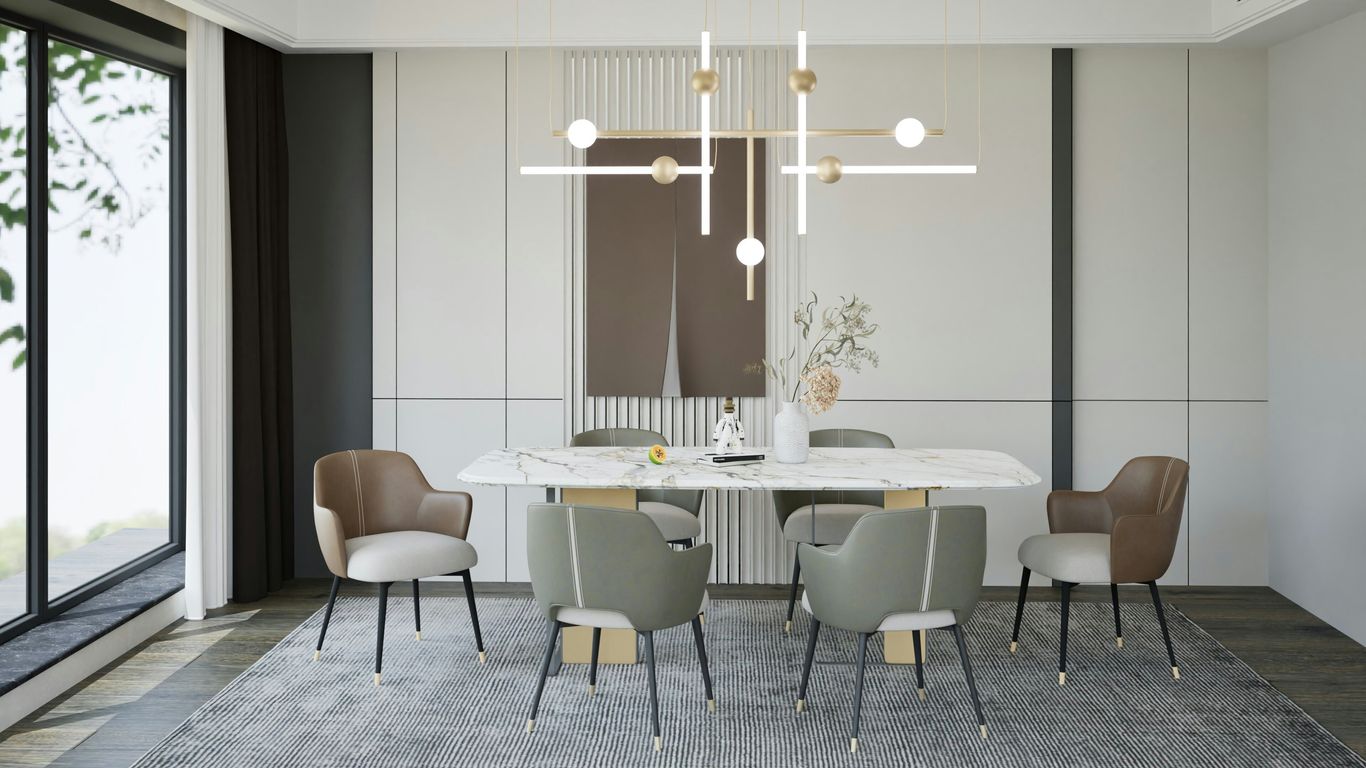
Tables below S$1,500 are more likely to be compact, ready-made pieces with a straightforward silhouette. They may use a thinner top, a simpler pedestal or metal base, or an engineered stone surface rather than a carefully selected natural slab. This price band can work well for a smaller flat, especially when the table is used for everyday meals rather than frequent entertaining.
Check what the quoted price actually covers. A low starting figure may exclude chairs, delivery, installation or any treatment for the surface, and the visible veining may not resemble the showroom photograph exactly.
Mid-range tables from S$1,500 to S$4,000
The S$1,500–S$4,000 range gives buyers more room to choose a six-seater format, a heavier base or a more distinctive natural stone. You may also find better attention to edge profiles, slab selection and finishing at this level. For many Singapore homes, this is the practical middle ground between a basic dining set and a highly individual statement piece.
A quotation in this band should still be read carefully. Ask for the top dimensions, thickness, stone description, finish, base material and delivery terms rather than comparing only the headline amount.
Premium and statement tables above S$4,000
Above S$4,000, the price often reflects scale, rarity or design complexity. A large table may require a substantial slab, carefully planned joins, reinforced packing and more demanding delivery arrangements. Sculptural bases, bookmatched veining, thickened edges and unusual shapes can also move a piece into this category.
Premium does not automatically mean more suitable for every room. A striking table can overwhelm a compact dining area, so the design should be judged alongside circulation space, lighting and the intended seating pattern.
Why custom-made designs can cost more
A custom table is priced around a particular project rather than pulled from a warehouse. Dimensions, stone, finish, edges and drillings may be confirmed through an approved production drawing, with the quotation also accounting for weight, packing, destination and site access. Geoscenic Stone describes this factory-to-order approach as producing made-to-order marble, travertine and onyx furniture and architectural pieces for specific projects.
That process can cost more than a standard catalogue item because material selection, fabrication, inspection and packing are tied to one commission. It can nevertheless reduce compromises when a room has an awkward footprint or when the desired top, base and finish need to work together.
Which factors affect the price of a marble dining table?
Two tables with similar dimensions can have very different quotations because the stone and construction are not identical. Country of origin, slab quality, thickness and the amount of fabrication all matter. In Singapore, access and delivery planning can be just as relevant as the material itself, particularly for a heavy top.
Marble type, grade and country of origin
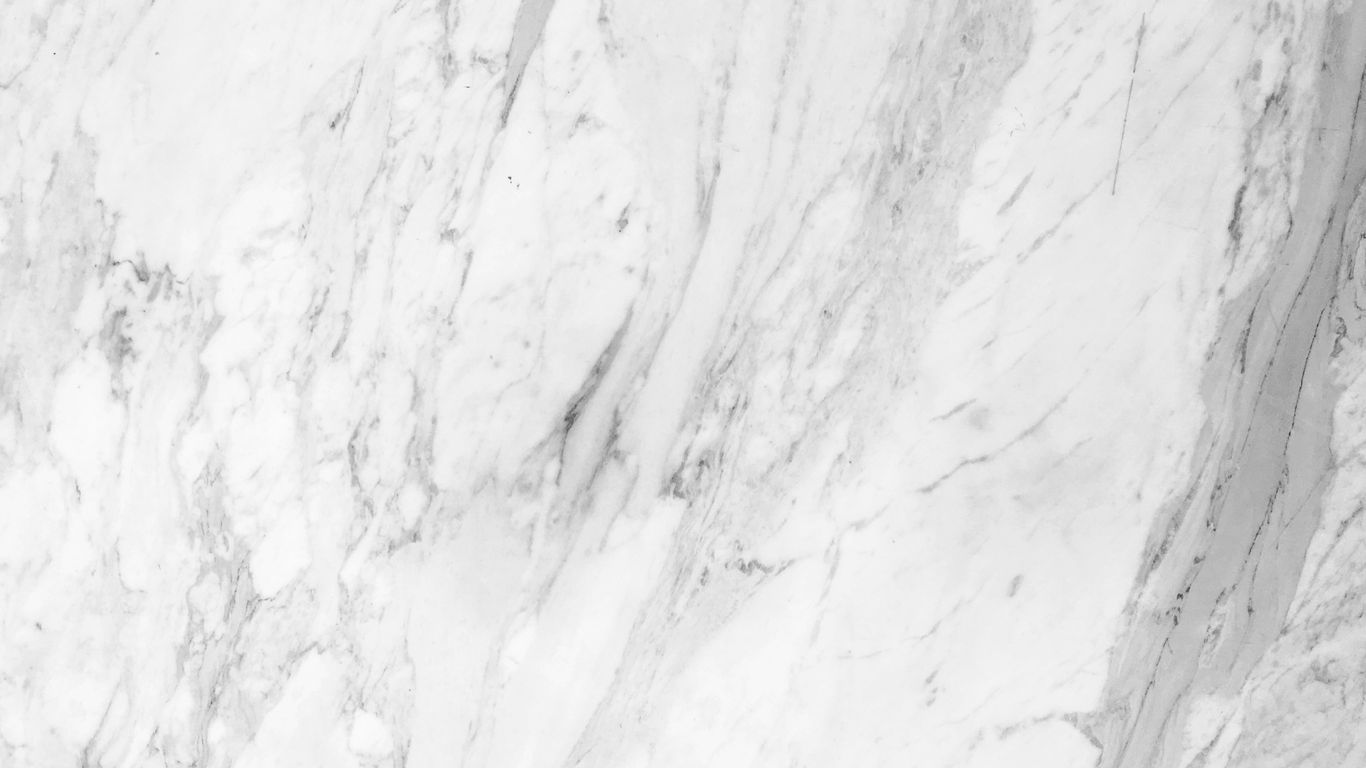
Natural marble varies in colour, veining, figuring, porosity and mineral marks. A calmer stone with consistent background tones may be easier to specify than a dramatic slab where the most attractive section needs to be positioned carefully. Rarer stones or slabs with more demanding visual selection generally command a higher price.
Ask whether the quotation refers to a named stone, a broader colour family or an engineered alternative. If the exact slab has not yet been selected, allow for natural variation rather than expecting a uniform pattern.
Table size, thickness and seating capacity
A larger top uses more material and may need additional structural support. Thickness affects visual weight, edge treatment and sometimes the way the top is packed and moved through a building. Seating capacity also changes the footprint: a comfortable six-seater needs more floor area than a compact four-seater, even before chairs and circulation are considered.
Measure the room, not just the wall where the table will sit. Leave enough clearance for chairs to pull out and for people to pass behind them without turning the dining area into a bottleneck.
Base materials and construction quality
The base affects both the appearance and the engineering of the table. Timber, metal, stone and mixed-material bases have different fabrication requirements, while a broad pedestal may need careful planning to preserve legroom. The connection between the top and base should also be clear, particularly for a heavy natural-stone surface.
A more useful question than “Is the base premium?” is whether it is appropriate to the top’s weight, the intended use and the room’s proportions. Construction details that are invisible in a photograph can still influence longevity and installation.
Finish, edge profile and design complexity
Polished, honed and leathered finishes can make the same stone look and feel quite different. Likewise, a simple eased edge is usually less involved than a bullnose, waterfall edge or shaped perimeter. Cut-outs, joins, radiused corners and matching the veining across components add further fabrication steps.
When reviewing a quotation, separate the visual decisions from the structural ones. This helps you keep the features that matter most while avoiding complexity that has little practical benefit.
How do different marble options compare in cost and practicality?
Material choice is a balance between appearance, use and care. Natural marble has variation that gives each slab its character, while engineered and sintered alternatives can offer a more controlled appearance or different maintenance expectations. A clear comparison should include the surface, not just the colour shown in a sample.
Natural marble versus sintered stone and engineered alternatives
Natural marble is a stone with individual veining and mineral character, so two pieces described by the same name may not look identical. Sintered stone and other engineered alternatives can provide different performance and appearance characteristics, but they are not interchangeable with natural marble. The right choice depends on whether the priority is natural variation, a particular visual effect, daily practicality or budget control.
A useful marble dining table guide can help compare natural stone, engineered stone and porcelain while considering size, shape and the conditions of a Singapore home. Bring that comparison back to your actual habits: frequent entertaining, children, hot serving dishes and how much routine care you are willing to provide.
Popular marble colours and veining patterns
White and pale marbles can make a dining room feel lighter, while darker stones create a stronger visual anchor. Fine veining tends to read quietly from a distance; bold movement can become the main feature of the room. Neither is inherently better, but a dramatic slab needs to be considered with the floor, cabinetry and wall colour.
Request photographs or samples that show the material honestly, while understanding that a small sample cannot represent every part of a full slab. The final piece may include tonal shifts, open veining or mineral marks that are natural to the material.
Honed, polished and other surface finishes
A polished surface reflects more light and can emphasise colour and veining. Honed finishes are softer and less reflective, while leathered finishes introduce a tactile texture. Each finish changes the visual character and the way marks, water and cleaning are perceived.
Before choosing, ask how the proposed finish behaves in ordinary use and what care it requires. A finish selected for its quiet appearance may be preferable to a high-shine surface if the table is used heavily every day.
Sealing, staining and maintenance considerations
Marble is porous to varying degrees, and sealing can help reduce the risk of staining but does not make the surface indestructible. Acidic foods and drinks may etch some finishes, while grit, rough ceramics and careless handling can mark the top. Maintenance should therefore be treated as part of ownership, not an afterthought.
The price should be considered alongside the care routine. A more affordable table may not be good value if its finish is unsuitable for the household, while a higher initial spend can be reasonable when the material and use are properly matched.
How much should you budget for different table sizes?
Size is one of the clearest drivers of the final price, but it also determines whether the table will feel comfortable in the room. Singapore apartments often need a careful balance between seating and circulation. Use the following ranges as planning guidance rather than fixed retail prices, since stone, base and fabrication can shift the total substantially.
Four-seater tables for compact dining areas
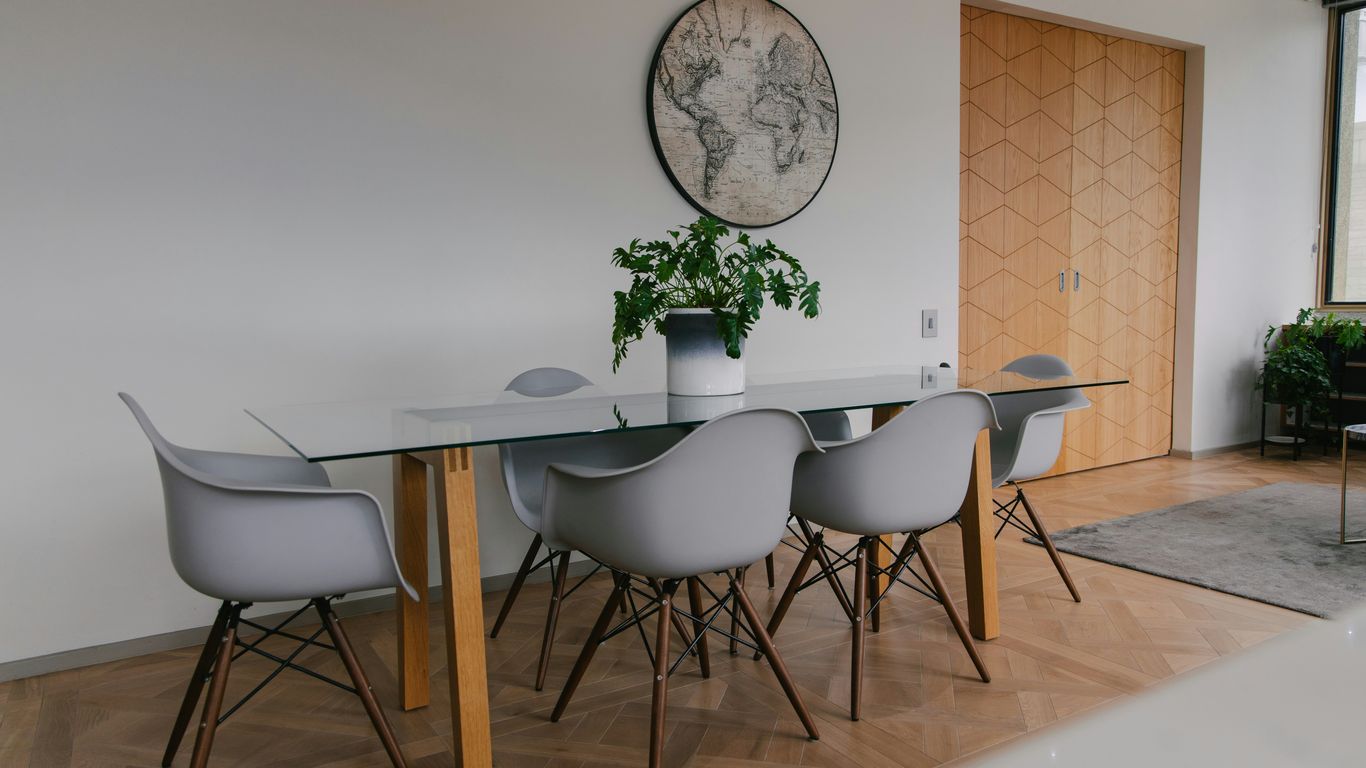
A four-seater is often the easiest format for a compact dining zone or open-plan kitchen. A smaller top can reduce material use and delivery difficulty, although a thick natural-stone slab or sculptural base can still raise the price. Round and square formats may make movement easier where a rectangular table would obstruct a walkway.
Measure with the chairs in place. The table may fit on paper but feel cramped once seats are pulled back for daily use.
Six-seater tables for typical apartments
A six-seater is a common compromise for households that need everyday practicality with occasional guests. It usually requires a more generous footprint and may involve a heavier top, stronger base and more involved access planning than a four-seater. For many buyers, this is the range where the choice between ready-made and custom-made construction becomes especially meaningful.
Set aside room for serving dishes and elbows, not only the number of chairs. A slightly smaller table that allows comfortable circulation can be more useful than a larger one that dominates the room.
Eight-seater and larger tables for entertaining
Eight-seater and larger tables are naturally more material-intensive. Their weight may affect the delivery route, packaging, lifting method and installation labour, especially in a high-rise building. Long tops can also make the character of the slab more prominent, so stone selection deserves close attention.
For a project of this scale, obtain a written quotation based on confirmed dimensions and access conditions. Small assumptions about lifts, stairs or narrow corridors can become expensive when the table is already in production.
Round, oval and extendable designs
Round and oval tables can improve conversation and soften circulation, while extendable designs offer flexibility when guests arrive. Their curved edges and mechanisms may require additional fabrication, and a round top can need a carefully proportioned central base to preserve legroom. A guide to round marble dining tables is useful when comparing diameter, seating capacity and room flow.
The most economical shape is not always the cheapest to live with. Choose the format that fits the room’s movement patterns first, then compare its fabrication cost with a rectangular alternative.
What extra costs should you include in your Singapore budget?
The table price is only one part of the purchase. A stone top is heavy, and the route from the workshop or warehouse to the dining room can involve packaging, lifting, protection and assembly. A realistic budget leaves room for these practical details rather than treating them as surprises.
Delivery and installation charges
Delivery may depend on distance, packaging size, floor level, lift availability and whether the piece arrives assembled or in separate components. Installation can involve levelling the base, positioning the top and checking that the finished table is stable. These items may be quoted separately, so ask for them explicitly.
For a made-to-order piece, confirm whether the quotation includes packing, delivery and installation, or whether those costs are provisional. The answer should be specific to the project and destination.
HDB lift, stair-access and site constraints
Lift dimensions, corridor widths, door clearances and stair turns can determine whether a top can enter the home safely. Protective measures may also be needed for walls, floors and shared building areas. If access is difficult, a split design or different base arrangement might be worth considering before fabrication begins.
Provide accurate site information early. A quick measurement of the route can prevent the costly mistake of discovering that the dining room is accessible but the building entrance is not.
Protective coatings, sealing and aftercare
Ask whether sealing or another protective treatment is included, recommended or left to the owner. The suitable care routine depends on the material and finish, and aftercare may be offered as a separate service. Cleaning products should be compatible with the surface rather than chosen solely for convenience.
Keep written care instructions with the quotation and production information. That makes it easier for everyone in the household to follow the same routine.
Chairs, lighting and matching dining furniture
A table can look inexpensive until the cost of chairs, pendant lighting, a rug and storage is added. Chair width affects the usable seating count, while lighting needs to suit the table’s shape and leave enough head clearance. Matching stone furniture can also increase the overall spend, even when the table itself remains within budget.
Prioritise the table’s dimensions and daily comfort first. Accessories can then be selected in stages without forcing the main piece to fit an unrealistic room plan.
How can you choose a marble dining table within your budget?
A sensible purchase begins with the room and the way it is used, not with a photograph of an attractive table. Decide which characteristics are essential and which are optional. This makes it easier to compare quotations without losing sight of what the table needs to do.
Set a budget based on room size and usage
Start with a total project budget rather than a top-only figure. Include the table, access, installation, seating and any care products that you expect to need. Then consider how often the table will be used, whether it must accommodate guests and how tolerant the household is of natural marks.
A clear brief saves money because it reduces late changes. State the preferred size, seating capacity, stone family, finish, edge and access conditions before asking for detailed pricing.
Compare ready-made and custom-made options
Ready-made furniture can make it easier to see a finished form and understand the starting price. Custom-made work is more suitable when the room, dimensions or material selection require a specific solution. The two should not be compared as if they include the same process or level of specification.
For a factory-to-order commission, Geoscenic Stone works from an approved drawing and carries out material selection, cutting, finishing, inspection, packing and delivery for the project. That approach is useful when dimensions and details need to be settled before production rather than inferred from a showroom example.
Check samples, slabs and colour variation in person
Natural stone should be assessed as a variable material. A sample can show the general tone and finish, but a full slab reveals the scale and direction of the veining more clearly. Ask how the selected section will be used and whether joins, edges or cut-outs will affect the appearance.
Do not expect a photographed example to be reproduced exactly. Variation in tone, figuring, porosity and mineral marks is part of natural marble, not necessarily an indication of poor quality.
Assess warranties, repairs and retailer service
Ask what the warranty covers, how damage is assessed and who handles repairs or replacement parts. Clarify whether the base, top, finish and installation are covered under the same terms. A responsive supplier should also explain tolerances, care expectations and what happens if site conditions change.
Keep the quotation, approved drawing, material information and care guidance together. Those documents make the final result easier to assess and provide a useful reference if a question arises later.
How can you get better value when buying a marble dining table?
Value is not the same as the lowest initial price. A table that fits the room, arrives safely and remains practical may be better value than a cheaper piece that requires compromises or costly changes. The strongest comparison looks at specification, service and long-term use together.
Compare like-for-like specifications between retailers
Put each quotation into the same format before comparing it. Record dimensions, thickness, stone, finish, edge, base, delivery, installation and aftercare separately. If one supplier has not specified an item, treat the price as incomplete rather than assuming it is included.
This simple method often explains why apparently similar tables differ in price. It also gives you a clearer basis for asking questions without reducing the conversation to a single number.
Time promotions, showroom sales and clearance offers
Promotions and clearance offers can reduce the starting price, but inspect the conditions carefully. Confirm whether the item is a fixed piece, whether the stone is already selected and whether the dimensions suit your room. A saving is less useful if delivery, alteration or access costs remove the difference.
Made-to-order work may follow a different pricing structure because the material and fabrication are assigned to a particular project. Ask what is available now and what will be produced specifically for your order.
Avoid paying for features you do not need
Complex edges, elaborate bases and rare stones can be beautiful, but they should earn their place in the budget. Consider whether the feature improves comfort, durability or the visual relationship with the room. If not, a simpler detail may provide a cleaner result and a more controlled price.
A practical shortlist might include these priorities:
- Confirm the correct dimensions and circulation space.
- Choose a stone and finish suited to daily use.
- Keep the base stable, proportionate and comfortable for legs.
- Pay for delivery and installation planning rather than last-minute fixes.
These choices protect the parts of the purchase that affect everyday satisfaction most. Decorative additions can be revisited after the essentials are settled.
Balance upfront price with durability and resale value
Consider how long you expect to keep the table and whether it may move to another home. A neutral shape and well-documented material can be easier to live with, while a highly personal design may have a narrower appeal. Natural stone also brings variation, so future buyers should receive realistic information about its character and care.
A quotation from Geoscenic Stone can be requested when a made-to-order stone piece needs to be assessed around its dimensions, material, finish and destination. The useful comparison is the complete delivered outcome, not merely the factory price.
Request A Considered Quotation
If you have a room size, preferred seating capacity or stone in mind, speak with Geoscenic Stone about a made-to-order piece shaped around the project. Request a quotation with the relevant dimensions and access details so the scope can be considered clearly.
Conclusion
The cost of a marble dining table in Singapore is shaped by stone selection, size, construction, finish and the practical work involved in delivering a heavy piece safely. Set a whole-project budget, compare equivalent specifications and accept natural variation as part of the material. With those points settled early, it becomes much easier to choose a table that feels considered rather than merely inexpensive.
Frequently Asked Questions
What is the average marble dining table price in Singapore?
A broad planning range is under S$1,500 for simpler compact options, S$1,500–S$4,000 for many mid-range tables and above S$4,000 for larger, more distinctive or complex pieces. Exact prices depend on the stone, dimensions, base and what the quotation includes.
Is natural marble more expensive than engineered stone?
It can be, particularly when the natural slab is rare, visually selective or heavily fabricated. Engineered alternatives may offer different pricing and maintenance characteristics, so compare the complete specification rather than material names alone.
How much space should I leave around a dining table?
Leave enough room to pull chairs out and allow people to pass behind them comfortably. The exact clearance depends on the room layout and chair dimensions, so measure the table and seating together rather than the tabletop alone.
Does a marble dining table need to be sealed?
Many marble surfaces benefit from suitable sealing, but sealing does not make them completely stain-proof or etch-proof. Follow care guidance appropriate to the particular stone and finish.
Are round marble dining tables practical for small homes?
They can be practical because the absence of corners may improve movement and conversation. However, the diameter still needs to provide enough space for diners while preserving circulation around the table.
What extra costs should I budget for?
Allow for delivery, installation, access requirements, sealing or aftercare, chairs, lighting and other dining furniture. These may be included, excluded or priced provisionally depending on the individual quotation.
Should I choose a ready-made or custom-made table?
Ready-made tables can suit straightforward spaces and fixed dimensions, while custom-made tables are useful when the room, stone, finish or base needs a specific solution. Compare the full process, lead time and included services before deciding.