
Key Takeaways
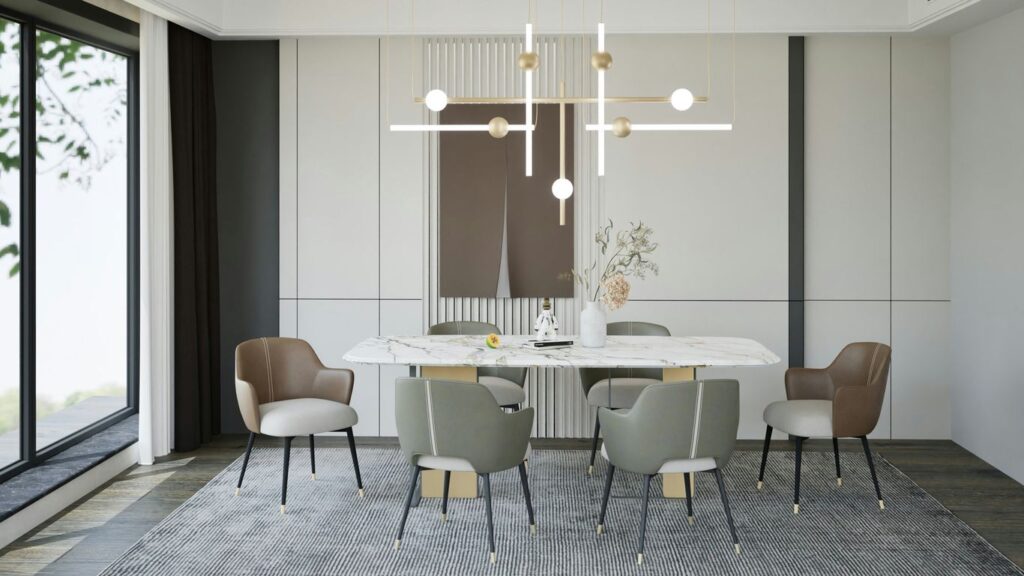
A marble dining table can be both a practical centrepiece and a defining architectural detail in a Singapore home. The best choice depends on the stone, proportions, finish, base and the realities of getting it into the room.
- Natural marble has individual veining, tone and mineral variation, so no two slabs are exactly alike.
- Polished, honed and leathered finishes create different levels of reflection, texture and maintenance.
- Table dimensions should account for seating, circulation, doors, lifts and service access—not just the dining area.
- A suitable base must support the stone securely while leaving enough legroom for everyday use.
- Made-to-order work is useful when a room, slab, edge or access route requires precise coordination.
Understanding marble top dining tables in Singapore
A marble top dining table in Singapore is often chosen for its cool surface, visual depth and ability to anchor an open-plan interior. Yet marble is not simply a decorative skin placed over a table. It is a natural stone with its own porosity, mineral structure, weight and response to use. Understanding those characteristics makes it easier to choose a table that remains enjoyable rather than demanding.
The decision also involves more than the slab itself. The base, edge, finish, dimensions and installation route all affect how the completed piece feels in the home. A well-proportioned table can make a compact dining area feel settled, while an oversized one can obstruct circulation even when the tabletop looks beautiful in isolation.
What makes marble different from engineered stone and porcelain
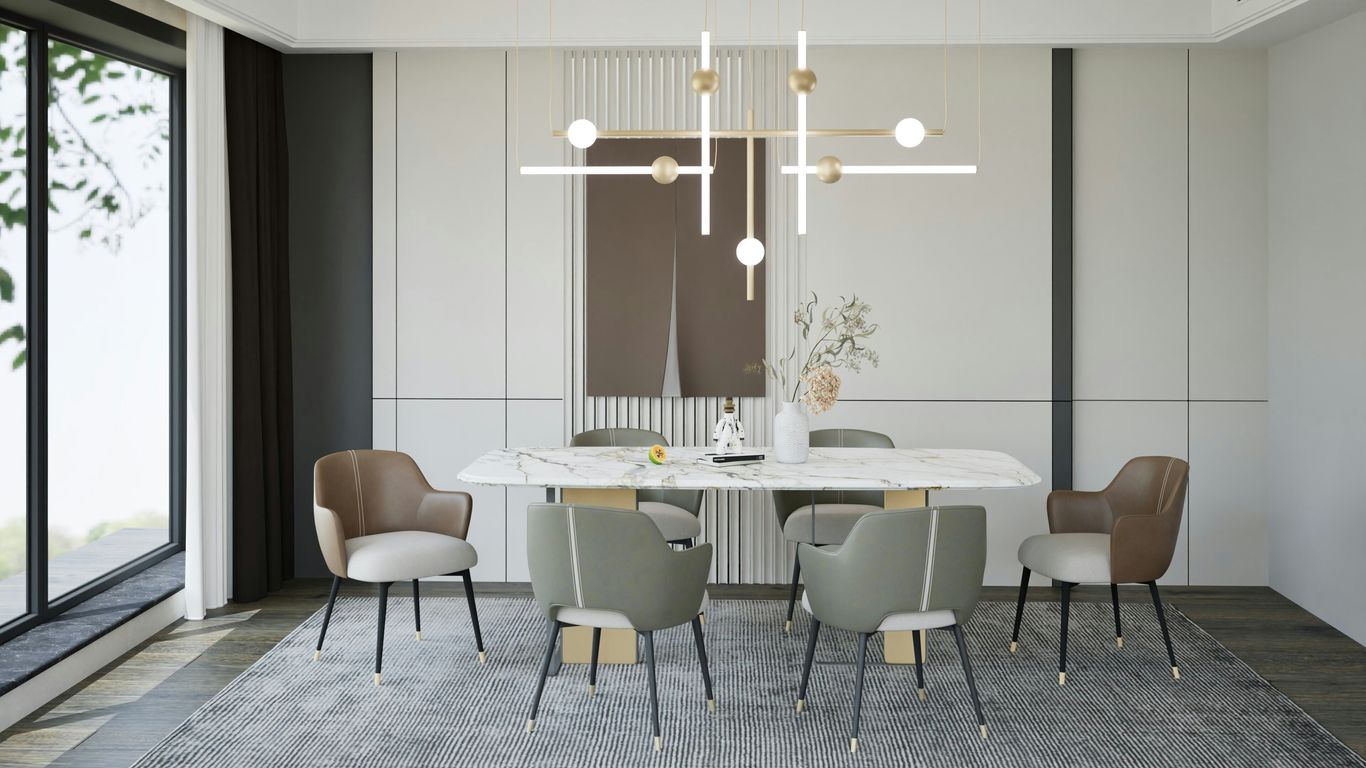
Natural marble is quarried stone formed through geological processes, so its veining and mineral marks are part of the material rather than a printed surface. Engineered stone is manufactured from a mix of materials, while porcelain is produced as a dense ceramic surface; each has different visual and technical characteristics. The right comparison is therefore not simply which material looks most luxurious, but which surface suits the household’s habits and tolerance for patina.
Marble also brings substantial weight and a tactile coolness that can be part of its appeal. Those qualities affect fabrication, support and delivery, particularly in an apartment where lift dimensions and corridor turns may limit what can be brought in as one piece.
Why natural veining makes every tabletop unique
Veining may be fine and linear, cloudy and layered, or concentrated into a dramatic area of the slab. Even slabs from the same quarry can vary in background tone, figuring, porosity and mineral marks. A photographed reference can therefore communicate a general direction, but it cannot guarantee the exact appearance of a future tabletop.
For a large dining surface, the placement of the cut matters as much as the overall colour. A fabricator can discuss how the dining edge, centreline and any joins will interact with the pattern, helping the finished table feel intentional rather than randomly cropped.
How Singapore’s climate affects marble furniture
Singapore’s warm, humid climate does not make marble unsuitable for indoor dining furniture, but it does reward sensible care. Condensation from cold drinks, wet crockery and food acids can leave marks if spills are allowed to sit. Air-conditioned interiors can also create a different daily rhythm from balconies or semi-outdoor areas, so the intended location should be made clear before material and finish are confirmed.
The practical response is straightforward: use coasters and mats, wipe spills promptly and follow the care guidance supplied with the stone. A properly supported and appropriately finished indoor table can be a durable piece, but it should not be treated as completely maintenance-free.
The advantages and trade-offs of choosing marble
Marble offers depth that is difficult to reproduce: light moves across its crystals, and natural veining gives a table a sense of place. It can sit comfortably in a restrained interior or become the main visual statement in a dining room. Its trade-off is that acids may etch some surfaces, porous areas may stain, and everyday use can gradually create a patina.
That balance is often the appeal. Natural variation is part of the design, not an inconsistency to be eliminated. Clients who want a perfectly uniform, highly resistant surface may prefer another material, while those who enjoy a living surface may find marble becomes more expressive over time.
Choosing the right marble for your dining table
Choosing stone begins with the room’s atmosphere, but it should end with a close look at the actual material. White marble can brighten a darker interior; a deep-toned stone can give an open room more visual weight. Neither is automatically better, and the same slab can appear different under daylight, warm pendant lighting and cool ceiling lights.
Ask to see representative samples early, then assess a larger slab or detailed selection before fabrication where possible. This is especially useful when the table has a wide top, prominent veining or a custom edge.
Popular marble varieties and their visual characteristics
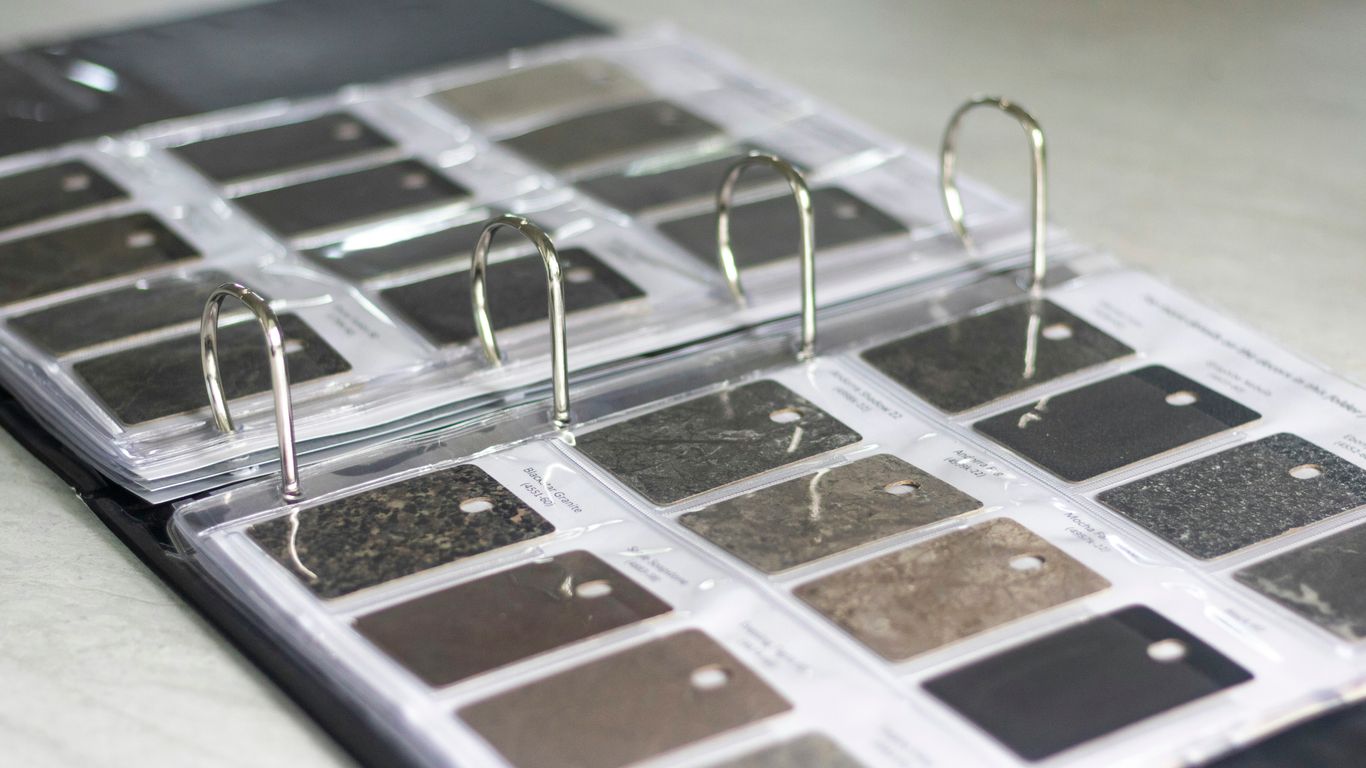
Common marble families include pale stones with grey veining, warmer beige or cream varieties, and darker stones with white, gold or rust-coloured movement. Names can vary between suppliers, so the commercial name alone should not be treated as a complete description of the slab. Background tone, vein scale and the amount of open or cloudy pattern are usually more helpful when comparing options.
Consider how much of the surface will remain visible between plates, placemats and chairs. A fine, quiet pattern may read as a calm field from across the room, whereas bold movement can make the table a more graphic focal point.
Light marble, dark marble and statement veining
Light marble reflects more ambient light and can make a compact dining zone feel airy, though pale surfaces may show spills and marks more readily. Dark marble creates contrast and a more intimate mood, but it can make a small room feel visually denser if the base, floor and lighting are also dark.
Statement veining needs room to breathe. If the slab has a strong directional pattern, keep surrounding furniture relatively composed and allow the tabletop to provide the main visual rhythm. A sample beside the actual flooring and chair fabric is more revealing than a standalone swatch.
Comparing honed, polished and leathered marble
A polished finish is reflective and can make colour and veining appear more intense. Honed marble has a low-sheen, soft appearance that tends to feel quieter and more contemporary, while leathered marble introduces tactile texture and reduces glare. The finish changes not only the appearance but also how fingerprints, water marks and minor surface changes are perceived.
There is no universally correct finish. A family that prefers a relaxed, low-reflection surface may favour honed or leathered stone, while a formal dining room with carefully controlled lighting may benefit from polish.
How to assess samples, veining and colour consistency
View samples in more than one lighting condition and compare them against the room’s floor, wall colour and chair upholstery. Check whether the stone’s background is consistent enough for the intended mood, then decide how much natural movement you are comfortable accepting across the whole top. Where possible, discuss the slab selection and cutting orientation before approving production drawings.
This marble dining table buyer’s guide is useful as a companion when comparing the stone with the base, dimensions, access route and likely costs. The sample should start a conversation, not create an expectation that every square centimetre will match it.
Selecting the ideal dining table size and shape
Dining tables need generous surface area, but they also need air around them. In Singapore homes, where the dining area may share space with a kitchen, living room or balcony route, a few centimetres can change whether chairs pull out comfortably. Plan the table as part of the room’s circulation rather than as an isolated object.
Shape matters too. A round top can soften a compact layout, while a rectangle may use a long wall efficiently. The best choice is the one that supports the household’s real routines and leaves the room usable between meals.
Standard dining table dimensions for Singapore homes
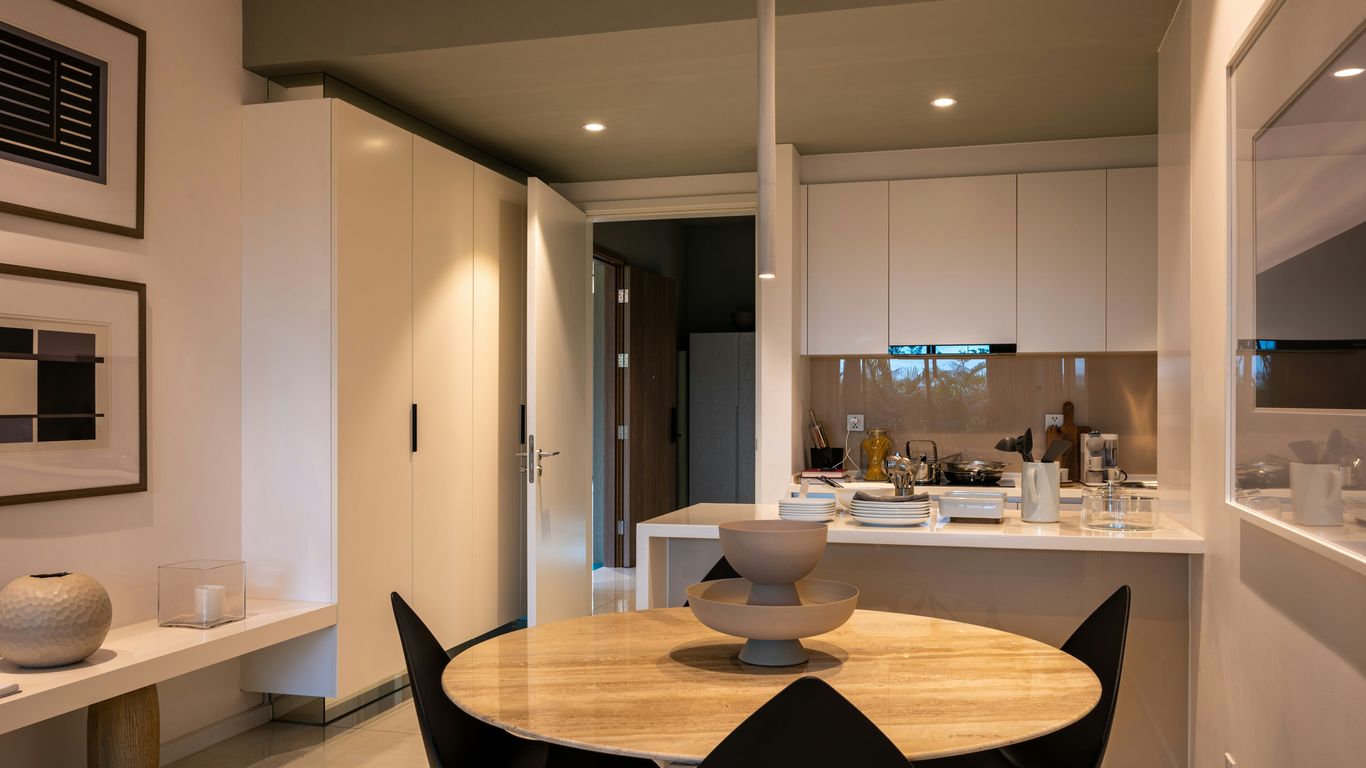
A rectangular four-seater is commonly planned at roughly 1200–1400 mm long, while a six-seater often falls around 1600–1800 mm. For eight seats, a length of about 2000–2400 mm may be appropriate, depending on chair width and the desired level of comfort. These are starting points rather than fixed rules, especially when the tabletop has thick edges or a sculptural base.
Table height is commonly around 730–760 mm, but the relationship with the chosen chairs matters more than a nominal standard. Confirm seat height, apron depth and leg clearance together before approving the final dimensions.
Choosing between round, oval, square and rectangular tops
Round tables encourage face-to-face conversation and avoid sharp corners, which can help in a tighter circulation path. Oval tops keep some of that softness while offering a longer centreline. Square tables suit balanced rooms and smaller groups, whereas rectangular tables are usually the most adaptable for larger gatherings and linear spaces.
A round marble dining table can be particularly effective where corners would interrupt movement. Its diameter still needs careful planning, since a large round top can occupy more central floor area than expected.
Seating capacity and comfortable spacing
Allow enough edge length for each diner rather than relying only on the number of chairs in a showroom photograph. As a practical starting point, 550–650 mm per person gives elbows and place settings more room, although chair width and the shape of the tabletop will change the result.
When testing a plan, consider these everyday points:
- Leave space for chairs to pull back without striking a wall or cabinet.
- Check that table legs do not occupy the preferred seating positions.
- Allow room for serving dishes, water glasses and shared plates.
- Consider whether occasional guests need flexible seating at the ends.
The list is deliberately practical. A table that technically seats six but forces diners to twist around a pedestal or squeeze past a wall will feel smaller than its dimensions suggest.
Measuring dining areas, walkways and lift access
Measure the clear dining zone, not just the outline shown on a floor plan. Mark the table footprint with tape, place temporary chair positions around it and walk through the adjacent kitchen and living routes. Then measure the lift door, cabin, corridor corners, stair landings and apartment entrance.
For a substantial stone top, access can affect whether the piece is delivered assembled, partially assembled or in coordinated components. Share accurate measurements early so that the design and packing approach can respond to the building rather than discovering a restriction on delivery day.
Exploring tabletop finishes and edge profiles
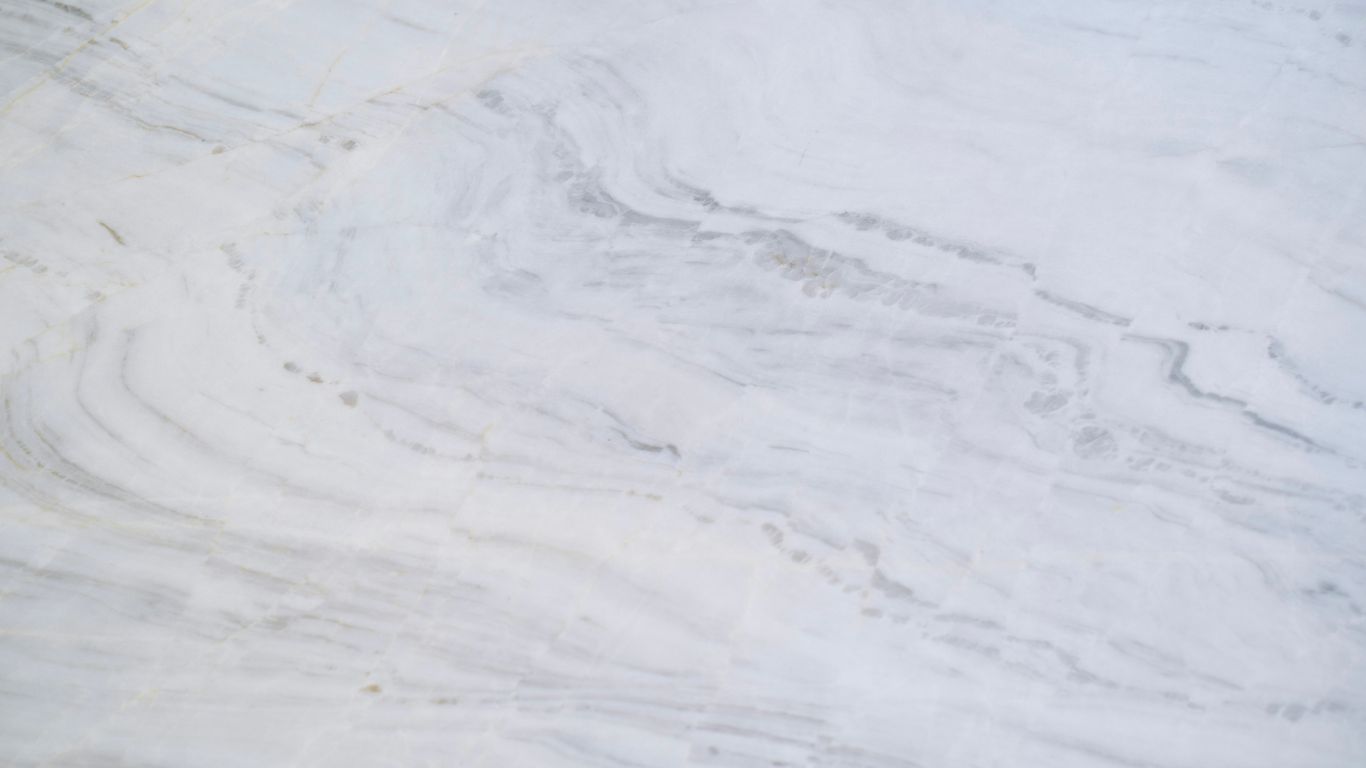
The surface finish and edge profile are small decisions with a large effect on how a table is read. Finish controls reflection and touch, while the edge determines how light breaks around the slab and how close a seated person can comfortably sit. Together, they can make a thick stone top feel light, formal, soft or architectural.
Ask for finish samples on the selected marble rather than assuming that a description will look the same across every stone. Texture and sheen are influenced by the material’s crystals, colour and natural variation.
Polished surfaces for a brighter, more formal look
Polished marble has a reflective surface that can deepen colour and emphasise movement in the stone. It works well where the dining table is intended to catch pendant light or act as a formal centrepiece. Reflections can also reveal fingerprints, water marks and overhead glare, so the lighting plan deserves attention.
Use a physical sample beneath the proposed pendant or window light if possible. A finish that looks elegant in a showroom may feel more visually active in a bright apartment with multiple reflective surfaces.
Honed finishes for a softer, contemporary appearance
Honed marble is smooth but has little or no high gloss. Its understated appearance suits warm minimal, contemporary and relaxed interiors, and it usually makes the stone’s colour feel gentler. It can still etch or absorb spills, so a low sheen should not be confused with complete resistance.
The quieter surface can also help a strongly veined slab feel less dramatic. This makes honed marble a useful option when the room already includes patterned flooring, textured upholstery or expressive artwork.
Leathered finishes for texture and reduced glare
Leathered marble has a tactile, subtly textured surface that scatters light instead of reflecting it sharply. It can make a large top feel more grounded and is often considered where touch and reduced glare are priorities. Texture may vary with the stone, so sample approval is particularly valuable.
Because the surface is not visually flat in the same way as a polished top, crumbs and dust may be seen differently. Regular gentle cleaning remains necessary, especially around the table’s eating and serving zones.
Straight, bevelled, bullnose and custom edge designs
A straight edge gives a crisp architectural outline, while a bevel catches light and can make the slab appear less heavy. A bullnose rounds the profile for a softer touch, and a custom edge can introduce a more sculptural detail. The edge should suit the scale of the top; an elaborate profile can overwhelm a small table.
Confirm the edge dimensions in the production drawing, including its thickness, corner radius and relationship to the base. That drawing becomes a shared reference for the fabricator, designer and client, reducing ambiguity before cutting begins.
Matching the marble top with a suitable base
The base is structural, but it also sets the table’s visual temperature. Timber warms pale marble, metal can give it a lighter contemporary outline, and a stone base creates a more monolithic composition. The choice should respond to the room as a whole rather than matching the tabletop too literally.
Weight distribution deserves equal attention. Marble is heavy, and the support must be stable without making the dining area difficult to use. Look at the base from sitting height as well as standing height, since its position will affect knees, feet and chair movement.
Wood, metal and stone bases compared
Wood bases bring grain and warmth, which can soften a cool stone surface and connect the table to timber flooring or cabinetry. Metal bases tend to read as slimmer and may suit a sharper, more contemporary interior. Stone bases create continuity and presence, although they can increase the table’s overall visual and physical weight.
The decision also involves maintenance and detailing. Metal junctions, timber grain direction and stone transitions should all be represented clearly before fabrication so that the finished table feels resolved from every angle.
Pedestal bases for legroom and flexible seating
A pedestal can free the corners and edges from individual legs, making it easier to position chairs around a round, oval or rectangular top. It can also improve flexibility when guests are added. The pedestal still needs a stable footprint and careful placement so that diners do not repeatedly knock their feet against it.
For a large top, one central support may not be sufficient on its own. The engineering and load path should be reviewed with the fabricator, particularly when the design includes an offset base, cantilevered appearance or unusually deep overhang.
Balancing heavy stone with compact apartment interiors
A compact room does not necessarily require a thin or visually insignificant table. It does require proportion. A substantial top can work when paired with an open base, restrained chairs and enough negative space around the perimeter; too many heavy elements can make the dining area feel blocked.
Consider sightlines from the entrance and living room. A pale stone, narrow base or rounded corner may preserve openness, while a dark monolithic composition may be better suited to a room with stronger architectural volume.
Coordinating the table with chairs, lighting and flooring
Start with the parts that cannot easily change, such as the floor and fixed lighting. Then choose the marble tone, base material and chair upholstery as a group. The table need not match every item; a considered contrast often gives the room more depth.
Warm timber, woven upholstery and soft lighting can temper a highly veined stone. Conversely, restrained chairs and a simple pendant allow the tabletop to remain the focus. The aim is visual balance, not a showroom set.
Buying a marble dining table in Singapore
Buying a marble dining table involves more coordination than selecting a tabletop from a photograph. You are commissioning a combination of material, fabrication, support, finish, packing and delivery. A clear quotation and approved drawing should make those components visible before work begins.
For projects with unusual dimensions or access constraints, the factory-to-order approach can be especially useful. Geoscenic Stone produces made-to-order marble, travertine and onyx furniture and architectural pieces from approved specifications, with material selection, cutting, finishing, inspection, packing and delivery considered for the individual project.
Ready-made versus custom-made dining tables
A ready-made table can be convenient when its dimensions, material and access requirements already suit the room. Custom-made work is more appropriate when you need a particular slab, unusual size, specific edge, integrated detail or a base designed around the seating plan. It may also help when the building route makes a standard assembled table impractical.
Custom does not mean every decision is left open indefinitely. The process works best when the client confirms the intended use, measurements, finish, drawings and material direction in a disciplined sequence.
Questions to ask about slab selection and fabrication
Ask whether the selected slab will be shown or approved before cutting, how natural variation will be documented, and where joins or bookmatching may occur. Clarify the finished thickness, edge profile, underside treatment and any drilling or fixing requirements. It is also sensible to ask which decisions are included in the quotation and which would change the cost.
A useful written brief should cover:
- The final length, width, height and corner details.
- The marble selection, finish and acceptable natural variation.
- The base material, support method and visible junctions.
- Packing, delivery, site access and installation responsibilities.
These questions create a practical record rather than relying on verbal descriptions. They also give the project team something concrete to review when the material and drawings are approved.
Checking structural support, sealing and workmanship
A stone table should be supported in a way that manages its weight without placing avoidable stress on the slab. Review the base connection, overhang, level and underside before installation is complete. Ask what sealing treatment is specified, when it is applied and what care routine is recommended for the selected finish.
Inspect visible edges, corners, joints and transitions under good light. Natural marks are not automatically workmanship issues, but uneven polishing, chipped edges, unstable supports or poorly aligned components should be discussed before acceptance.
Delivery, installation and access considerations
Delivery planning should begin while the table is still being designed. Confirm the lift dimensions, loading bay rules, corridor widths, door clearances, stair routes and any restrictions on delivery timing. A heavy stone piece may require specialised handling, protective packing or installation at the final location rather than in a workshop.
The individual quotation should state what is included for packing, destination-specific delivery and installation. Avoid assuming that building permits, hoisting, taxes or site protection are automatically covered; these items depend on the project and location.
Caring for and budgeting for a marble dining table
Marble care is mostly about small, consistent habits. Wipe food and drink spills before they can penetrate or react with the surface, use suitable mats and avoid dragging hard objects across the top. A dining table should show signs of life over time, but sensible care can prevent avoidable damage.
Budgeting should take the whole piece into account, not just the price per square metre of stone. Slab selection, thickness, edge work, base design, fabrication complexity, packing, access and installation can all influence the final quotation.
Preventing stains, etching and scratches
Use coasters beneath cold drinks and trivets under hot serving dishes, particularly when the marble has a porous or honed surface. Wipe wine, citrus, vinegar, sauces and oily foods promptly, since acidic or strongly coloured substances may mark some stones. Felt pads beneath decorative objects can reduce scratching when items are moved.
Do not use the tabletop as a cutting surface or a workbench. A small amount of protection is easier than trying to remove a mark after it has reacted with the stone.
Everyday cleaning products and habits to avoid
For routine cleaning, use a soft cloth and a product recommended for natural stone, following the care instructions for the specific finish. Avoid abrasive powders, harsh scouring pads and unapproved acidic cleaners. Even a product that is safe for another kitchen or bathroom surface may be unsuitable for marble.
Drying the surface after cleaning can also reduce water marks. Keep cleaning simple and consistent rather than rotating through strong products in search of extra shine.
When to reseal and professionally restore the surface
Sealing does not make marble impervious, and the appropriate interval depends on the stone, finish, use and treatment originally applied. Ask the fabricator or stone-care professional how to assess the surface rather than resealing on an arbitrary schedule. A professional can also distinguish staining, etching, scratches and natural mineral variation before recommending a remedy.
Minor changes may become part of the table’s patina, while deeper damage or widespread dullness may justify professional restoration. The finish should be matched after repair so that one area does not appear noticeably different from the rest.
Understanding price factors and long-term value
The main cost factors include the stone itself, slab size and rarity, thickness, amount of cutting, edge complexity, base construction, finish, packing and delivery. A larger table may require more than one slab or more careful pattern planning, and a heavy base can affect handling as well as fabrication.
A considered table can provide long-term value because it is made around the room and the way it will be used. That value is not a promise that the stone will remain unchanged; it comes from choosing material and workmanship whose natural development you are comfortable living with.
Conclusion
A marble dining table works best when beauty and logistics are considered together: select the slab with its natural variation in mind, choose a finish and base that suit the room, measure every access route, and agree the details in a clear drawing. If you are planning a made-to-order piece, request a quotation with your dimensions, material preferences and site information so the design and delivery requirements can be assessed together.
Frequently Asked Questions
Is marble suitable for a dining table in Singapore?
Yes, marble can suit an indoor Singapore dining room when it is properly supported and cared for. Prompt spill removal, suitable cleaning products and sensible use help manage its natural porosity and sensitivity to acids.
What is the best marble finish for a dining table?
The best finish depends on the desired appearance and household habits. Polished marble is reflective and formal, honed marble is softer and lower in sheen, while leathered marble adds texture and reduces glare.
How many people can a marble dining table seat?
Capacity depends on the table’s length or diameter, chair width, legroom and desired comfort. As a general planning guide, allow approximately 550–650 mm of tabletop edge per diner, then test the layout with the actual chairs.
Is a round marble dining table better for a small home?
A round table can improve movement around corners and encourage conversation, but its diameter still needs careful planning. A smaller rectangular or oval table may use a narrow dining zone more efficiently in some floor plans.
How should marble be cleaned after a meal?
Wipe the surface with a soft cloth and a cleaner approved for natural stone, following the care instructions for the selected finish. Avoid acidic, abrasive or strongly scouring products, and dry the surface if water marks are a concern.
Does marble need to be sealed?
Some marble tables benefit from sealing, but sealing requirements vary with the stone, finish and intended use. It reduces absorption rather than making the surface completely stain-proof, so spills should still be dealt with promptly.
What should be measured before ordering a marble dining table?
Measure the dining footprint, chair clearances, walkways, doors, lift, corridors, stair landings and any loading restrictions. Also confirm the table’s final dimensions, weight, base configuration and whether it will arrive assembled or in separate components.