

Key Takeaways
A successful custom marble furniture project begins well before fabrication. The stone, drawing, construction details and site conditions all need to be considered together.
- Define the furniture’s use, dimensions, style and budget before selecting stone.
- Expect natural variation in colour, veining, porosity and mineral markings.
- Confirm drawings, edges, supports, access routes and installation responsibilities in writing.
- Compare quotations by their inclusions, not simply by the headline price.
- Protect the finished piece with suitable sealing, cleaning and regular care.
1. Define the brief for your custom marble furniture in Singapore
Commissioning custom marble furniture in Singapore is an exercise in balancing appearance with everyday use. A dining table, console or coffee table must suit the room, the people using it and the way it will be delivered. Before discussing slabs or finishes, establish what the piece needs to do. A clear brief gives the fabricator a practical basis for drawings, costing and production.

Choosing the right furniture type and intended use
Start with the role of the piece. A dining table may need generous legroom and resistance to frequent spills, while a console might prioritise a slim profile and a carefully planned wall clearance. A coffee table is usually touched, moved around and viewed from several angles, so its corners and base deserve as much attention as the stone itself.
Think honestly about household or commercial routines. If the surface will support meals, drinks, displays or work, say so at the briefing stage. A useful custom stone furniture guide can help frame the conversation around dining tables, consoles and other made-to-measure pieces without treating one photographed example as a guaranteed result.
Establishing dimensions, proportions and room clearances
Measure the room rather than relying on approximate furniture dimensions. Record door widths, lift dimensions, stair turns, ceiling heights and the clear space around adjacent furniture. For a dining table, allow enough room for chairs to be pulled out and for people to pass behind them; for a coffee table, consider the relationship between the tabletop, sofa and rug.
Dimensions should be confirmed in a production drawing, including thickness, overhangs and the position of any base. The visual weight of marble can make a piece feel larger than its measurements suggest, so proportions matter as much as the maximum length or width.
Matching the design to your interior style
Marble can appear quiet and architectural or highly expressive, depending on the stone, layout and finish. Consider the room’s flooring, joinery, lighting and upholstery before choosing a dramatic slab. A restrained base can allow strong veining to lead, while timber, metal or fabric may soften a substantial stone top.
The design should also be viewed from standing and seated positions. Edge profiles, underside details and the shape of the support are visible parts of the furniture, not secondary decisions. Natural stone varies from slab to slab, so the design should accommodate character rather than depend on a perfectly repeatable pattern.
Setting a realistic budget and project timeline
A custom quotation reflects more than the square metre price of stone. It may account for slab selection, cutting, shaping, finishing, supports, packing, delivery, site access and installation requirements. Ask which items are included and which are provisional, particularly when the final destination or access route is still being assessed.
Allow time for design development and approval before production begins. A useful budget should also leave room for revisions, additional site information or a change in material after slab review. If you are weighing alternatives, a marble dining table cost guide offers a helpful way to think about how size, stone and fabrication complexity influence price.
2. Select the right marble for the project
Marble selection is both a visual and practical decision. Colour, veining and finish determine the character of the furniture, while porosity and daily use affect how it will age. Samples are useful, but they cannot show the full movement of a complete slab. For a made-to-order piece, the selected material should be reviewed in relation to the approved design.

Comparing natural marble varieties and colour palettes
Begin with the atmosphere you want to create. White and pale marbles can keep a compact room feeling light, while darker or warmer stones introduce more visual depth. Travertine and onyx offer different expressions from marble, and each has its own variation, structure and handling considerations.
Compare samples under the lighting used in the room. A cool daylight tone may look quite different beside warm lamps or timber cabinetry. Material discussions should cover not only colour but also available slab sizes, thickness, finish options and the intended position of joins.
Understanding veining, movement and slab variation
Natural stone is not a printed surface. Veins may change direction, gather into areas of movement or include mineral marks and tonal shifts. These characteristics are part of the material, and a design that respects them usually feels more convincing than one that tries to make every section uniform.
Ask to see how the slab will be laid out before cutting. Bookmatching, vein direction and the placement of cut-outs can significantly change the finished appearance. The outcome should be assessed against the selected slab and approved drawing, rather than against a generic product photograph.
Choosing between polished, honed and other finishes
A polished surface reflects light and can make colour and veining appear more pronounced. Honed finishes are softer and less reflective, while other textures may emphasise the stone’s natural surface. The right choice depends on the room, the desired mood and the level of contact the piece will receive.
The finish should be specified clearly, including where it applies to edges, returns and secondary components. It is worth comparing physical samples because a finish seen online may not communicate its tactile quality or reflectivity accurately. For a broader comparison of finishes and table applications, see this marble table finish guide.
Assessing porosity, durability and suitability for daily use
Marble is porous and can be affected by spills, acids, abrasion and heat. That does not make it unsuitable for daily use, but it does mean that the household or project team should understand the care involved. A dining table in a formal room may face different demands from a kitchen-adjacent console or a hospitality surface.
Choose the material with the intended routine in mind. Ask about sealing, cleaning recommendations and the likely appearance of normal use. A realistic brief accepts that a natural surface may develop small marks over time rather than expecting it to remain exactly as it looked on installation day.
3. Plan the design and construction details
Good stone furniture depends on decisions that are easy to overlook in an early moodboard. The drawing must communicate not only the overall silhouette but also how the piece will be cut, supported, joined, packed and installed. Small changes to a mitre, edge or base can affect both the appearance and the cost. Treat the design as a coordinated technical proposal rather than a decorative image alone.
Translating ideas into drawings, renders and slab layouts
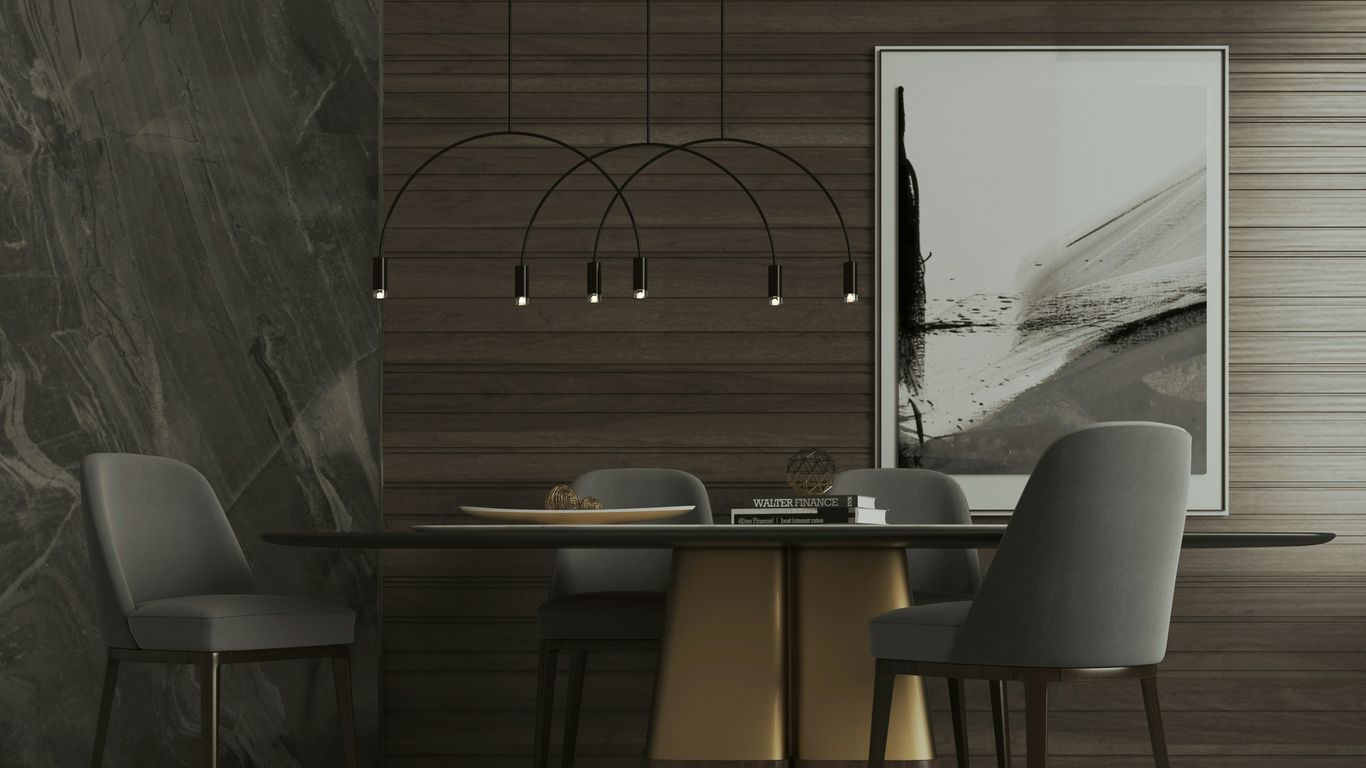
A render helps everyone discuss proportion and atmosphere, while a dimensioned drawing controls production. Together, they should show plan, elevation and section information where needed, along with stone thickness, edge profiles, joins, drillings and the relationship between components.
The slab layout is equally useful. It shows where the parts will sit on the selected material and helps the client understand how veining may travel across the piece. Before production, check every dimension and visible finish, because the approved drawing becomes the reference for fabrication.
Designing edges, corners, bases and support structures
Edges affect touch, shadow and perceived thickness. A small radius can make a corner feel more comfortable, while a mitred edge can create a visually substantial profile without using one solid block of stone. Bases must distribute weight properly and remain stable when the furniture is used.
Discuss concealed fixings, tolerances and the relationship between the stone and its support. The support should not be treated as an afterthought, especially where the tabletop is large, cantilevered or frequently moved around. Structural clarity matters because an elegant outline still has to perform safely.
Combining marble with timber, metal, glass or upholstery
Mixed materials can make marble feel more integrated into a room. Timber brings warmth, metal can provide a fine and precise frame, and glass may reduce the apparent mass of a base. Upholstery is useful where the stone forms part of a console, bench or hospitality setting.
Specify the junctions carefully. Differences in movement, texture and tolerance can become visible at a seam, so the drawing should indicate reveals, fixing points and finish transitions. Material combinations should support the intended use rather than add complexity simply for visual effect.
Accounting for weight, balance and installation access
Stone is heavy, and the final piece may need to be carried in several components. Check the lift, loading bay, corridors, stairs and turning points before the design is locked. In a condominium, building management requirements and delivery booking procedures may also affect the installation plan.
A piece that fits the room may still be impossible to move through the building. Confirm whether the base is assembled on site, whether the top requires mechanical assistance and what protection is needed for floors and walls. These practical questions are part of design, not an inconvenience added at the end.
4. Understand the fabrication process
Fabrication turns an approved concept into a physical object through a series of controlled steps. The stone is inspected, marked, cut, shaped and finished before it is checked and packed. Each stage can influence the next, so late changes are more disruptive once material has been cut. Clear approvals help preserve both the design intent and the selected stone.

Inspecting and marking the selected slab
The selected slab should be reviewed for colour, movement, thickness and natural features before marking begins. The fabricator then considers the grain or veining, the direction of visible faces and the position of openings or joins. This is where the drawing meets the actual material.
Marking should allow the team to avoid unwanted weak points where possible, while accepting that natural variation cannot be edited into complete uniformity. If the piece includes several visible faces, agree how the slab’s character should be distributed across them.
Cutting, shaping and joining the marble components
Cutting follows the approved dimensions, but the work does not end with straight lines. Components may need curved edges, internal corners, rebates or carefully aligned returns. Joining methods and tolerances should be considered alongside the thickness and weight of each part.
The quality of a finished piece is often most apparent at the transitions. Consistent alignment, clean joins and an appropriate edge treatment help the furniture read as one coherent object. Any proposed change to dimensions or material should be recorded rather than handled informally on the factory floor.
Creating cut-outs, mitred edges and bespoke details
Cut-outs for fittings, cables or other components need accurate positions and suitable edge treatment. Mitred edges require careful preparation because the meeting faces must align cleanly while retaining enough material for strength. Bespoke details should be shown clearly in the production drawing.
Ask how visible corners, underside returns and openings will be finished. These areas are frequently seen at close range, especially on coffee tables and consoles. A small detail that is vague on paper can become a noticeable difference in the finished piece.
Refining the surface through polishing and quality checks
Surface finishing develops the final reflectivity and feel of the stone. Edges, corners and broad faces should be checked for consistency, while the piece is reviewed against the approved dimensions and finish specification. Inspection should happen before packing, when corrections are more manageable.
For factory-to-order work, the process normally includes finishing, inspection and packing for the specific project. A clear inspection record or photo review can help the client and project team confirm what will be dispatched, while still recognising that natural stone will contain individual variation.
5. Manage sourcing, fabrication and installation in Singapore
Singapore projects often involve tight access, managed buildings and carefully timed deliveries. Sourcing and fabrication therefore need to be coordinated with the site, not treated as separate tasks. The quotation, drawing and delivery plan should tell the same story. Clarifying responsibility early reduces uncertainty when the piece is ready to leave the factory.
Clarifying supplier responsibilities and project milestones
Establish who provides the material, prepares drawings, arranges packing, books transport and coordinates installation. Agree the points at which the client or designer must approve the stone, drawing, finish and final inspection. This is particularly useful when several parties are involved in a residence, hotel or commercial project.
A factory-to-order approach means the piece is produced for a particular project rather than taken from warehouse stock. Made-to-order stone pieces are described in terms of selected material, approved specifications, packing and destination-specific delivery, which is a useful model for structuring your own project questions.
Checking delivery routes, lift access and on-site conditions
Before fabrication, measure the route from the vehicle to the final position. Include loading bays, lift doors, corridor widths, staircases and any points where the piece may need to turn. Confirm the building’s delivery hours, protective requirements and lift booking process well in advance.
The site should also be ready to receive the furniture. Floors must be protected, the room should be cleared, and the final location should be accessible. If the piece arrives in multiple sections, identify where assembly and joining will take place.
Planning installation for condominiums, landed homes and commercial spaces
Different property types create different constraints. Condominiums may require security registration, loading reservations and management approval. Landed homes may have narrow entrances or steps, while restaurants, hotels and retail spaces often require installation around an operating programme.
Build these conditions into the schedule rather than assuming a standard delivery. Installation may depend on other trades being complete, the absence of wet works and the availability of a clear working area. In commercial settings, check whether work must happen outside public hours.
Allowing for weather, humidity and site-related considerations
Singapore’s warm, humid conditions make storage and site protection worth discussing. Stone should be kept clean and protected from construction dust, standing water and contact with incompatible materials. The installation team should also know whether the room is fully enclosed and ready for the final finish.
Site conditions can affect timing even when fabrication is complete. Keep the piece covered during surrounding works, but avoid trapping moisture or debris against finished surfaces. The project manager should confirm when protection can be removed and when the furniture is ready for normal use.
6. Evaluate quotes, lead times and workmanship
A quotation is most useful when it makes the project legible. It should show what is being made, from which material, to what dimensions and with which finish. It should also identify logistical assumptions. Comparing only the total figure can hide meaningful differences in scope, access and workmanship.
Identifying what a custom marble furniture quotation includes
Look for a description of the stone, dimensions, thickness, edge treatment, base, finish and any visible joins. The quotation should also state whether design drawings, sampling, packing, delivery and installation are included. If the item is intended for another location, destination-specific requirements should be addressed separately.
Ask what remains provisional. A quotation may change if the selected slab differs in availability, if the design is revised or if site access requires additional handling. Clear wording is more valuable than an artificially precise figure based on missing information.
Comparing material, fabrication, delivery and installation costs
Separate the cost into sensible categories so that you can compare like with like. Material may be priced differently from cutting and finishing, while packing and delivery may depend on weight, destination and route. Installation can also vary according to access, assembly and the need for protection.
| Cost area | Questions to ask | Why it matters |
|---|---|---|
| Material | Which stone, slab and thickness are allowed for? | Natural variation and availability affect the result. |
| Fabrication | Which cuts, edges, joins and finishes are included? | Detail and complexity influence labour and waste. |
| Logistics | Is packing and delivery priced for the destination? | Weight and access can change handling requirements. |
| Installation | Is assembly or fixing included on site? | A finished piece may still require careful installation. |
This breakdown gives the quotation a practical context. A lower total may simply exclude a service that another quotation includes, so confirm the scope before deciding which option represents better value.
Understanding deposits, revisions, warranties and potential variations
Custom work usually requires an agreed deposit and a defined approval process before production. Read how revisions are handled after the drawing or material has been approved, and ask what happens if the client changes dimensions, finish or stone later in the programme.
Also clarify the treatment of natural variation and any warranty or aftercare terms. A warranty should not be interpreted as a promise that marble will remain free from all marks, since use, cleaning and exposure affect the surface. Written terms help separate workmanship concerns from normal material characteristics.
Inspecting the finished piece before final acceptance
Inspect the furniture in good light and compare it with the approved drawing. Check the overall dimensions, alignment, finish, visible joins, stability and the condition of edges and corners. If the piece is delivered in parts, inspect components before final assembly where practical.
Record any concern promptly, with photographs and a clear description. Acceptance should follow a fair review of both workmanship and the inherent variation of natural stone. When the piece meets the agreed specification, document the care instructions and any remaining installation notes.
7. Protect and maintain the finished marble piece
Marble rewards considered use rather than neglect. The right care routine depends on the stone, finish, location and frequency of use. Maintenance is not about preventing every sign of life; it is about limiting avoidable damage and responding to marks early. A simple written routine is easier to follow than vague advice.
Sealing marble and establishing a maintenance schedule
Ask whether the piece has been sealed, what product was used and when resealing should be considered. The answer depends on the stone’s porosity, finish and use, so a dining surface may require a different schedule from a lightly used console. Keep the care information with the project documents.
A periodic review can identify changes in absorption, surface appearance or the condition of vulnerable edges. Sealing does not make marble impervious, but it can form part of a sensible protection plan when paired with prompt cleaning.
Preventing stains, etching, scratches and heat damage
Use coasters, mats and trivets where they suit the design, particularly beneath acidic drinks, hot vessels or abrasive objects. Wipe spills promptly and avoid dragging ceramics, metal or stone across the surface. Pay attention to cosmetics, cleaning products and food ingredients that may react with marble.
The most useful habits are straightforward:
- Wipe spills with a soft, clean cloth soon after they occur.
- Use suitable mats or coasters beneath hot, wet or abrasive items.
- Keep acidic and strongly coloured substances from sitting on the stone.
- Lift objects rather than sliding them across the finished surface.
These measures reduce the likelihood of avoidable marks without asking the furniture to be treated as untouchable. Normal use should remain practical, especially when the piece forms part of a busy home or hospitality environment.
Cleaning different marble finishes safely
Use a soft cloth, clean water and a pH-neutral cleaner recommended for natural stone. Avoid abrasive powders, harsh acids and untested household products, as they may dull the finish or react with the surface. Do not assume that a cleaner suitable for glass, timber or metal is also safe for marble.
Polished and honed surfaces may show marks differently, but both benefit from gentle, consistent cleaning. Follow the fabricator’s specific guidance where it differs from general advice, particularly for textured finishes or combined-material pieces.
Arranging professional restoration and resealing when needed
Deep stains, etching, chips and worn areas may need assessment by a qualified stone-care professional. The correct remedy depends on the cause and the finish; aggressive polishing or unsuitable chemicals can make the problem worse. Ask for a proposed treatment and expected appearance before work begins.
Restoration should be approached as a planned service, not an emergency response. Keep records of the stone, finish and previous treatments so that future care is based on the actual piece. With reasonable protection and timely attention, custom marble furniture can develop character while remaining functional and well presented.
Start Your Stone Project
If you are planning a made-to-order marble piece, share your intended use, dimensions, preferred material and site conditions with Geoscenic Stone so the design and quotation can be developed around the project.
Conclusion
Custom marble furniture in Singapore is best approached as a coordinated process, from the first room measurements to the final care routine. When the stone, drawing, construction, logistics and maintenance plan are considered together, the finished piece can feel both distinctive and properly resolved. Natural variation remains part of its character, while careful specification gives that character a suitable place in the room.
Frequently Asked Questions
Is custom marble furniture suitable for everyday use?
Yes, provided the stone and finish suit the intended routine and the owner accepts that marble can stain, etch or scratch. Simple protective habits and prompt cleaning help keep the piece practical.
How early should dimensions be confirmed?
Confirm dimensions before the production drawing is approved. Include room clearances, furniture relationships, delivery routes, lift access and any installation constraints rather than measuring only the final location.
Can the veining be chosen in advance?
You can usually review a selected slab and discuss vein direction, layout and visible movement. However, natural stone varies, so the completed piece should not be expected to replicate a photograph exactly.
Which marble finish is easiest to maintain?
No finish removes the need for care. Polished and honed surfaces have different appearances and may show marks differently, so the most suitable choice depends on the room, the user’s habits and the desired visual character.
What should a custom furniture quotation show?
It should identify the material, dimensions, thickness, finish, edge details, base, fabrication scope, packing, delivery and installation assumptions. It should also explain deposits, approvals and possible variations.
How can a large marble piece be delivered safely?
Plan the complete route before fabrication, including loading areas, lifts, doors, corridors, stairs and turning points. Large pieces may need to be delivered in sections and assembled at the final location.
How often should marble be resealed?
There is no universal interval because porosity, finish and use differ. Ask the fabricator or stone-care professional for guidance, then review the surface periodically and reseal when its condition indicates it is needed.