
Key Takeaways
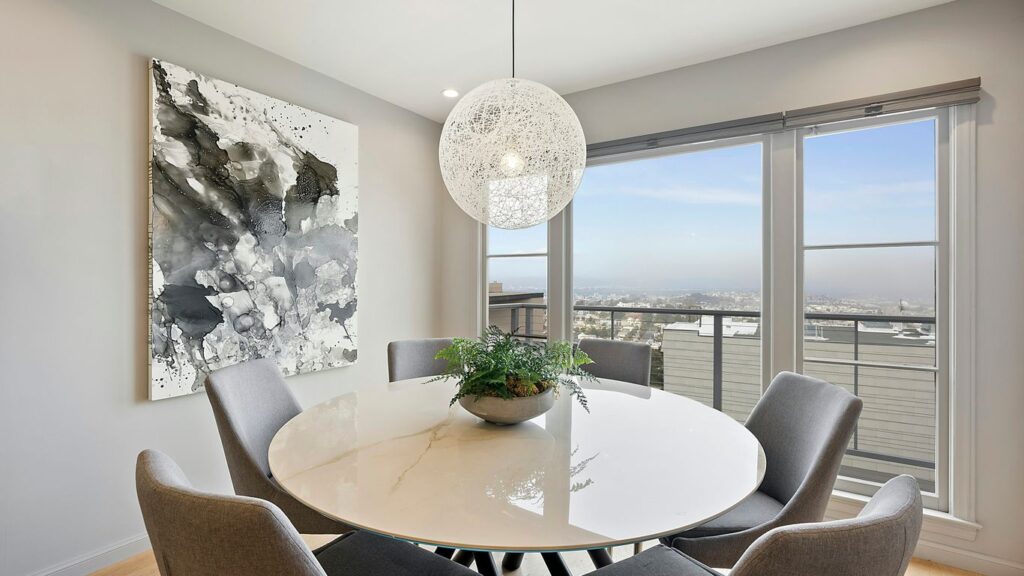
A round marble dining table can make a Singapore dining area feel more open, but the right result depends on careful planning rather than appearance alone.
- Measure the full dining zone, including chairs and circulation routes.
- Choose the diameter according to both diner count and daily use.
- Consider marble colour, veining and finish alongside maintenance needs.
- A pedestal base can improve legroom, but stability and floor protection still matter.
- Confirm the drawing, stone selection, finish, delivery scope and care advice before ordering.
Why choose a round marble dining table for a Singapore home?
A round marble dining table can suit Singapore homes where dining, entertaining and circulation often share one compact space. Its continuous edge avoids a pronounced “head” or corner, while the stone surface brings a strong architectural note. The decision still needs to account for weight, access, maintenance and the proportions of the room. For a broader planning reference, this marble dining table buying guide covers measurements, bases, finishes and delivery considerations.
How a circular shape improves flow in compact dining areas
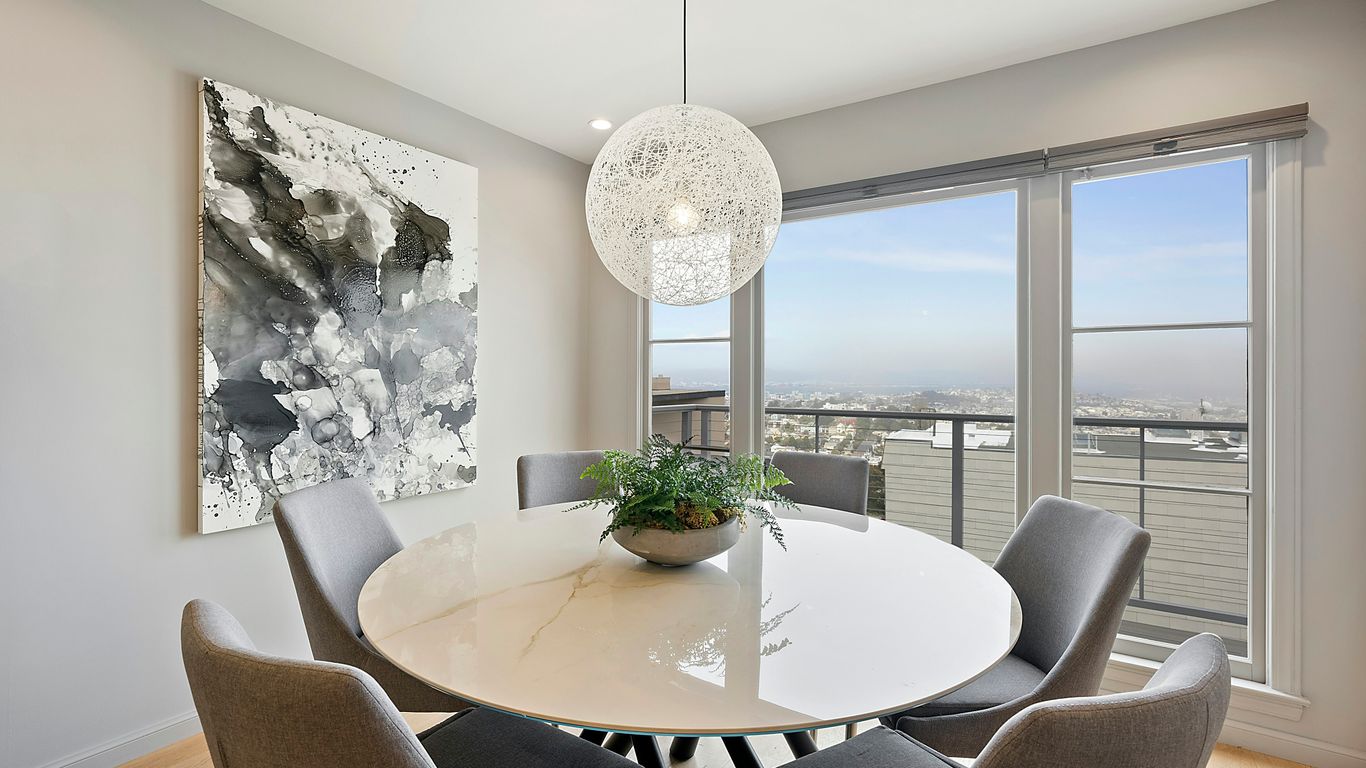
A circular tabletop gives each chair a similar relationship to the centre, which can make conversation feel more natural. More practically, there are no sharp corners projecting into a walkway, so a tight route between the dining area and kitchen may feel less obstructed. The table still occupies a real footprint, however; a large circle can be just as difficult to pass as a rectangular table.
In a condominium dining zone, mark the proposed diameter on the floor with tape. Walk around it with a chair pulled out, and check doors, balcony routes, kitchen access and the clearance beside nearby furniture. This simple test often reveals that a slightly smaller table creates a more comfortable room.
When marble suits modern, minimalist and luxury interiors
Marble works across several interior directions because its visual character comes from both colour and mineral pattern. A quiet white or beige stone can support a restrained, minimalist room, while stronger veining can become the main decorative element in a more expressive interior. Darker stone may add contrast, particularly where walls, flooring and upholstery are light.
The material is not visually neutral. Even a simple round top can carry considerable presence, so balance it with the rest of the room rather than adding several competing patterns. Timber, woven fibres and softly upholstered seating can make the stone feel more inviting.
Benefits and trade-offs compared with rectangular tables
A round table encourages face-to-face seating and can use an awkward central area efficiently. It may also be easier to centre beneath a pendant light, particularly where the dining zone is defined by a rug or ceiling feature. Rectangular tables usually offer more linear wall placement and can provide greater seating capacity within a long room.
Marble also brings practical trade-offs. It is heavy, naturally variable and vulnerable to etching from acidic substances, depending on the stone and finish. A considered purchase weighs those limitations against the permanence and individuality of a natural surface; daily practicality matters as much as visual appeal.
How to assess your room layout before buying
Start with a scaled plan showing walls, doors, windows, sockets and fixed cabinetry. Add the proposed table and the chairs, not just the tabletop, because pulled-out chairs determine how the room actually works. Note lifts, staircases, corridors and the final doorway if the piece will be delivered to an apartment.
A made-to-order approach can be useful when the available area is unusual. Geoscenic Stone produces furniture and architectural pieces to an approved drawing, with dimensions, stone, finish, edges and drillings confirmed before production. That process does not remove the need for accurate site measurements, but it gives the project team a clear reference before fabrication begins.
How to choose the right table diameter
Diameter is the central decision for a round dining table because a modest increase changes both seating and circulation requirements. Begin with the number of people who dine at the table most often, then consider occasional guests without designing the room around a rare event. In Singapore apartments, the most comfortable size is usually the one that leaves usable space around it, not the largest top that can technically fit.

Recommended dimensions for two, four, six and eight diners
As a starting point, a table around 900–1,000 mm in diameter may suit two diners comfortably, while approximately 1,100–1,300 mm often works for four, depending on chair width and place settings. Six diners commonly need around 1,400–1,600 mm, and eight may require roughly 1,700–1,900 mm. These are planning ranges rather than fixed rules; broad chairs, armrests and generous serving space can increase the requirement.
A useful way to compare options is to draw each diameter at full scale. Place the intended chairs around the perimeter and allow room for elbows, tableware and serving dishes. If everyday dining is for four but celebrations involve eight, an extendable design or a separate occasional table may be more sensible than keeping a very large circle in constant use.
Allowing enough clearance for chairs and walkways
Measure from the table edge to the nearest wall or furniture, then repeat the measurement with a chair pulled out. Around 900 mm gives a more relaxed passage behind a seated diner, while a tighter arrangement may be workable where the route is not used continuously. Main circulation paths, kitchen approaches and access to doors deserve the greatest clearance.
Do not assume that a clear tabletop means a clear room. A chair with a deep seat or rear arms can extend well beyond its legs, and a pedestal may encourage chairs to be positioned differently from the plan. A floor template with the actual chair dimensions is a better test than a catalogue photograph.
Matching table size to open-plan living and dining areas
In an open-plan room, the table needs to relate to the sofa, kitchen island, flooring and lighting rather than stand alone. A round top can soften the transition between rectilinear cabinetry and seating, but its visual centre should still align with the pendant or dining rug. Use the edge of the rug, a change in flooring or a console to help define the dining zone.
The table should not interrupt the main path between living and kitchen areas. If people have to squeeze between chair backs and an island several times a day, the layout will feel tight even when the dimensions look acceptable on paper. Test both the furniture plan and the movement plan.
When an extendable or custom-sized table is worthwhile
An extendable round table can suit households that need a compact daily footprint but host larger meals from time to time. Check how the extension operates, where the additional leaves are stored and whether the expanded shape remains comfortable in the room. Some spaces are better served by a custom diameter that fits the actual architecture rather than a standard size.
Custom sizing is particularly worthwhile when a column, bay window or narrow passage sets an unusual limit. It also allows the top thickness, edge detail and base position to be considered together. The finished quotation should distinguish the furniture itself from delivery, access and any installation requirements.
Planning comfortable seating around a round table
Seating changes the experience of a round table as much as the stone does. Chair width, armrests, upholstery thickness and the position of the base all affect how many people can sit comfortably. Plan the chairs as part of the table, not as an afterthought once the tabletop has been selected.
Choosing the right number and width of dining chairs
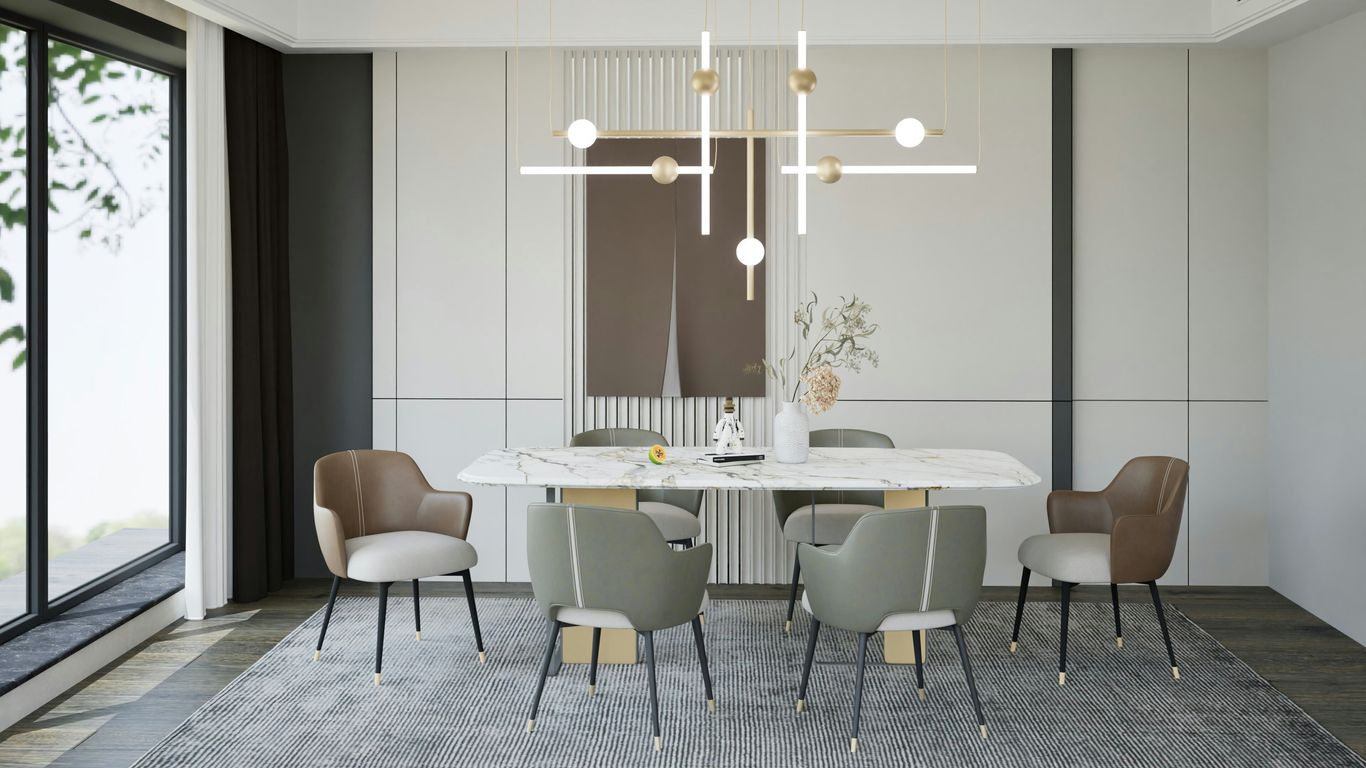
Allow roughly 550–650 mm of table edge per diner as a practical starting point, then increase that allowance for wide or upholstered chairs. Armchairs require particular care because their arms may collide with neighbouring seats or prevent a chair from sliding close to the table. A smaller number of generous chairs can feel better than squeezing in an extra place.
For a four-person arrangement, leave enough room for each diner to move without brushing the next chair. With six or eight seats, check whether the chair backs overlap visually and physically. Place settings, serving bowls and the preferred seating posture should guide the final count.
Calculating legroom around different pedestal designs
A central pedestal usually gives diners more freedom to position their legs than four corner legs, but the shape and width of that pedestal still matter. A broad base can restrict feet, while a narrow column may need additional engineering to support a heavy stone top. Ask for the base dimensions and the clearance beneath the tabletop, rather than judging comfort from the top view alone.
The position of the chair relative to the pedestal is important too. With a sculptural or multi-part base, some seats may align with a wider section. A drawing showing the top, base and chair positions helps identify those conflicts before fabrication.
Pairing upholstered, wooden and rattan chairs with marble
Upholstered chairs soften the hardness of stone and can introduce colour without competing with the veining. Timber adds warmth and suits a room with wood flooring or cabinetry, while rattan brings texture and a lighter visual rhythm. The best pairing usually repeats one small element from the wider room, such as a warm timber tone or a muted fabric colour.
Avoid matching every material too literally. A quiet marble can support more expressive upholstery, whereas a dramatic stone may benefit from simpler chairs. You can find further ideas for modern marble dining designs, particularly around balancing stone with timber, upholstery and metal.
Avoiding crowding, awkward chair angles and blocked circulation
A round table does not automatically solve a crowded layout. Chairs may sit at slight angles, backs may enter a walkway, and a large pendant can make the centre feel visually low. Check each seat from the perspective of someone standing up, reaching for a sideboard or walking behind the chair.
Before approving the arrangement, test these everyday movements:
- Pull out every chair that would be occupied during a normal meal.
- Walk from the kitchen to the table while carrying a plate or tray.
- Open nearby doors, drawers and balcony access points fully.
- Sit in each position and check knees, arms and the underside of the tabletop.
The test is simple but revealing. It can show that moving the table a small distance, reducing one chair or choosing a different base improves the entire room without changing the stone.
Selecting marble for appearance and everyday use
Natural marble is selected for more than a colour swatch. Tone, veining, mineral marks, porosity and the intended finish all influence how the completed top will look and age. For a dining table, consider the room’s light at different times of day and the way the surface will be used, not just the appearance in a showroom.

Comparing white, beige, grey and darker marble options
White marble can keep a compact dining area feeling bright, although veining and marks may be more visible against a pale background. Beige and cream tones bring warmth and tend to sit comfortably with timber, woven materials and warm lighting. Grey marble provides a cooler, architectural note, while darker stone creates contrast and a more formal mood.
There is no universally easiest colour. A busy household may prefer a pattern that visually breaks up small marks, while a quieter interior may be built around a nearly uniform field. Ask to review a larger slab or representative material selection where possible, since small samples cannot show the full distribution of pattern.
Understanding veining, colour variation and surface character
Every natural slab has its own arrangement of lines, clouds, crystals and tonal shifts. Veins may continue across a top, change direction or become more prominent near an edge. These are characteristics of the material rather than details that can be made perfectly uniform.
For a made-to-order piece, discuss the intended orientation of the slab and any preference for a particular area of the material. The approved drawing can identify dimensions and finish, but the visual result remains subject to natural variation. A transparent conversation at this stage prevents an unrealistic expectation of an identical photographed surface.
Honed, polished and leathered finishes compared
A polished finish has a reflective surface that can emphasise colour and veining, but reflections may show fingerprints, dust and light scratches more readily. Honed marble is softer in appearance and less reflective, though it can still etch and absorb spills if not properly protected. A leathered finish has tactile texture and may make the surface feel more informal, while its texture can affect cleaning.
Finish choice should follow the room and the way the table will be used. Request a finish sample and consider it under the actual lighting, beside the proposed chairs and flooring. Maintenance advice should be confirmed for the selected stone and finish rather than assumed from the name alone.
Choosing between natural marble and marble-look alternatives
Natural marble offers genuine geological variation and a surface that is unique to the selected piece. Marble-look alternatives may provide a more consistent appearance or a different maintenance profile, but they should be assessed as separate materials rather than treated as interchangeable. Compare edge details, thickness, weight, repair considerations and the way the material feels in daily use.
A useful comparison should include the whole construction, not simply the surface image. The base, support, fabrication quality, delivery route and future care all affect the finished table. If the stone character is central to the room, natural material may be worth the additional planning; if uniformity is the priority, an alternative may be more appropriate.
Matching the tabletop with a suitable base
The base supports both the weight of the marble and the way people sit around it. It also determines how substantial the table appears in the room. A successful combination balances engineering, legroom and visual proportion, rather than choosing a base solely because it looks striking in isolation.
How pedestal bases affect comfort and seating capacity
A pedestal can free the perimeter from corner legs, giving chairs more flexibility and making it easier to add or remove a place. Its diameter, shape and position still need checking, especially for six- and eight-person tables. A sculptural base may look central from above but create different legroom at different seats.
Ask for a plan showing the tabletop, pedestal and intended chairs. This is particularly important when the table has a thick top or a wide structural base. Comfort should be assessed at the seated position, not inferred from the base’s appearance.
Comparing wood, metal and stone table bases
Wood bases introduce warmth and can connect the dining table to cabinetry or flooring. Metal offers a slimmer, more precise visual line, with options ranging from discreet supports to expressive geometric forms. Stone bases create a monolithic effect but add weight and may require especially careful planning for delivery and floor loading.
The right choice depends on the room’s existing materials and the desired visual balance. A pale marble top with a dark base can feel graphic, while timber can temper a strongly veined surface. In every case, the base must be designed for the specific top rather than treated as a decorative add-on.
Balancing visual weight in small and large rooms
A compact room usually benefits from a base that leaves some visual space beneath the tabletop. This does not mean the support must be minimal; it means its mass should be proportionate to the room and the chair design. In a larger space, a more substantial base can help the table hold its position within the overall composition.
Look at the table from the entry, kitchen and living areas. The base may be seen from several directions in an open-plan home, so its silhouette matters. A rug and pendant can reinforce the table’s scale, but neither should make circulation feel narrower than it is.
Checking stability, floor protection and chair clearance
A heavy marble top needs a stable, properly engineered support and a level installation surface. Confirm how the base meets the floor, whether protective pads are included or specified, and how the finished piece will be moved into position. Floor protection is especially relevant for timber, delicate stone and polished finishes.
Geoscenic Stone describes a factory-to-order process in which each piece is cut, formed, finished, inspected and packed for a specific project. For a Singapore installation, ask the quotation to identify the relevant delivery and site-access assumptions, including any requirements that depend on the building.
Buying and maintaining a round marble dining table in Singapore
Buying well involves more than selecting a slab and a diameter. Fabrication, sealing, packing, access, installation and after-sales communication all affect the final experience. Singapore’s humidity and frequent air-conditioning make sensible care worthwhile, although neither condition replaces the need to follow the advice for the specific stone and finish.
Questions to ask about fabrication, sealing and delivery
Ask who confirms the production drawing, how the stone is selected, which edges and finish are included, and whether the tabletop and base are supplied together. Clarify the sealing method, recommended resealing interval and products that should not be used. It is also sensible to ask about tolerances, inspection, packing and the route from factory to site.
Delivery should be discussed in practical terms. Confirm the packed dimensions and weight, lift or staircase access, building booking requirements and whether installation is included in the individual quotation. A made-to-order stone quotation should reflect the actual piece and destination rather than rely on a generic furniture price.
How Singapore’s humidity and air-conditioning affect care
A stable indoor environment is generally preferable for natural stone furniture, but changes in temperature and humidity can still influence adjacent materials, sealers and the feel of the room. Keep the table away from prolonged standing moisture and avoid placing damp cloths beneath objects for extended periods. Air-conditioning should not be directed aggressively at one part of a mixed-material base.
The stone itself is not made maintenance-free by sealing. Sealers can reduce absorption, but they do not make marble immune to etching, scratching or staining. For climate-specific context, this Singapore marble care guidance can sit alongside the fabricator’s instructions for the chosen material.
Cleaning spills, protecting the surface and preventing stains
Wipe spills promptly with a soft cloth and a pH-neutral cleaner suitable for natural stone. Acidic foods and drinks, including citrus, wine and some sauces, can etch susceptible marble even when the surface has been sealed. Use coasters, placemats and trivets where appropriate, and avoid abrasive powders or harsh household chemicals.
Do not drag ceramics, serving dishes or decorative objects across the top. If a mark appears, identify whether it is a stain, etch, scratch or residue before attempting treatment. The wrong cleaning method can make a small issue more visible, so professional advice is sensible for persistent or uncertain damage.
Inspecting quality, customisation options and after-sales support
Inspect the edge profile, underside, joints, base finish and overall stability when the table arrives. Compare the delivered dimensions with the approved drawing and look at the stone in its intended light. Natural variation in tone, veining and mineral marks is expected, but workmanship, damage in transit and instability should be recorded promptly.
A project team should retain the drawing, stone details, care instructions and quotation. Geoscenic Stone makes made-to-order marble, travertine and onyx furniture and architectural pieces, with material selection and production stages tied to the individual project. That level of documentation is useful when a table forms part of a wider residential, hospitality or development scheme.
Conclusion
The best round marble dining table for a Singapore home is the one that fits the room in real use, supports comfortable seating and reflects a realistic understanding of natural stone. Measure the circulation, choose the diameter and base together, review the material and finish carefully, then confirm fabrication, access and care before approving the order.
Frequently Asked Questions
What diameter is best for four people?
A diameter of roughly 1,100–1,300 mm can suit four diners, but chair width, armrests, serving space and the room’s circulation may change the final choice.
How much space should be left around a round dining table?
Allow enough room for chairs to pull out and for people to pass behind them. Around 900 mm is a useful comfortable target for active walkways, though a quieter edge may work with less.
Is marble practical for everyday dining?
Yes, provided its natural limitations are accepted. Prompt cleaning, suitable protection and the correct care products help, but marble can still etch or stain.
Is a pedestal base better than four legs?
A pedestal often gives more flexible seating around the perimeter, but its width and shape determine actual legroom. Stability and chair clearance should be checked from a drawing.
Which marble finish is easiest to live with?
Polished, honed and leathered finishes each have different visual and tactile qualities. The most suitable choice depends on the stone, the room and the household’s tolerance for visible marks and texture.
Can a round marble table be made to a custom size?
A custom-sized table can be planned around the room, chair dimensions and access route. The approved drawing should confirm the diameter, thickness, edge, finish and base before production.
What should be checked before delivery?
Confirm packed dimensions, weight, building access, lift or staircase restrictions, delivery scope, installation arrangements and the care instructions for the selected marble and finish.