
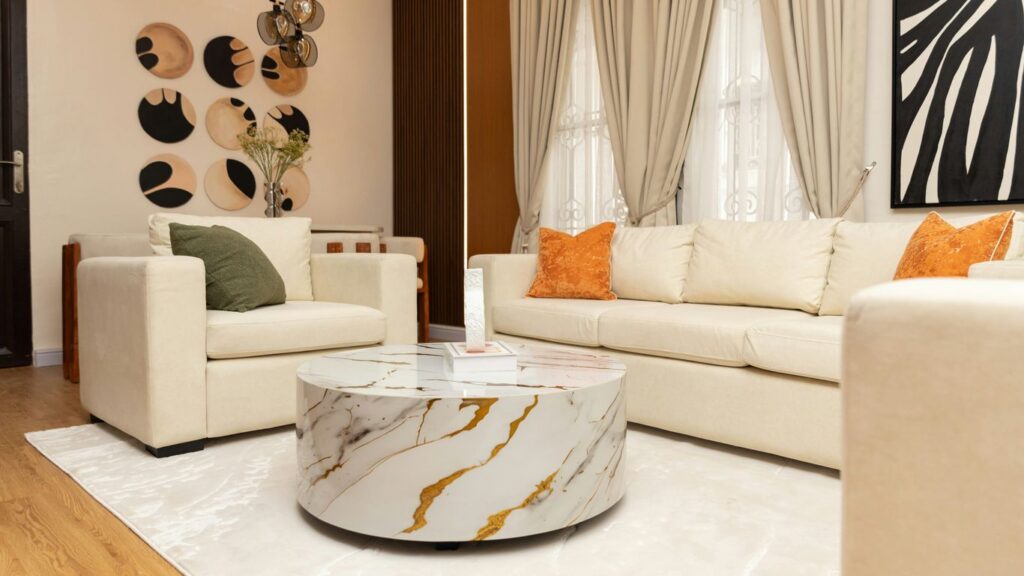
Key Takeaways
A well-chosen marble top coffee table should fit the room, the way you live and the conditions of a Singapore home. Measure carefully, compare materials honestly and confirm every specification before ordering.
- Measure the seating area, walkways and delivery route before choosing a shape.
- Compare natural marble with sintered stone and ceramic alternatives according to use and maintenance.
- Keep height, visual weight and base proportions in balance with the sofa and rug.
- Allow for humidity, condensation, heat, cleaning and everyday spills.
- Check drawings, stone character, packing, delivery terms and warranty details before purchase.
1. Define your room’s needs and layout
A coffee table can make a living room feel settled, or make it feel crowded. Start with the room as it is used rather than choosing a striking top in isolation. For a marble top coffee table singapore homeowners can commission or purchase, the practical details are just as important as the stone’s appearance.
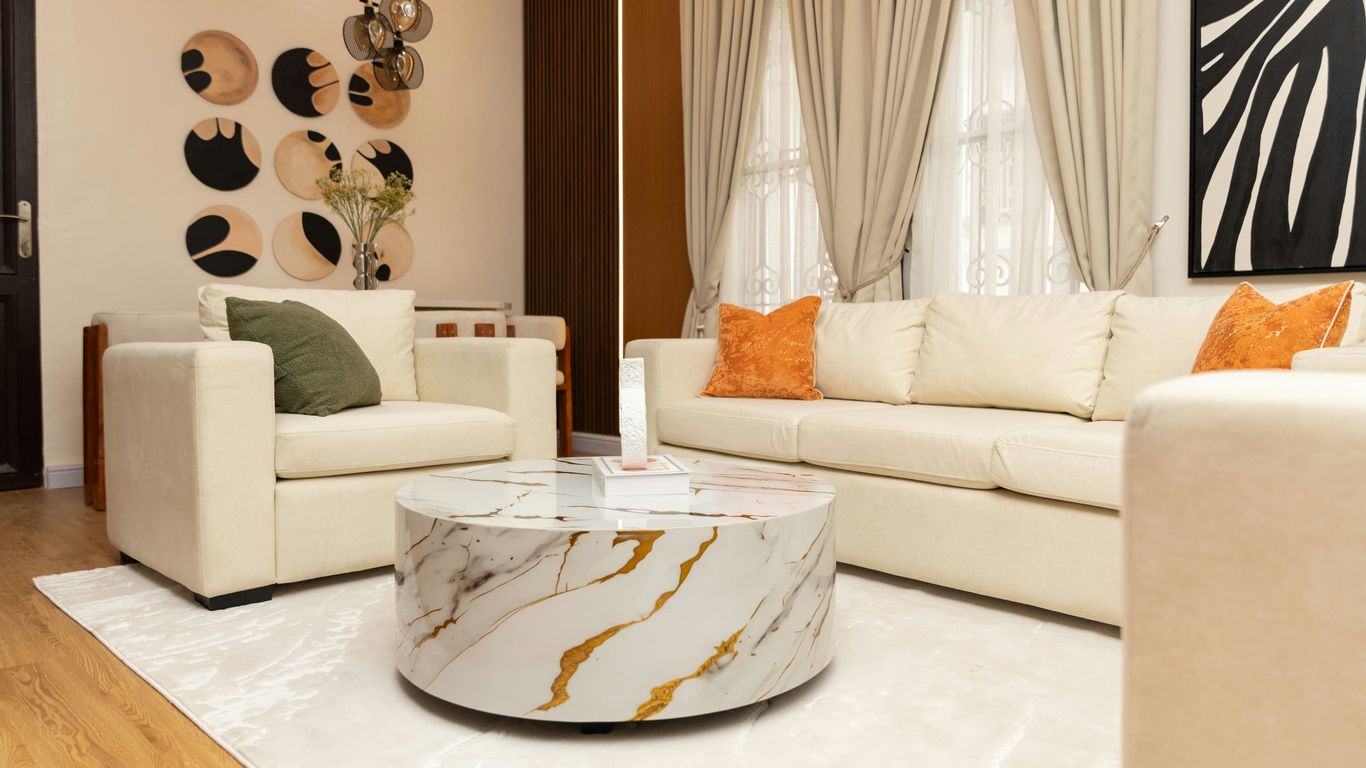
Measure the available floor area
Measure the open floor area between the sofa, chairs, media console and major walkways. Record the overall width and depth, then note fixed features such as columns, rugs, floor sockets and balcony doors. It is also sensible to measure the lift, stairwell and entrance route before settling on a heavy stone piece.
A useful marble coffee table guide can help you think through shape, height, edge details and quality checks before you compare individual designs. Keep those measurements with your room photographs so a quotation or drawing can be reviewed against the actual space.
Match the table shape to your sofa arrangement
A rectangular table generally works well with a long sofa, while a round or oval top can soften a compact arrangement or a setting with several occasional chairs. Square tops suit rooms with a centred seating group, provided there is enough room to move around all four sides. The right shape follows the circulation pattern rather than simply copying the shape of the rug.
Allow comfortable clearance for movement
Leave a practical gap between the tabletop and the sofa so people can sit down, stand up and reach a drink without twisting awkwardly. Keep the main route through the room clear, especially if the table sits near a hallway or entrance. A smaller top with generous clearance usually feels better than a larger one that interrupts every movement.
Consider how the table will be used day to day
Think about whether the table will hold books, drinks, children’s items, a laptop or serving pieces. A delicate edge may look refined but need more care in a busy home, while a lower table may be comfortable for lounging but less convenient for entertaining. Write down the ordinary uses first; the design brief becomes clearer once the table has a job.
2. Choose the right marble or stone surface
Stone is not a single, uniform material. Natural marble brings variation in veining, tone, figuring, porosity and mineral marks, while sintered stone and ceramic alternatives offer a different relationship between appearance and maintenance. Look at samples in the finish you are considering, and ask how the selected material will be treated, edged and packed for delivery.
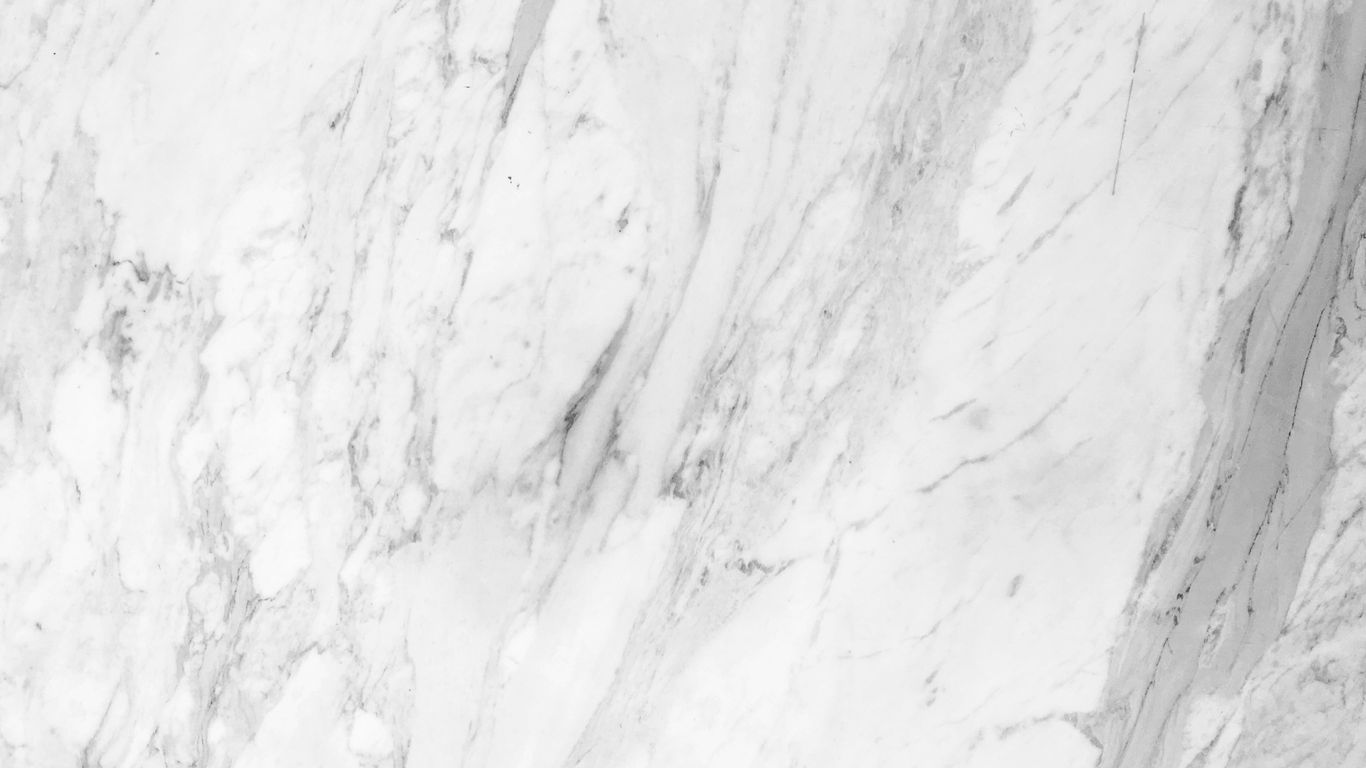
Compare natural marble with sintered stone and ceramic alternatives
Natural marble is chosen for its depth, variation and tactile character, but it may require more attentive care around acidic foods, coloured liquids and standing moisture. Sintered stone and ceramic alternatives can suit clients who prioritise a more consistent surface or particular resistance characteristics. Local sintered stone options may also be useful for comparing practical finishes and storage-friendly designs, although the specification still needs to be checked for the exact product.
Understand veining, colour variation and surface character
Ask to see the actual slab or a meaningful material selection rather than relying only on a styled photograph. Veining direction can change the impression of a top, particularly when the edges are mitred or the design uses more than one visible face. Natural variation is part of the material, not an error to be corrected, so the approved drawing and stone-selection process should make the expected character clear.
Check resistance to stains, scratches and heat
Ask what the surface can reasonably withstand and what it cannot. Coasters, trivets and soft pads remain sensible even when a surface has been sealed or finished for easier care. A finish may reduce everyday marking without making the top immune to scratches, heat, impact or staining.
Ask about sealing and long-term maintenance
Find out whether sealing is included, what it is intended to do and whether it needs renewing. Request simple cleaning guidance in writing, including products to avoid. A honed, polished or leathered finish can change both the look and the way marks appear, so maintenance should be considered alongside colour and veining rather than afterwards.
3. Select a practical size and proportion
The best size is the one that supports the seating group without dominating it. Marble has visual and physical weight, so a top that looks modest on a large showroom floor may feel substantial in a Singapore apartment. Compare the proposed dimensions with the sofa height, rug, side tables and clear walking routes before approving the design.
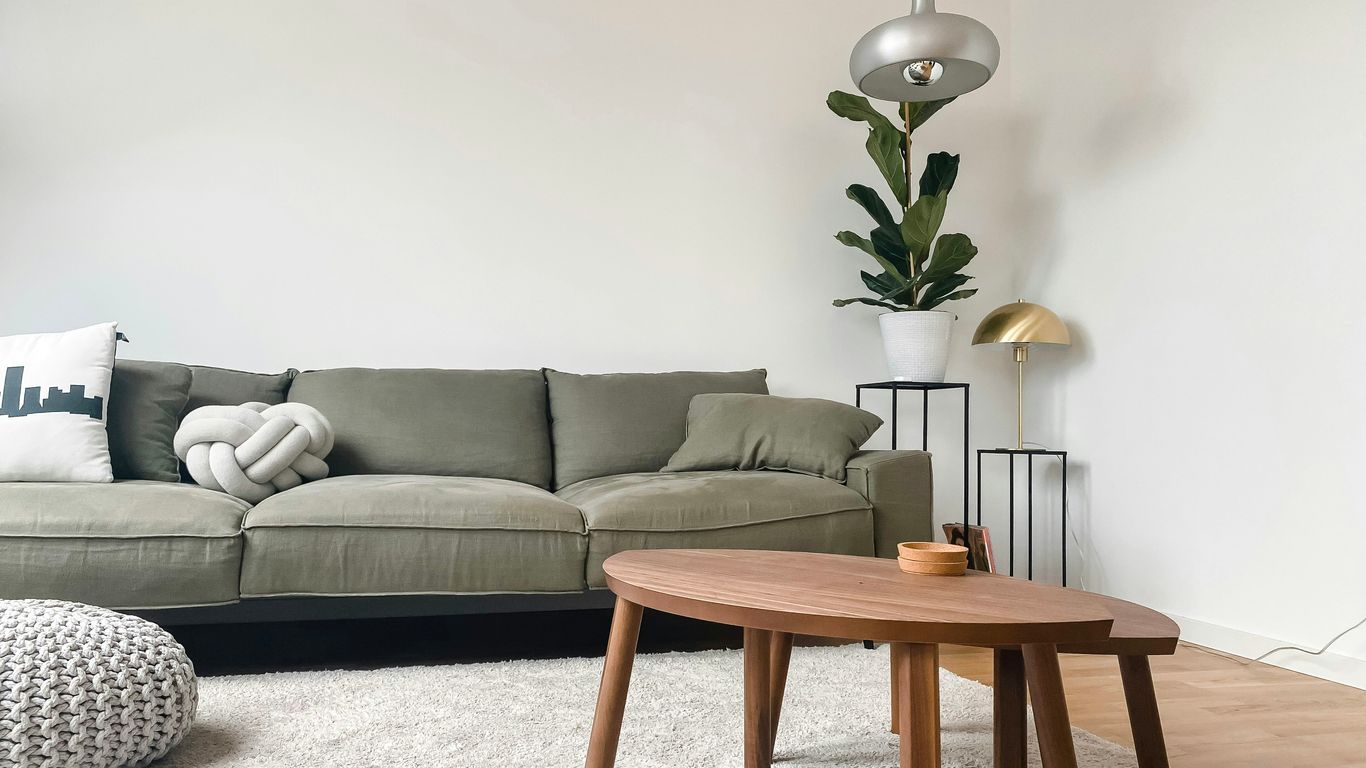
Choose a coffee table height that suits your sofa
A table that sits close to the seat height often feels calm and easy to use, while a noticeably lower design creates a more relaxed profile. Measure the sofa cushion rather than only the frame, since deep or soft seating changes how the table is reached. Consider the users of the room, including older family members and children, before choosing an unusually low top.
Match the tabletop dimensions to the seating area
The tabletop should serve the main seats without stretching so far that it blocks knees or doorways. For a long sofa, a generous rectangular top may be appropriate; for a pair of sofas or occasional chairs, a round design can make access more equal. Check the relationship with the rug as well, because a table that is too small can look disconnected from the seating arrangement.
Balance visual weight in small Singapore homes
In a compact home, a pale stone, slim edge or open base may make the room feel lighter, although the stone itself can still be heavy to move. Strong veining and thick profiles draw attention, so balance them with quieter upholstery or timber elsewhere. The aim is not to make the table disappear, but to give it enough space to be appreciated.
Consider nesting or extendable designs for flexibility
Nesting tables can provide extra surface when guests arrive and separate into smaller pieces during everyday use. An extendable arrangement may offer similar flexibility, but its moving parts and joining details should be inspected carefully. If you are comparing a single top with nesting tables, consider storage, cleaning and the weight of each piece rather than looking only at the maximum footprint.
4. Pick a base that suits your interior style
The base determines how the top is supported, how much floor remains visible and how the table relates to the rest of the room. Wood can introduce warmth, metal can sharpen a contemporary scheme and stone can create a more sculptural silhouette. Whatever the style, the base must be proportionate to the top and designed for the weight it carries.

Compare wood, metal and stone bases
Wood bases tend to soften the form of marble, especially in rooms with timber flooring or woven textures. Metal frames can look lighter and provide a crisp contrast, while a stone base creates continuity but may increase the overall mass. Compare the materials under the same lighting, since colour and texture can look quite different in a showroom photograph.
Assess stability, weight distribution and floor protection
A substantial top needs a stable base with weight distributed evenly across its supports. Check for rocking, sharp contact points and the type of feet provided for the floor. Ask how the top is secured to the base and whether the assembled piece can be moved safely without stressing the stone.
Match the base to contemporary, minimalist or classic décor
A simple metal frame can suit a restrained contemporary room, while a rounded timber base may work better with softer, more tactile furnishings. Classic interiors can accommodate turned, layered or more decorative forms, but proportion still matters. Take a photograph of the room and compare the base silhouette against the sofa arms, lighting and shelving rather than judging it alone.
Check whether the design allows easy cleaning underneath
Open clearance makes it easier to vacuum and retrieve toys, while a broad plinth can create a grounded look but collect dust at its edges. Ask how the underside is finished and whether the table can be cleaned without moving the entire piece. This small detail becomes noticeable in a high-use living room.
5. Account for Singapore’s climate and home conditions
Singapore’s warm, humid conditions make ventilation, condensation and cleaning part of the furniture decision. Air-conditioning may create temperature changes, while open windows and balconies can expose furniture to moisture and direct heat. Stone is durable, but it still benefits from sensible placement and prompt attention to spills.
Consider humidity, air-conditioning and indoor ventilation
Avoid assuming that indoor placement removes all environmental considerations. Keep the room reasonably ventilated and follow the supplier’s guidance for cleaning and sealing. If the table is placed close to an air-conditioning outlet, watch for recurring condensation and dry the surface rather than allowing moisture to sit.
Protect the surface from spills, condensation and tropical heat
Use coasters beneath cold glasses and trivets beneath hot items, even when the surface has a protective treatment. Wipe coffee, wine, oils and coloured liquids promptly, and avoid abrasive pads that can dull the finish. These habits are simple, but they make a noticeable difference to a table used every day.
Choose finishes that suit high-use living spaces
Polished surfaces reflect light and show the depth of some stones, while honed or leathered finishes offer a quieter appearance. A busy household may prefer a finish whose everyday marks are less visually prominent. Ask for care instructions matched to the precise stone and finish rather than relying on general advice about marble.
Plan for safe placement near windows, balconies and entrances
A table near an entrance may receive more dust, knocks and wet items, while one beside a balcony may be exposed to stronger light and occasional wind-driven rain. Keep enough clearance to open doors fully and avoid creating a trip hazard. Check the route from the entrance to the final position before delivery day.
6. Set a realistic budget for a marble top coffee table in Singapore
A price is shaped by more than the visible slab. Material selection, dimensions, edge work, base construction, finish, packing, destination and site access can all affect the quotation. Treat an online figure as an initial reference, not a like-for-like comparison between different specifications.
Understand the factors that affect the price
A larger or thicker top uses more material and may require more careful handling. Complex edges, cut-outs, curved work, book-matched surfaces and substantial bases add fabrication time and weight. Natural stone selection can also affect the result because the usable slab, veining direction and approved appearance are specific to the order.
Compare ready-made, custom-made and designer options
Ready-made pieces can be convenient when their dimensions and material meet your needs. A custom-made piece is more suitable when the room requires a particular size, edge, base or finish. Geoscenic Stone produces made-to-order marble, travertine and onyx furniture from an approved drawing, with material selection, cutting, finishing, inspection, packing and delivery forming part of the project process.
For a made-to-measure commission, made-to-order stone furniture is best assessed through the drawing and quotation rather than by assuming that a photographed example will be identical. Confirm the stone, finish, tolerances, edge details and any drillings before production begins.
Include delivery, assembly and installation costs
Ask whether delivery, packing, carrying into the room, assembly, installation, duties or taxes are included in the individual quotation. The answer can depend on destination, access and the amount of work required on site. If the table is heavy or the entrance is constrained, provide photographs and route measurements early.
Weigh durability against short-term savings
A lower initial price may not represent better value if the table is poorly proportioned, difficult to maintain or unsuitable for the room. Compare the stone specification, base construction, finish, packing and after-sales terms together. When commissioning, request a quotation with the room dimensions and intended use so the scope can be assessed clearly.
7. Inspect the table before buying and delivery
Inspection is easier when the expectations are written down. Use the approved drawing, quotation and material description as the reference, while remembering that natural stone will not have a perfectly uniform pattern. Before signing for delivery, allow time to examine the top, base, packaging and the route into the room.
Verify dimensions, materials and product specifications
Measure the delivered table and compare it with the agreed dimensions, allowing for stated tolerances. Check the stone type, finish, edge profile, base material and any agreed features such as cut-outs or fixings. Keep the documents together, since they are more useful than a product photograph when something needs clarification.
Check the marble top for cracks, chips and uneven edges
Inspect the top in good light, including corners, edges, underside areas and joins. Natural mineral marks, tonal shifts and veining are expected characteristics, but cracks, fresh chips or unsafe sharp edges should be raised before use. Photograph anything unclear and record it on the delivery paperwork where appropriate.
Confirm the base is level, secure and properly finished
Place the table on its intended floor and check for rocking or uneven contact. Look at the joints, feet, fixings and the point where the top meets the base. Protective pads should sit securely and the finished surface should not have exposed sharp points that could damage flooring or cause injury.
Review delivery access, returns and warranty coverage
Confirm who is responsible for carrying the table inside, assembling it and positioning it. Read the return and warranty terms carefully, particularly any exclusions relating to natural material characteristics, wear, installation or accidental damage. A considered inspection at delivery gives you a clear record and avoids uncertainty later.
A Considered Stone Choice
Choosing a marble top coffee table in Singapore is a balance of room planning, material knowledge and honest specification. Measure first, accept natural variation as part of the stone, and make sure the quotation covers the practical details from approved drawing to delivery. The result should look right in the room and remain manageable in everyday life.
Frequently Asked Questions
Is marble suitable for a coffee table in Singapore?
Yes, marble can be suitable indoors when it is correctly specified, finished and maintained. Protect it from standing moisture, acidic spills, excessive heat and abrasive cleaning, and follow the care guidance for the exact stone.
What shape of coffee table works best with a sofa?
Rectangular tables often suit longer sofas, while round or oval designs can improve flow around several chairs. The best choice depends on the seating arrangement, rug, walkways and available floor area.
How high should a marble coffee table be?
A coffee table is usually most comfortable when its height relates closely to the sofa seat. Measure the actual cushion height and consider how people will reach across it before choosing a particularly low or high design.
Does natural marble stain easily?
Marble can be porous and may mark if spills are left on the surface, particularly liquids containing acids, oils or strong colour. Sealing can support easier maintenance, but it does not remove the need for prompt cleaning and sensible protection.
Is sintered stone easier to maintain than marble?
Sintered stone is often selected for practical surface performance and a more consistent appearance, but the exact properties depend on the product. Compare the manufacturer’s specification, finish and care instructions with the way you intend to use the table.
What should I check before a coffee table is delivered?
Confirm the dimensions, material, finish, edge profile, base, delivery route, assembly scope and warranty terms. Also check that the lift, doors and stairways can accommodate the packed and assembled piece.
Can a marble coffee table be custom-made?
Yes, a custom table can be developed around a room’s dimensions, seating arrangement, preferred stone, edge, base and finish. The approved drawing should record the specification clearly before fabrication starts.
Plan Your Stone Piece
If you have the room measurements and a clear idea of the stone, finish and base you want, contact Geoscenic Stone to discuss a made-to-order piece and receive a quotation based on the project’s actual specifications.