
Key Takeaways
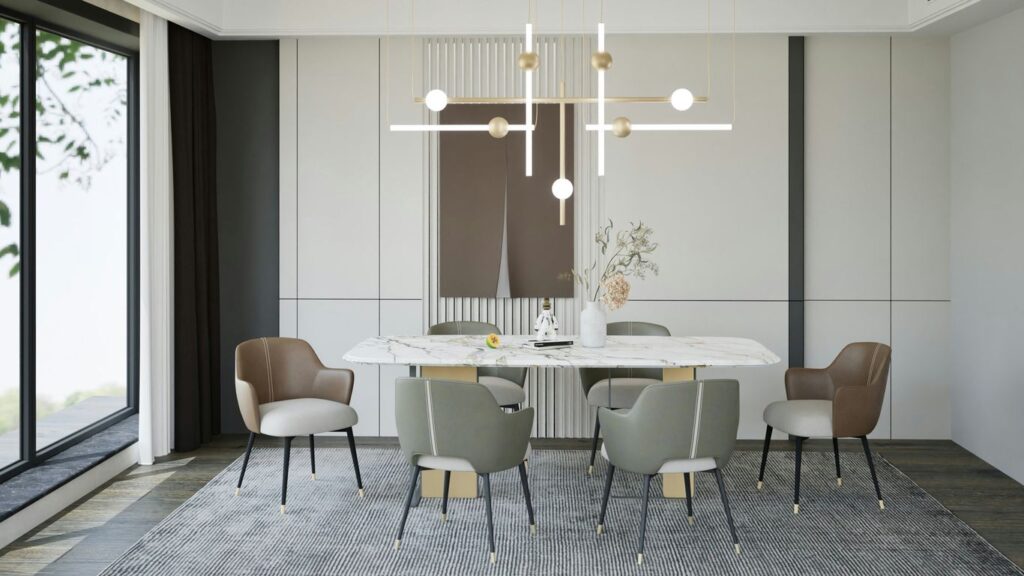
A marble dining table can become the visual centre of a room, but it rewards careful selection and sensible daily care.
- Choose the stone, finish and colour with your household’s routines in mind.
- Measure the room, circulation routes and chair positions before deciding on a size.
- Treat veining and mineral variation as part of natural marble, not as a flaw.
- Give equal attention to the base, edge detail, delivery route and installation plan.
- Confirm maintenance, sealing, warranty and quotation details before placing an order.
Understanding marble dining tables
Marble brings geological variation into the dining room: no two slabs will have precisely the same movement, tone or mineral pattern. It is beautiful, cool to the touch and capable of making a relatively simple room feel considered. The right choice depends on more than colour, though; formation, finish, scale and daily use all affect how the table will live in your home. For a broader overview of natural and engineered stone choices, this marble dining table buying guide is a useful companion.
What marble is and how it is formed
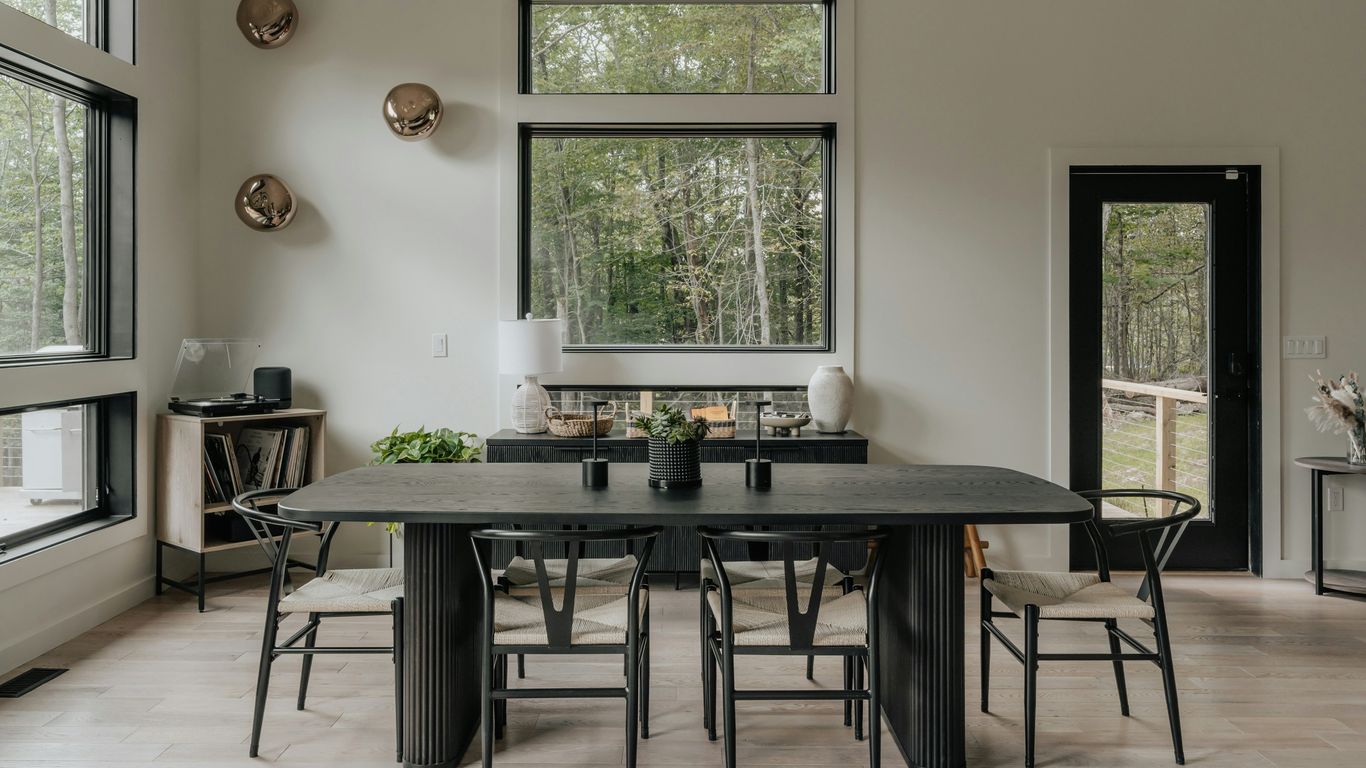
Marble is a natural stone formed when limestone is changed by heat, pressure and geological movement. During that process, minerals can create veins, clouds, flecks and shifts in colour. Some slabs are relatively calm, while others contain strong bands that become the defining feature of the furniture.
For a dining table, that variation has practical consequences. A slab should be viewed as a whole before fabrication where possible, because the position of a cut, the edge profile and the orientation of the veining can change the finished impression. Natural pores and mineral marks are also part of the material’s character.
Popular marble types and their visual differences
Carrara is often associated with a pale background and fine grey veining, while Calacatta can show stronger, warmer or more dramatic movement. Emperador tends towards brown tones, and green, black and richly patterned marbles offer a more assertive presence. Names can describe broad families rather than one perfectly uniform appearance, so a sample alone may not represent the complete slab.
Ask to see the proposed material in adequate light and discuss acceptable variation before production. For made-to-order work, Geoscenic Stone selects material for each order and confirms the stone and dimensions in an approved production drawing, rather than treating a photographed example as interchangeable with the finished piece.
Honed, polished and leathered finishes
A polished finish reflects more light and usually makes colour and veining appear sharper. Honed marble has a softer, low-sheen surface that can feel quieter and more relaxed, while a leathered finish introduces subtle texture and can make the stone feel less formal. None of these finishes makes marble maintenance-free; they simply change its appearance and tactile quality.
Think about lighting, fingerprints and the way the table will be used. A glossy surface may suit a formal dining room, whereas honed or leathered marble can sit comfortably within a more understated interior. The edge finish should be considered at the same time, since a crisp, rounded or bevelled edge changes the table’s visual weight.
How marble compares with quartz, granite and porcelain
Marble is valued for its natural movement, but it is more reactive to certain foods and drinks than many manufactured surfaces. Granite is also natural and is generally hard-wearing, while quartz and porcelain offer more controlled appearance and different maintenance profiles. The best option is the one that matches the room, budget and tolerance for change rather than the one with the longest list of technical advantages.
| Material | Visual character | Main consideration |
|---|---|---|
| Marble | Natural veining and mineral variation | Can etch and stain without suitable care |
| Granite | Often granular, with strong natural patterning | Slab appearance and weight vary considerably |
| Quartz | More controlled colour and pattern | Exact care guidance depends on the product |
| Porcelain | Consistent contemporary finishes | Edge, fabrication and installation need careful planning |
This comparison is a starting point, not a substitute for a material sample and care instructions. If the marks and evolution of natural stone would frustrate you, a more uniform surface may be the calmer choice; if individuality matters most, marble has a quality that is difficult to reproduce.
Weighing the advantages and drawbacks
A marble dining table is both furniture and a large visible piece of stone. That gives it presence, but it also means its weight, surface sensitivity and natural variation should be considered honestly. Marble can suit a formal dining room, a hospitality setting or a relaxed family space, provided the specification reflects the way the room is used. The useful question is not whether marble is universally practical, but whether its particular trade-offs fit your household.
Why marble makes a distinctive dining table
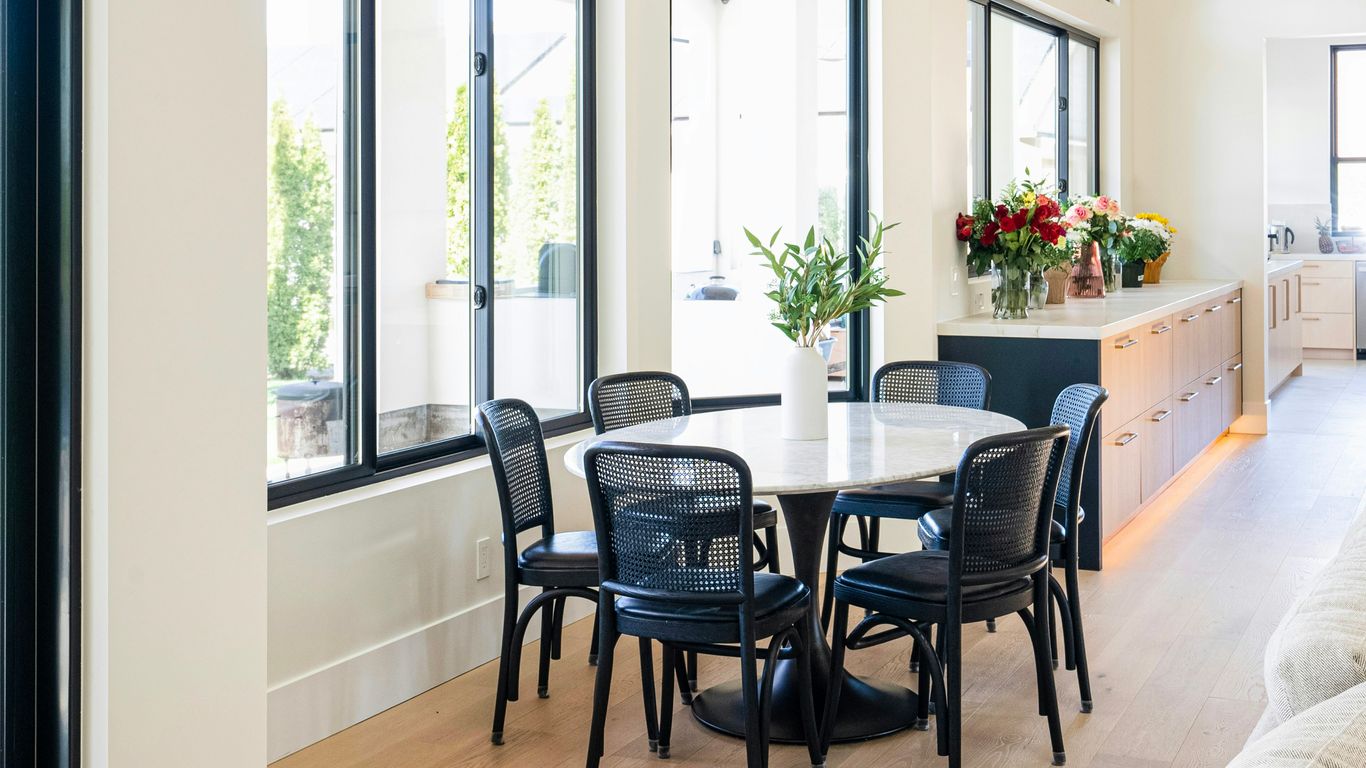
The appeal is immediate: every slab has its own arrangement of veins, and the surface changes subtly as daylight moves across it. A simple base can let the top carry the composition, while a sculptural base can make the whole table feel architectural. Marble also pairs well with timber, upholstery, metal and stone, which gives designers plenty of room to set the tone.
Its individuality is especially valuable in a made-to-measure interior. Rather than forcing the room around an anonymous standard piece, the table can be considered alongside the proportions, lighting and seating from the beginning. Natural variation is part of the design, not an error to be hidden.
Heat resistance and everyday durability
Marble is not easily damaged by the warmth of an ordinary plate or serving dish, but very hot cookware should still be placed on a trivet. Abrasion, impact and spills are more relevant in daily use than moderate heat. A well-fabricated top with a sensible edge can last for many years, though longevity depends on the stone, thickness, finish and how the table is treated.
A dining table also needs a stable base and properly supported top. Ask how the piece will be assembled and whether the design allows safe handling during delivery. Durability is not just a property of the slab; it is the result of material choice, fabrication, construction and use.
Why marble can stain, scratch and etch
Porous stone can absorb some liquids, especially when a spill is left in place. Acidic ingredients such as citrus, vinegar and wine may react with the surface and leave a dull mark known as etching. Sharp or gritty objects can scratch, while dragging heavy ceramics may create fine abrasions that are more visible on a polished finish.
The good news is that many risks are manageable. Wipe spills promptly, use coasters and placemats, and follow the fabricator’s specific care advice instead of reaching for an aggressive household cleaner. A mark that develops over time is not necessarily a structural failure, but it may need professional attention if the appearance bothers you.
When a marble dining table may not suit your household
A busy family home, a short-term rental or a household that wants a completely uniform surface may find marble demanding. It may also be unsuitable if the table will routinely be used for messy craft work, food preparation or outdoor exposure without protection. Read this discussion of marble’s practical limitations alongside your own habits before deciding.
The choice becomes easier when you picture an ordinary week rather than an idealised dinner party. If you can accept occasional marks and are willing to care for the surface, the material’s character may outweigh its sensitivities. If not, choose a surface whose behaviour feels less noticeable in daily life.
Choosing the right size and shape
The most attractive marble dining table can feel wrong if it overwhelms the room or leaves too little space to move. Begin with the dining area, not the slab you happen to like, and measure fixed features such as walls, radiators, doors and pendant lights. Then consider how many people need to sit comfortably on a normal evening and how often the table will host more guests. A round marble table guide can help when a circular design is under consideration.
Measuring your dining area
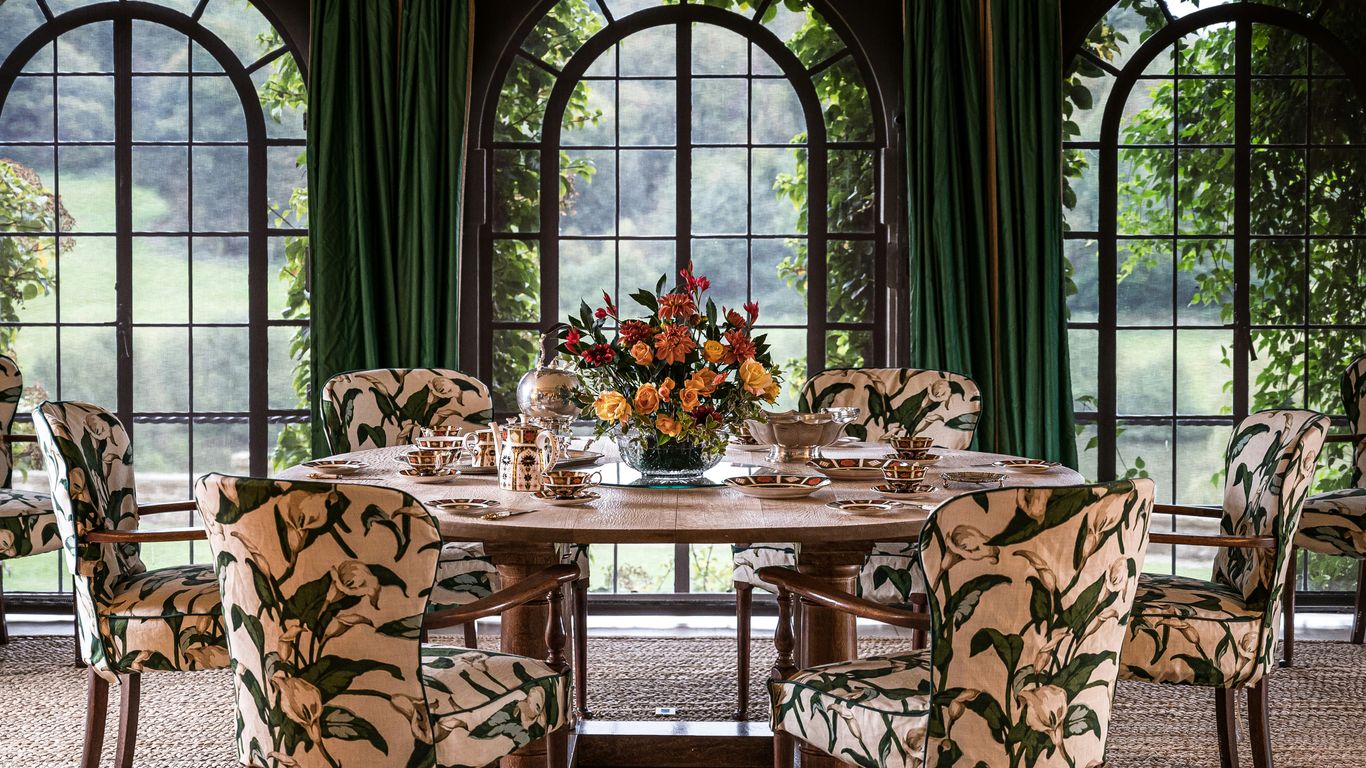
Measure the clear floor area and mark the proposed tabletop with masking tape or folded newspaper. Include the footprint of the chairs, not just the table itself, because a chair pulled back for someone to sit down needs more room than a chair pushed neatly underneath. Check sightlines and door swings too.
A simple measuring sequence keeps the decision grounded:
- Record the room’s usable length and width.
- Mark circulation paths between the dining area and nearby doors.
- Place temporary chair footprints around the proposed tabletop.
- Check pendant, sideboard and radiator positions.
Walk around the taped outline at different points in the day. If the route feels tight with an empty room, it will feel tighter once people, plates and serving dishes are present. A smaller table with comfortable circulation usually feels more generous than a larger one that blocks movement.
Selecting a table length for the number of diners
Allow roughly 60 centimetres of table edge per diner as a starting point, then adjust for chair width, place settings and the shape of the ends. A rectangular table may seat additional people at its ends, while a pedestal can make those positions easier to use. Formal entertaining often needs more space than occasional family meals.
Do not rely on a retailer’s seating number without checking the actual dimensions. The thickness of the top, the base position and the width of the chairs can all change how comfortably people sit. If the table will be used for projects or serving, include that surface area in the brief.
Round, oval, rectangular and square designs
Round tables encourage conversation and remove corners from compact rooms, but their diameter increases quickly as seating capacity rises. Oval tables offer some of the same softness while providing a longer central surface. Rectangular tables are efficient for larger groups and traditional layouts, while square designs work best when the room and seating arrangement are proportionate.
Shape should follow both circulation and social preference. A round table can make a small dining area feel open, whereas a long room may benefit from an oval or rectangle that follows its architecture. Consider the base at the same time, since the visual and physical footprint of a pedestal differs from that of four corner legs.
Allowing enough space for chairs and movement
Leave enough clearance for chairs to be pulled back without striking walls or furniture. Where people regularly pass behind seated diners, allow more space than you would for a quiet room used only at mealtimes. Rugs also need to be large enough that chair legs remain on them when the chairs move.
These details are easy to overlook when concentrating on the stone. Draw the room to scale, include the real chair dimensions if possible, and test the arrangement before approving a production drawing. Proportion is what makes a marble dining table feel settled rather than imposing.
Matching the tabletop with the right base
The base carries the weight of the stone and controls how people use the table. It also contributes strongly to the overall style: a pale top on timber feels different from the same top on dark metal or a carved stone pedestal. Consider legroom, cleaning, stability and the visual balance of the room together. A base should support the tabletop without competing with its natural pattern.

Pedestal and trestle bases compared
A pedestal keeps the area beneath the tabletop relatively open and avoids corner legs, which can be useful for flexible seating. A trestle gives a more architectural or farmhouse character and can work well beneath a long top, although its supports need to be positioned carefully around chairs and feet. Four-leg bases remain familiar and can provide a clear sense of structure.
The right option depends on the shape and size of the top. A large round table often benefits from a centred pedestal, while a long rectangular table may look balanced with trestles or a pair of substantial supports. Ask for a plan showing the base location, not only a front elevation.
Wood, metal and marble base materials
Timber introduces warmth and can soften the cool visual quality of stone. Metal creates a lighter, more graphic contrast, while a marble base gives the table a monolithic feel and increases the amount of stone in the room. Mixed materials can be especially effective when the base echoes an existing finish in the chairs, lighting or flooring.
Material compatibility matters beyond appearance. The base finish should tolerate contact, cleaning and the expected environment, and the connection between base and top should be engineered for the table’s dimensions. Samples viewed next to the proposed slab are more useful than isolated swatches.
How the base affects stability and legroom
A base that looks delicate may still be stable if it is properly proportioned and weighted, while a visually heavy base can feel awkward if it interrupts knee space. Check how the load is distributed and whether the top is supported across its intended span. Uneven floors may also require adjustable feet or careful site levelling.
Stability should be discussed before fabrication, especially for large or cantilevered designs. Confirm the overall height, top thickness, support points and assembly method in the drawing. These details affect both safety and comfort and should not be left to delivery day.
Coordinating the table with your dining chairs
Chairs should relate to the table’s height, edge profile and visual weight. Upholstered chairs can make veined marble feel softer, timber chairs add warmth, and slender metal frames can emphasise a contemporary direction. Make sure armrests can slide beneath the top if that is part of the intended arrangement.
Look at the ensemble from the doorway as well as from a seated position. The table, chairs, floor and lighting should share a proportionate rhythm, even if their materials differ. For more ideas on combining stone with timber, upholstery and metal, explore these marble table design ideas.
Selecting colour, veining and finish
Colour sets the table’s relationship with the rest of the room, while veining determines how much visual attention the top demands. A quiet stone can support expressive chairs or lighting; a dramatic slab may need a simpler setting. Finish changes the way both colour and movement are read. Samples are useful, but a full slab or carefully selected slab photographs provide a more reliable sense of scale.
White, black, green and other marble colours
White marble can brighten a room and make a substantial table feel lighter, while black marble creates depth and a more formal mood. Green marble brings a botanical or richly layered quality, and beige, brown, grey and rust-toned stones can connect naturally with timber and textured fabrics. Colour should be judged in the actual room, since artificial and natural light can shift its appearance.
Do not choose from a name alone. Marble names are used across varied material families, and the background may range from warm to cool within a broad category. Request a sample, discuss the expected variation and consider how the colour will look beside the floor and wall finishes.
Subtle versus dramatic veining
Fine, restrained veining tends to recede, allowing artwork, chairs or lighting to lead. Broad veins and strong contrasts make the tabletop a statement, particularly when the slab is bookmatched or used on a large surface. Neither approach is more correct; the decision is about how much movement the room can comfortably hold.
The cut and orientation can also alter the reading of a vein. A fabricator can explain how much of the slab will be visible and where joins, openings or edge details may fall. For a project with several stone elements, continuity should be discussed rather than assumed.
Choosing between a uniform and natural appearance
A more consistent surface may be easier to coordinate with a tightly controlled interior scheme. Natural marble, by contrast, may include tonal shifts, pores, small mineral marks and changes in veining across the slab. Those differences are part of why the material feels individual, but they should be agreed as acceptable before work begins.
Ask what the quotation and approved drawing say about material selection and variation. A clear conversation at this stage is kinder than expecting a natural product to resemble a digitally selected image exactly. It also gives the maker a chance to suggest a different slab if the first choice does not suit the brief.
Matching the marble to your interior style
Marble can support classic, contemporary, quiet luxury, industrial and eclectic interiors, depending on the shape, finish and base. The same white stone may feel traditional with turned timber legs or distinctly modern with a thin profile and a dark pedestal. Rugs, curtains and upholstery can temper the coolness of the stone without hiding it.
Aim for relationships rather than exact matching. Repeating one undertone or finish elsewhere in the room is usually enough to make the table feel integrated. Natural contrast often looks more considered than a room in which every surface tries to be identical.
Caring for and protecting a marble dining table
Good care is mostly simple and consistent. Remove spills before they have time to absorb, use gentle products and avoid treating the tabletop like a chopping board or workbench. The exact maintenance plan depends on the stone and finish, so retain the care guidance supplied with the piece. A little routine protection is easier than trying to restore a neglected surface later.
Daily cleaning products and techniques
Use a soft cloth with clean water or a pH-neutral stone cleaner recommended for the marble. Wipe rather than scrub, and dry the surface to reduce streaks and standing water. Avoid abrasive powders, scouring pads, strong acids and generic bathroom products unless the manufacturer specifically confirms they are suitable.
Clean crumbs before wiping so grit does not drag across the surface. If a spill leaves a mark, do not immediately apply several different chemicals; identify the substance and seek stone-specific advice. Gentle, repeated care is safer than a forceful response.
Preventing stains, etching and water marks
Place drinks on coasters and clear food or liquid spills promptly, particularly wine, citrus, vinegar, oils and strongly coloured sauces. Water rings are often associated with moisture trapped beneath a glass or object, so drying the area and allowing air to circulate can help. Keep ink, cosmetics and craft materials away from the dining top unless the surface is protected.
Etching is a chemical reaction rather than a conventional stain, which is why a pale dull mark may remain after the liquid has been wiped away. Prevention is the least disruptive approach. If damage occurs, a stone professional can advise whether honing, polishing or another treatment is appropriate.
Using placemats, coasters and table protection
Placemats reduce abrasion from plates and cutlery, while felt pads beneath decorative objects can prevent fine scratches. Trivets are sensible for hot serving dishes, and a protective cloth can be useful during parties or messy activities. Choose accessories that sit flat and do not trap dampness against the stone for long periods.
Protection should be practical enough that people actually use it. A table covered permanently may lose some of its visual pleasure, so many households reserve fuller protection for meals involving staining foods, children’s activities or large gatherings. The aim is to reduce avoidable wear, not to make the table untouchable.
Sealing schedules and professional maintenance
Sealing can reduce absorption, but it does not make marble stain-proof or prevent etching. The suitable product and interval depend on the stone’s porosity, finish and use. Follow the fabricator’s guidance and test any treatment in an inconspicuous area rather than applying a household sealant by guesswork.
Professional maintenance may be worthwhile when the table has developed widespread dulling, scratches or stains. Keep records of the stone, finish and any products used, since that information helps a specialist choose an appropriate treatment. Routine inspection is particularly sensible in hospitality and other high-use settings.
Checking quality, cost and delivery
The price of a marble dining table reflects more than the square metre rate of the stone. Slab selection, thickness, edge work, base construction, finishing, packing, destination and site access can all affect the quotation. For a made-to-order piece, the drawing and specification are as important as the photograph. Geoscenic Stone produces made-to-order furniture and architectural pieces from an approved drawing, with material selection, cutting, finishing, inspection, packing and delivery considered for the individual project.
What affects the price of a marble dining table
The stone itself may vary greatly in price according to rarity, slab size, background, veining and availability. Fabrication becomes more involved when the design includes thickened edges, curved cuts, bookmatching, recesses or a complex base. Packing, crating, freight, destination charges and installation should also be clarified rather than assumed.
Request an itemised quotation where possible. It should identify the material, dimensions, finish, edge, base, quantities and any services included. A lower initial figure may not represent the same specification, delivery arrangement or level of protection.
Inspecting the slab, edges and joins
Look for a slab that suits the agreed colour and variation range, rather than expecting a completely uniform field. Edges should be consistently finished, with corners shaped as specified and no obvious chips or rough transitions. If the design contains joins, ask where they will fall and how the veining will be aligned.
Inspection photographs can help when the piece is being produced remotely, but they do not replace a clear approval process. Confirm the final dimensions and details against the approved drawing. For natural stone, the purpose of inspection is to verify workmanship and suitability, not to eliminate every geological difference.
Understanding weight, access and installation requirements
Marble is heavy, and a large top may require a planned route through doors, lifts, stairwells or loading areas. Measure the narrowest points and check building rules before fabrication. Consider whether the top and base will arrive separately, how they will be carried, and who is responsible for assembly and levelling.
Geoscenic Stone’s quotations account for the individual piece, weight, packing, destination, site access and any installation requirements. That information is most useful when the project team supplies accurate site details early. A delivery plan should be part of the design conversation, not an afterthought.
Questions to ask about sourcing, warranty and returns
Ask where the stone is being sourced, how natural variation will be assessed, which finish and sealer are specified, and what the warranty covers. Clarify the approval point for drawings and material, the process for reporting transit damage, and whether bespoke dimensions affect cancellation or return rights. Get duties, taxes, delivery and installation stated plainly in the individual quotation.
For larger projects, nominate one person to approve the material and retain the drawing, quotation, care instructions and delivery records. You can also request a quotation when you are ready to discuss a made-to-measure piece. Clear documentation protects both the client and the maker and makes the final result easier to evaluate fairly.
Bring Your Table Brief Together
If you have a room, a preferred stone or an unfinished idea, speak with Geoscenic Stone about a made-to-order piece shaped around your dimensions, material, finish and delivery requirements. A considered quotation and approved drawing can turn the early design conversation into a practical next step.
Conclusion
Choosing a marble dining table is a balance between visual expression and everyday reality. Consider the stone’s variation, finish, size, base, care needs and delivery route as one connected decision, and you are more likely to choose a table that remains rewarding long after the first impression.
Frequently Asked Questions
Is marble suitable for an everyday dining table?
Yes, provided you accept that it needs sensible care. Use coasters, placemats and trivets, clean spills promptly and expect natural changes such as minor etching or marks over time.
What is the best finish for a marble dining table?
Polished, honed and leathered finishes each have a different appearance and feel. Polished is reflective, honed is softer and lower-sheen, while leathered adds texture; the best choice depends on lighting, style and tolerance for visible wear.
How much space should be left around a dining table?
Allow room for chairs to pull back and for people to walk behind seated diners. The exact clearance depends on the room and furniture, but a taped floor layout is a useful way to test the arrangement before ordering.
Can hot dishes be placed directly on marble?
Moderately warm dishes are usually less concerning than very hot cookware, but trivets are still recommended. They reduce thermal stress, protect the finish and help prevent marks from heat or moisture.
Does marble need to be sealed?
Many marble surfaces benefit from suitable sealing, but sealing does not make them stain-proof or etch-proof. The product and schedule should be chosen according to the stone, finish and expected use.
How do I choose between a round and rectangular table?
Round tables encourage conversation and can work well in compact spaces, while rectangular tables use long rooms efficiently and suit larger groups. Compare the shape with circulation, seating numbers and the position of the base.
What should I check before delivery?
Confirm the final dimensions, access route, packing, delivery responsibilities, assembly method and installation requirements. Also check that the quotation states what is included and how natural variation and transit damage will be handled.