
Key Takeaways
A marble dining table can anchor a contemporary room without making it feel overly formal. The most successful schemes balance the stone’s visual weight with thoughtful proportions, warmer materials and comfortable seating.
- Choose the table shape according to circulation and available floor space.
- Let the marble’s colour and veining guide the rest of the room.
- Pair stone with timber, upholstery or restrained metal for balance.
- Use lighting, rugs and accessories to soften a substantial tabletop.
- Confirm dimensions, finish and practical details before commissioning a made-to-measure piece.
1. Pair a round marble dining table with sculptural chairs
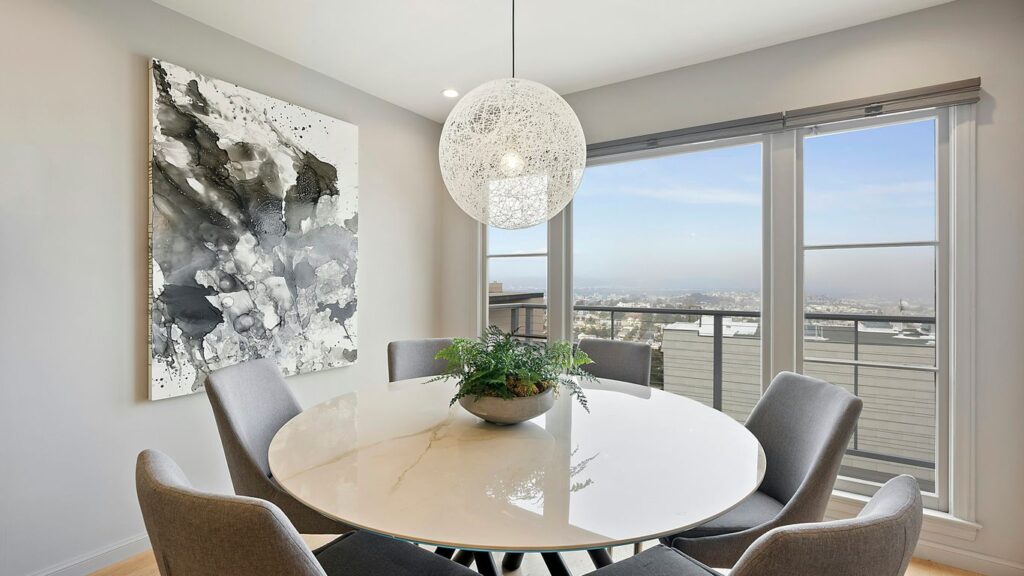
A round table changes the mood of a dining room immediately. Its curved outline encourages conversation, removes sharp visual corners and gives every seat a similar relationship to the centre. In a contemporary interior, that simple geometry can feel especially effective against a rectilinear kitchen or a room with strong architectural lines.
Sculptural chairs make the arrangement feel considered rather than merely functional. Look for silhouettes with a curved back, unusual leg detail or a gently enveloping seat, but keep the upholstery relatively quiet if the marble has lively movement. The aim is to create a conversation between shapes, not a collection of competing statements.
Scale matters more than decoration. Leave enough space behind each chair for people to move comfortably, and consider a slim profile around the tabletop so the room does not feel crowded. A smaller round top can suit a breakfast area, while a larger diameter gives a formal dining setting a softer, more sociable character.
2. Choose a waterfall-edge modern marble dining table
A waterfall edge allows the surface to flow visibly over the side of the table, creating a continuous stone gesture. It works particularly well in minimalist rooms where there are few decorative elements to interrupt the form. The profile is confident, but its simplicity keeps the overall effect architectural rather than ornate.
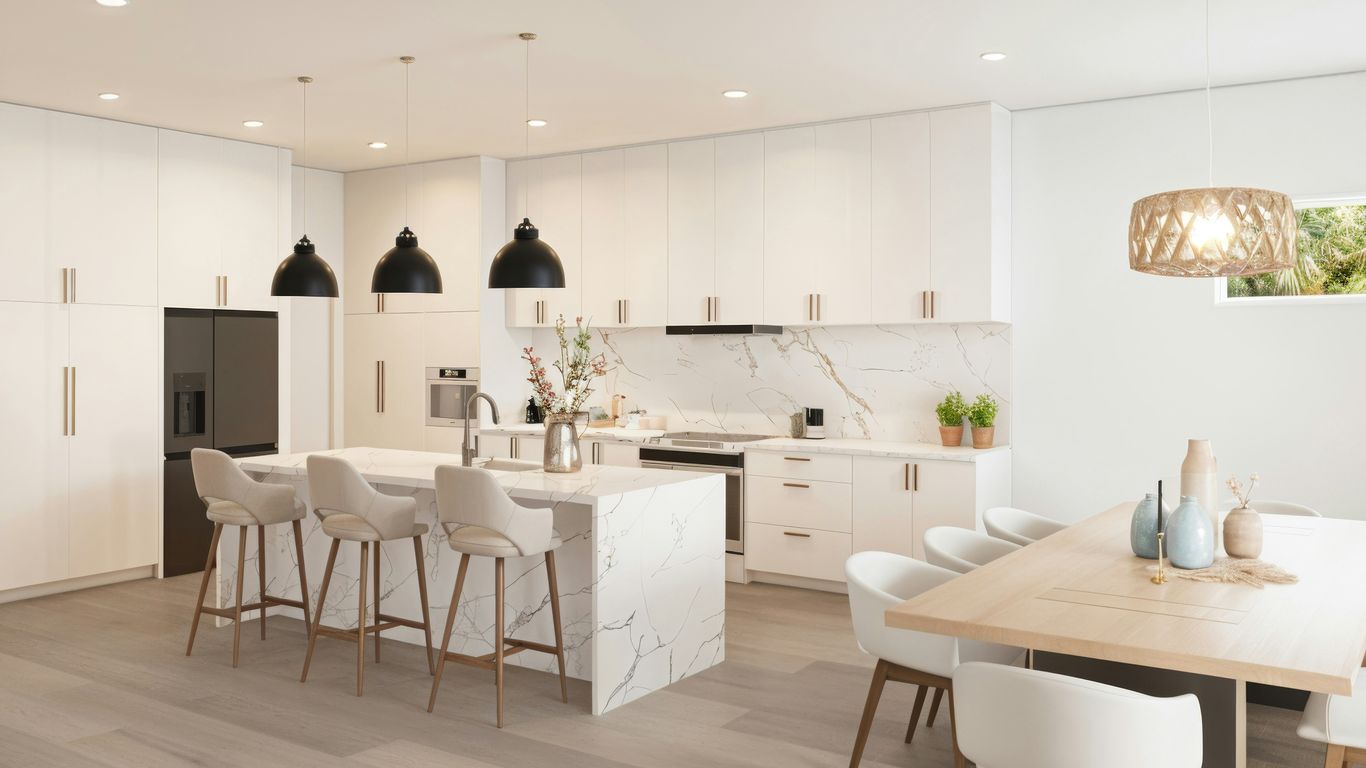
When planning a waterfall-edge modern marble dining table, inspect the proportions from standing height as well as from the seated position. The edge should feel substantial enough to read as intentional, without taking too much legroom or making the top appear visually heavy. The relationship between the slab thickness, overhang and supporting structure deserves attention in the drawing stage.
For further visual reference, contemporary marble tables often show how clean silhouettes and mixed materials can keep stone feeling light. At home, repeat one detail from the table elsewhere, such as a slim dark frame, pale timber tone or softly rounded accessory, so the design feels connected without becoming matched.
3. Create contrast with a dark marble tabletop
Dark marble brings depth to a dining room and can ground a pale, open interior. Charcoal, deep green and near-black stones work especially well with brushed metal, light oak and warm neutral walls. The result is less about making the room dramatic at every turn and more about giving the eye one dependable point of gravity.
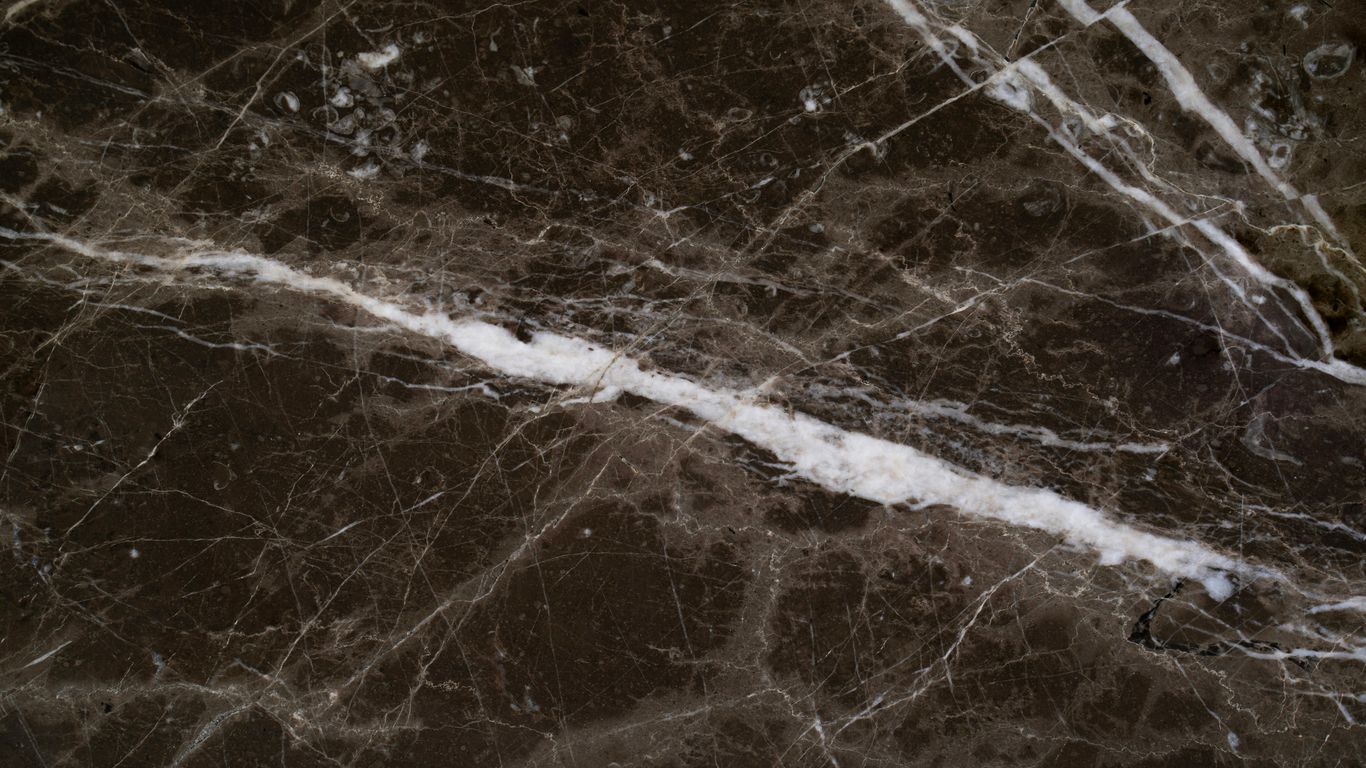
Contrast is most successful when it is repeated sparingly. A dark tabletop might relate to window frames, cabinet handles or a single piece of artwork, while the surrounding upholstery and flooring remain lighter. This approach lets the stone hold attention without making the dining area feel closed in.
The finish also changes the impression. A polished surface reflects more light and can appear formal, whereas a honed finish has a quieter, softer presence. Whichever finish is selected, allow for natural differences in tone, mineral marks and veining; these are part of the character of natural stone rather than details to be standardised away.
4. Combine white marble with warm timber details
White marble can brighten a dining area, but an entirely cool palette may feel a little distant. Timber introduces visual warmth and a more tactile note, whether it appears in the floor, chairs, cabinetry or the table base. Oak, walnut and smoked timber each shift the atmosphere in a different direction, from relaxed and pale to richer and more intimate.
Use the wood to define the room’s temperature rather than to compete with the marble. A simple timber base, for example, can make a thin white top feel less stark, while wooden chairs bring comfort around a more formal stone surface. Keep the number of timber tones limited so the veining remains legible.
A useful starting point is to select the marble and timber together, rather than choosing one after the other. Compare samples in the actual room’s daylight, because white stone can read differently beside warm flooring or cool cabinetry. This kind of early comparison is also helpful when reviewing the wider marble dining table guide, particularly for decisions about shape, finish and base style.
5. Make a statement with a pedestal base
A pedestal base gives a dining table a strong central presence while leaving the perimeter relatively clear. That can make chairs easier to position and reduce the visual interruption created by multiple legs. It is a particularly useful direction for round or oval tops, where a central support follows the logic of the shape.
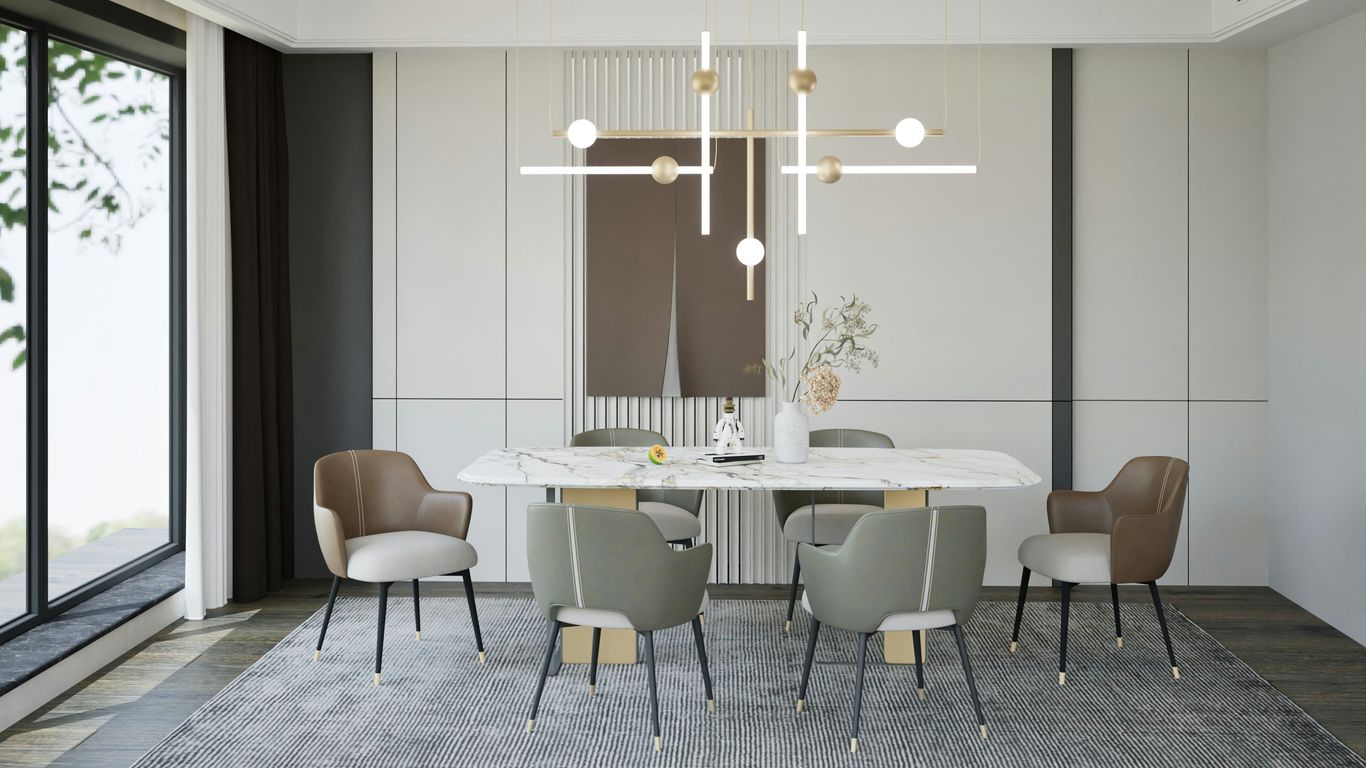
The base should be judged as carefully as the slab. A fluted or faceted form adds texture, while a smooth monolithic support keeps the composition restrained. Consider how the base meets the floor, how much clearance it leaves for feet and how its width relates to the tabletop from every angle.
For a project with unusual dimensions or a precise architectural brief, made-to-order stone furniture can be developed around an approved production drawing. Geoscenic Stone describes a factory-to-order process in which pieces are cut, formed, finished, inspected and packed for a specific project. That approach is useful when the base, edge, dimensions and finish need to be resolved as one coherent object rather than selected independently.
6. Style a marble dining table in an open-plan kitchen
In an open-plan kitchen, the dining table sits between several working zones, so it needs to belong to the whole room. It may relate to the island, cabinetry and living area without looking like an extension of any one of them. Repeating a finish or colour in small doses can create continuity while preserving a distinct dining area.
Think about circulation before styling. The route between the kitchen, table and living space should remain clear, particularly when chairs are pulled out. A rug can define the dining zone, but its edges should not catch chair legs, and the table should not obstruct access to drawers, appliances or doors.
Keep the tabletop arrangement practical. A low bowl, one sculptural object or a small arrangement of branches is often enough for everyday use, leaving room for serving dishes and conversation. For larger homes or hospitality settings, the same principle applies at a greater scale: the dining table should support movement rather than become an island people have to navigate around.
7. Layer marble with soft, textured furnishings
Stone has a naturally cool visual and tactile quality, so soft furnishings help create a more welcoming dining setting. Upholstered chairs, a woven rug and linen curtains can soften the hard surface without disguising its character. Texture is often more effective than extra colour, especially when the marble already carries visible movement.
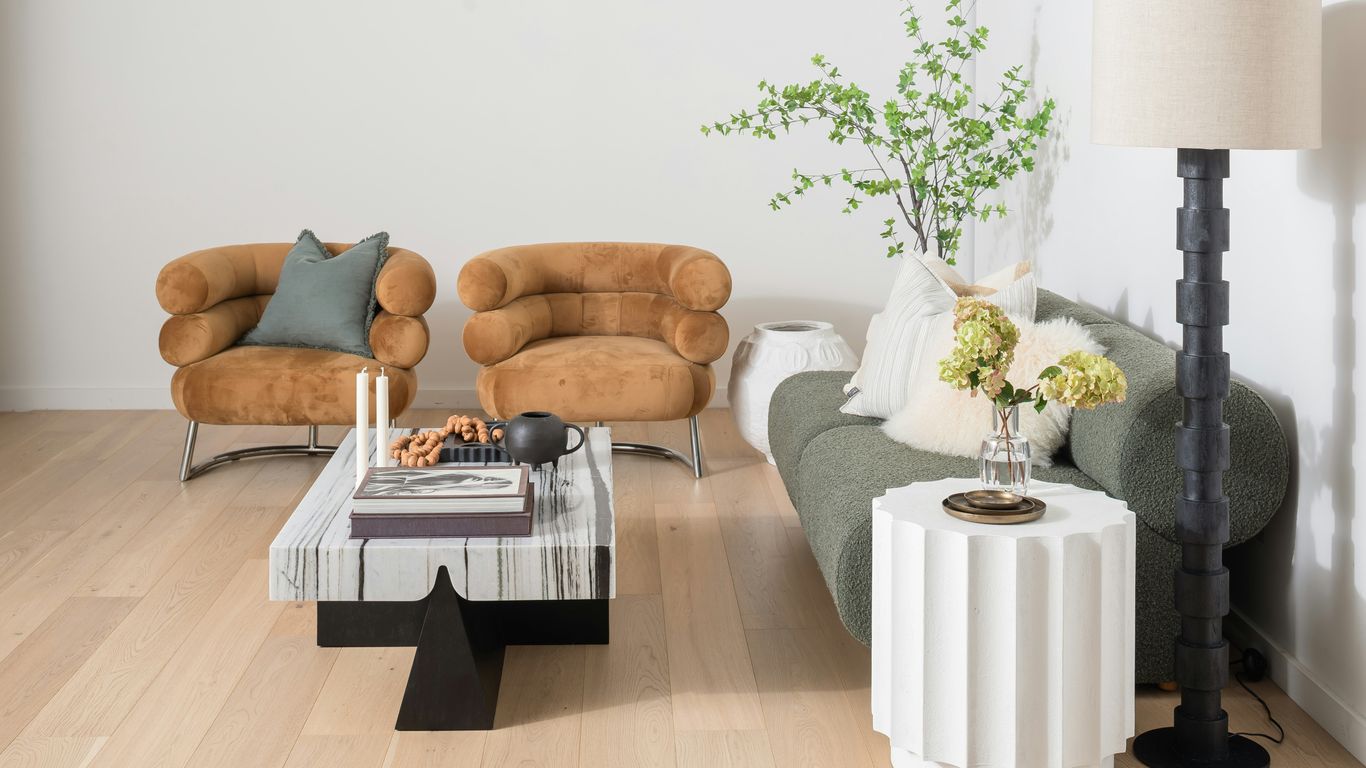
Build the layers from the floor upwards. A rug establishes softness underfoot, upholstered seating adds comfort at the body and curtains or acoustic panels can temper the room’s harder surfaces. Choose fabrics that can cope with everyday use, particularly in dining areas that also serve as work or homework spaces.
Warmth can also come from smaller details: a timber serving board, aged metal candlesticks or a lightly coloured pendant. These elements should sit alongside the stone rather than imitate it. The most comfortable rooms usually allow marble to remain the crisp, permanent element while the textiles and accessories can change over time.
8. Use bold veining as the room’s focal point
A strongly veined slab can act almost like a large-scale artwork. Instead of covering it with a busy centrepiece, give the pattern enough visual space to be read from across the room. Quiet walls, simple chairs and restrained tableware allow the natural movement to do the work.
The direction of the veining affects how the table is perceived. Veins running along a rectangular top can lengthen the composition, while more dispersed figuring may make a compact table feel richer and more intimate. If several stone elements are used in one room, decide whether they should coordinate gently or remain deliberately distinct.
Natural variation should be considered during selection and approval. Tone, porosity, mineral marks and figuring can differ from one part of a slab to another, so a photographed example cannot promise an identical finished appearance. The variation is part of the material and should be considered alongside the room’s lighting, joinery and overall level of contrast.
9. Match a compact marble table with space-saving seating
A compact dining area benefits from furniture that is easy to move around and easy to live with. A small round or oval table can improve circulation, while armless chairs, benches or seats that tuck fully beneath the top help preserve a clean footprint. The goal is not simply to fit the table in, but to retain enough room for everyday movement.
Measure the complete arrangement, including the pulled-out chair position. A table that fits neatly on paper may feel cramped once people are seated, especially beside a wall or kitchen run. If the room serves several purposes, lightweight chairs can make it easier to shift from dining to working or entertaining.
For a compact interior, visual weight matters as much as measurements. A pale stone top, open base or slender chair frame can make the arrangement feel less dense. Conversely, a darker tabletop may be useful when the room needs a stronger anchor, provided the surrounding surfaces remain calm and reflective.
10. Balance contemporary marble with minimalist lighting
Lighting completes the relationship between marble and the room around it. A simple pendant centred over the table can define the dining zone, while wall or ceiling lighting adds a softer layer for evenings. Choose the fixture according to the table’s shape: a round pendant suits a circular top, while a linear fitting can echo a long rectangular design.
The light should reveal the stone without creating distracting glare. Polished marble may reflect a bright source, so diffused shades and dimmable controls are useful. Warm white light generally brings out the gentler tones in cream, beige and warm grey stone, though the final choice should be tested in the room rather than judged from a catalogue alone.
Keep the rest of the lighting quiet if the tabletop has dramatic veining or a sculptural base. A considered combination of ambient, task and accent light gives the table presence at night without turning it into a display object. This balance is what allows a modern marble dining table to feel both impressive and comfortably usable.
Begin Your Stone Project
If you are planning a made-to-order dining table, request a quotation with the intended dimensions, stone, finish, access details and delivery destination so the project can be assessed clearly from the beginning.
Conclusion
A contemporary marble dining table works best when its shape, stone, base and surroundings are considered together. Balance the permanence of marble with warm materials, comfortable textures and carefully measured circulation, and the result can feel distinctive without becoming overworked.
Frequently Asked Questions
Is marble suitable for a modern dining table?
Yes. Its natural veining and broad range of colours work with clean-lined bases, minimalist rooms and warmer contemporary interiors. The finish and edge profile will strongly influence how formal or relaxed it feels.
Which shape is best for a small dining room?
Round and oval tables often make circulation easier because they have no sharp corners. A slim rectangular table can also work well when it sits against a wall or serves a narrow, linear space.
Should dining chairs match a marble table?
They do not need to match. Chairs in timber, upholstered fabric, leather or metal can all work, provided their scale and visual weight relate to the tabletop and base.
How can dark marble work in a compact room?
Use it as a clear focal point and surround it with lighter walls, flooring or upholstery. Repeating a small dark detail elsewhere can make the tabletop feel intentional rather than visually isolated.
What finish is practical for a marble dining table?
Polished finishes are reflective and formal, while honed finishes have a softer, more understated appearance. The right choice depends on the desired look, the stone selected and the level of everyday use.
How much space should be left around a dining table?
Allow enough clearance for chairs to be pulled out and for people to pass behind seated diners. The exact amount depends on the room and furniture, but measuring the fully occupied arrangement is more useful than measuring the tabletop alone.
How should natural veining be considered when commissioning a table?
Review the selected material and approved drawing carefully, understanding that tone, figuring, mineral marks and veining vary naturally. The finished piece should be appreciated as an individual stone object rather than expected to look identical to a photographed example.