

Key Takeaways
A successful marble slab selection begins before the first visit to a stone yard. Define how the furniture will be used, then assess the slab’s appearance, condition, fabrication requirements and long-term care.
- Start with the furniture’s dimensions, use and support structure.
- View natural marble as a material with variation, not a uniform finish.
- Inspect the full slab for movement, repairs, fissures and usable area.
- Discuss cutting, edging, packing, delivery and installation before approval.
- Compare the complete project cost rather than the slab price alone.
Define the furniture’s requirements before viewing slabs
Marble looks persuasive in isolation, but a beautiful slab is not automatically right for every piece. A dining table, console, basin or coffee table places different demands on thickness, support and maintenance. Begin with a practical brief so the stone is selected for the finished furniture, not merely for its colour.

Match the marble to the furniture’s function
Consider what the piece will encounter each day. A dining table may face food, drink and repeated contact, while a console may be touched less often but need a particularly refined edge. A basin introduces water management and tap clearances, whereas a coffee table may need a lighter visual proportion and safer corners. A useful custom marble furniture guide can help frame the brief around use, dimensions and fabrication rather than appearance alone.
Assess the expected weight, impact and heat exposure
Marble is substantial, so the finished weight affects the base, floor loading, handling and installation route. Think about hot serving dishes, dropped objects, children, pets and whether the piece may be moved. Marble can tolerate ordinary use, but it can still scratch, stain or etch, so the intended behaviour of the furniture should be agreed before the material is approved.
Confirm the dimensions, edges and support structure
Record the room measurements, access route and clearances around the furniture. The drawing should show the slab thickness, overhangs, corner radii, edge profile, joins and any drillings. For cabinetry or integrated storage, hardware also needs to suit the construction, weight and frequency of use; the guidance on custom cabinetry hardware is relevant when stone is being coordinated with drawers or doors.
Decide whether the marble will be a focal point or a supporting detail
A strongly figured slab can become the room’s centre of attention, while quieter stone may allow timber, metal, upholstery or artwork to lead. This decision affects every later choice, including the base colour and edge treatment. If the piece is intended as a focal point, allow enough surrounding space for its movement to be read rather than crowded by competing patterns.
Understand marble types and their suitability
Marble is not one uniform material. Different varieties vary in colour, crystal structure, veining, porosity and availability, and even two slabs from the same source can look noticeably different. Compare the stone’s character with the furniture’s use, finish and maintenance expectations before becoming attached to a particular name.

Compare common marble varieties and their characteristics
White marbles may range from soft, quiet backgrounds to high-contrast veining, while darker varieties can bring depth and graphic definition. Carrara, Calacatta, Statuario and Nero Marquina are familiar reference points, but their appearance still depends on the individual block and slab. For example, Nero Marquina Black Marble is described through its dark background and contrasting white veining, with polished and honed finishes available.
Distinguish natural marble from engineered alternatives
Natural marble offers mineral variation that cannot be repeated precisely. Engineered alternatives may provide greater consistency or a different maintenance profile, but they do not present the same geological pattern in the same way. The right choice depends on whether individuality, predictable repetition, repair considerations or day-to-day resilience matters most to the project.
Evaluate porosity, hardness and susceptibility to scratching
Ask how porous the selected stone is and whether its finish changes how marks appear. Hardness is only one consideration: a surface can be relatively durable and still show scratching or acidic etching. A honed surface may make minor wear less conspicuous, while a polished surface can intensify colour and reflection; either finish still needs sensible sealing and cleaning.
Consider how the stone’s origin affects appearance and availability
Quarry origin often influences the range of tones, vein patterns and block sizes available, as well as lead time and price. Availability should be checked against the required dimensions rather than assumed from a small photograph. If a specific stone is scarce, keep a considered alternative in mind before the drawing and budget become dependent on one unrepeated slab.
Select colour, veining and surface movement
Colour is only the beginning of marble slab selection. The direction, scale and density of the veining can alter how large or visually heavy a piece feels. Bring the room palette, metal samples, upholstery references and approved drawings to the viewing so the slab is judged in context.

Choose a colour palette that complements the room
Start with the fixed elements that will remain in the room: flooring, walls, joinery and architectural finishes. A warm white marble may sit comfortably with timber and brass, while cooler grey tones can support a restrained contemporary scheme. Dark stone can anchor a light interior, but it may also make a compact piece feel denser than expected.
Assess veining direction and visual flow
Imagine the slab turned, rotated and divided into the required components. Veins that look balanced across a large field may become abrupt when interrupted by a leg, basin cut-out or join. Ask the fabricator to mark the intended orientation on the drawing, particularly where a long top or waterfall edge is involved.
Decide between understated consistency and dramatic variation
Quiet movement is often easier to coordinate across several components, whereas dramatic variation can give one piece a sculptural presence. Neither approach is inherently better. The choice should reflect the room, the number of visible faces and the client’s comfort with natural mineral marks and differences between adjoining pieces.
Review the full slab rather than relying on a small sample
A sample can establish a general colour, but it cannot show the full rhythm of the stone. Full-slab viewing reveals large veins, open areas, tonal shifts and sections that may be lost to cutting. This is also the stage to record the selected slab reference and agree that the final appearance will retain natural variation rather than reproduce a showroom image exactly.
Check slab quality and condition
A slab should be assessed as both a visual surface and a fabrication material. Ask to see it under clear, even lighting and inspect it from more than one angle. The aim is not to reject every natural mark, but to understand which characteristics are acceptable and which could affect cutting, transport or use.
Inspect the surface for cracks, fissures and repairs
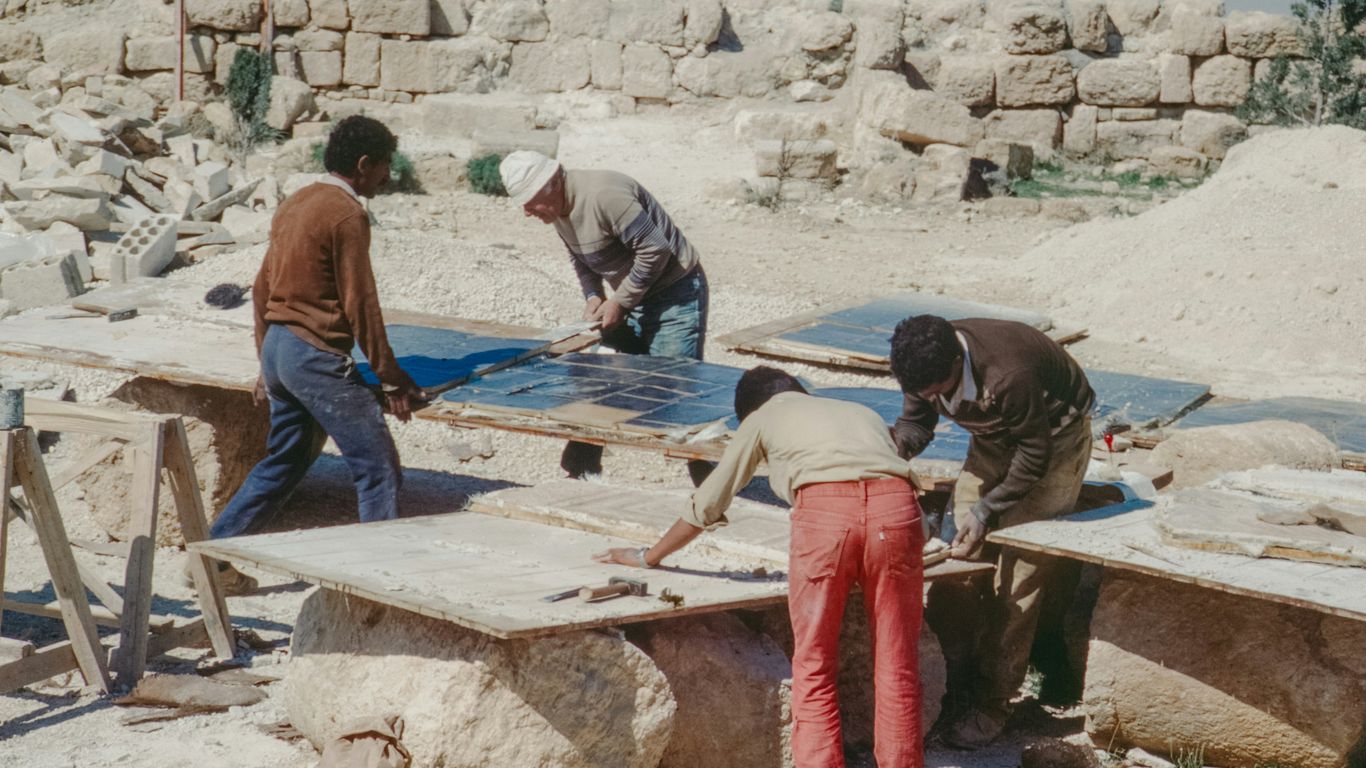
Look for cracks, filled fissures, resin repairs, pits and areas where the surface changes under light. Some marks are part of the stone’s character; others may need reinforcement or a revised cutting plan. Ask the supplier or fabricator to identify repairs clearly and to explain any limitations before the slab is reserved.
Identify natural variation that may affect fabrication
Mineral pockets, open veining and changes in density can influence where a sink opening, drilling or narrow edge should be placed. These features are not automatically faults, but they should appear on the working discussion around the slab. A careful fabricator can often design around them, provided they are known before cutting begins.
Check slab thickness, flatness and usable dimensions
Measure the actual slab, not only its nominal description. Confirm thickness tolerance, flatness, finished dimensions and the area remaining after trimming. The usable rectangle may be smaller than the headline slab size once damaged edges, irregular corners or unsuitable sections are excluded.
Confirm how lighting changes the stone’s appearance
Daylight, warm interior lighting and directional spotlights can make the same marble appear quite different. View the slab in the intended lighting where possible, or take photographs under more than one condition without relying on automatic colour correction. This avoids approving a tone that feels unexpectedly cool, yellow or reflective after installation.
Plan the cut, layout and edge details
Good fabrication planning protects both the slab and the design. The approved drawing should connect the room dimensions to every visible face, including edges, returns, cut-outs and joins. At this point, appearance and engineering need to be considered together rather than in separate conversations.
Position templates to make the most of the slab
Lay out each component on the actual slab with the grain and strongest features visible. Keep high-visibility areas away from questionable sections where practical, but do not assume that every offcut is waste: smaller pieces may suit shelves, plinths or sample approvals. The layout should be reviewed before cutting, especially for large or expensive slabs.
Allow for bookmatching and vein alignment
Bookmatching can create a mirrored composition across two faces, but it requires sufficient material and a clear understanding of the vein direction. Alignment is not always possible when the natural pattern changes or the slab is not symmetrical. Agree which faces matter most and show their proposed relationship in the drawing.
Select an edge profile that suits the furniture design
A crisp arris can suit a minimal table, while a softened radius may feel more comfortable on a coffee table or basin. More elaborate profiles increase visible fabrication and may expose different layers of the stone. The edge should be judged at the furniture’s scale, with attention to comfort, proportion and the likelihood of impact.
Account for cut-outs, joins and potential breakage
Cut-outs for basins, cables or hardware reduce the uninterrupted stone area and can create vulnerable corners. Joins need to be positioned where they are least intrusive and supported appropriately. Include reasonable allowance for handling and possible breakage in the programme, because a replacement slab may not match the first one exactly.
Balance appearance with budget and availability
The stone price is only one part of a made-to-order furniture quotation. Size, thickness, finish, edge work, reinforcement, packing, access and destination can all affect the final figure. A transparent comparison should show what is included and which items remain subject to site conditions or the individual delivery plan.
Compare material, fabrication and installation costs
Request a breakdown covering the slab, cutting, forming, polishing or honing, edging, supports, packing, transport and installation where applicable. A lower material price may not represent better value if it produces more waste or requires a complicated layout. For factory-to-order work, dimensions and finish should be confirmed against the approved production drawing before the quotation is finalised.
Allow for waste, transport and specialist handling
Natural slabs rarely divide perfectly into a project’s components. Waste can increase when bookmatching, vein alignment or selective placement is required, and heavy stone may need specialist lifting or restricted-access planning. For international work, confirm the destination, packing method, freight terms and whether duties, taxes or site installation are separately quoted.
Check lead times and reserve the required slab
Ask when the slab can be inspected, held and released for fabrication. Reservation should identify the actual slab rather than a broad material category, since a later replacement may have a different pattern. Keep the programme realistic for drawing approval, fabrication, inspection, packing, transport and any site coordination.
Weigh premium finishes and rare stones against practical value
A scarce stone or elaborate finish may be worthwhile when its visual contribution is central to the design. Elsewhere, a readily available marble with a simpler edge may deliver a more balanced result. The best decision is usually the one that preserves the intended character without compromising the furniture’s dimensions, schedule or care requirements.
For a compact comparison, consider the whole project rather than only the material label:
| Cost area | What to confirm | Why it matters |
|---|---|---|
| Material | Slab identity, thickness and usable area | Establishes the real stone allowance |
| Fabrication | Cutting, edges, joins and finish | Reflects the labour and technical complexity |
| Logistics | Packing, freight and access | Connects the quotation to the destination |
| Installation | Lifting, placement and site conditions | Clarifies what happens after delivery |
This structure makes quotations easier to compare without treating natural stone as a standardised commodity. It also gives the project team a clear list of questions before approval.
Finalise protection, maintenance and installation
The final decision is not complete when the slab is selected. Protection, cleaning and installation should be discussed while the piece is still on the drawing board. This is where an attractive material becomes a workable piece of furniture with expectations that everyone understands.
Choose a suitable sealer for the furniture’s use
Sealing can reduce the ease with which some liquids penetrate, but it does not make marble impervious to staining or etching. The appropriate product and application schedule depend on the stone, finish and use. Ask what has been applied, when it needs renewing and whether the finish may subtly change the surface appearance.
Confirm cleaning and maintenance requirements
Use a soft cloth and a cleaner suitable for natural stone, and deal with spills promptly. Avoid treating abrasive pads, acidic products or harsh household chemicals as harmless simply because the surface feels hard. For a dining table or vanity, agree practical habits with the user rather than presenting maintenance as a technical footnote.
Protect vulnerable areas with design details
Rounded corners, sensible overhangs, well-positioned joins and supported cut-outs can reduce avoidable damage. Coasters, trivets and felt pads may also be appropriate depending on the piece. If the project includes a basin, review drainage, splash zones and tap clearances alongside the stone choice; a made-to-order marble basin illustrates why these details belong in the design brief.
Coordinate fabrication, delivery and installation checks
Before release, compare the finished piece with the approved drawing, including dimensions, edge treatment, drillings, surface finish and visible stone placement. On delivery, inspect packing and accessible faces before moving the furniture into position. Geoscenic Stone describes a made-to-order process in which stone pieces are produced to project dimensions and prepared for delivery, so the same discipline of drawing approval and delivery planning is useful for any bespoke commission.
A short video can be helpful when a project team is unfamiliar with slab viewing and fabrication terminology.
For larger or international projects, keep one person responsible for coordinating the final drawing, inspection notes, packing requirements and site access. That simple ownership prevents small assumptions from becoming expensive changes at installation.
Request a considered quotation
When the slab, drawing and intended use are clear, share the project details with a specialist fabricator for a tailored quotation. Geoscenic Stone works from approved project information for made-to-order marble, travertine and onyx pieces; you can also request a quotation with the dimensions, finish, destination and installation requirements.
Conclusion
Thoughtful marble slab selection balances the beauty of natural variation with the realities of use, fabrication, transport and care. By reviewing the full slab, confirming the drawing and discussing costs and maintenance early, you give the finished furniture a much better chance of feeling deliberate, practical and lasting.
Frequently Asked Questions
How do I choose the right marble slab for custom furniture?
Begin with the furniture’s function, dimensions, support structure and maintenance expectations. Then compare full slabs for colour, veining, condition, thickness and usable area before approving the material.
Is natural marble suitable for a dining table?
It can be suitable when the household accepts that the surface may develop marks, etching or minor scratches with use. Sealing, prompt spill management and appropriate cleaning can help, but they do not remove the material’s natural sensitivity.
Should I view the entire slab before ordering?
Yes. A small sample cannot show the full pattern, tonal movement, repairs or sections that may be lost during cutting. Full-slab review also helps the fabricator plan the most important visible faces.
What should be included in a marble furniture drawing?
The drawing should normally show overall dimensions, thickness, edge profiles, corner details, joins, cut-outs, drillings, support points and the intended vein orientation. It should be approved before fabrication begins.
How much waste should I allow for a marble slab?
The allowance depends on the furniture’s dimensions, slab shape, vein alignment, bookmatching, edge details and areas that cannot be used. A fabricator should calculate the practical requirement from the actual layout rather than applying one universal percentage.
Is honed or polished marble better for furniture?
Neither finish is universally better. Honed marble has a softer, matte appearance that may make minor wear less obvious, while polished marble reflects more light and can heighten colour and veining; both require suitable care.
What should I check when the furniture is delivered?
Inspect the packing, accessible surfaces, dimensions, edges, joins, drillings and finish against the approved drawing. Also confirm that the access route, lifting plan and installation area are ready before the piece is moved into position.