
Key Takeaways
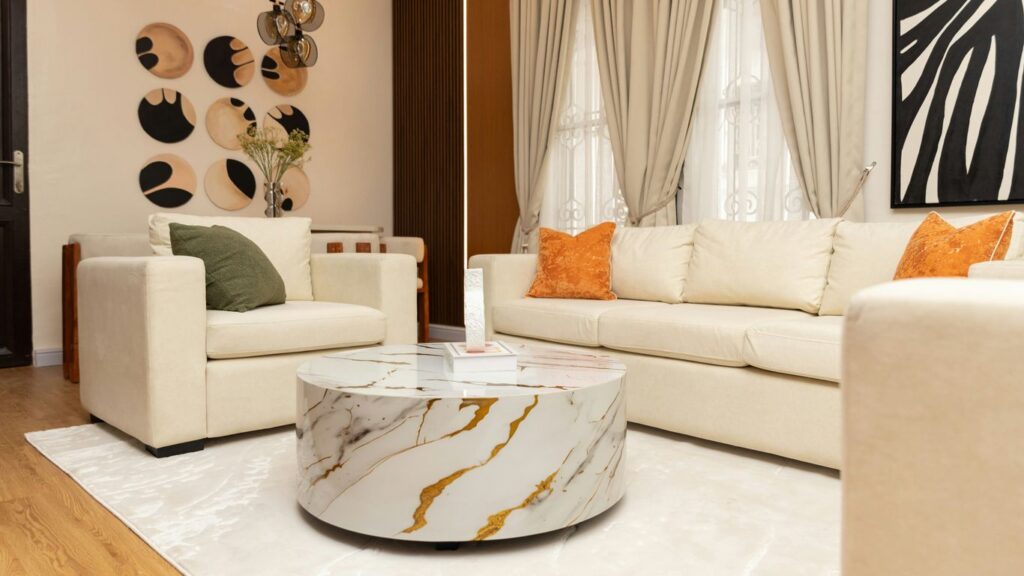
A marble coffee table can bring pattern, weight and a quiet sense of permanence to a Singapore home. The best choice balances the stone with the room, the dimensions with circulation, and the finish with how you actually live.
- Natural marble varies from slab to slab, so colour and veining should be reviewed before production.
- Finish, edge profile and base design can change the table’s character as much as the stone itself.
- Round, oval, square and rectangular shapes suit different seating plans and circulation routes.
- Accurate measurements should include sofa height, walking clearances, lift access and doorway constraints.
- A clear quotation should address the stone, approved drawing, packing, delivery and any installation needs.
Understanding marble for Singapore homes
Marble is a natural material with depth that cannot be reduced to a single colour swatch. Its mineral structure, veining and small variations make each slab different, which is part of its appeal but also something to plan for. In a Singapore apartment, the stone should be considered alongside humidity, daily use, access routes and the visual scale of the room. A thoughtful marble dining table guide is also useful for understanding how slab, base, finish and delivery decisions overlap across stone furniture.

How marble is formed and why each slab is unique
Marble begins as limestone that has been changed by heat and pressure over geological time. Minerals introduced during that process create the lines, clouds and colour shifts seen across a slab. Two sections from the same block may share a family resemblance without matching exactly, so a photographed table should not be treated as a promise of identical figuring.
For a commissioned piece, it is sensible to discuss the preferred level of movement, the direction of the veining and whether bookmatching or a particular cut is appropriate. Natural variation in tone, porosity and mineral marks is an inherent quality of stone, not a manufacturing error.
Carrara, Calacatta, Emperador and other popular marble varieties
Carrara is often associated with a cooler white ground and softer grey veining, while Calacatta commonly has a brighter background with stronger, more graphic movement. Emperador marbles bring brown, mocha and deeper tonal notes, creating a warmer presence. Names alone, however, do not determine the final appearance; individual quarries, blocks and slabs vary considerably.
Samples help establish the general direction, but a larger slab review is more revealing when the table is a prominent feature. Consider the surrounding floor, upholstery and joinery before choosing between a pale, dramatic or dark stone.
Natural marble versus engineered stone alternatives
Natural marble offers geological variation and a surface that develops its own character over time. Engineered alternatives can provide more consistency and may suit projects where repeatability or a particular performance specification is central. Neither choice is automatically right for every living room; the decision depends on appearance, maintenance expectations, budget and fabrication requirements.
Ask how the material will be cut, edged, supported and finished rather than comparing colour alone. The most useful comparison considers the complete table, including its base, weight, access and long-term care.
Choosing the right marble finish
The finish changes how marble catches light, feels to the hand and responds visually to everyday marks. A bright surface can make a small room feel more luminous, while a quieter finish may sit more comfortably among textured fabrics and timber. Edge treatment matters too, especially where the table will be used around children, guests or narrow circulation paths. Think of the finish as part of the design specification, not a final cosmetic decision.

Polished, honed and leathered surfaces compared
Polished marble has a reflective surface that brings out contrast and makes veining appear more pronounced. Honed marble is softer in appearance, with a low-sheen surface that can feel understated and contemporary. Leathered finishes add tactile texture and can give a darker stone a more grounded quality, though the exact result depends on the material and fabrication process.
No finish makes marble immune to etching or staining. The practical choice is the one whose appearance you are comfortable maintaining, particularly if the table will regularly hold drinks, flowers or serving pieces.
How veining, colour and edge details affect the look
Veining can be delicate and linear, or broad and sweeping enough to become the focal point of the room. A simple eased edge keeps attention on the slab, while a bullnose or bevel introduces a more shaped silhouette. Darker stone often benefits from a carefully proportioned edge because heavy profiles can increase its visual weight.
The base should be considered at the same time. A fine metal structure may allow dramatic veining to lead, whereas a solid stone or timber base can make a quieter slab feel more substantial. The edge is part of the composition, not merely protection for the perimeter.
Matching marble finishes with Singapore interior styles
Light polished marble can work with pared-back interiors where daylight and clean lines are central. Honed stone suits calm, tactile schemes with linen, timber and muted upholstery, while a leathered surface can add depth to a darker, more architectural palette. In compact homes, a restrained finish may prevent the table from competing with artwork, rugs or strong joinery.
Aim for balance rather than matching every surface. A marble table usually looks more considered when one element carries the pattern and the surrounding materials give it room to breathe.
Selecting a coffee table shape
Shape affects more than style. It determines how people move around the table, where drinks can be placed and how the piece relates to a sofa or sectional. The right form can make a compact living room feel easier to navigate, while an overly large or angular design can interrupt an otherwise comfortable plan. Start with the seating arrangement, then choose the silhouette that supports it.
When to choose a round or oval marble coffee table
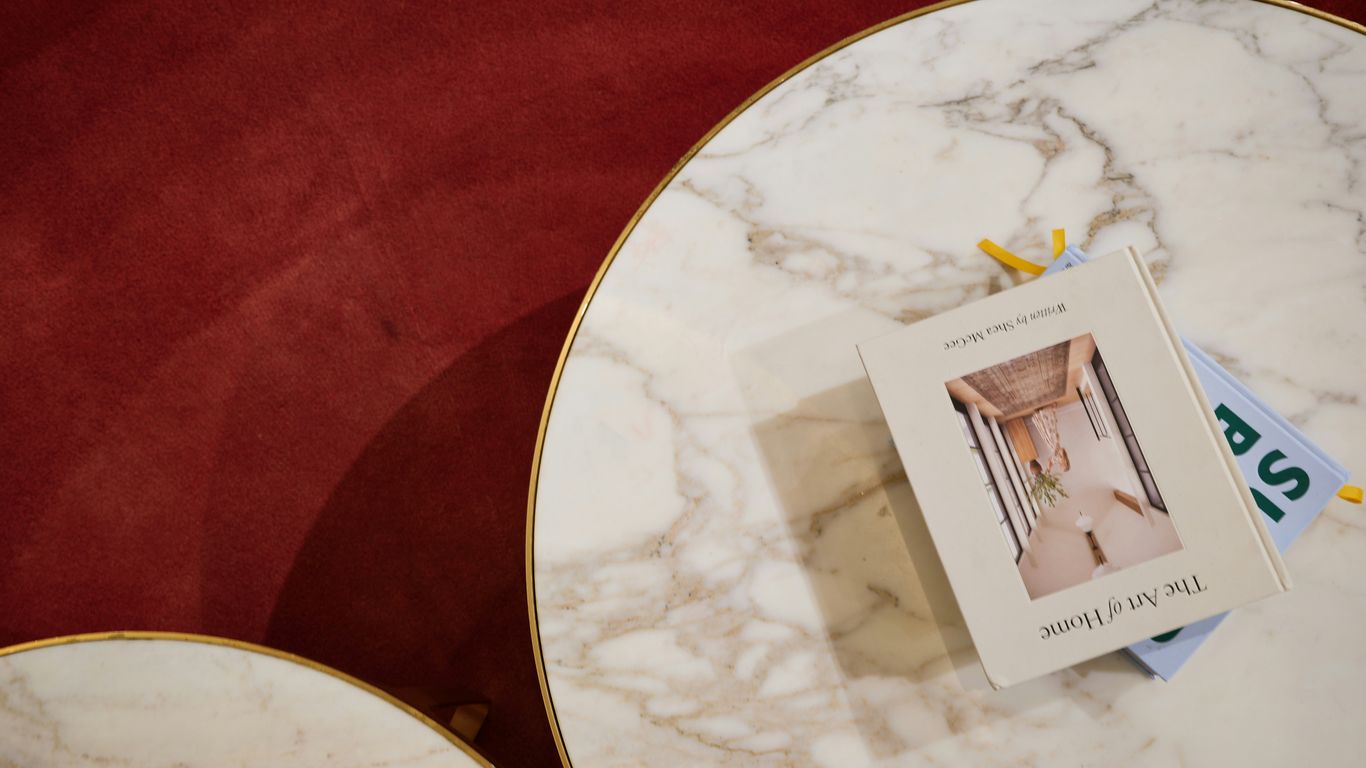
Round and oval tables remove sharp corners from busy walking routes and work naturally with sofas arranged around a central point. An oval can offer useful length while retaining a softer perimeter, making it particularly adaptable between a straight sofa and lounge chairs. These shapes also encourage a more conversational arrangement.
Check the diameter or overall length against the seating footprint. A very small round table may look lost in front of a deep sofa, while a large one can consume the central circulation zone.
Benefits of rectangular and square designs
Rectangular tables align neatly with linear sofas and can provide a generous surface for books, trays and decorative objects. Square designs suit balanced seating plans, especially where two sofas or a sofa and chairs face one another. Their corners create a more formal, architectural impression.
Proportion is crucial. A long table needs enough room at each end for people to pass, and a square table should not overwhelm the distance between opposing seats. Use the room’s existing lines as a guide rather than selecting a shape in isolation.
Considering irregular, nesting and sculptural forms
Irregular forms can make a room feel less predictable, particularly when the rest of the furniture is rectilinear. Nesting tables offer flexibility because smaller surfaces can be separated for guests or tucked away when floor space is needed. Sculptural bases and asymmetrical tops can also turn a coffee table into a focal point.
These designs deserve careful attention to stability, cleaning access and the relationship between the top and base. A distinctive silhouette is most successful when it remains practical from every seat in the room.
Getting the size and proportions right
A beautiful slab will not rescue a table that is too tall, too deep or difficult to move around. Measure the room in its furnished state, including sofa arms, rug edges, side tables and the likely path to the balcony or entrance. In Singapore homes, lift dimensions and narrow corridors can be just as relevant as the final floor plan. Good proportions make the table feel as though it belongs from the first day.
Measuring your living room and available floor space
Begin with the overall seating zone, then mark the proposed table footprint on the floor with masking tape or cardboard. This reveals whether the shape works when doors open and when someone is seated rather than simply viewing the plan from above. Record doorway widths, lift access, stair turns and any height restrictions before confirming a heavy stone piece.
A short measurement checklist keeps the conversation clear:
- Overall sofa width, depth and arm position.
- Proposed table length, width and diagonal measurement.
- Door, lift, corridor and stairwell clearances.
- Rug edges, power points and nearby furniture.
After marking the footprint, walk around it with a tray or laptop in hand. That simple test often exposes a clearance problem that a drawing misses.
Choosing the right height for sofas and seating
A coffee table is usually most comfortable when it sits around the height of the sofa seat or slightly lower, though the exact relationship depends on cushion depth and how the room is used. A lower table gives a relaxed, lounge-like feeling, while a taller one can be more convenient for entertaining. Check the finished height including the slab, understructure and any adjustable feet.
The visual relationship matters as much as reach. A thick top on a low base may look grounded, whereas a thin top on a tall base can feel light and crisp. Confirm the dimensions in the approved drawing rather than relying on a product photograph.
Allowing enough clearance for movement and comfort
Leave enough space for knees, cleaning and ordinary movement between the table and surrounding seating. The ideal clearance varies with the room and furniture, but the principle is consistent: circulation should not feel like an obstacle course. Also allow for drawers, recliners, ottomans and doors that open into the same zone.
A little extra room is often more valuable than a larger tabletop. When a plan is tight, reducing depth or choosing an oval edge can preserve comfort without losing the table’s presence.
Matching the table to your living space
The same marble can feel entirely different in a compact flat, a large condominium or an open-plan house. Scale, sightlines and the amount of visual activity around the table all affect the result. Rather than treating the coffee table as an isolated purchase, read it as a bridge between seating, flooring, lighting and adjacent dining areas. This is where material knowledge becomes practical interior planning.
Designing around compact flats and condominium layouts
In a smaller home, a table with a clear underside can preserve sightlines and make the floor feel less crowded. Round or oval forms may be easier to navigate, while nesting pieces provide a useful secondary surface without occupying the full footprint all the time. Pale stone can feel airy, but a darker top may work well when the rest of the scheme is restrained.
Consider weight and access early. A large marble top may be perfectly suitable once installed but difficult to manoeuvre through a tight lift or corridor, so the delivery route belongs in the design discussion.
Coordinating the base with your existing furniture
The base should echo, balance or deliberately contrast with the furniture already in the room. A slim metal base can relate to lighting or hardware, while timber can soften a stone top and connect it to cabinetry. A stone base creates continuity but needs enough breathing space to avoid making the whole arrangement feel dense.
Look at the underside as well as the top. Feet, shadow gaps and junctions are visible from seated positions, and they influence whether a custom table feels refined or visually heavy.
Balancing visual weight in open-plan interiors
Open-plan rooms need furniture that holds its own without blocking the connection between zones. A strongly veined top can anchor the living area, while a simpler slab may be preferable when the kitchen, dining furniture or artwork already carries substantial pattern. Repeating one tone from the wider scheme can help the table belong without making the space too matched.
The table’s weight should also relate to the sofa and rug. A small, delicate base beneath a broad top may feel top-heavy, whereas a solid base can steady a generous design. The aim is a clear centre, not a visual bottleneck.
Buying a marble coffee table in Singapore
Buying locally gives you the opportunity to discuss material, drawings and delivery conditions in the context of Singapore homes. Ready-made options may simplify selection, while a made-to-order piece allows closer control of dimensions, stone, edge and base. Whichever route you take, ask for clarity about what is included in the quotation and what remains subject to site conditions. A useful stone furniture journal can also help frame questions around custom natural stone work and architectural design.
Comparing local showrooms, online retailers and custom makers
Showrooms can make it easier to judge scale, surface texture and the relationship between top and base. Online retailers offer convenient browsing, but images may not show the exact slab that will be supplied. Custom makers are better suited when the room has unusual dimensions, a specific access constraint or a design that needs an approved production drawing.
For a made-to-order project, Geoscenic Stone describes pieces that are custom-cut, formed and finished to approved specifications, with material samples and detailed quotations available for individual projects. That approach is useful when appearance, dimensions and delivery need to be coordinated rather than chosen separately.
Checking slab quality, construction and table stability
Inspect the slab for the character you want, while recognising that natural mineral marks and variation will remain part of the finished piece. Ask how the top is supported, how the base is joined and whether the table has been checked for rocking or uneven contact. Edge consistency and the transition between materials are small details that become obvious in daily use.
A quotation or drawing should identify the top dimensions, thickness, finish, edge profile, base material and any drillings. If the table is unusually large, ask how its weight will affect handling and installation.
Understanding delivery, installation and lead times
Lead time depends on material selection, drawing approval, production, inspection, packing and the destination. Delivery planning should include the building’s booking rules, lift protection, access route and whether installation is required. Confirm which costs are included in the individual quotation rather than assuming that delivery or site work is automatic.
For a tailored piece, request a quotation with the room dimensions, preferred stone direction, finish and access information. Clear details at the start make the resulting programme and price easier to understand.
Caring for and protecting marble
Marble rewards ordinary care, but it is not a maintenance-free material. It can react to acidic liquids, absorb spills through unsealed areas and show marks more readily on polished or dark surfaces. The aim is not to prevent every sign of use, but to limit avoidable damage and understand what can be repaired. A sensible care routine protects both the stone and the design investment.
Preventing stains, etching and water marks
Use coasters beneath drinks and place vases or plant pots on suitable trays rather than directly on the slab. Wipe spills promptly, especially wine, citrus, vinegar and other acidic substances that may etch the surface. Ask whether the selected stone and finish need sealing, and follow the fabricator’s guidance rather than applying an unsuitable household product.
Water marks are often reduced by drying the surface after cleaning and avoiding standing moisture around objects. Felt or protective pads beneath accessories can also prevent grit from being dragged across the top.
Cleaning products and daily maintenance techniques
For routine cleaning, use a soft cloth with clean water or a pH-neutral stone cleaner recommended for marble. Avoid abrasive powders, acidic sprays, bleach and rough scouring pads, which can dull or damage the finish. Dusting first is useful because loose grit can create fine scratches when wiped across the surface.
Keep the routine simple:
- Blot spills rather than spreading them.
- Wipe the surface with a soft, damp cloth.
- Dry the table after cleaning or a wet spill.
- Use trays, coasters and pads beneath objects.
These habits are modest, but they reduce the chance that everyday use becomes a visible repair issue. Test any new product on an inconspicuous area only after confirming that it is suitable for the stone.
Handling chips, scratches and professional restoration
Small marks should be assessed before they are treated. A scratch may affect only the finish, while a chip can involve the edge or expose a vulnerable point in the slab. Do not use abrasive DIY methods without understanding the finish, as polishing one area can create an uneven patch.
A stone professional can advise whether honing, polishing, filling or edge repair is appropriate. The repair may improve the appearance without making the stone indistinguishable from new, particularly where the surrounding slab has natural movement or has developed its own patina.
Conclusion
Choosing a marble coffee table in Singapore is a matter of coordinating stone character, finish, shape, dimensions and practical access. When those decisions are recorded clearly in an approved drawing and matched to the room’s daily use, the result can feel both sculptural and easy to live with.
Frequently Asked Questions
Is marble suitable for a coffee table in Singapore?
Yes, marble can be suitable when the finish, sealing guidance and maintenance routine match the way the table will be used. Protect the surface from acidic spills, standing moisture and abrasive grit.
What is the best marble colour for a small living room?
Light marble can make a compact room feel more open, while darker stone can add contrast and definition. The best choice depends on the floor, upholstery, lighting and amount of pattern already present.
Should a coffee table be lower than the sofa?
A coffee table is often most comfortable at the sofa-seat height or slightly lower. Check the actual seat cushions and the finished table height rather than relying on a general rule.
Is a round marble coffee table better than a rectangular one?
Neither is universally better. Round and oval tables help with circulation and soften a room, while rectangular designs align well with long sofas and provide a generous usable surface.
How much space should be left around a coffee table?
Leave enough room for people to walk, sit comfortably, clean and operate nearby furniture. The appropriate clearance depends on the sofa depth, room plan and whether doors or recliners share the same zone.
Can marble coffee tables be custom made?
Yes, a table can be made to a specified size, stone, finish, edge and base when the project is properly documented. Confirm the production drawing, material selection, access route and quotation before fabrication.
How should marble be cleaned every day?
Use a soft cloth with water or a suitable pH-neutral stone cleaner, then dry the surface. Avoid acidic, abrasive or harsh chemical products unless a stone professional has confirmed they are appropriate.