
Key Takeaways
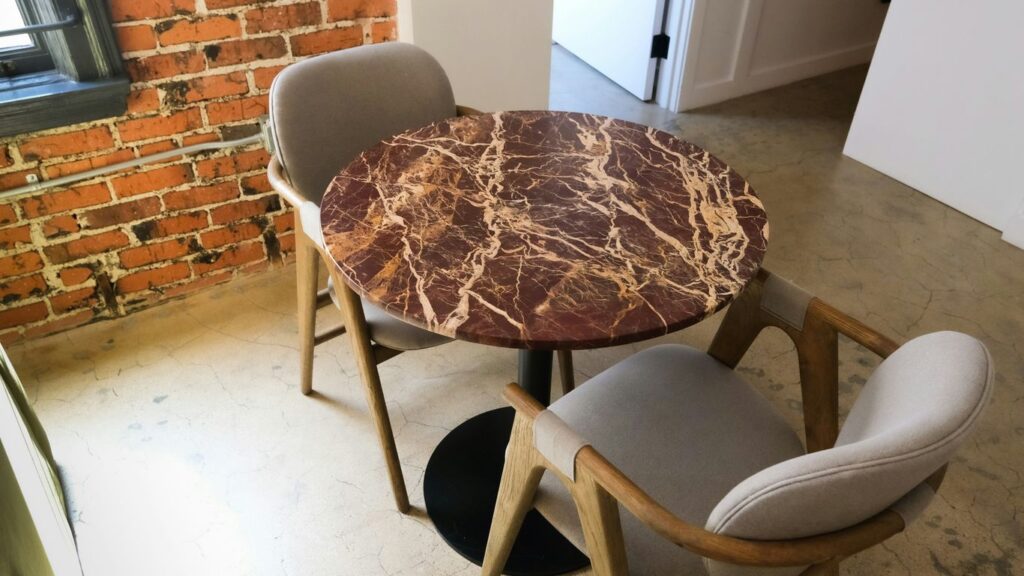
A small round marble dining table can suit a compact room beautifully when its diameter, base and circulation space are considered together.
- Measure the whole dining zone, including chair movement and access routes.
- Use 70–80 cm for two diners, 90–100 cm for three to four, and 110–120 cm for four to six.
- Check place settings, serving space and occasional seating before choosing a diameter.
- Compare pedestal and four-leg bases for legroom and visual openness.
- Confirm marble thickness, weight, finish, delivery access and installation requirements early.
Start with the available floor space
A table may have a modest footprint and still feel oversized once chairs are pulled out. Begin with the room’s usable dining zone rather than measuring an empty patch of floor. Include the routes people use to enter, sit down and pass behind a chair. This simple exercise gives you a more realistic starting point for a small round marble dining table.
Measure the dining area, not just the table footprint
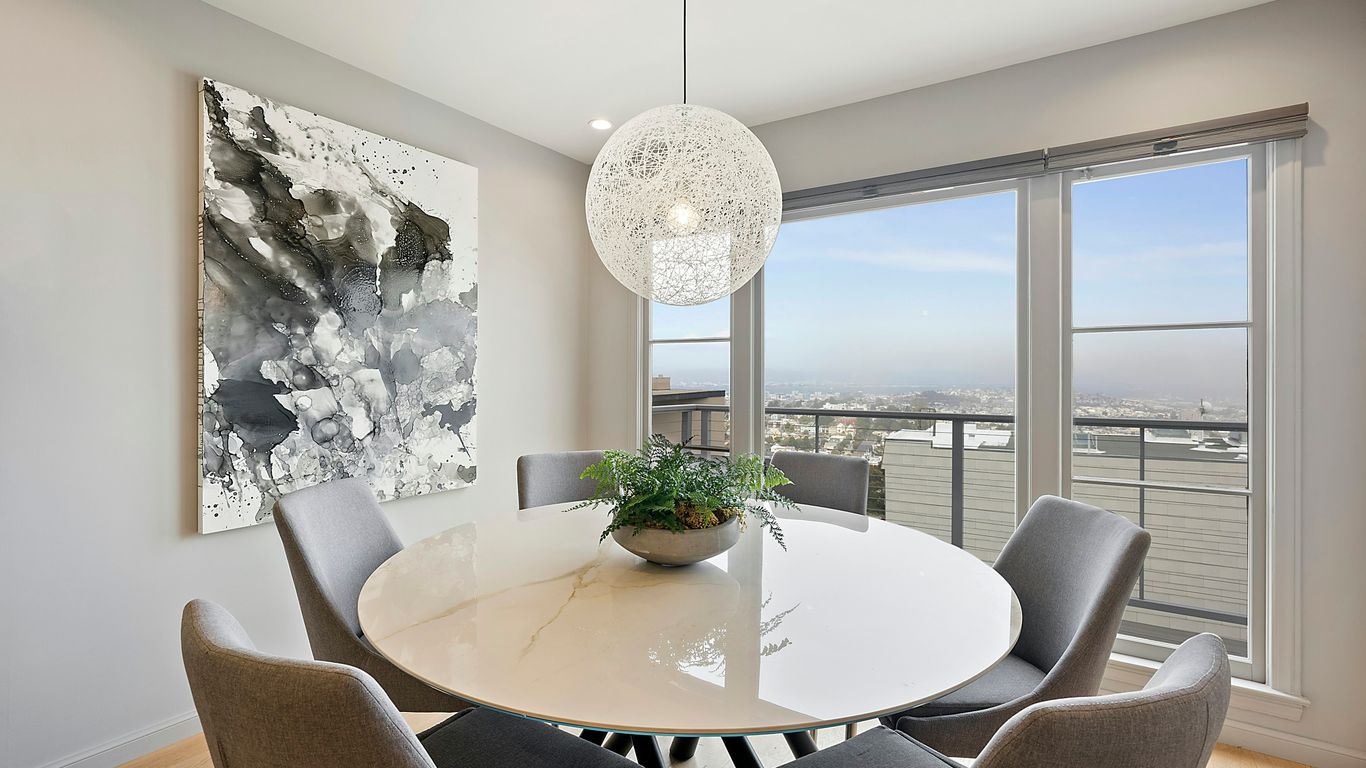
Measure the width and length of the area available for dining, then note fixed features such as skirting boards, radiators and built-in cabinetry. A circular top is easy to describe, but the surrounding chairs determine how much room the arrangement actually occupies. For a more detailed comparison of dimensions and seating, see this marble dining table size guide.
Allow enough clearance for chairs and movement
Leave a comfortable band of open floor around the table for chairs and movement. The exact allowance depends on the chair depth and how frequently people walk behind seated diners, so test with the chairs you intend to use rather than relying only on a catalogue diagram. Clearance is part of the table size, not an afterthought.
Account for doorways, walkways and nearby furniture
Trace the route from the doorway to the kitchen or living area before settling on a diameter. A table that fits between four walls can still obstruct a frequently used passage. If the dining zone sits near an entrance, even a small reduction in diameter may make the room easier to live with.
Use masking tape to test potential table sizes
Mask circles on the floor at the diameters you are considering and place chairs around them. Walk through the room, pull each chair back and try reaching towards the centre. This low-cost test often reveals awkward corners or blocked routes sooner than a plan drawing does.
Match the table diameter to your seating needs
Diameter affects more than the number of chairs. It changes how easily diners can talk, reach shared food and move around the table, while the central base can alter the usable seating positions. These ranges are useful starting points, but chair width, table edge detail and the way you serve meals still matter.
Choose a 70–80 cm table for two people
A 70–80 cm table is suited to two diners who mainly eat simple meals and do not need several serving dishes on the surface. It can work well in a kitchen corner, studio flat or narrow breakfast area. Keep the tabletop relatively clear so that the limited central space remains useful.
Consider a 90–100 cm table for three to four diners
A 90–100 cm diameter generally gives three or four people a more relaxed everyday arrangement. It leaves room for individual place settings and a modest shared dish without making conversation feel distant. For a compact home, this is often the most adaptable middle ground.
Select a 110–120 cm table for four to six people
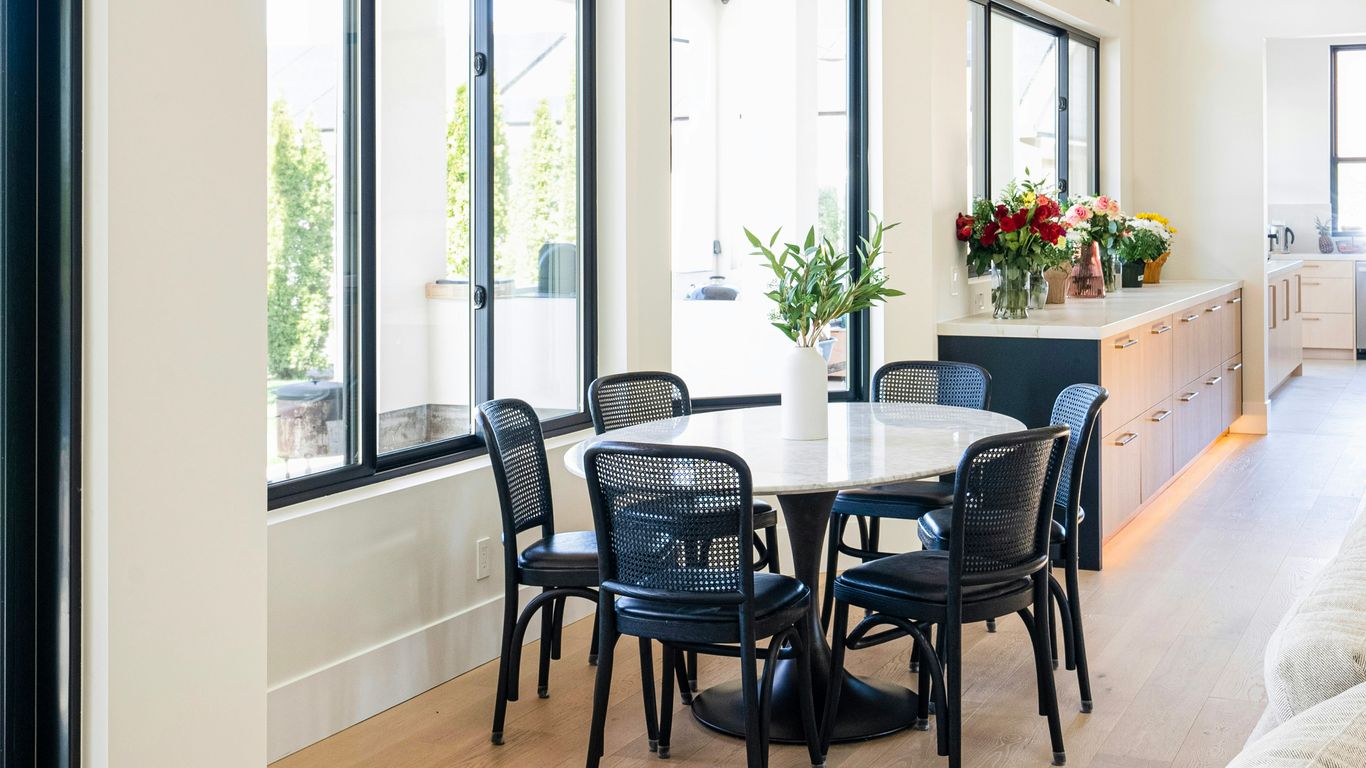
A 110–120 cm table can accommodate four diners comfortably and may suit six for occasional meals, depending on chair width and the base design. Before choosing this range, check the room with all chairs occupied, not just pushed neatly beneath the top. The round marble dining tables available in different styles also illustrate how proportions can vary even when diameters are similar.
Understand when a larger table becomes impractical
Past 120 cm, a round table needs noticeably more floor area and may lose the intimacy that makes the shape attractive. Guests can also find it harder to reach the centre without leaning across place settings. If you regularly host larger groups, compare the extra capacity with the circulation you will sacrifice every day.
Compare table size with everyday dining requirements
A diameter should reflect how the table is used, not simply how many chairs can be squeezed around it. Think about a weekday breakfast, a laptop left on the surface, shared serving bowls and the occasional longer meal. Natural stone adds presence, so a top that is technically adequate can still feel busy if daily habits are not considered.
Allow sufficient space for place settings
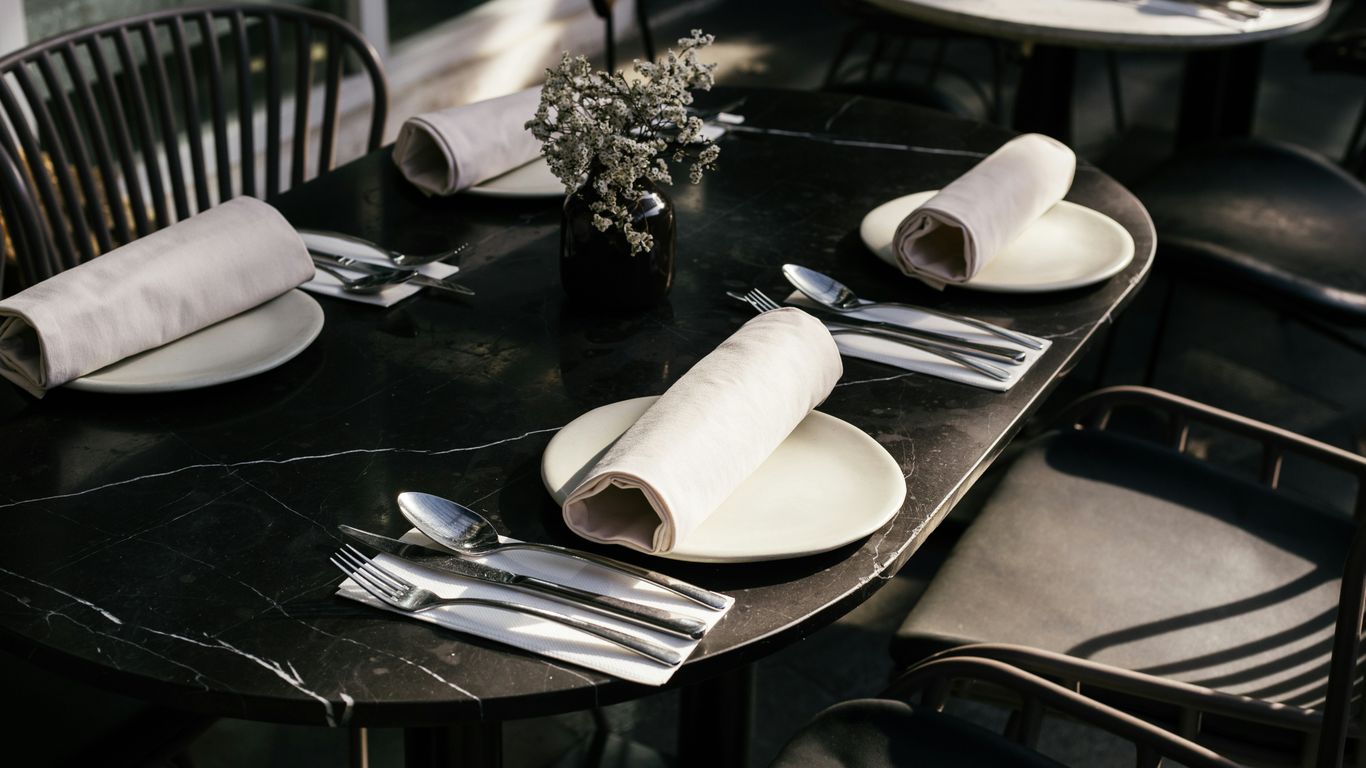
Each diner needs enough edge space for a plate, glass and cutlery without elbows colliding. Round tables distribute people evenly, but the usable perimeter still shrinks when the edge is thick or the chairs are broad. Lay out your usual crockery on paper or on the floor at full scale before confirming the order.
Check whether serving dishes will fit comfortably
If meals are served from the table, allow a central zone for bowls, platters or condiments. A 70–80 cm top may be fine for plated meals but restrictive for shared dishes. For larger family meals, a slightly wider table can be more practical than adding a side trolley that further narrows the room.
A useful planning check is to list the objects that must remain on the tabletop:
- One place setting for each regular diner
- Glasses and everyday condiments
- The serving dishes used most often
- A small centrepiece, if desired
That list helps separate genuine surface requirements from occasional decorative ambitions. It can also show that a smaller diameter works when meals are plated in the kitchen.
Plan for occasional guests and flexible seating
Choose whether extra guests will use slim spare chairs, stools or a nearby seat brought in only when needed. A pedestal can make occasional seating easier by reducing interference from corner legs, but the total room clearance still governs whether those places are comfortable. Flexibility should not turn every meal into a carefully choreographed manoeuvre.
Consider how often the table will be used
A table used for every meal deserves more generous clearance and surface area than one reserved for weekend dining. If it doubles as a work or study surface, allow for devices and cables without compromising place settings. Everyday convenience is usually a better guide than the maximum number of guests you might host once a year.
Choose a base that works in a compact room
The base is part of the footprint, even when it sits below the tabletop. Its shape affects where chairs can go, how easily people stand up and how heavy the table appears in the room. In made-to-order work, these details can be considered alongside the approved drawing rather than treated as a last-minute substitution.
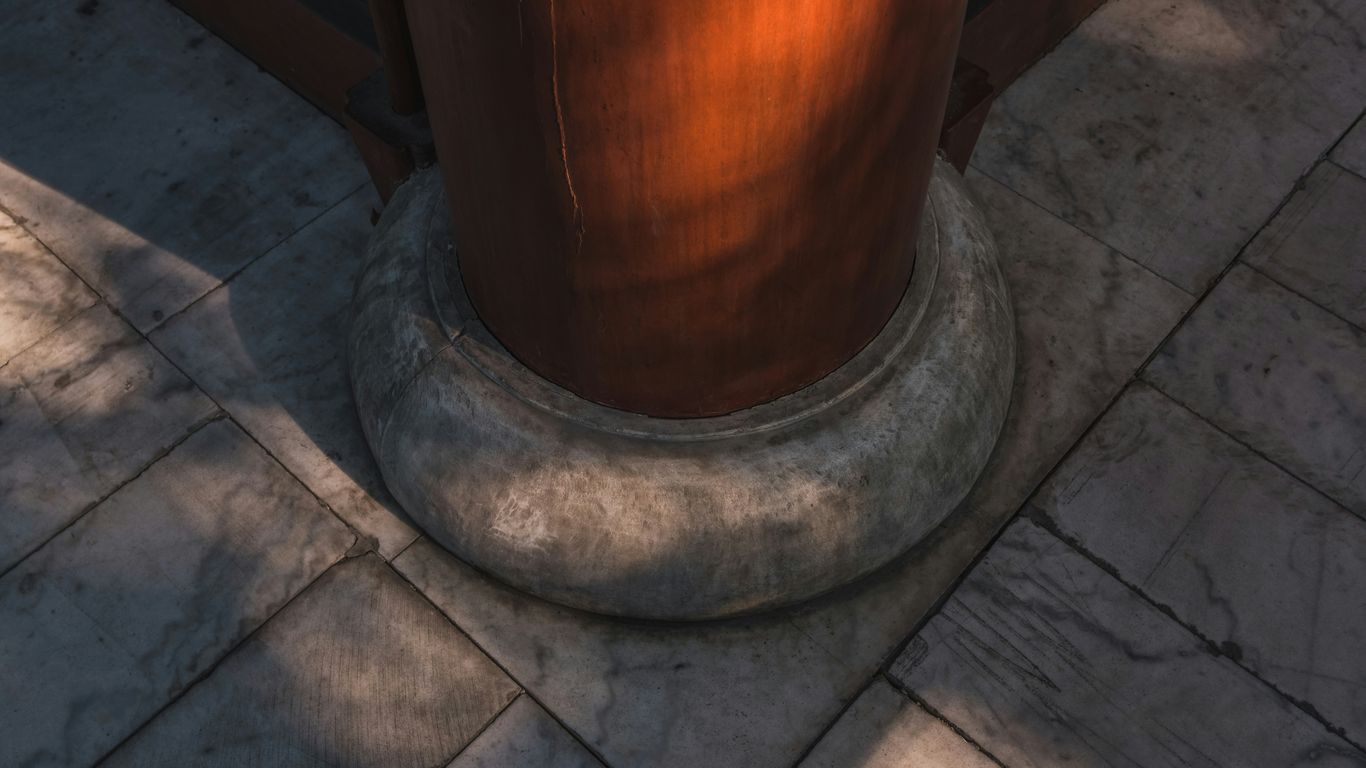
Compare pedestal and four-leg designs
A pedestal concentrates support near the centre and can leave more freedom for chair placement. Four legs may provide a familiar architectural rhythm, but each leg occupies a potential seating position. Neither option is automatically better; compare the base with your chair widths and preferred sitting positions.
Check leg placement against chair positions
Mark each leg on the floor before approving the design, especially if the table will seat four or six people. A leg aligned with a chair can restrict feet and make diners sit off-centre. This is also a good point to review delivery access and the practical advice in a custom natural stone furniture guide.
Look for a slim profile beneath the tabletop
A visually narrow stem or neatly proportioned frame can help a compact room feel less crowded. Slim does not mean underspecified: the base must still be designed for the top’s weight and intended use. Ask for the overall height, base width and underside details rather than judging the silhouette from a single image.
Consider how the base affects visual spaciousness
An open base allows more floor and chair legs to remain visible, which can make the room read as larger. A solid sculptural support may bring welcome focus but increase visual weight. If the stone has strong veining or a dark tone, a restrained base can keep the composition balanced.
Balance marble thickness, weight and proportions
Marble introduces natural variation in colour, veining, figuring and mineral marks, so the sample is a guide rather than a promise of an identical finished pattern. Thickness, edge treatment and surface finish all affect how substantial the table feels. A clear specification is especially valuable when the piece is commissioned for a tight room or a difficult access route.
Assess how the tabletop thickness changes the look
A thicker edge gives the top a grounded, architectural presence, while a slimmer profile can feel lighter in a small dining area. The edge should relate to the diameter: an overly heavy rim may dominate a 70–80 cm table, whereas a larger top can carry more visual mass. Review an elevation drawing as well as a plan.
Check the floor loading and installation requirements
Marble is heavy, and the complete table weight includes the base, fittings and packing considerations. Confirm the floor condition, lift or stair access, doorway widths and any installation restrictions before production begins. Geoscenic Stone makes made-to-order furniture and architectural pieces through an approved drawing and accounts for the individual piece, weight, packing, destination and site requirements in its quotation.
Consider the visual impact of veining and colour
Veining can make a tabletop appear more active or visually larger than a plain surface of the same diameter. Pale stone may keep a compact room feeling bright, while darker stone can create a strong focal point that needs quieter surrounding furniture. Natural variation is part of the material’s character, so discuss the intended selection and acceptable variation clearly.
Match the marble finish to the room’s scale
Polished surfaces reflect light and can make the top feel more prominent; honed finishes tend to look softer and less formal. The right choice depends on lighting, nearby materials and how much surface variation you want to see. For broader maintenance and material considerations, this natural stone dining table guide offers useful context.
Make a small round marble dining table work harder
Once the diameter is settled, the surrounding choices can preserve the room’s flexibility. Chairs, lighting, wall position and accessories should support the table rather than compete with it. A considered arrangement can make a compact piece feel intentional rather than merely squeezed into an available corner.
Pair it with armless or compact dining chairs
Armless chairs usually tuck closer to a round top and allow diners to shift their position more easily. Check the seat width and back depth, not just the chair’s advertised footprint. Upholstery, timber and metal can all work; the key is leaving enough clearance for the chair to move naturally.
Use a wall or corner position without restricting access
A round table can sit near a wall when one side is used for everyday meals and the room allows it to pull out for guests. Keep the most active route open and avoid placing the table where a chair blocks a cupboard or door. If the room needs a linear arrangement, an oval alternative may deserve comparison.
Choose lighting that suits the table’s diameter
A pendant centred over the tabletop reinforces the circular form, but its scale should not overwhelm the room. A compact fitting or a dimmable wall-and-ceiling combination may be more comfortable where the ceiling is low. Centre the light to the table’s final position, not simply to the room’s geometric midpoint.
Keep accessories minimal to preserve usable space
Use one low centrepiece rather than several tall objects that interrupt sightlines. A shallow bowl, small vase or single candle can define the centre while leaving room for food. For meal inspiration that suits shared dining, LACONIKO offers recipes that can help clarify how much serving space you actually need.
Practical planning sometimes extends beyond furniture. Check the nearby floor finish with this tile flooring guidance, and make sure a doorway’s lock or access arrangement is not compromised by the new layout; this lock solutions guide covers that separate household consideration. Privacy information and cooling efficiency are separate matters too, but the relevant Privacy Policy and HVAC efficiency tips may be useful when reviewing the wider home project.
Make a considered commission
A small round marble dining table works best when its size is tested against real movement, real chairs and real meals. Confirm the diameter, base, thickness, finish, stone selection, access route and installation expectations in writing before production. For a made-to-order piece, request a quotation with the room dimensions and delivery details so the proposal can reflect the project rather than an assumed standard size.
Conclusion
The best small round marble dining table is not simply the smallest one that fits: it is the table that leaves enough room to sit, move, serve and live comfortably. Measure generously, choose the diameter around everyday habits, and treat the base, stone weight and finish as part of the same decision. With those details resolved early, a compact dining area can feel calm, useful and distinctly finished.
Frequently Asked Questions
What is the best round table size for two people?
A 70–80 cm diameter is usually suitable for two people eating simple meals, provided chairs and surrounding clearance also fit comfortably.
Can four people sit at a 90 cm round table?
Yes, a 90–100 cm table can suit three to four diners, although chair width, place settings and serving dishes will affect comfort.
How much space should be left around a dining table?
Allow enough room to pull chairs out and walk behind seated diners. Measure the chair depth and the main circulation route rather than relying on the tabletop diameter alone.
Is a pedestal base better for a small round table?
A pedestal can free up seating positions by keeping support near the centre, but its width and stability still need to suit the tabletop and room.
Does marble thickness affect a table’s appearance?
Yes. A thick edge looks more substantial, while a slimmer profile can appear lighter and better proportioned in a compact room.
Will a round table fit in a corner?
It can, especially when one side is used for everyday dining and the table can be pulled out when guests arrive. Keep doors, cupboards and walkways accessible.
What should be checked before ordering a marble table?
Confirm the diameter, chair positions, base, stone selection, finish, weight, doorway and lift access, packing, delivery terms and any installation requirements.