
Key Takeaways
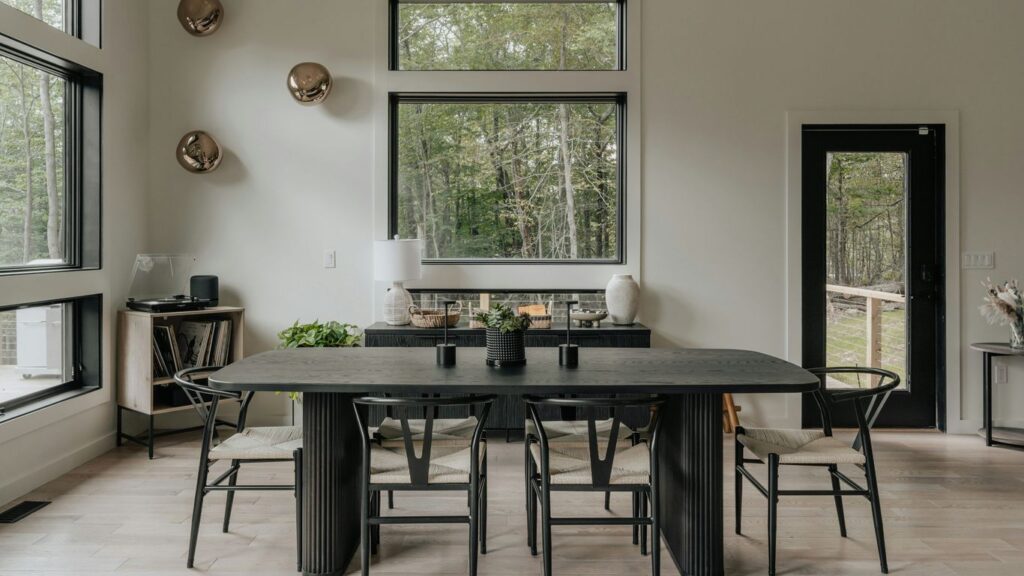
A natural stone dining table is chosen as much for its character as for its performance. Marble, travertine and harder stones each suit a different rhythm of use, room and maintenance routine.
- Marble offers expressive veining and a refined presence, but needs considerate daily care.
- Travertine brings warmth and texture, with pores and surface marks that remain part of its appeal.
- Granite and quartzite are generally better suited to heavy everyday use where hardness is a priority.
- Weight, access, table support and finished dimensions deserve attention before ordering.
- Natural variation is inherent to stone, so a full-slab review is more informative than a small sample.
What makes a natural stone dining table different
A natural stone dining table begins as a geological material rather than a manufactured surface. Its colour, mineral movement and small variations are formed over time, then revealed through cutting and finishing. That gives the finished piece a depth that can be difficult to reproduce consistently. It also means the buyer should understand both the beauty and the practical limits of the material.
How natural stone is quarried, cut and finished
Large blocks or slabs are extracted from a quarry and transported for processing before they become furniture. Fabricators cut the stone to a drawing, shape the edges, create openings where required and finish the visible faces. Polished surfaces reflect more light, while honed or other matt finishes give a quieter, softer appearance. Thickness, edge treatment and support details all influence how the slab behaves as a table.
For made-to-order work, the production drawing is especially useful because it records the agreed dimensions, finish and details before fabrication begins. A factory-to-order approach can also allow the stone selection to be considered alongside the room, base and intended use rather than treating the tabletop as an interchangeable component.
Why every tabletop has unique variation
No two slabs of natural stone are identical. Marble may carry long veins, cloudy patches or shifts in background tone; travertine may show pores and linear deposits; granite can contain flecks and crystalline changes. These are not printing inconsistencies but evidence of the stone’s formation. A useful stone variation guide explains why full-slab scale matters when judging movement and balance.
A small sample can confirm a general colour family, but it cannot show how a vein will travel across a large tabletop. When the table is visually important, review photographs or a slab selection at a useful scale and discuss what variation is acceptable before production.
Natural stone compared with sintered stone and engineered quartz
Natural stone is cut from quarried material, so each piece has a particular geological pattern. Sintered stone and engineered quartz are manufactured products with more controlled visual consistency, although their precise performance depends on the specification and fabrication. The choice is therefore not simply between attractive and unattractive materials. It is a decision about variation, surface behaviour, repair expectations and the atmosphere you want the room to have.
A focused marble and sintered stone comparison can help clarify the trade-off between natural veining and a more consistent surface. Look beyond photographs: ask about the actual finish, edge, thickness, heat guidance and care instructions for the product being considered.
How stone weight affects delivery, flooring and installation
Stone is substantially heavier than many timber or glass alternatives, and the weight is concentrated in a large, rigid component. That affects lift routes, staircases, door widths, flooring, handling equipment and the design of the base. A table may be perfectly suitable in the room but impossible to move through an unmeasured access route.
Confirm the finished weight, package dimensions and whether the top and base travel separately. Flooring capacity and protection during installation should also be discussed with the project team. For made-to-order projects, the quotation may need to account for packing, destination, access and installation requirements individually rather than assuming a standard delivery arrangement.
Marble dining tables: Elegant but demanding
Marble has a naturally expressive surface that can make a dining table feel architectural without becoming visually cold. Its veining gives even a simple pedestal design a strong focal point, while lighter stones can help a room feel open. The same mineral character that makes marble appealing also means that it is not maintenance-free. Consider the way meals, drinks and entertaining actually happen in the room before choosing it.
Key characteristics of Carrara, Calacatta and darker marbles
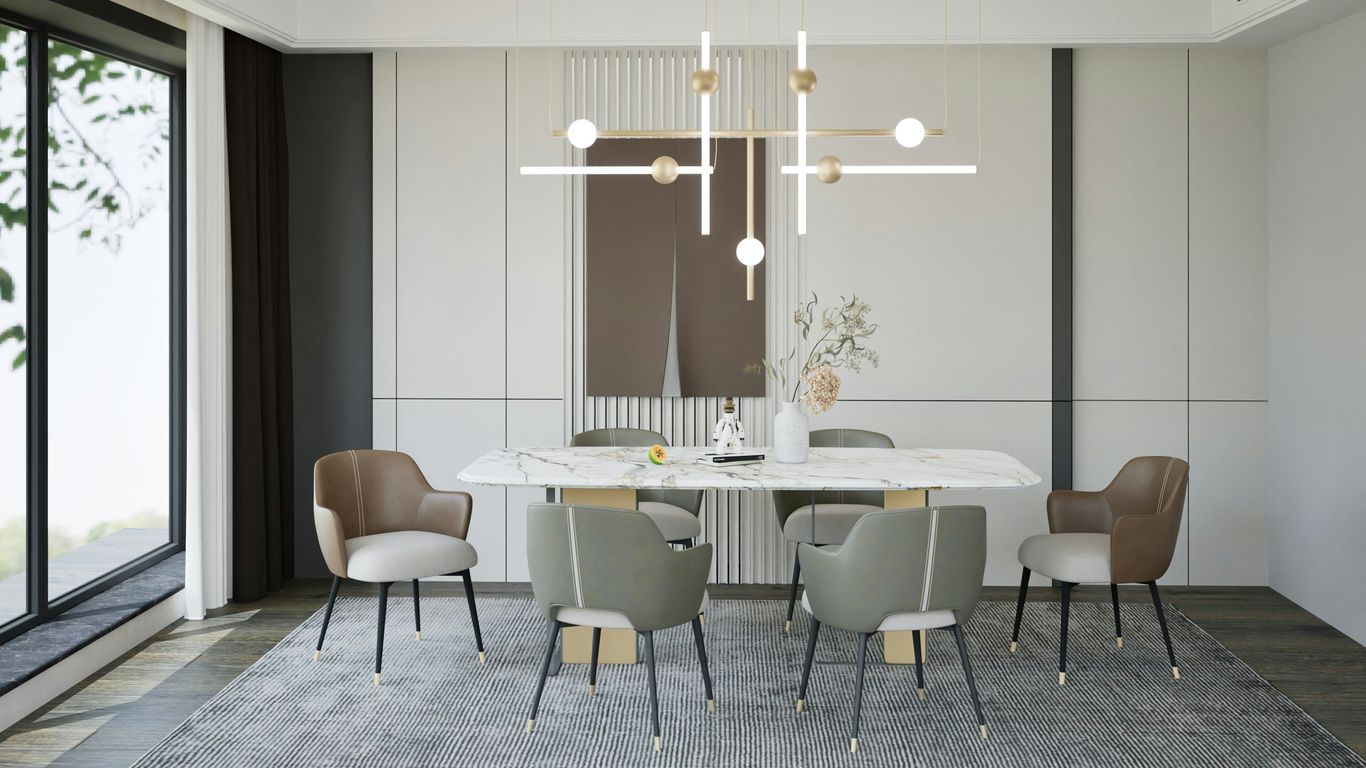
Carrara is often associated with a pale grey-white background and gentler grey movement, while Calacatta is commonly recognised for stronger, more dramatic veining against a light ground. Darker marbles can bring depth and contrast, with light veins that read as deliberate graphic lines. Names alone are not enough, however; slabs within a broad category can differ noticeably in tone, movement and marking.
The marble and travertine guide is useful when comparing the cooler, more expressive register of marble with travertine’s warmer texture. Always judge the actual selection under lighting similar to the finished room.
Advantages for formal and contemporary dining rooms
Marble suits rooms where the table is intended to anchor the composition. A polished top can reinforce a formal interior, while honed marble works comfortably with timber, linen, plaster and less reflective finishes. In a contemporary setting, a bold vein can provide enough visual interest without requiring a complicated base. Rounded corners and a carefully scaled pedestal can soften the material’s weight.
For further design direction, these modern marble table ideas show how contrast, warm materials and proportion can keep marble from feeling overly austere. The most successful result usually comes from allowing the slab to lead while keeping surrounding elements restrained.
Etching, staining and scratching risks to consider
Marble is relatively soft and calcium-based, so acidic foods and drinks can etch the surface, leaving a duller mark rather than a conventional stain. Oils, pigments and moisture may also darken porous areas if they are left in contact with the stone. Cutlery, ceramics and grit can create fine scratches, particularly on a highly polished finish. Sealing can reduce absorption but does not make marble immune to chemical reaction or impact.
Use coasters, mats and prompt cleaning as part of normal ownership, not as an emergency response. A honed surface may disguise fine wear more readily than a glossy one, but it still needs suitable products and sensible handling.
When marble is worth the additional maintenance
Marble is worth considering when the visual depth of a natural slab matters more than having a perfectly uniform, low-intervention surface. It can be a strong choice for a dining room used thoughtfully, a hospitality setting with a clear care plan, or a residence where patina is accepted as part of the material’s life. It is less suitable when every mark will be treated as a failure.
The right decision rests on a realistic agreement about ageing. A table that is loved and used can acquire small signs of life; a table expected to remain visually untouched may create unnecessary frustration.
Travertine dining tables: Warm, textured and relaxed
Travertine has a softer visual language than many marbles. Its earthy tones, open texture and linear markings can make a dining area feel settled and tactile, especially when paired with timber, woven seating or plastered walls. It is still a natural stone and should not be treated as indestructible. Its pores and surface details need to be considered at the design stage.
How travertine’s pores and surface markings affect its appearance
Travertine forms with visible voids, deposits and layers, so its surface may contain pores, filled areas and tonal movement. Some pieces are filled and finished to create a smoother face, while others retain more tactile character. These choices change not only the look but also the way crumbs, spills and cleaning cloths interact with the top.
Variation is particularly noticeable on a large table. A full slab or carefully selected group of slabs gives a better sense of the balance between open areas, linear marks and denser patches than a small showroom tile.
The design styles that suit travertine best
Travertine works naturally with quiet, material-led interiors: Mediterranean rooms, contemporary spaces with warm neutrals, relaxed hospitality settings and interiors built around timber and natural fibres. A substantial edge can emphasise its geological quality, while a slim profile can make the table feel more current. The base should support the stone without competing with its texture.
A travertine furniture guide offers useful context on finishes, edge details and the way this stone can move between classic and contemporary settings. The room’s proportions matter as much as the material; too much similarly coloured stone can flatten the composition.
Sealing requirements and everyday spill management
Travertine is porous, so sealing is normally part of responsible ownership, although the correct product and schedule depend on the stone and finish. Sealing gives more time to wipe away liquid but does not turn the table into a stain-proof surface. Water, wine, oils and strongly coloured foods should not be left sitting on the top.
Use a pH-neutral cleaner and a soft cloth for routine care. Avoid abrasive powders and acidic household products, which may dull or damage the surface. A sample test can help confirm how a chosen sealer affects colour and sheen before the whole table is treated.
Situations where travertine may be less practical
Travertine may be challenging in a busy household where spills are frequent, cleaning is hurried or a completely smooth surface is expected. Its pores can also feel visually prominent in a minimalist room with very little other texture. Outdoor or humid applications require particularly careful specification because exposure conditions affect maintenance and finish.
That does not rule it out. It simply means the table should be selected with an honest view of how the room is used, rather than for a photograph alone.
Other natural stones for dining tables
Marble and travertine receive much of the attention, but they are not the only natural stones that can form a compelling dining surface. Granite, quartzite, limestone, slate and onyx each bring a different combination of hardness, porosity, colour and visual intensity. The best choice depends on whether the table is a workhorse, a centrepiece or something between the two.
Granite for durability and heavy everyday use
Granite is generally dense and hard, making it a sensible candidate for frequent family meals and demanding hospitality environments. Its granular structure can range from quiet and fine to highly patterned, with colours spanning pale neutrals, greys, greens and darker tones. It still benefits from appropriate sealing and care, but it often offers greater resistance to everyday abrasion than softer stones.
Because the pattern can be active, inspect a meaningful section of the slab before committing to the table shape and edge. A restrained granite can behave almost like a neutral, while a strongly flecked selection becomes the room’s main visual event.
Quartzite for a marble-like appearance with greater hardness
Quartzite can offer sweeping movement that recalls marble while generally providing greater hardness. It is often considered where a client wants expressive veining but expects substantial daily use. The name should still be verified carefully, since commercial stone names are not always used consistently and different slabs can have different performance characteristics.
Ask for the exact material specification, finish and care advice rather than relying on a broad category. Heat, impact, edge vulnerability and porosity remain relevant even when the stone is hard.
Limestone and slate for softer, more understated interiors
Limestone tends to bring a calm, matte and architectural quality, while slate can introduce darker colour, fine layering and a more grounded texture. Both can suit understated interiors where the table should support the room rather than dominate it. Their relative softness and surface response make finish selection especially important.
These stones can be rewarding when their natural marks are accepted. They may be less appropriate where the brief calls for a highly reflective, uniform top that conceals almost all evidence of use.
Onyx and other statement stones for occasional dining spaces
Onyx is often selected for its dramatic translucency, colour and banding. It can create a memorable table in a reception, private dining room or carefully managed residential setting, especially when lighting is part of the design. Its visual impact comes with a need for thoughtful support, handling and protection from hard knocks.
For occasional dining or display-led spaces, the material may be judged more for its composition and atmosphere than for heavy-duty practicality. A detailed drawing should resolve thickness, support and any lighting integration before fabrication.
How to compare natural stone dining tables
Comparing stone tables requires more than placing colour samples beside one another. Hardness, porosity, finish, edge detail, slab movement and installation all affect ownership. The right questions will differ for a family kitchen, a formal dining room and a restaurant, but the underlying process is similar: match the material’s behaviour to the brief.
Durability, hardness and resistance to heat
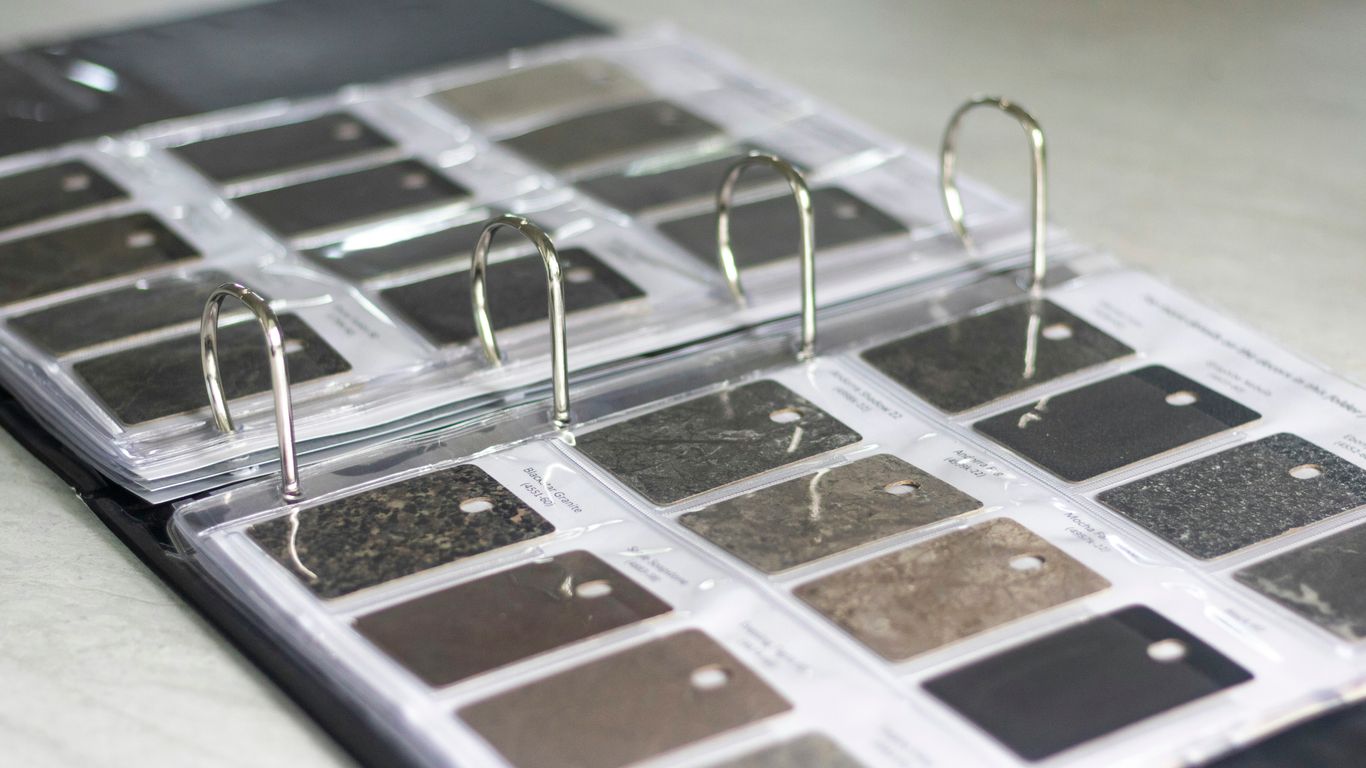
Hardness can indicate resistance to scratching, but it is not a complete measure of table performance. A hard stone can still chip at a vulnerable edge or crack if it is poorly supported. Heat guidance also varies, so hot cookware should not automatically be placed directly on any stone surface without checking the specification.
The useful comparison is practical rather than absolute. Ask how the stone responds to the particular combination of heat, impact, abrasion and cleaning that the table will encounter.
Porosity, sealing and vulnerability to spills
Porosity affects how quickly a liquid can enter the stone and how much attention spills require. A sealer can reduce absorption, but it will gradually wear and cannot prevent etching on reactive materials. Finish, colour and lighting also affect how visible a mark becomes.
A written care schedule is preferable to vague advice. It should identify suitable cleaners, products to avoid, likely resealing intervals and the process for dealing with a mark that does occur.
Surface finishes, edge profiles and tactile appeal
Polished, honed and textured finishes can make the same stone feel entirely different. Polished faces emphasise reflection and colour depth; honed faces appear quieter and may be more forgiving of fine surface wear. Edge profiles affect safety, visual weight and the way the top meets the base.
The finish should be viewed at hand height and in the room’s expected light. A small edge sample can be valuable because it shows how thickness, corner radius and surface treatment work together rather than presenting the top as a flat colour.
Colour, veining and how samples can differ from the finished table
A sample is a reference, not a guarantee of the final pattern. Large slabs reveal changes in direction and scale that are invisible on a small piece, and two slabs from the same quarry can carry different backgrounds or mineral marks. This is why full-scale slab review is one of the most useful steps in a natural stone purchase.
The following comparison is a simple starting point, not a substitute for reviewing the selected material.
| Stone | Typical visual character | Main practical consideration | Often suits |
|---|---|---|---|
| Marble | Expressive veining and varied backgrounds | Etching, staining and scratching | Formal or design-led rooms |
| Travertine | Warm tones, pores and linear markings | Porosity and surface texture | Relaxed, material-rich interiors |
| Granite | Granular pattern and strong colour range | Weight and slab selection | Heavy everyday use |
| Quartzite | Veined appearance with greater hardness | Verify material and care specification | High-use statement tables |
The table shows why “best stone” is too broad a question. A material that performs well in one household may be unnecessarily demanding, or visually wrong, in another.
Choosing the right stone for your room and lifestyle
The right table is a meeting point between material, architecture and daily routine. Start with how people sit, serve food and move around the room, then consider the visual character you want to live with. A beautiful slab cannot compensate for cramped circulation or a base that makes seating awkward. Nor should practicality erase the distinctive reason for choosing natural stone.
Matching the tabletop to your interior style
Light marble can brighten a restrained scheme, dark marble can create contrast, and travertine can warm a room built around natural finishes. Granite and quartzite offer broader possibilities, from quiet neutrals to strong movement. Look at the flooring, joinery, wall colour and upholstery together rather than matching the tabletop to one isolated sample.
A useful made-to-order stone furniture resource can help frame the conversation around material selection, dimensions and the relationship between a piece and its setting. For a bespoke table, the visual decision and the technical decision should be made together.
Selecting a practical shape and size for entertaining
Rectangular tables are efficient for larger groups and formal place settings, while round tables encourage conversation and can improve circulation in a compact room. Oval shapes soften corners without losing useful length. Allow enough clearance for chairs to pull out comfortably and for people to pass behind seated diners.
Before confirming the size, mark the footprint on the floor with tape or cardboard. Check doors, sideboards, pendant lights and service routes at the same time. A table that looks generous on a plan can feel restrictive once chairs and bodies occupy the room.
Planning for children, pets and frequent family meals
Busy households should consider how quickly spills are noticed, whether edges are exposed to knocks and how willing everyone is to use mats and coasters. A forgiving finish and a less reactive stone may be more satisfying than a highly polished surface selected only for its first impression. Rounded corners can also be worth considering where circulation is tight.
For family use, decide which compromises are acceptable before choosing the slab. These may include a visible patina, a more muted finish or a stone with less dramatic movement but easier day-to-day management.
Checking the base design, legroom and visual proportions
The base is not merely decorative. Its position affects knee room, chair placement, stability and the visual balance of a heavy top. A central pedestal can improve access around a round table, while four legs may suit a rectangular plan and make the structure feel lighter. Confirm overhangs, support points and the relationship between top thickness and base scale.
A production drawing should show these relationships clearly. It is much easier to resolve a base, edge or clearance issue before cutting than after the stone has been finished.
Caring for a natural stone dining table
Care begins with choosing a material and finish that suit the way the table will be used. Routine cleaning is usually straightforward when the correct products are used, but natural stone does not respond well to guesswork. Small habits, such as wiping a spill promptly and lifting rather than dragging objects, prevent many avoidable marks. The aim is sensible maintenance, not anxiety around the table.
Cleaning products and techniques that protect the surface
Use a soft cloth, clean water where appropriate and a cleaner recommended for the particular stone and finish. Neutral products are generally preferable to acidic, strongly alkaline or abrasive household cleaners. Spray the cloth rather than flooding joints and edges, then dry the surface to avoid lingering moisture.
Do not use vinegar, lemon-based cleaners, scouring powders or rough pads unless a stone professional has specifically confirmed their suitability. Even a product that works on one surface can dull or react with another.
Preventing stains, rings, scratches and heat damage
Coasters and placemats are practical barriers, not signs that the stone is too delicate to use. Felt pads under decorative objects can reduce abrasion, while lifting ceramics and servingware prevents grit from being dragged across the surface. Hot pans should rest on a suitable trivet, and damp items should not be left in one position for long periods.
A simple household routine can include:
- Wiping liquid and food spills as soon as they are noticed.
- Using boards, mats and trivets during preparation and serving.
- Lifting objects instead of sliding them across the tabletop.
- Keeping abrasive and acidic cleaners away from the stone.
These habits reduce the likelihood of damage without turning everyday meals into a formal ceremony. They are particularly helpful for marble and travertine, where surface response is part of the material’s character.
When to reseal, polish or professionally restore the stone
Resealing depends on the stone, finish, sealer and intensity of use, so a fixed calendar is not appropriate for every table. A professional can assess whether the surface is absorbing more readily, whether a finish has dulled and whether a mark is superficial or deeper. Polishing may improve a suitable surface, while honing or refinishing may be more appropriate for another.
Do not apply a new product over an unknown old coating without testing. Restoration should begin with identifying the stone and finish, then choosing a process that will not change the appearance unexpectedly.
How to deal with common spills and surface marks
Blot liquids rather than rubbing them outward, and remove food residue with a soft cloth and suitable cleaner. Oil, wine, coffee and coloured sauces may need different treatment, particularly on pale or porous stones. If a mark remains after routine cleaning, avoid repeated aggressive scrubbing; it may be an etch, absorbed stain or change in sheen rather than surface dirt.
Photograph the area in ordinary light and ask a stone specialist for advice. Prompt, accurate identification usually gives a better result than trying several household remedies in succession.
Buying and owning a natural stone dining table
Buying a stone table is a small project, especially when the piece is made to a particular drawing or delivered internationally. Material selection, fabrication, inspection, packing, access and installation all influence the final experience. A clear quotation should distinguish the furniture itself from services or site conditions that may vary. This level of detail is reassuring because it leaves fewer assumptions hidden in the process.
Questions to ask about stone origin, fabrication and finish
Ask where the stone was selected, whether the proposed slab can be reviewed, how variation will be handled and what finish has been specified. Clarify the finished thickness, edge profile, tolerances, joints, support method and any drillings. It is also sensible to ask which cleaning products and resealing approach are recommended.
For a bespoke project, confirm that the approved production drawing records the details that matter to you. A photograph of another table should not be treated as a promise of identical veining, tone or mineral marks.
Understanding weight limits, access and delivery arrangements
Measure every stage of the route, including gates, lifts, stair turns, corridors and final door openings. Ask how the tabletop will be packed, whether components are delivered separately and what equipment is needed for safe handling. Confirm who is responsible for checking access and whether installation is included in the individual quotation.
The same careful planning applies to unusual references: landscaping installs, for example, also show why high-value physical work benefits from clear scope and appropriate project information. The comparison is simple, but the principle holds: delivery assumptions should be written down rather than left to chance.
Assessing craftsmanship, joins, supports and table stability
Inspect exposed edges for consistent finishing, check that joins are intentional and ask how the stone is supported across its span. The top should sit securely without rocking, and the base should remain stable when people lean lightly against it. On a large table, small inaccuracies can become more noticeable because long edges and broad surfaces make alignment easy to see.
Where possible, approve drawings and finish samples before fabrication. This creates a shared reference for dimensions, tolerances and the visual treatment of the stone, while still acknowledging that natural variation cannot be standardised completely.
Balancing purchase price with long-term maintenance costs
The price of a natural stone table reflects more than the slab. Stone type, grade, thickness, size, fabrication complexity, edge work, base construction, packing, destination and installation can all affect the quotation. Maintenance costs may include suitable products, resealing and occasional professional restoration.
A realistic budget therefore compares the complete ownership picture rather than the tabletop alone. For broader context, online booking systems demonstrate in a different field how overlooked process details can affect the value of a high-consideration purchase; with furniture, the equivalent details are access, handling, specification and aftercare.
A well-specified table is easier to deliver, easier to care for and more likely to remain satisfying as the room evolves. If you are ready to discuss dimensions or material options, you can request a quote with the intended size, stone preference and destination details.
Consider Your Stone in Person
For a made-to-order natural stone dining table, discuss your room, dimensions, material and delivery requirements with Geoscenic Stone before committing to a slab. A considered brief makes it easier to resolve the drawing, finish, access and care expectations together.
Conclusion
A natural stone dining table can bring geological depth, tactility and permanence to a room, but the best choice is never based on appearance alone. Marble rewards care, travertine brings relaxed texture, and harder stones may suit more demanding routines. Compare the actual stone, finish, dimensions, support and delivery plan, then choose the material whose character and maintenance requirements fit the way you live.
Frequently Asked Questions
Is a natural stone dining table suitable for everyday family use?
Yes, provided the stone, finish and care routine match the household. Harder stones may tolerate more abrasion, while marble and travertine need prompt spill management and sensible protection.
Which is easier to maintain, marble or travertine?
Neither is maintenance-free. Marble is more vulnerable to etching from acidic substances, while travertine’s pores and texture can make sealing and spill management especially important.
Does natural stone need to be sealed?
Many porous stones benefit from sealing, but the correct product and timing depend on the material, finish and use. Sealing reduces absorption; it does not make a surface stain-proof or scratch-proof.
Can hot pans be placed directly on a stone table?
Do not assume that they can. Follow the supplier’s guidance and use trivets, since heat, sudden temperature change and localised stress can affect some stones and finishes.
How do I choose between a round and rectangular stone table?
Consider the room’s circulation, the number of diners and how the table will be used. Round tables support conversation and can improve movement in compact rooms, while rectangular tables often provide efficient seating for larger groups.
Will my tabletop look exactly like a sample?
Usually not. Natural stone varies in background tone, veining, pores and mineral marks, and a small sample cannot show the scale of a full slab. Review the selected material at the largest practical scale.
How should I clean a natural stone dining table?
Use a soft cloth and a cleaner suitable for the specific stone and finish. Wipe spills promptly, avoid acidic or abrasive household products, and seek specialist advice if a mark remains after gentle cleaning.