
Key Takeaways
A travertine coffee table can bring warmth, texture and a strong architectural presence to a room, but it rewards careful buying. Look beyond the photograph and assess the stone, proportions, construction, care requirements and delivery practicalities.
- Travertine is a porous natural stone with genuine variation in colour, veining and surface texture.
- Shape, height and circulation space matter as much as the tabletop’s appearance.
- Check whether the table is solid stone, veneered or supported by another structure.
- Sealing, gentle cleaning and sensible protection help prevent avoidable marks.
- A made-to-order piece should be confirmed through drawings, material selection and a detailed quotation.
Understand what travertine is and why it suits coffee tables
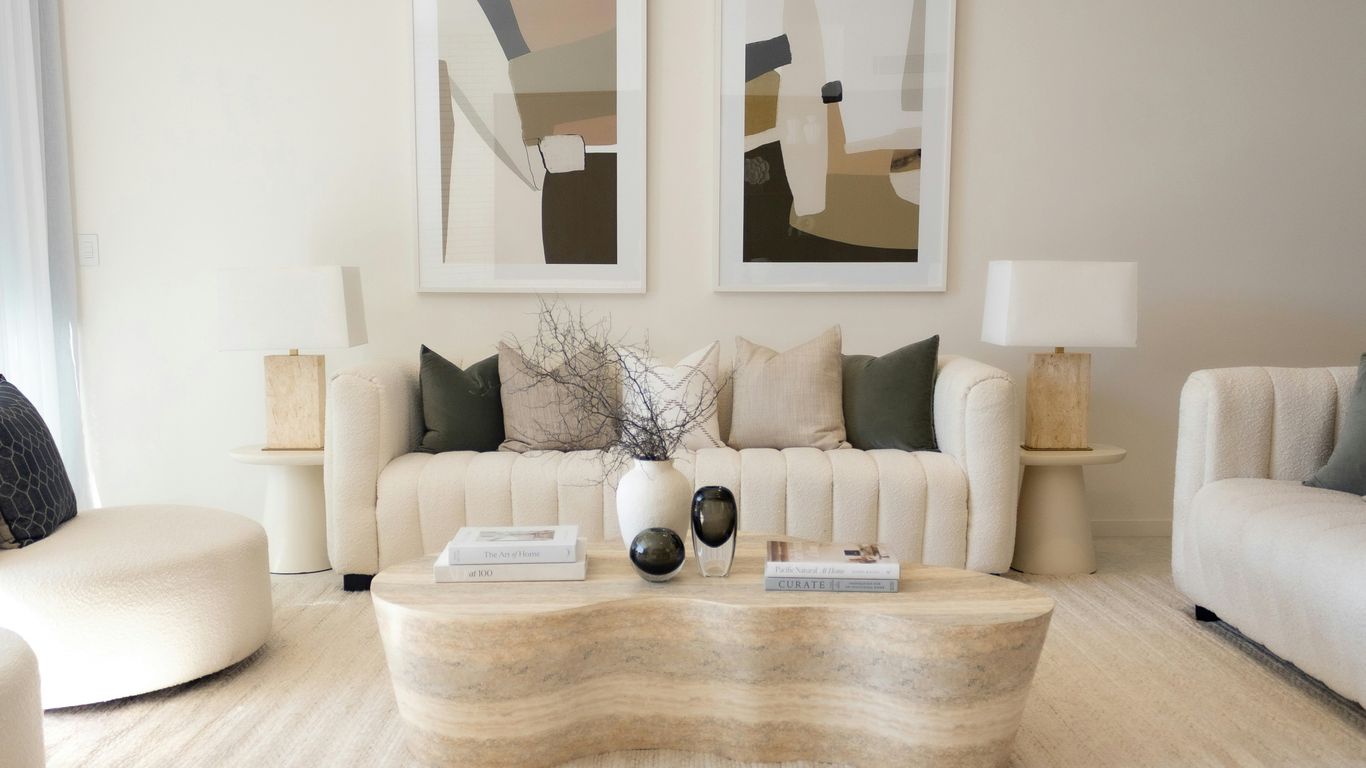
Travertine has a softly layered appearance that works particularly well at coffee-table scale. It can feel quieter than highly veined stone, yet its pores, tonal shifts and edges give a room something to look at. Before choosing a style, understand what is inherent to the material and what comes from fabrication.
How travertine forms and how it differs from marble
Travertine forms when mineral-rich water deposits calcium carbonate, often around springs and other water sources. Its characteristic pores and bands reflect that geological process, while marble is a metamorphic stone formed when limestone is changed by heat and pressure. Both are natural stones, but travertine generally reads as more textured and gently porous rather than crystalline and strongly veined.
The distinction matters when comparing samples. Travertine’s cavities may be filled or left visible, and its surface can have a more tactile quality than polished marble. A useful travertine furniture guide can help you compare table forms, finishes and practical limitations before you settle on a design.
The natural variation in colour, veining and surface texture
No two slabs will be perfectly alike. Cream, ivory, beige, tan and warmer brown notes may occur within the same broad selection, while veins, pits and mineral marks can change from one area to another. Natural variation is part of the material, not a manufacturing error, so ask how a selected slab or block will be reviewed before cutting.
A small sample gives you a sense of tone and finish, but it cannot show the complete movement of a larger top. If the table is intended to be a focal point, discuss the preferred background colour, vein direction and degree of filling in advance.
Honed, polished and filled finishes explained
A honed finish is smooth with little or no gloss and tends to make travertine feel understated. Polishing creates more reflection and can deepen the apparent colour, although it may also make marks more noticeable. Filling the natural voids produces a more even surface; leaving them open preserves a more rustic, tactile character.
Finish names are not always used consistently, so request a physical sample or a clear finish description. Edge treatment matters too: a softened edge can make a substantial stone top feel approachable, whereas a crisp edge gives it a more architectural character.
The benefits and drawbacks of using travertine indoors
Travertine offers visual warmth, individual character and considerable mass, which can anchor a seating arrangement beautifully. It also has limitations: it is porous, relatively heavy and susceptible to staining or etching if it is neglected. Those qualities do not make it unsuitable for a living room; they simply mean the table should be chosen with everyday use in mind.
For a wider comparison of how natural stones behave around furniture, see this guide to marble and travertine. The most suitable material is the one whose maintenance and appearance fit the household, rather than the one that looks best in a single photograph.
Choose the right shape, size and proportions
A beautiful stone top can still feel wrong if it crowds the sofa or leaves an awkward route through the room. Start with the seating plan, rug and doorways, then consider the shape that will make movement feel natural. The aim is a table that has presence without becoming an obstacle.
Round, oval, rectangular and irregular designs compared
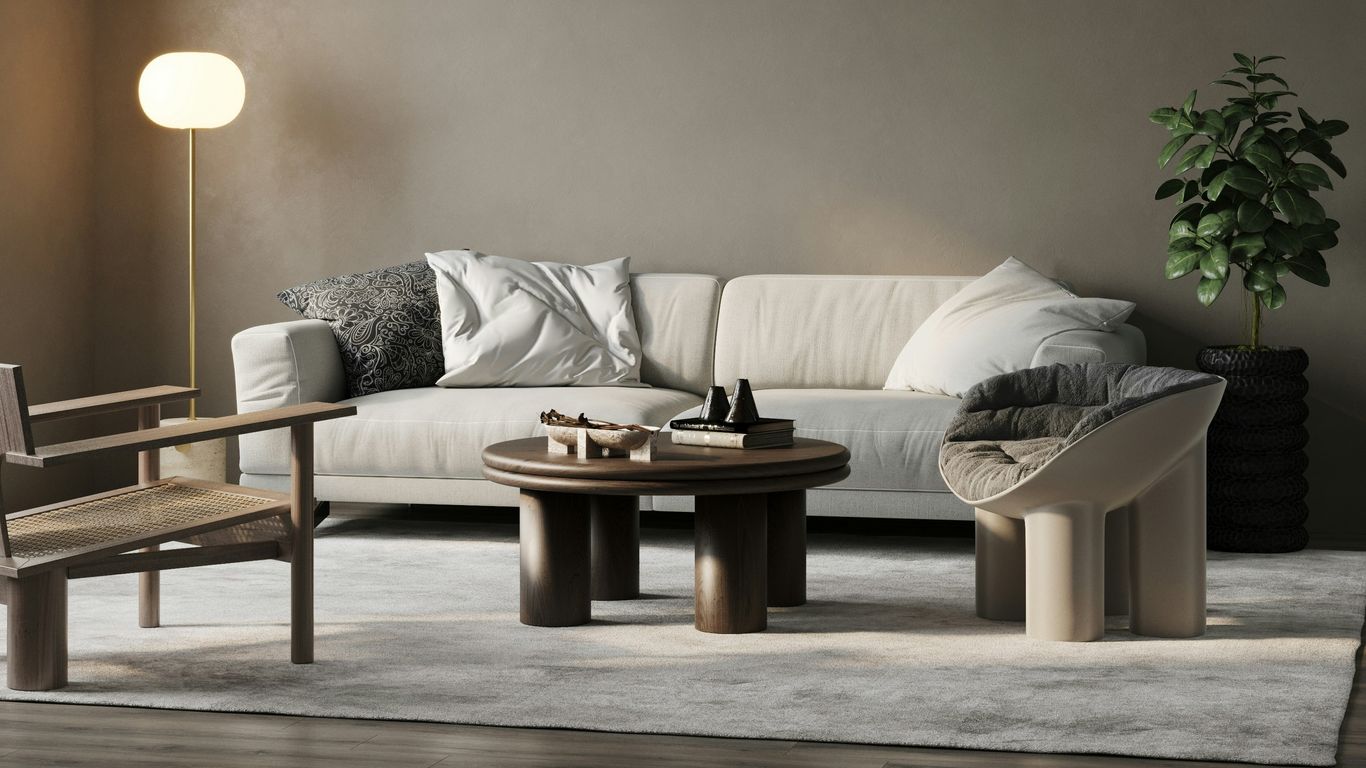
Round tables soften rooms with many straight lines and avoid sharp corners in busy circulation areas. Oval tops offer some of the same ease while providing a longer usable surface. Rectangular designs suit longer sofas and more formal layouts, while irregular or sculptural tops can make the table feel like a small architectural element.
Think about the room’s existing geometry rather than choosing a shape in isolation. A round top may be generous visually but still need a large diameter, whereas an oval can provide similar access with less visual bulk.
How to measure your seating area and walking space
Measure the sofa length, chair positions, rug boundaries and the intended route around the table. Mark the proposed footprint on the floor with masking tape or sheets of cardboard, then live with it for a day if possible. Include door swings, drawers and the places where people actually walk, not only the dimensions shown on a plan.
For projects involving a commissioned piece, Geoscenic Stone confirms dimensions, stone, finish, edges and drillings in an approved production drawing before production. That drawing-based approach is useful when a table must fit a particular seating plan rather than a standard retail footprint.
Recommended height relative to sofas and chairs
A coffee table is usually most comfortable when its top is close to the height of the sofa seat, or slightly lower. A notably taller table can interrupt sightlines and feel more like a dining surface, while one that is too low may be difficult to reach. Compare the table with the actual seat cushions, since deep or loose upholstery can change the practical relationship.
Allow enough room for knees and for reaching drinks without leaning across the seating. If the table has a thick top or a low plinth, check the clearance beneath it as carefully as the overall height.
When a nesting or modular design makes sense
Nesting tables are useful when the room needs flexibility: separate them for guests, then slide them together when the space is quieter. Modular designs can also help in apartments, hospitality settings or rooms that serve more than one purpose. Their usefulness depends on whether the pieces can be moved safely, particularly when each component is made from heavy stone.
A bespoke arrangement should have clear dimensions for every module, including overlap and the gap between surfaces. Do not assume that a smaller table is automatically easier to handle; a dense stone piece can still be cumbersome.
Assess the table’s construction and quality
Construction determines whether the table will remain stable and serviceable after the initial excitement wears off. Ask what the top is made from, how it is supported and how the base transfers weight to the floor. A natural-stone appearance alone tells you very little about those details.
Solid travertine versus travertine veneer
Solid travertine has a substantial stone component throughout the visible top, while veneer uses a thinner stone layer over another substrate. Neither description is automatically a criticism, but they have different weight, edge and repair implications. A veneer may allow a lighter structure; solid stone usually gives a more monolithic appearance and requires careful support.
Read the specification rather than relying on words such as “stone look” or “travertine effect”. Ask where the material appears on the edges, how the underside is finished and whether the photographs show the actual construction.
Checking the stone thickness, weight and stability
Thickness affects the visual proportion, edge treatment and total weight of the table. Weight is not a simple quality score, but it should be known because it affects floor protection, access and safe handling. Test whether the assembled table rocks, and check that the top sits evenly on its base.
For a clearer comparison, use the following questions when reviewing a quotation or product specification:
- What are the finished length, depth, height and top thickness?
- What is the estimated total weight and how is it distributed?
- Which surfaces are finished, filled or left intentionally open?
- Is the base fixed, demountable or supplied in separate parts?
These answers help distinguish a considered piece from a listing that only describes its appearance. They also give the delivery team information needed to plan handling.
Inspecting edges, joins, bases and support structures
Look closely at corners, underside details and the junction between top and base. Edges should be consistent with the approved design, joins should be intentional and a pedestal should sit squarely rather than appear to balance by chance. If timber or metal is combined with stone, check how the materials meet and whether movement or protective pads have been considered.
Geoscenic Stone produces pieces from material selection and cutting through finishing, inspection, packing and delivery for projects worldwide. For a made-to-order table, those stages should be reflected in the conversation and in the documents, not left as assumptions.
Warning signs of poor craftsmanship or misleading listings
Be cautious when a listing gives no material thickness, no underside photographs and no useful weight information. Vague claims about “real stone” are another reason to ask questions, especially if the finish appears unusually uniform across multiple supposedly unique pieces. Missing information does not prove poor quality, but it increases the need for clarification before payment.
Also check whether the photograph represents the exact table or only a reference example. Natural stone can vary in tone, figuring, porosity and mineral marks, so a seller should explain what can and cannot be matched.
Match the table to your interior and existing furniture
Travertine is versatile, but it is not visually neutral. Its pale mineral tones and solid mass can either calm a room or compete with other strong elements. Consider the full composition: upholstery, flooring, timber, metal, lighting and the amount of pattern already present.
Pairing travertine with wood, metal and upholstered seating
Warm timber brings out the beige and honey notes in many travertines, while black or aged metal creates a sharper contrast. Upholstered seating can soften a heavy stone base, especially when the fabric has a subtle weave rather than a high-contrast print. Glass, glossy lacquer and very pale textiles create a lighter look but may make surface marks more visible.
The most convincing combinations usually repeat one small characteristic elsewhere in the room: a warm undertone, a curved edge or a related matte finish. For a made-to-measure scheme, custom stone furniture offers useful context on combining stone with different room elements.
Choosing between light, beige and darker travertine tones
Light travertine can make a compact room feel open, but its pale surface may show coffee rings or dust more readily. Beige tones are forgiving and often sit comfortably with timber and woven fabrics. Darker travertine has greater visual drama and can ground a large room, though it may make a small arrangement feel denser.
Judge the colour in the room’s actual daylight and artificial light. A sample that looks neutral in a showroom may appear pinker, greyer or more golden beside your flooring and upholstery.
Balancing a sculptural base with the stone’s visual weight
A pedestal or sculptural base can make a simple tabletop memorable, but both elements need room to breathe. If the base is broad and the top is thick, the result will feel grounded and formal. A narrower support or raised plinth can reduce the apparent mass while retaining stability.
Keep the surrounding furniture relatively calm when the base is highly expressive. Conversely, a plain base gives more freedom to select a top with pronounced pores or distinctive movement.
Using natural variation to create a cohesive room scheme
Rather than trying to match every tone exactly, identify the dominant family of colours in the stone and repeat it in smaller details. A beige vein might relate to a rug border; a grey note might connect with metalwork or painted walls. This approach allows the table to remain individual without looking disconnected.
Review the whole slab or a large representative image where possible. That is more reliable than choosing from a tiny chip, particularly when the table is intended to be the room’s central visual element.
Know how to care for a travertine coffee table
Travertine needs ordinary care rather than anxious care. Dust, spills and heat are manageable when the surface has been specified and maintained appropriately. The exact routine depends on the finish and sealer, so keep any care guidance supplied with the table.
Why travertine is porous and needs sealing
The pores in travertine can absorb liquid, particularly when they are open or only lightly filled. A suitable sealer reduces absorption but does not make the surface invulnerable or permanently maintenance-free. Ask whether the table is sealed before delivery, what product was used and when resealing may be advised.
A sealer also does not prevent every form of etching. Acidic substances can alter the surface appearance even when staining is reduced, so prevention remains preferable to relying on treatment afterwards.
Everyday cleaning products and methods to use
Use a soft cloth and a pH-neutral cleaner appropriate for natural stone, following the product instructions. Wipe spills rather than spreading them, and avoid abrasive pads, acidic sprays, bleach-heavy products and powders that may dull or scratch the finish. A clean, slightly damp cloth is often enough for light daily cleaning.
Test any unfamiliar product in an inconspicuous area first. If the table has an unusual coating or a deliberately open texture, obtain care advice specific to that finish.
Preventing stains, etching and marks from spills
Coasters and mats are simple but worthwhile, particularly under coffee, wine, citrus drinks and oily objects. Blot a spill promptly with an absorbent cloth and avoid rubbing it deeper into the pores. Do not leave damp objects, plant pots or metal containers on the surface for long periods.
A lived-in patina may develop over time, and some owners appreciate that change. The key is to choose knowingly: a pristine, uniform appearance requires more vigilance than a surface where small signs of use are acceptable.
Protecting the surface from heat, moisture and scratches
Use trivets for hot serving dishes and felt or rubber pads beneath decorative objects. Lift ceramics and heavy accessories rather than dragging them, and keep grit away from the tabletop because small particles can create fine scratches. Place mats beneath items that may trap moisture.
If the table is moved, protect corners and avoid pulling it across the floor. Its weight can damage flooring or loosen joints even when the stone itself appears unaffected.
Compare prices, delivery and buying options
The price of a travertine coffee table reflects more than the stone. Size, thickness, finish, base design, fabrication time, packing, destination and access can all change the final figure. Comparing like with like is difficult unless the specifications and delivery terms are written clearly.
What affects the cost of a travertine coffee table
Larger tops use more material and may require heavier packing or specialist handling. Complex curves, thickened edges, filled voids, unusual finishes and sculptural bases add fabrication time. Custom dimensions can also involve drawing, sampling and approval stages that are not present in a standard retail listing.
For a project-specific piece, Geoscenic Stone prepares quotations around the individual table, including its weight, packing, destination, site access and any installation requirements. Confirm which elements are included, excluded or provisional before comparing totals.
Buying online versus viewing the stone in person
Online buying is convenient and can provide a useful first view of shape, scale and finish. However, photographs rarely show every pore, tonal shift or mineral mark, and the pictured piece may not be the one delivered. Viewing a slab, large sample or workshop finish in person gives a better sense of texture and colour.
When an in-person visit is not practical, request additional images in consistent light and ask whether the material will be selected for your order. A useful comparison is to review a handcrafted travertine table while remembering that a reference image cannot guarantee identical stone appearance.
Questions to ask about sealing, sourcing and returns
Before ordering, ask for the stone type, finish, dimensions, estimated weight, sealing status and care instructions. Also ask how natural variation is handled, whether drawings are approved before fabrication, and what happens if damage is found on arrival. Return conditions may differ for made-to-order work, so read them before confirming.
The following links are unrelated to stone buying, but they illustrate why clear written information matters when comparing specialist services: remodelling contractor marketing, Oli6Goat, Amazon Echo Show 10, Golf DFS and the acne patient journey. In each case, the useful decision begins with understanding what is actually being offered rather than relying on a broad label.
Planning for delivery, access and the table’s heavy weight
Measure lifts, doorways, stair turns, corridors and the final position before production begins. A table may fit the room but fail at the narrowest access point, or require two-person handling and temporary protection for floors and walls. Confirm whether delivery reaches the room, whether unpacking is included and whether installation is separately quoted.
For a bespoke order, site access details should be shared early, not after the table has been packed. If you are planning delivery, keep the approved dimensions and access notes available for everyone involved.
Conclusion
Choosing a travertine coffee table is a balance between geological character, practical proportions and honest expectations about care, variation and weight. Measure the room, inspect the construction, clarify the finish and delivery terms, then select a piece whose natural differences will feel at home in your interior.
Frequently Asked Questions
Is travertine suitable for a coffee table?
Yes, provided you are comfortable with a porous natural stone that may show variation and requires sensible protection. Its warmth, texture and weight make it well suited to many living rooms.
Does travertine stain easily?
Unsealed or poorly maintained travertine is more vulnerable to absorbing spills. Sealing can reduce absorption, but prompt cleaning and coasters remain important.
Should travertine be honed or polished?
Honed travertine has a quieter, low-sheen appearance, while polished travertine reflects more light and can look more formal. The best choice depends on the room and how much surface variation you want to see.
How high should a coffee table be?
A coffee table is generally comfortable when its top is close to, or slightly below, the sofa seat. Check the actual cushions and allow enough clearance for reaching and legroom.
Is solid travertine better than veneer?
Neither is automatically better. Solid stone offers a more monolithic construction but adds weight, while veneer can reduce weight and allow different support solutions. The specification and workmanship matter most.
How do you clean a travertine coffee table?
Dust with a soft cloth and clean spills promptly using a pH-neutral natural-stone cleaner or clean water where appropriate. Avoid acidic, abrasive and harsh chemical products unless the stone-care instructions specifically allow them.
Can a travertine coffee table be made to measure?
Yes, some makers can produce a table to approved dimensions, with selected stone, finish, edge details and base design. Confirm drawings, tolerances, weight, packing, access and installation arrangements before production begins.
Talk Through Your Stone Piece
If you are planning a made-to-order table or architectural stone element, request a quotation with your preferred dimensions, material, finish and delivery destination. A clear brief helps establish the practical details before fabrication begins.