
Key Takeaways
A white marble dining table can be quietly elegant or highly dramatic, depending on the stone, slab and finish chosen. The best decision balances appearance with the way the table will be used every day.
- Carrara, Calacatta and Statuario offer noticeably different backgrounds and veining.
- Natural variation means the selected slab matters as much as the marble name.
- Shape, size, base design and clearance should be considered together.
- Polished, honed and textured finishes each create different maintenance expectations.
- Careful drawings, support, sealing and delivery planning help protect the finished piece.
Choosing the right white marble for a dining table
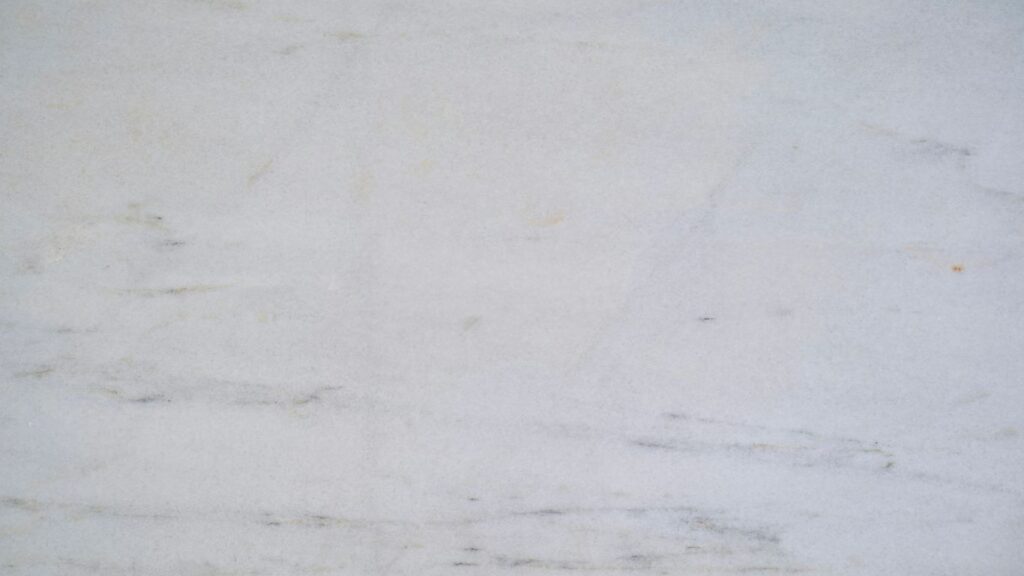
The phrase white marble covers a surprisingly broad range of appearances. Some slabs are cool and almost uniform, while others carry grey, gold or taupe movement across the surface. For a wider overview of marble types, finishes and practical trade-offs, this marble dining table guide is a useful companion. The right choice is the one that suits both the room and the amount of care you are comfortable giving it.
Carrara marble: soft veining and versatile style
Carrara is often recognised by its pale grey background and relatively gentle veining. It works comfortably in contemporary, classic and transitional interiors because it adds pattern without becoming the only visual feature in the room. A softer slab can also sit well alongside warm timber, natural linen and muted upholstery.
When reviewing a slab, look beyond the general label. The density, direction and contrast of the veins can differ considerably, so a small sample may not show how the finished tabletop will read at full scale.
Calacatta marble: bold patterns and a luxury look
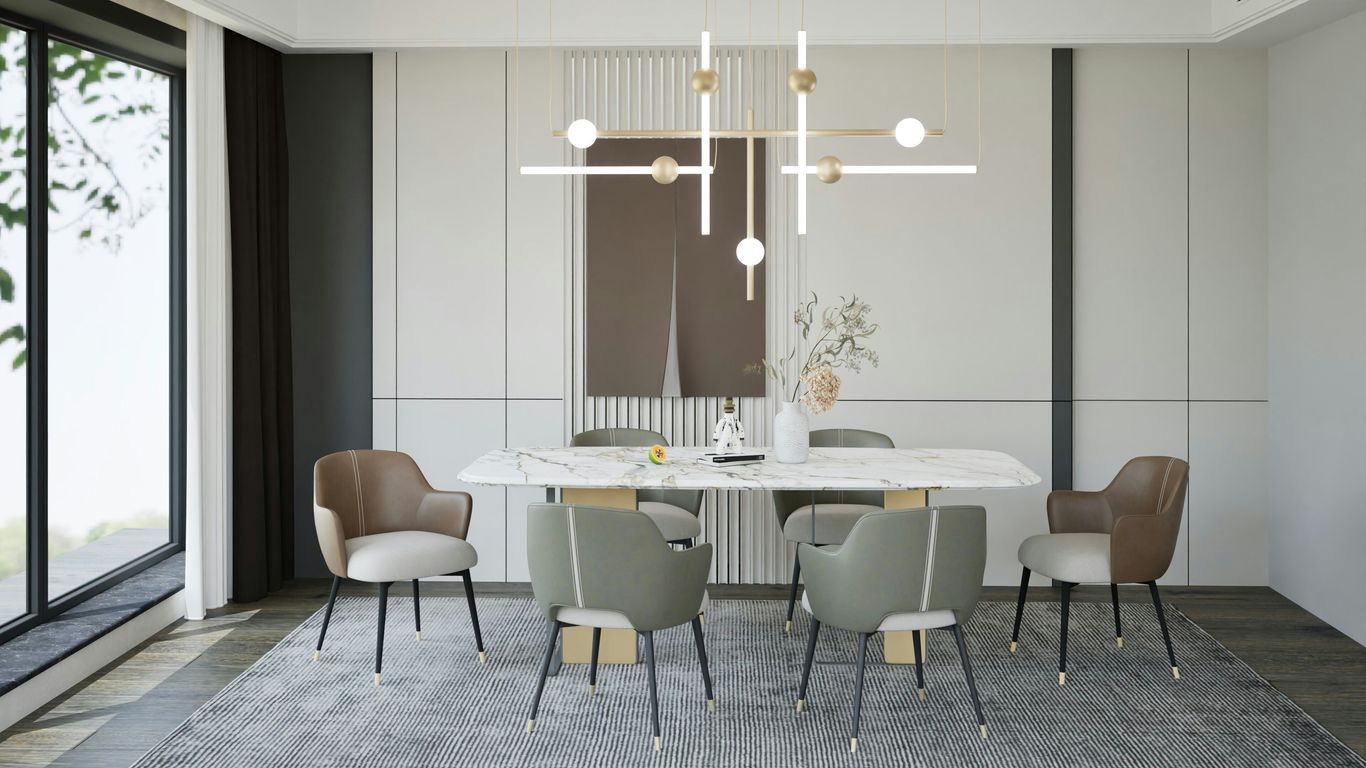
Calacatta generally makes a stronger statement, with a light background crossed by broader, more expressive veins. Depending on the slab, those marks may be grey, warm-toned or sharply contrasting. It is often chosen when the tabletop is intended to act as the room’s main focal point.
Bold stone benefits from a restrained base and simple surrounding furniture. If the table is made to order, the cut plan should be considered carefully so the most compelling part of the slab appears in a balanced position rather than disappearing into an edge or support.
Statuario marble: bright backgrounds with dramatic veining
Statuario is valued for its bright appearance and more pronounced veining. The contrast can give a dining room a crisp, architectural quality, particularly when paired with dark timber, black metal or sculptural seating. Its character is best judged from the full slab under lighting similar to that of the intended room.
A dramatic pattern does not need decoration around it. Keeping tableware, lighting and chairs relatively calm allows the stone to remain legible and prevents the setting from feeling visually crowded.
Dolomite and other marble alternatives
Dolomite and other light natural stones can offer a related look with their own balance of colour, movement and texture. They should not be treated as interchangeable simply because they appear white in a photograph. Hardness, porosity, availability and fabrication requirements may differ, so the intended use should guide the conversation.
A useful comparison also includes alternatives such as granite, quartzite, porcelain or sintered stone, where consistency or lower maintenance may matter more than the exact character of natural marble. The material is only one part of the decision; the support and fabrication details matter just as much.
Understanding marble colour, veining and variation
Colour and veining determine how a white marble dining table sits within a room. A blue-white background can feel cooler and sharper, while creamier tones can soften timber, brass and warm lighting. Since natural stone is formed with variation, the chosen slab should be reviewed as a real piece of material rather than assumed from a name alone.
How background colour changes the overall look
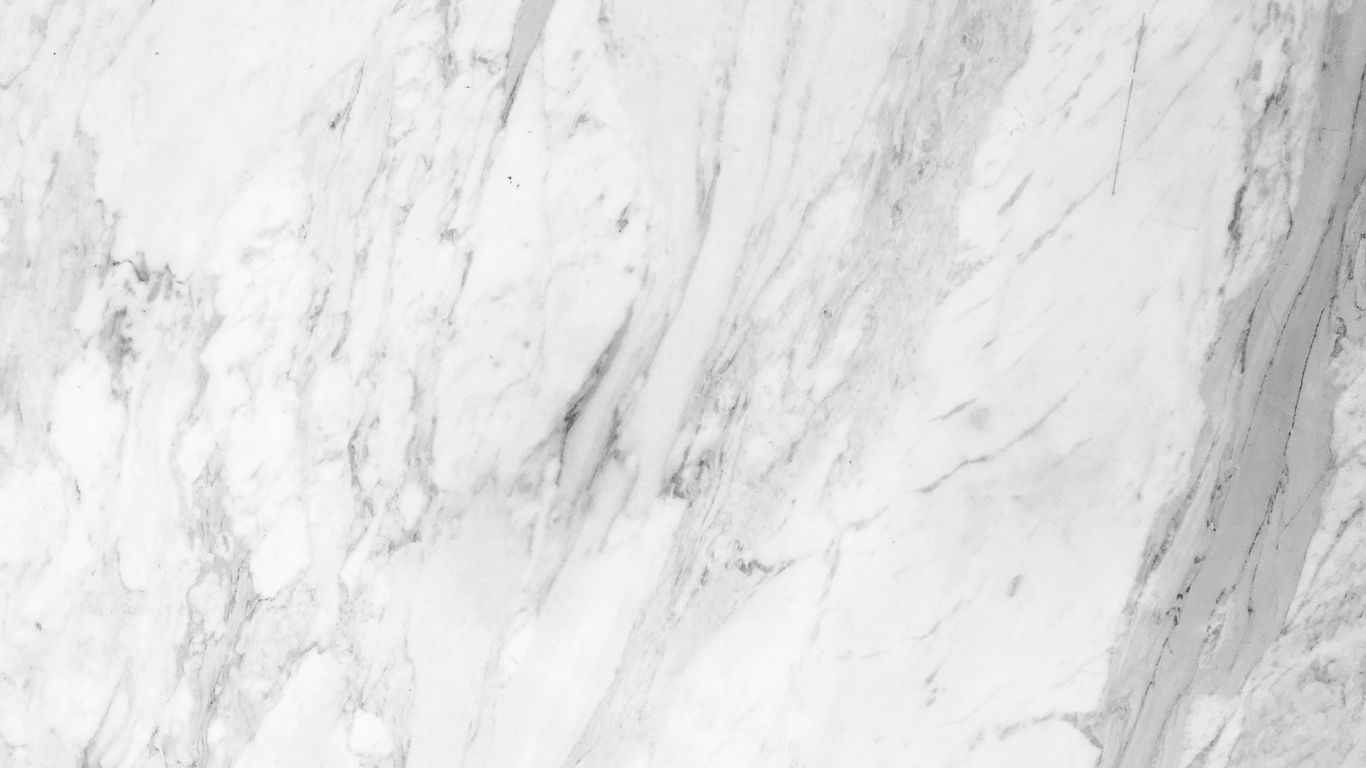
The background is the visual field behind the veins, and it has a strong effect on atmosphere. A very bright white can reflect more light and create a clean, gallery-like impression; ivory, dove and pale grey backgrounds tend to feel gentler. Consider flooring, wall colour and daylight before deciding that one shade is universally better.
In a compact room, a lighter background may help the table feel less visually heavy. In a large open-plan setting, a deeper grey-white can provide enough definition to anchor the dining zone.
Fine, linear and cloud-like veining explained
Fine veining creates a delicate, almost drawn effect, while linear veins give the eye a clear direction across the slab. Cloud-like figuring is more dispersed and tonal, producing a quieter but less predictable surface. None of these patterns is inherently superior; the choice depends on whether you want the table to recede or make a statement.
The direction of the cut can also affect the result. Ask to see how the proposed dimensions will be taken from the slab, particularly for an oval or long rectangular top where the pattern may travel noticeably from end to end.
Matching slab variation across a dining table
For a single-piece top, matching means selecting a slab whose movement works with the final outline. Larger tables may require more than one piece, in which case the relationship between joins, vein direction and edge details needs to be discussed before fabrication. A production drawing should show dimensions, edges and any joins clearly.
The following checks help keep the review practical rather than purely visual:
- View the slab under natural and artificial light.
- Confirm the usable dimensions after cutting and edge finishing.
- Discuss vein direction at joins and around openings.
- Ask whether visible repairs, fissures or mineral marks are expected.
This process does not remove natural variation. It simply makes the expected result clearer before cutting begins, which is especially helpful for a made-to-order piece.
Why natural marks are part of the stone’s character
Mineral marks, small tonal shifts and changes in veining are part of natural stone’s identity. They may appear more or less visible after polishing, honing or exposure to different light. Treating these features as part of the selection process leads to a more realistic and satisfying result than expecting a perfectly repeated pattern.
A dining table also gains a history through use. Minor signs of life may become part of its character, although sensible protection and prompt cleaning will reduce avoidable damage. For a broader explanation of variation, see this guide to natural stone uniqueness.
Selecting a suitable white marble dining table design
A good design begins with the room rather than the tabletop in isolation. The table needs enough space for chairs to move, people to pass behind them and doors or drawers to open comfortably. Shape, base and material combinations then determine whether the piece feels light, grounded, formal or relaxed.
Round, rectangular and oval table shapes
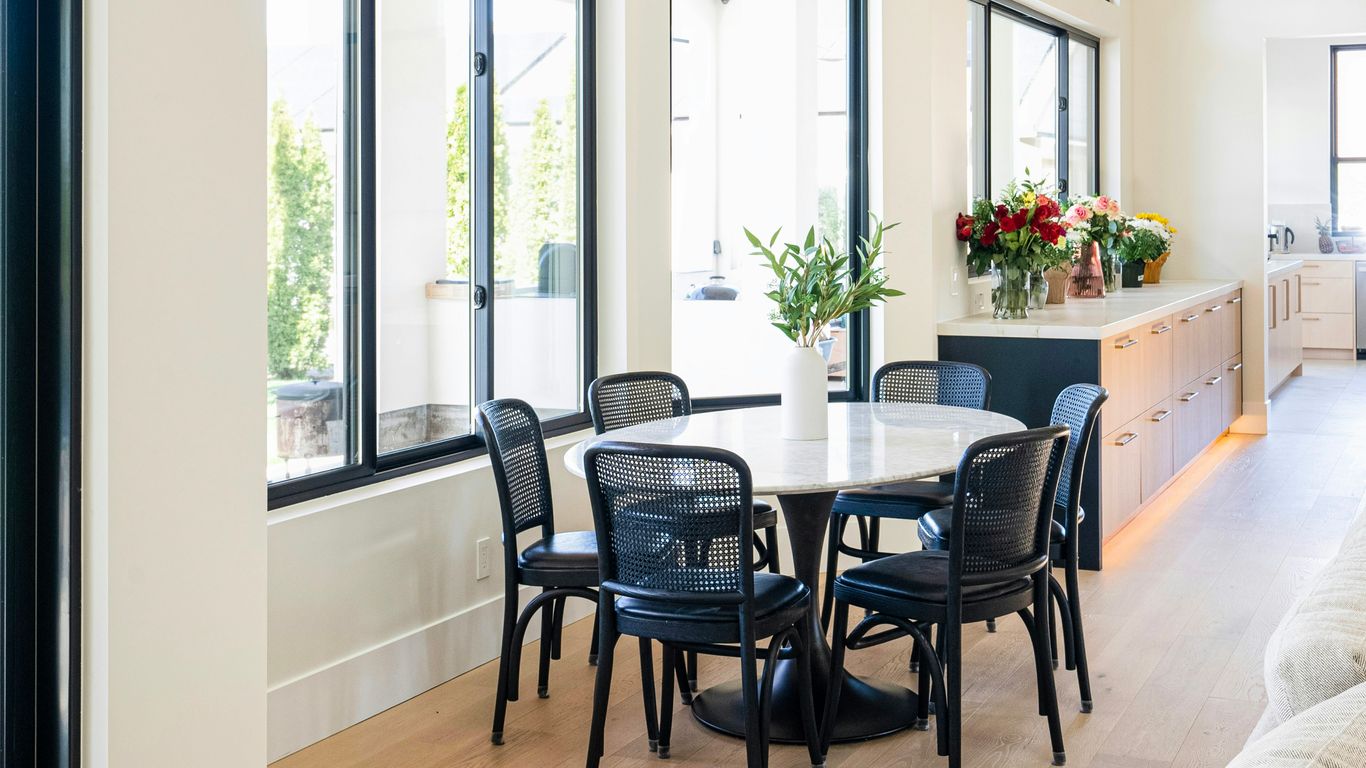
Round tables encourage conversation and can be efficient in smaller rooms, particularly when paired with a central pedestal. Rectangular tables suit long rooms and larger gatherings, while oval tables soften the corners of a generous top without losing useful length. The shape should follow the room’s circulation as much as its aesthetic.
A round marble dining table can be especially effective where there is no obvious linear wall to follow. Measure the surrounding clearance carefully, since the absence of corners does not remove the space needed for chairs.
Choosing the right size for your dining space
Start with the room’s clear dimensions, then allow for the chairs and a comfortable route around them. Do not measure only the empty floor area: a sideboard, radiator, island or open door may reduce the usable footprint. Seat count is also affected by leg placement, overhang and the width of each chair.
For a more detailed look at dimensions and seating, consult this dining table size guide. It is sensible to tape the proposed outline on the floor before ordering, especially when access through corridors, lifts or staircases is tight.
Pedestal bases versus four-leg designs
A pedestal can provide more uninterrupted legroom and gives a round or oval top a clear, centred presence. Four legs offer a familiar structure and can suit rectangular tables, but their position affects where guests can sit comfortably. Either approach can be stable when properly engineered; stability should not be assumed from appearance alone.
The base also carries the visual weight of the stone. A slender metal form can make a substantial top feel lighter, while timber or stone supports can create a more grounded composition. The connection between top and base should be resolved in the approved drawing.
Coordinating marble with wood, metal and upholstered seating
Marble becomes more welcoming when balanced with materials that introduce warmth or softness. Timber brings grain and tactility, metal can sharpen the silhouette, and upholstered seating reduces the formality of a hard stone surface. Choose one or two supporting materials rather than trying to echo every colour in the veining.
There is useful inspiration in these modern marble tables, particularly in the way streamlined bases and warmer materials offset the mass of stone. A white marble dining table does not need to match every element in the room; it needs a coherent relationship with them.
Comparing marble finishes for everyday use
The finish changes more than reflectivity. It affects how colour is perceived, how marks catch the light and how often the surface may need attention. Polished, honed and textured options can all be appropriate, provided the finish is chosen with the table’s use, lighting and maintenance routine in mind.
Polished marble for shine and visual depth
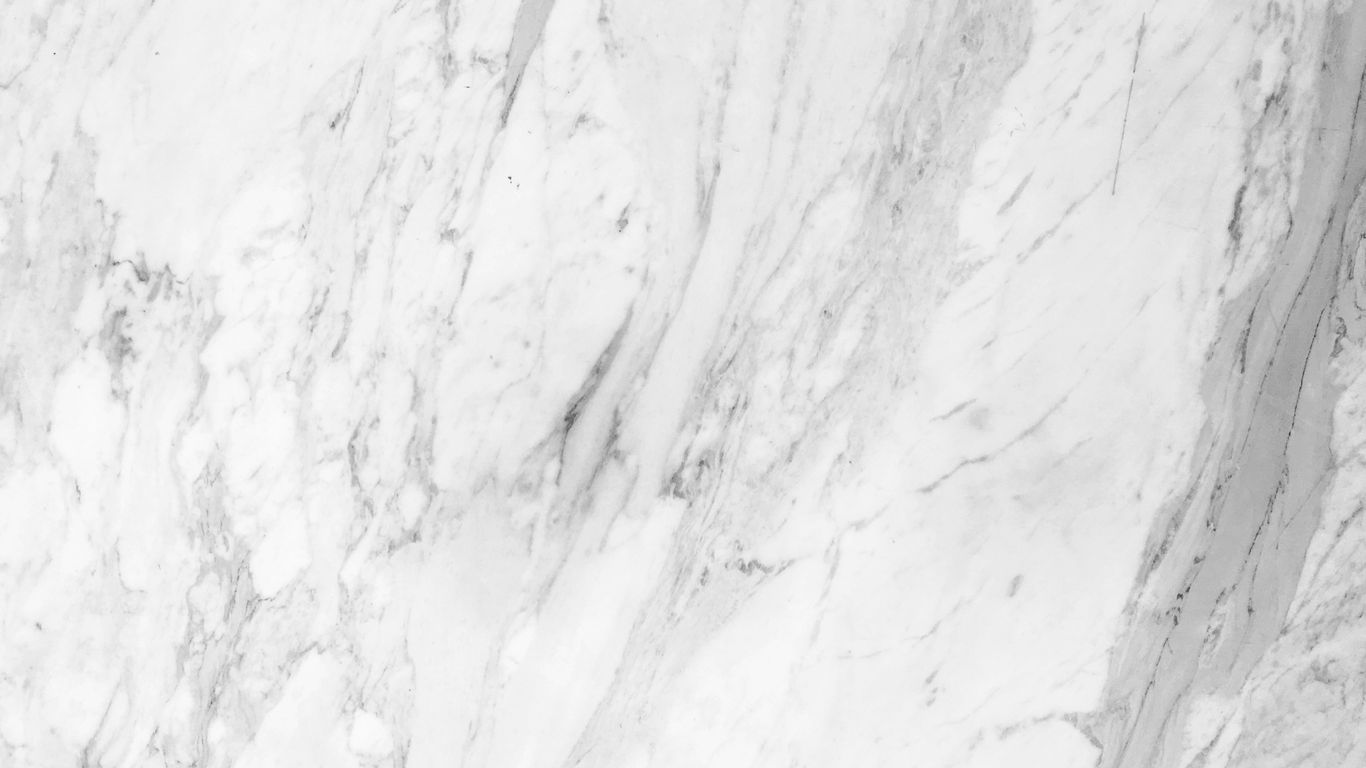
Polished marble has a reflective surface that can make veining appear deeper and colours more saturated. It suits formal interiors and rooms where the tabletop is intended to catch light. The gloss can also make fingerprints, fine scratches or etching more noticeable from certain angles.
This does not make polished marble unsuitable for dining. It simply means that users should understand the surface and use sensible protection rather than expecting it to behave like a completely maintenance-free material.
Honed marble for a softer, contemporary appearance
Honed marble has a low-sheen, velvety appearance that tends to feel quieter and more contemporary. It can reduce glare and may make light surface wear less visually prominent. The colour often appears softer than it would on a polished surface, so samples should be viewed in the intended room.
Honing does not make marble immune to acids or stains. A matte appearance can be forgiving, but the underlying stone still benefits from appropriate sealing and prompt attention to spills.
Leathered and textured finishes for added character
Leathered or textured finishes bring tactile variation and can emphasise the natural structure of the stone. They may suit informal dining rooms, hospitality settings or interiors that already contain woven textiles and rougher materials. The texture should be assessed by hand as well as by eye.
Uneven surfaces can require a little more care around crumbs and spills, particularly where the texture is deep. The edge profile should be considered at the same time so that the top feels deliberate rather than overly busy.
How finish affects staining, scratches and maintenance
No finish removes marble’s sensitivity to acidic substances, and no finish eliminates the possibility of staining. Polished surfaces can show scratches and etching through reflected light, while honed and textured surfaces may absorb spills differently. The best choice is therefore a trade-off between visual preference and realistic use.
| Finish | Visual effect | Practical consideration |
|---|---|---|
| Polished | Reflective, high contrast | Marks may catch the light clearly |
| Honed | Soft, low sheen | Spills still require prompt cleaning |
| Leathered | Tactile, subtly textured | Crumbs and residue may need more attention |
The finish should be specified alongside the stone, edge and dimensions rather than selected as an afterthought. This finish comparison can help clarify the difference between honed and polished marble before you approve a sample.
Buying a white marble dining table with confidence
Buying a natural stone table involves more than choosing a photograph and a nominal size. The slab, fabrication, base, packing and route into the room all affect the final piece. A transparent quotation should make those variables visible rather than hiding them behind a single headline price.
Checking slab thickness, support and table construction
Thickness influences proportion, weight and the way the edge is perceived. A substantial-looking edge may be solid, built up or shaped through fabrication, so ask how it is constructed. The top also needs suitable support to manage its weight and reduce stress during use and movement.
At Geoscenic Stone, pieces are produced to an approved drawing, with dimensions, stone, finish, edges and drillings confirmed before production. That process is valuable because it gives the client and project team a shared reference for checking the finished table.
Understanding sealing, warranties and installation
Ask which sealer is proposed, when it will be applied and what it is intended to protect against. A sealer can reduce absorption, but it does not make marble impervious to etching or remove the need for care. Installation should cover access, positioning, levelling and any joining or fixing work required on site.
Warranties should be read alongside the material specification. Clarify what is covered, what is considered normal natural variation and how delivery damage or installation issues are handled.
Assessing comfort, clearance and seating capacity
Comfort is determined by more than the number of chairs that fit around the outline. Check knee clearance, base position, chair width and the relationship between tabletop height and seat height. A visually generous table can still feel cramped if the supports occupy the wrong places.
Before final approval, walk through the everyday scenario: pulling out a chair, serving food, passing behind a seated guest and reaching the centre of the table. These simple tests often reveal problems that a plan drawing alone does not show.
Questions to ask about sourcing and quality
A useful supplier conversation should cover the origin and selection of the slab, inspection standards, usable dimensions and any expected variation. Ask to see the actual material where possible, not just a styled room image. It is also worth clarifying how the top will be protected during packing and what access information is needed before dispatch.
For dining projects, a restaurant website features article may seem unrelated, but it is a reminder that hospitality spaces are planned around real use, movement and service. The same practical thinking belongs in a private dining room. At Geoscenic Stone, quotations account for the individual piece, weight, packing, destination, site access and installation requirements where applicable.
Caring for and protecting a white marble dining table
Marble care is straightforward when the routine is gentle and consistent. Wipe the surface regularly, deal with spills before they sit and avoid treating the stone like glass, laminate or ceramic. A considered care plan protects the finish while allowing the material’s natural character to remain visible.
Cleaning spills and everyday marks safely
Use a soft cloth, clean water and a pH-neutral stone cleaner suitable for the specified finish. Blot rather than scrub when a spill occurs, then dry the area to avoid leaving a film. Dust and crumbs can be removed with a soft cloth before wiping the surface.
Avoid vinegar, lemon-based products, abrasive powders and strong household chemicals unless a stone-care professional has confirmed their suitability. This marble care guide offers a practical reference for building a gentle cleaning routine.
Preventing etching, stains and heat damage
Acidic foods and drinks can etch marble, leaving a dull or lighter mark rather than a removable stain. Oils, dark liquids and coloured sauces may penetrate if left unattended, especially where the stone or sealer is more absorbent. Hot cookware should not be placed directly on the surface, since sudden heat can damage the finish or stress the stone.
A sealed surface gives additional time to respond, but it is not permission to leave spills until later. The safest habit is simple: clear, blot and wipe soon after the incident.
Using placemats, coasters and protective accessories
Protective accessories are useful without needing to hide the tabletop completely. Coasters under drinks, placemats beneath serving dishes and trivets under warm cookware reduce repeated exposure to moisture, heat and abrasion. Felt pads beneath decorative objects can also prevent small scratches caused by movement.
In a busy household, these habits are easier to maintain when the accessories are attractive and close at hand. The aim is not to prevent the table from being used, but to make normal use less punishing.
When to reseal, repair or professionally restore the surface
Resealing intervals depend on the stone, finish, previous sealer and intensity of use, so there is no universal calendar date. A stone specialist can assess whether water is absorbing unusually quickly or whether the surface needs further treatment. Deep stains, chips, cracks and pronounced etching are better evaluated professionally than treated with improvised abrasives.
Professional restoration may improve a damaged surface, but it cannot always erase every mark or recreate a particular natural pattern. Discuss the likely result, cost and finish before work begins, and keep the original material details for future reference.
Bring your stone brief together
If you are planning a made-to-order table, share the room dimensions, preferred shape, seating needs and access constraints before requesting a quotation. Lisboa Secreta, Memphis water quality, NZ outdoor furniture and Bundoora Family Dental Clinic illustrate how varied online reference material can be, but a stone brief should remain focused on the actual space, material and use. At Geoscenic Stone, the next step is to review the stone and production requirements for the individual project; you can plan your piece when the brief is ready.
Conclusion
A white marble dining table earns its place through the relationship between stone, proportion, finish and daily care. Review the actual slab, confirm the construction and access details, then choose protection that suits how the room is lived in. Natural variation is not a flaw to be designed out; it is part of making a table that feels specific to its setting.
Frequently Asked Questions
Is white marble suitable for a dining table?
Yes, provided you accept that marble needs sensible care. Sealing, prompt spill removal, coasters and suitable cleaning products can help preserve its appearance, but acidic substances may still etch the surface.
Which white marble has the least veining?
Carrara often offers a softer and more restrained appearance, but individual slabs vary. The marble name is only a starting point, so inspect the actual slab or a representative selection before deciding.
Is polished or honed marble better for dining?
Neither is universally better. Polished marble has shine and stronger visual depth, while honed marble has a softer, lower-sheen appearance; both remain vulnerable to staining and etching.
How much space should surround a dining table?
Allow enough room to pull chairs out and walk behind seated guests. The exact clearance depends on chair size, circulation routes, doors, sideboards and the overall layout of the room.
Can a marble table be made to a custom size?
Many natural stone tables can be produced to a specified size, shape, edge and finish. Confirm the usable slab dimensions, support method, access route and production drawing before fabrication.
How do I clean a white marble dining table?
Use a soft cloth, clean water and a suitable pH-neutral stone cleaner. Avoid acidic products, abrasive cleaners and prolonged contact with coloured or oily spills.
How often should marble be resealed?
There is no fixed interval for every table. Resealing depends on the stone, finish, existing treatment and use, so a professional assessment is more reliable than following a universal schedule.