
Key Takeaways
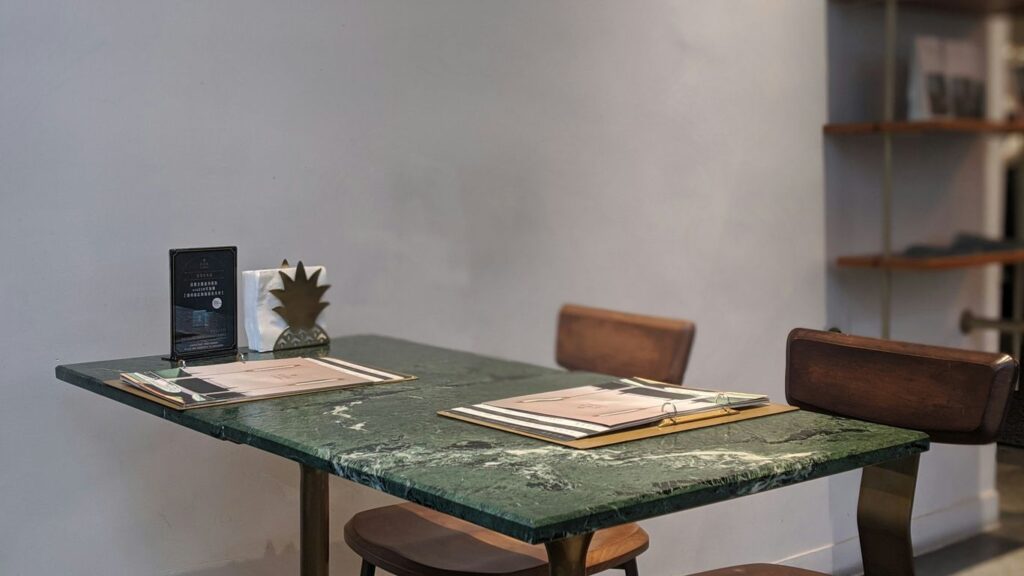
A green marble dining table brings natural colour, movement and weight to a dining room. The best choice balances the stone’s character with the room, the table’s proportions and the practicalities of daily use.
- Review the full slab rather than relying on a small sample.
- Match colour, veining and finish to the wider interior scheme.
- Measure seating, circulation and delivery access before ordering.
- Protect marble from acids, heat, standing water and abrasive cleaning.
- Confirm the drawing, construction, quotation and aftercare before production.
Understanding green marble for dining tables
Green marble is valued for its depth, mineral movement and ability to act as both furniture and focal point. No two slabs should be expected to look identical, even when they share a commercial name. The right stone depends on how much visual activity the room can carry and how the table will be used. A useful overview of marble dining table ideas can help place the material in a wider interior context.
How green marble is formed and why its colour varies
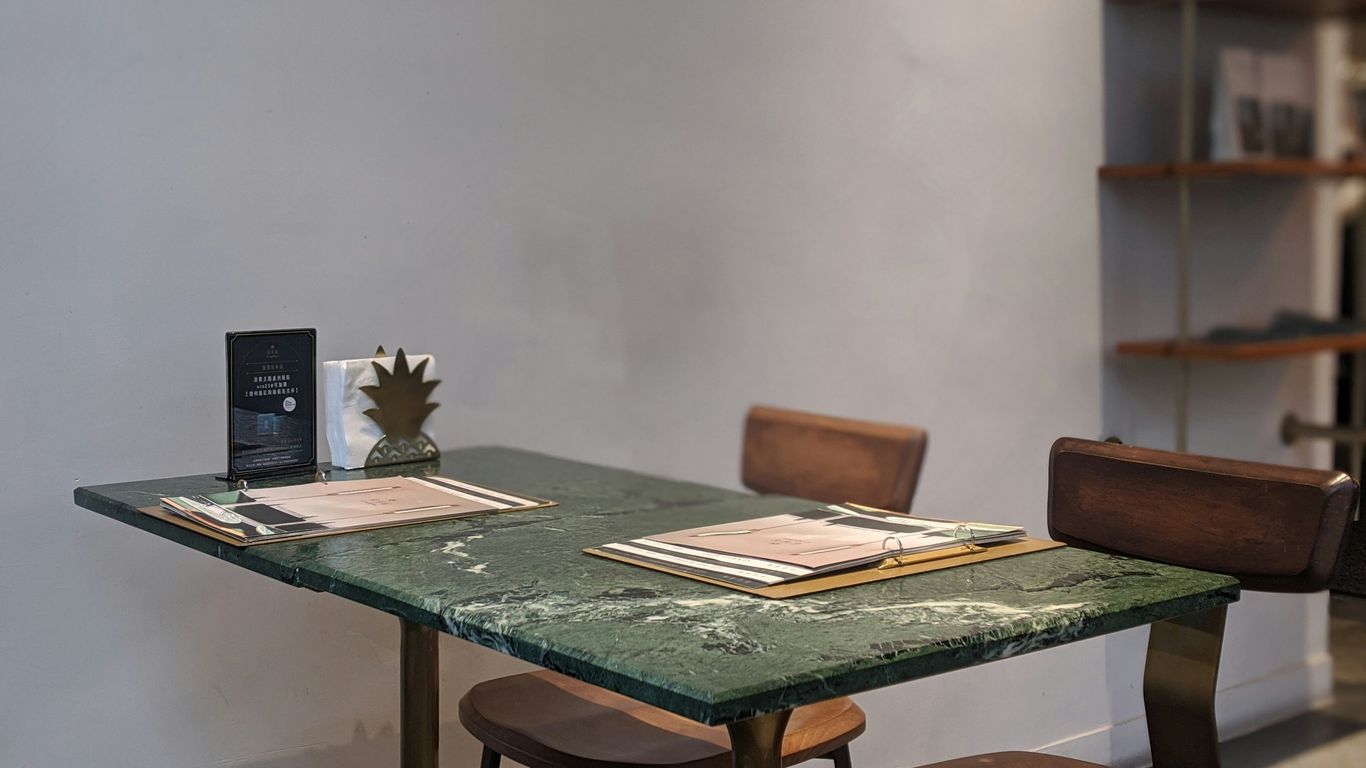
Marble begins as limestone that has been altered by heat, pressure and mineral activity. Green tones may come from minerals present during that transformation, while veining reflects fractures, deposits and changes within the stone. The result can range from quiet, misty colour to concentrated bands of dark green and pale mineral lines. Colour is therefore a geological characteristic, not a printed finish that can be reproduced exactly.
Popular green marble varieties and their visual character
Green marble is not one uniform material. Some varieties have a deep forest background with pale or white veins; others lean towards sage, olive, emerald or blue-green. Onyx-like stones may appear more translucent or layered, while heavily figured marbles can resemble painted landscapes. Ask to see the actual slab proposed for the table, since names are only a starting point.
Natural stone versus marble-effect alternatives
Natural marble offers genuine mineral variation, a cool tactile surface and a pattern that belongs to one particular slab. Marble-effect ceramics, sintered materials and other engineered options can provide greater consistency and may suit households seeking simpler maintenance. Neither choice is automatically better: the decision should reflect appearance, use, maintenance expectations and budget. A comparison of marble and sintered stone is useful when consistency is a priority.
How lighting changes the appearance of green marble
Daylight, warm bulbs and directional spots can all alter the way green marble reads. Warm lighting usually deepens olive and forest tones, while cooler daylight may reveal blue notes and fine veining. Glossy surfaces reflect fittings and windows, whereas honed finishes absorb more light and appear quieter. Test samples near the intended pendant or window before settling on a colour.
Choosing the right stone and veining
Choosing a slab is as much about visual rhythm as colour. Stand back from the material and consider where the strongest movement will fall once it is cut into a tabletop. A dining table is viewed from several angles, so the edge, corners and seated sightline matter as much as the centre. The stone should support the room rather than compete with every other surface.
Deep green, pale green and blue-green marble palettes
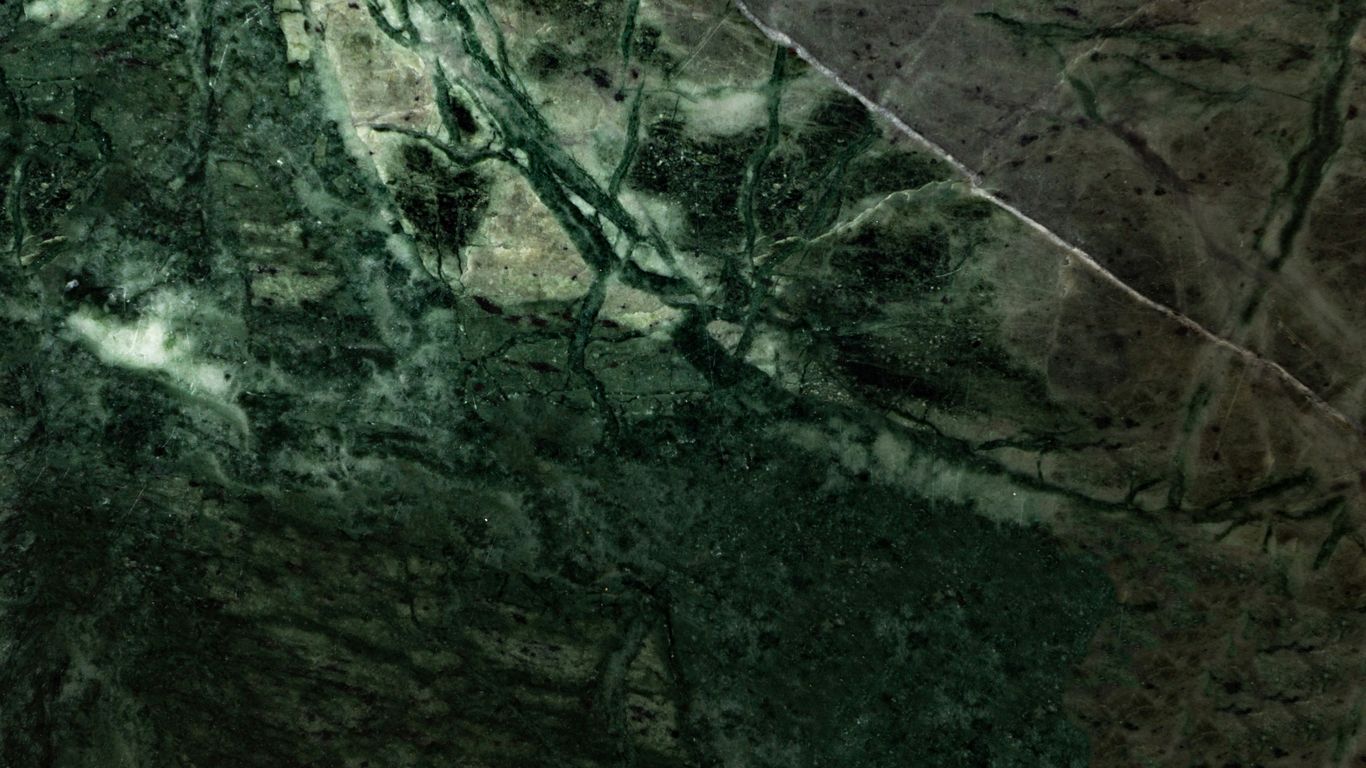
Deep green creates a formal, enveloping mood and works well where the surrounding walls and upholstery are restrained. Pale green can feel lighter and more relaxed, particularly with pale timber or linen. Blue-green marble introduces a cooler, architectural note and can sit comfortably with charcoal, brushed metal or blue-grey paint. Compare the stone beside the actual floor, cabinetry and wall colour rather than choosing from a screen.
Bold veining, subtle movement and consistent patterns
Bold veins make the tabletop a statement, while subtle movement allows chairs, lighting and artwork to take a larger role. If the slab has a directional pattern, decide whether the movement should run along the length of a rectangular table or radiate across a round one. Consistency can be attractive, but an overly regular pattern may lose some of the character people seek in natural stone. The full-slab selection guide explains why the complete slab is more informative than a small sample.
Matching the slab to your preferred interior style
A strongly veined green marble can anchor a contemporary room with simple silhouettes and limited decoration. A softer green with cloudy movement suits organic, transitional and Scandinavian-inspired spaces. Dark stone with antique brass or timber can feel more traditional, while a polished surface and sculptural base create a more theatrical setting. Think in terms of the room’s complete material palette, not just the table colour.
What variation, inclusions and surface markings to expect
Natural stone may contain mineral flecks, small tonal shifts, hairline features and areas of different porosity. These are part of the material’s identity, although the fabricator should still inspect the slab for suitability and disclose relevant limitations. Agree in advance which features are acceptable and where they may appear after cutting. Natural stone variation is easier to appreciate when the approval process shows the full slab and proposed orientation.
Selecting the ideal green marble dining table
A beautiful slab still needs a table design that works in the room. Shape affects conversation, circulation and how many people can sit comfortably, while the base determines legroom and visual weight. Measure the room with chairs pulled out, not simply the empty floor area. For a made-to-order piece, dimensions and construction should be resolved in an approved drawing before cutting begins.
Choosing between round, oval, rectangular and square shapes
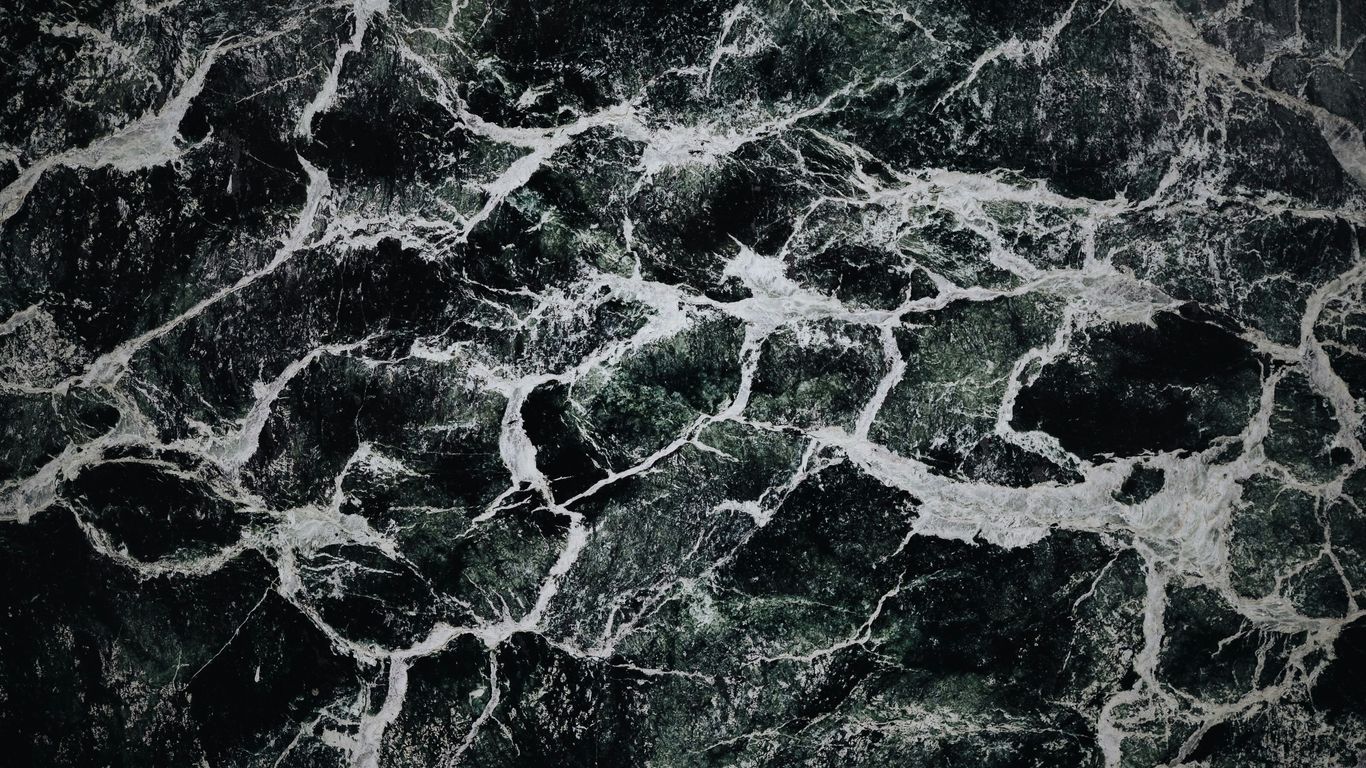
Round tables encourage face-to-face conversation and avoid sharp corners, making them useful in compact or central dining areas. Oval tables retain some of that softness while offering more length. Rectangular tables suit longer rooms and larger gatherings, while square designs work best when the room and seating plan are similarly balanced. A guide to a round marble dining table is particularly helpful when circulation and pedestal legroom are deciding factors.
Finding the right table size for your dining space
Allow enough room for chairs to move back and for people to pass behind seated diners. The table’s stated dimensions are only part of the calculation; include the chair depth, rug, sideboard and main walkway. Seating capacity also depends on leg placement and the thickness of the top. A clear dining table size guide can help you compare proportions for four, six, eight or more seats.
Pedestal, trestle and four-leg base designs
A pedestal keeps the area beneath a round or oval top open and can improve legroom, although its footprint must remain stable. Trestle bases give a strong architectural presence and suit longer tops, but the supports should not obstruct knees. Four-leg bases are familiar and visually light when carefully proportioned. Whichever design you choose, confirm how the top is supported, fixed and levelled.
Balancing a heavy stone top with the room’s proportions
Marble has a visual and physical weight that should be acknowledged rather than disguised. A thick top may need a quieter base and more breathing space around it, while a slim edge can make a dark stone feel less imposing. Consider ceiling height, nearby furniture and the distance to walls. Proportion matters more than drama when the table is intended for everyday use.
Green marble dining table ideas for different interiors
Green marble can move between styles because its character comes from both colour and pattern. The surrounding materials decide whether it feels crisp, warm, formal or collected. Start with one clear relationship—stone with timber, stone with metal or stone with upholstery—and let the rest of the room support it. More examples of marble dining furniture can help when developing a broader scheme.
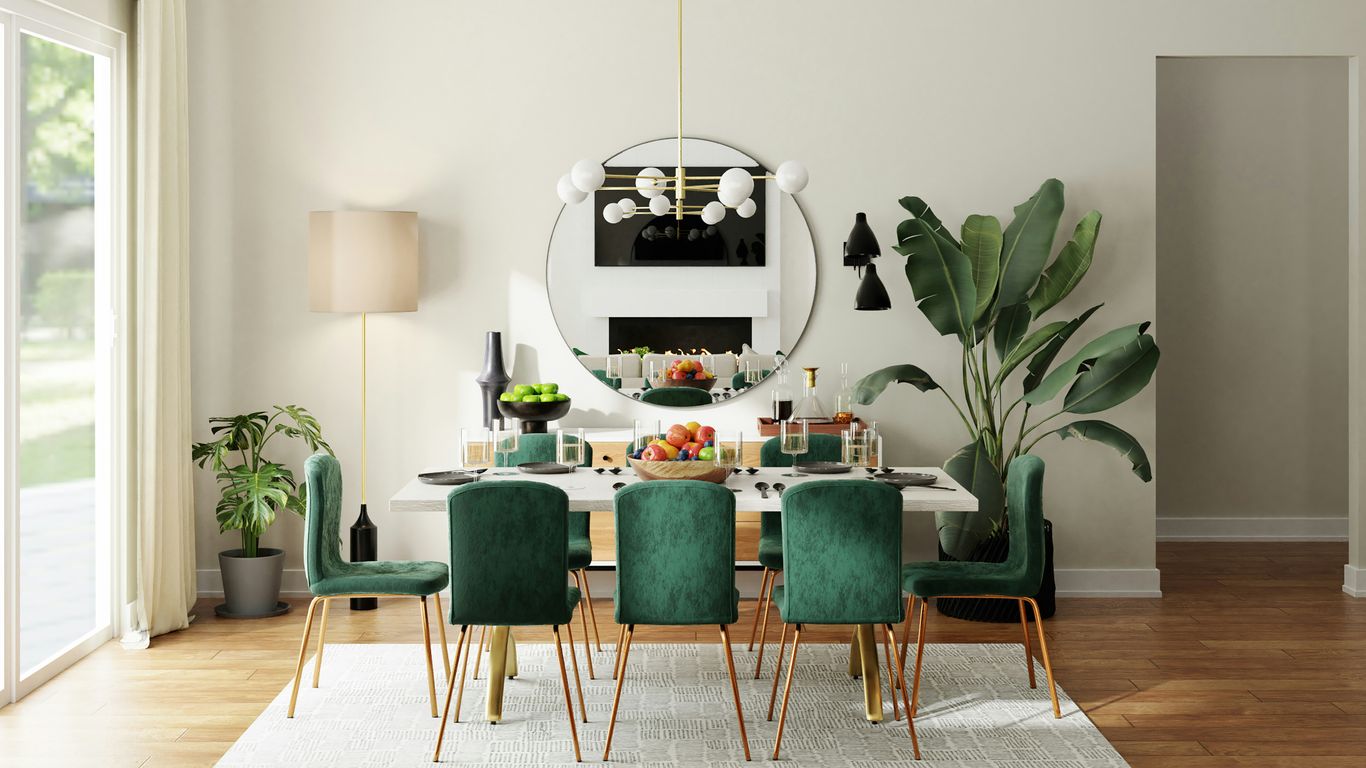
Creating a contemporary dining room with clean-lined furniture
Pair a busy slab with chairs that have a clear, uncomplicated outline. Black, cream or muted grey upholstery can calm a high-contrast stone, while a simple pendant keeps the focus at table height. Keep joinery and accessories disciplined so the veining has room to be seen. A polished edge can add formality; a honed finish is often more understated.
Pairing marble with warm timber and natural textures
Walnut, oak and smoked timber bring warmth to green marble and soften its cool surface. Woven seats, linen curtains and textured plaster can make the arrangement feel comfortable rather than overly formal. Repeat one timber tone in a nearby cabinet or floor detail so the pairing looks intentional. Avoid introducing too many competing grains around a strongly marked slab.
Using brass, bronze or black metal accents
Brass brings out yellow and olive notes, while aged bronze gives a quieter, more collected effect. Black metal creates sharper contrast and works especially well with deep green backgrounds. Use the finish consistently across the pendant, base, handles or picture frames rather than scattering unrelated metals. Small accents are usually enough when the tabletop already has strong movement.
Styling green marble in traditional, vintage and eclectic homes
In a traditional room, green marble can sit naturally with dark timber, framed art and patterned textiles. Vintage pieces add patina and prevent the table from feeling too newly matched. In an eclectic home, repeat one colour from the slab in a chair, rug or artwork while allowing the other elements to differ. For a more collected reference point, explore vintage green marble tables, then assess proportion and condition carefully.
Coordinating chairs, lighting and dining accessories
The table should remain usable as well as attractive. Chairs need to slide beneath the top without catching on the base, and lighting should illuminate faces without creating distracting reflections. Accessories can echo the stone without covering it. The most successful arrangements leave generous visual and physical space around the tabletop.
Choosing upholstery colours that complement green marble
Cream, oatmeal and warm grey are dependable choices for deep green stone. Rust, ochre and muted blush can bring out warmer mineral notes, while navy and charcoal reinforce a cooler, more tailored scheme. If the marble is pale, darker upholstery can provide useful definition. Always view fabric samples beside the stone in both daylight and evening light.
Selecting pendant lights and chandeliers above the table
The fitting should relate to the table’s shape and leave clear sightlines across it. A linear pendant suits a rectangular table, while a central pendant or clustered arrangement can follow a round or square top. Check glare on polished stone and make sure the lowest point does not obstruct conversation. The scale should feel connected to the room, not merely sized to the tabletop.
Adding rugs to define the dining area
A rug can frame the dining setting and reduce the visual hardness of stone. It should extend beyond the chairs even when they are pulled back, otherwise the back legs will catch at the edge. Low-pile, durable materials are easier to live with beneath a dining table. Choose a pattern that supports the marble’s movement rather than repeating it literally.
Using tableware, glassware and centrepieces without hiding the stone
Use low arrangements, clear glass and restrained tableware when the slab is especially expressive. A single bowl, branch or candle grouping can provide scale without concealing the centre. Place coasters and mats where they are needed for practical protection, but avoid covering the entire surface permanently. The tabletop should still read as the main material in the room.
A short visual guide can be useful for comparing table shapes, finishes and styling ideas, but the final decision should be based on the actual stone and measured room.
Caring for a green marble dining table
Marble rewards ordinary care, but it is not maintenance-free. Acids, standing liquid, abrasive grit and sudden heat can affect the surface, particularly on darker or more absorbent stones. Care should be matched to the finish and the household’s habits. Natural stone furniture guidance such as choosing natural stone is a useful companion when comparing maintenance expectations.
Sealing marble and protecting it from everyday spills
Sealing can reduce absorption, but it does not make marble stain-proof or acid-proof. Follow the fabricator’s recommendation for the selected stone and re-seal when appropriate for the product and level of use. Blot wine, citrus, oil and coffee promptly rather than wiping them across a large area. Keep bottles, vases and plant pots on suitable protective supports.
Cleaning products and methods that are safe for natural stone
Use a soft cloth, clean water and a pH-neutral stone cleaner when needed. Avoid vinegar, lemon-based products, bleach, scouring powders and abrasive pads unless a stone-care professional specifically recommends them. Rinse away cleaner residue and dry the surface to prevent films and water marks. Test an unfamiliar product on a discreet area first.
Preventing etching, staining, scratches and heat damage
Etching is a change to the surface caused by acidic contact, rather than a conventional stain. Coasters, placemats and trivets reduce risk from drinks, cutlery, serving dishes and hot cookware. Do not drag ceramics or grit across the top, and lift objects when moving them. A small routine is more effective than trying to repair damage after a busy gathering.
For daily use, a simple protection routine is usually enough:
- Wipe spills as soon as they occur.
- Use coasters, mats and trivets for dining and serving.
- Lift decorative objects instead of sliding them.
- Keep abrasive cleaners and rough cloths away from the stone.
These habits preserve the finish without turning the dining table into a display object that cannot be used. If a mark does occur, identify whether it is a stain, scratch or etch before choosing a treatment.
Handling maintenance for honed, polished and leathered finishes
Polished marble shows reflection, colour depth and fine marks more readily, while honed marble has a softer, flatter appearance that may disguise some small scratches but can still etch. Leathered surfaces provide texture and may need attention to their shallow valleys. Ask for finish-specific cleaning advice, since the same product or repair method is not suitable for every surface.
Buying considerations for a green marble dining table
Buying a green marble dining table involves more than choosing a colour and shape. The slab, edge, base, support method, finish and delivery route all affect the final result. For a commissioned piece, these details should be recorded clearly rather than left to assumption. A transparent quotation should also distinguish the furniture itself from packing, delivery, duties, taxes and installation where relevant.
Checking slab quality, finish and construction details
Inspect the full slab for the intended background tone, movement, inclusions and any areas that may affect fabrication. Confirm the edge profile, top thickness, underside treatment, joins and base connection. Ask how the stone will be oriented and what tolerances apply. A sample is useful for colour, but it cannot represent every feature of the finished surface.
Understanding dimensions, weight and delivery access
Record the overall length, width, height, top thickness and base footprint. Marble can be extremely heavy, so check lifts, stairwells, door widths, turning circles and the final route into the room. Consider whether the top and base will travel separately and where assembly will take place. These details should be resolved before production, not discovered on delivery day.
A simple comparison can clarify what needs to be confirmed:
| Decision area | What to confirm | Why it matters |
|---|---|---|
| Stone | Slab, tone, veining and inclusions | Sets the finished visual character |
| Finish | Polished, honed or leathered surface | Affects reflection, texture and care |
| Construction | Top, edge, base and fixing method | Supports stability and safe use |
| Logistics | Weight, packing, access and installation | Reduces delivery complications |
The table is not a substitute for a production drawing, but it provides a useful checklist for a quotation meeting. For made-to-order work, the approved drawing should bring these decisions together before cutting and finishing begin.
Comparing made-to-order, vintage and ready-made tables
Made-to-order furniture allows the dimensions, stone selection, finish and base to be developed for a particular room, but it requires decisions and a production lead time. Vintage tables offer patina and immediate character, although condition, hidden repairs, dimensions and delivery can be less predictable. Ready-made tables may be simpler to purchase, but the available slab and proportions are fixed. Compare the route against the project’s priorities rather than treating one category as universally superior.
Questions to ask about sourcing, sealing and aftercare
Ask where the proposed stone will be selected, whether you can review the slab, how variation is documented and which finish is being applied. Confirm what the quotation covers, how the piece will be packed, and whether installation is included or separately arranged. It is also sensible to ask for cleaning guidance and the recommended sealing schedule. If you are coordinating several materials, even unrelated planning resources such as NZ outdoor furniture, Memphis water quality, coffee shop website, Bundoora Family Dental and Lisbon plans should remain separate from the stone specification rather than being mixed into it.
Geoscenic Stone works on a factory-to-order basis, with material selection, cutting, finishing, inspection, packing and delivery developed for the individual project. For clients considering a commission, request a quotation with the intended dimensions, stone, finish, destination and access information so the practical scope can be assessed clearly.
Conclusion
A green marble dining table is most successful when its natural variation, scale and care requirements are considered from the beginning. Choose the full slab thoughtfully, develop the shape and base around the room, and confirm every production and delivery detail before approval. The result can be a durable, distinctive centrepiece that feels connected to the way the space is actually used.
Frequently Asked Questions
Is green marble suitable for a dining table?
Yes, provided its natural sensitivity to acids, staining, scratches and heat is accepted. Regular sealing and prompt cleaning help protect the surface during everyday use.
Does every green marble slab look the same?
No. Tone, veining, mineral marks, porosity and movement vary from slab to slab. Reviewing the actual slab is the most reliable way to understand the finished appearance.
Which dining table shape works best for a small room?
Round and oval tables can improve circulation by removing sharp corners, while a compact square table may work well in a balanced nook. The best choice depends on seating, walkways and door clearances.
Should green marble be polished or honed?
Polished marble has more reflection and colour depth, while honed marble is softer and more understated. Both require care, so the choice should follow the desired appearance and household routine.
How do you clean a green marble dining table?
Wipe spills promptly with a soft cloth and use a pH-neutral stone cleaner when necessary. Avoid acids, abrasive powders, rough pads and harsh chemicals that may etch or damage the surface.
How much clearance should there be around a dining table?
Leave enough room for chairs to pull out comfortably and for people to pass behind seated diners. Measure the complete furniture arrangement, including chair depth, rugs, sideboards and main walkways.
Can a marble dining table be made to a custom size?
Yes, a custom table can be developed around the room, seating plan, stone and base design. The dimensions, finish, edge, support structure and delivery access should be confirmed in an approved drawing before production.