
Key Takeaways
A black marble dining table can anchor a room with depth, movement and a distinctly architectural presence. The best choice balances the stone’s character with practical dimensions, a suitable base and a realistic care routine.
- Natural veining means every marble top has its own visual character.
- Shape, base design and circulation space matter as much as colour.
- Honed, polished and leathered finishes create different moods and maintenance considerations.
- Marble needs gentle cleaning, prompt spill management and sensible heat protection.
- A made-to-order piece should be confirmed through drawings, material selection and a clear quotation.
Understanding black marble dining tables
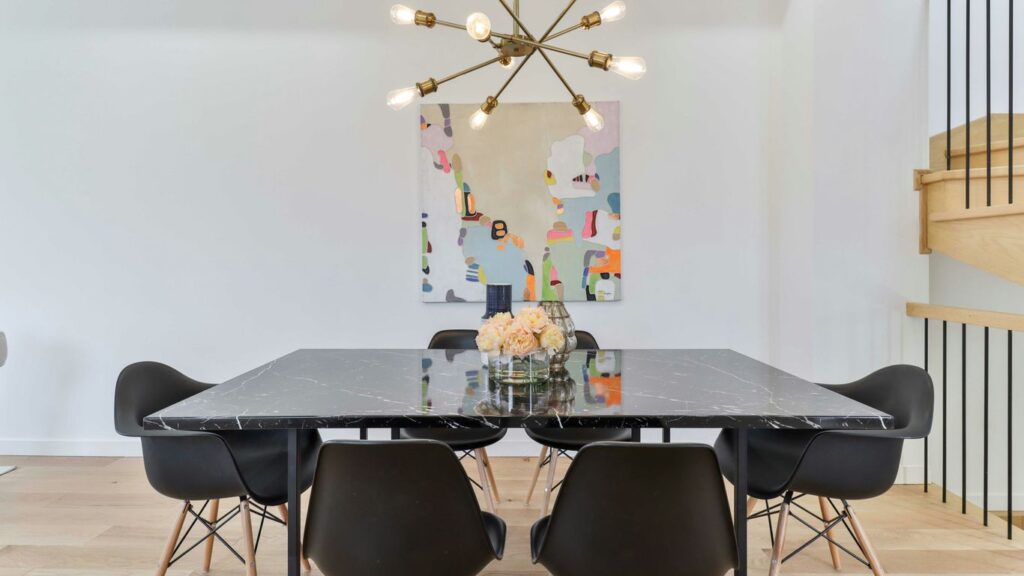
Black marble brings visual weight without necessarily making a room feel formal. Depending on the stone and finish, it can look glossy and dramatic, softly tactile or almost charcoal-like. Its appeal lies in the relationship between a dark background, mineral movement and the quieter details of the surrounding interior.
What makes black marble visually distinctive
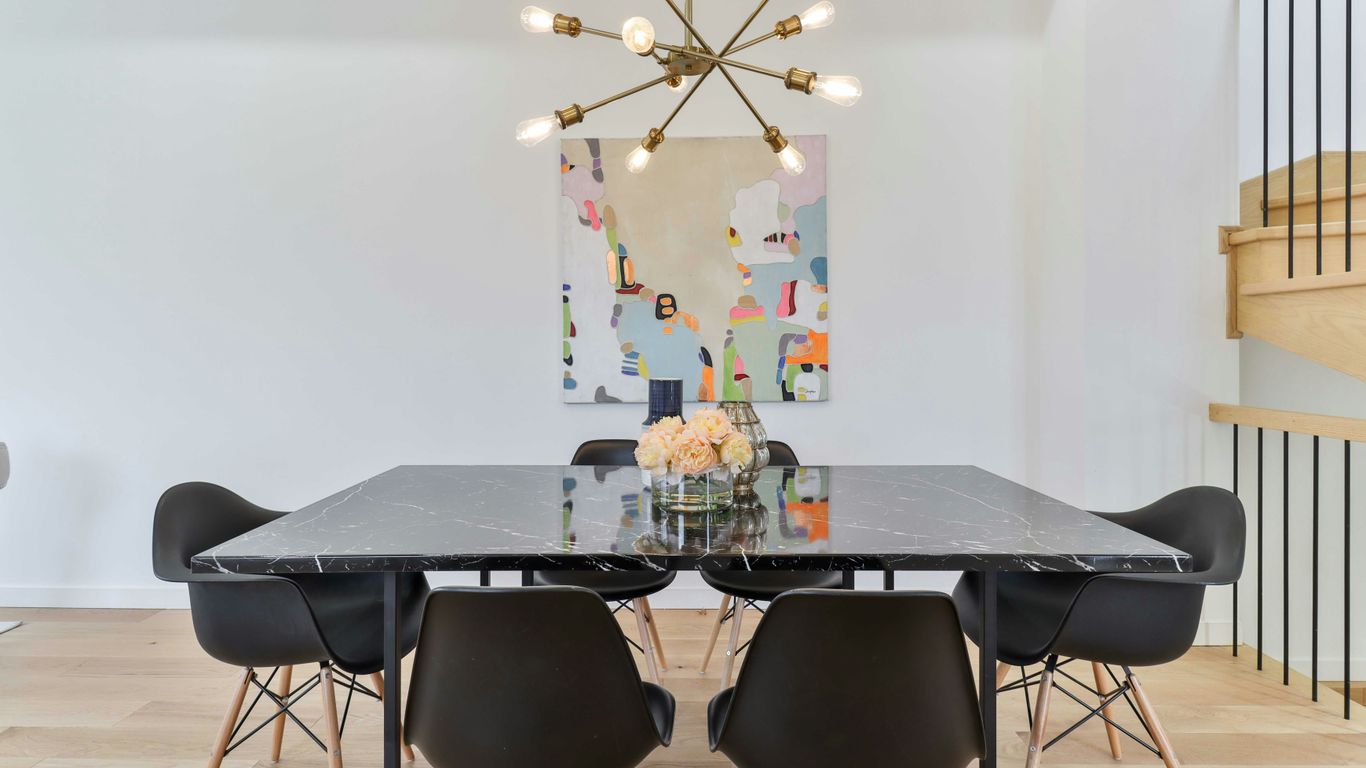
A black marble dining table often works as the room’s visual anchor because its surface absorbs and reflects light in changing ways. White, gold, rust or grey mineral lines can appear sharp in one part of the slab and hazier in another. This makes the table more nuanced than a flat black surface, particularly when daylight moves across it.
The depth of the colour also depends on the finish. A polished top reflects pendant lights and nearby furnishings, while a honed surface gives the same stone a quieter, more powdery appearance. The surrounding palette should therefore be considered alongside the slab rather than after it has been selected.
Popular black marble varieties and veining patterns
Black marble is not one uniform material category. Some slabs have fine linear veins, others show broad cloudy movement, and some contain small mineral flecks or warm-toned deposits. A sample can indicate the general direction, but it cannot fully show how the pattern will read across a complete dining top.
For a considered selection, view the full slab where possible and note the background tone, the scale of the movement and the direction in which the veins travel. A useful natural stone dining table guide can help frame those comparisons without reducing the choice to colour alone.
Honed, polished and leathered surface finishes
A polished finish intensifies colour and veining, while its reflective surface can make fingerprints, glare and small marks more visible. Honed marble has a low-sheen, velvety appearance that tends to feel relaxed and contemporary. Leathered finishes add subtle texture and can give dark stone a more tactile, grounded quality, though the exact result varies with the material.
The finish should follow the way the table will be used. A formal dining room may suit a polished surface, while a busy family setting might feel more forgiving with a honed or leathered look. None removes the need for sealing and careful cleaning.
Natural variation, markings and colour consistency
Variation is part of natural stone rather than a manufacturing irregularity. Differences in tone, veining, porosity and mineral marks may occur within one slab and between slabs from the same source. For that reason, the photographed example should be treated as a reference, not a promise of an identical finished top.
This is especially relevant when a table is being commissioned for a project with several stone elements. Discuss the desired level of movement, inspect available material and record the agreed selection before production. The result should feel coherent with the room, not artificially uniform.
Choosing the right table design
The table’s silhouette determines how people move around it and how the stone is seen from across the room. A dark top can appear lighter when lifted on a slender base, or more grounded when paired with a broad sculptural support. Consider the architecture, the chairs and the route through the dining area together.
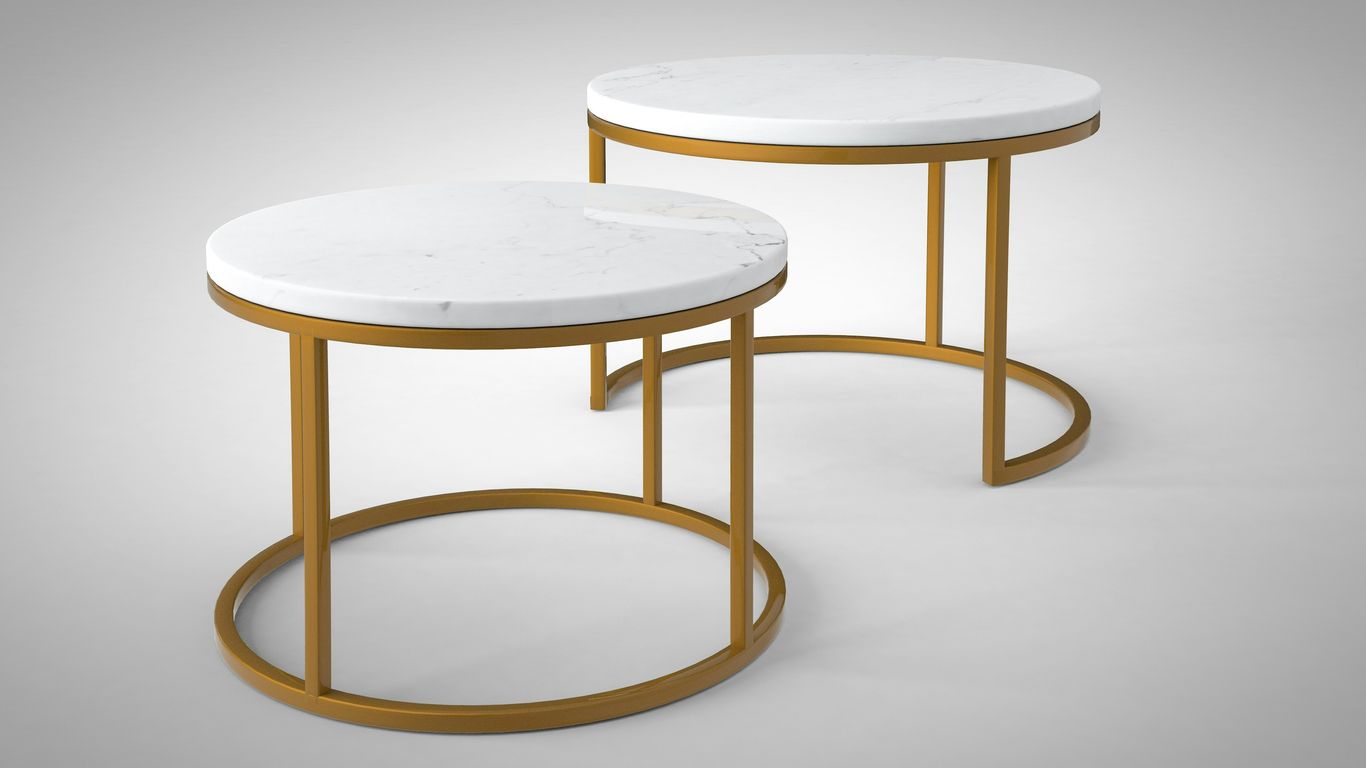
A useful source of marble dining table ideas can help compare proportions, mixed materials and pedestal forms before settling on a drawing.
Round, oval, rectangular and square formats
Round tables encourage conversation and remove sharp corners from tighter circulation routes. Oval designs retain some of that softness while offering a longer seating line. Rectangular tables suit larger rooms and formal layouts, while square tables can work well when the dining area is close to square and the number of diners is modest.
The shape also changes how the veining is read. Long directional movement can support a rectangular top, whereas a round slab may make the pattern feel more central and sculptural. There is no universally best format; the room’s proportions should lead.
Pedestal bases versus four-leg designs
A pedestal clears the corners and can make it easier to position chairs around a round or oval top. It may also give a substantial stone surface a cleaner, more unified outline. Four-leg designs provide familiar visual structure and can suit rectangular tables, but the placement of the supports needs to be checked against chair positions.
The base must be designed for the top’s weight, not selected only for appearance. Its footprint, fixing method and relationship to the finished thickness all affect stability and comfort.
Contemporary, classic and sculptural silhouettes
Contemporary designs often use crisp edges, restrained profiles and a contrast between heavy stone and visually light supports. Classic tables may introduce shaped edges or warmer timber details. Sculptural designs make the base part of the composition, turning the table into a piece of furniture viewed from every angle.
Keep the silhouette legible. If the marble already has dramatic movement, a quieter base may prevent the room from becoming visually busy. Conversely, a calm, nearly uniform stone can support a more expressive support structure.
Matching marble tops with wood, metal and stone bases
Wood introduces warmth and can soften the severity of black stone. Metal creates a sharper, more graphic contrast, especially in dark, brushed or warm metallic finishes. A stone base gives the piece a monolithic quality, but it requires careful attention to weight, access and floor loading.
Material matching is not only about colour. Compare texture, edge treatment and the visual temperature of the room. A full marble top dining table guide offers a useful way to think about finishes and complementary materials as one decision.
Getting the size and proportions right
A beautiful table can still feel wrong if it crowds the room or leaves chairs colliding with walls. Measure the space before choosing a shape, and include the chair depth, circulation paths and any doors that open into the dining area. The stone’s weight also makes access planning part of the design rather than an afterthought.
Measuring the dining area and circulation space
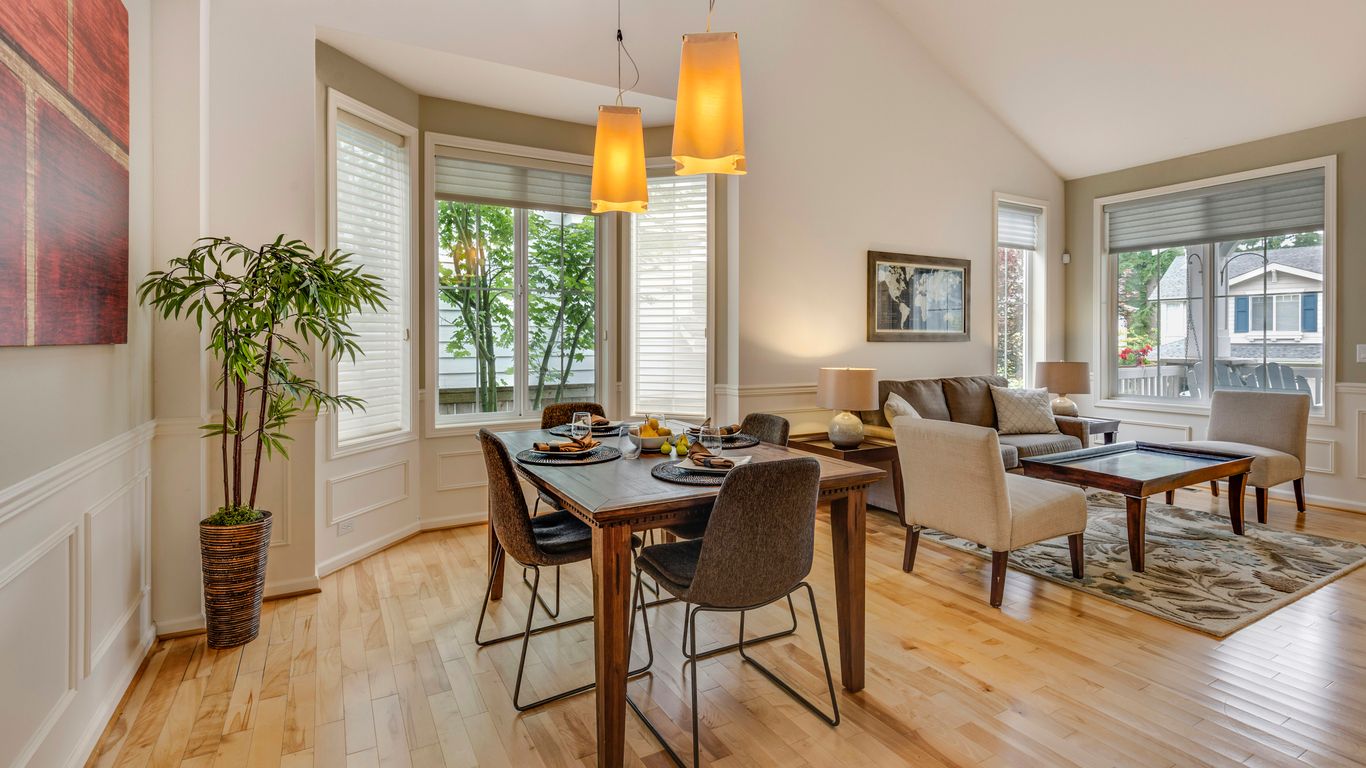
Start with the clear floor area, not simply the wall-to-wall dimensions. Mark the proposed tabletop with tape or a temporary outline, then walk around it with chairs pulled back. This reveals pinch points that a plan drawing may overlook.
Allow room for people to sit, stand and pass behind occupied chairs. Door swings, sideboards, radiators and changes in floor level should be recorded before the final dimensions are approved. A marble dining table size guide is a useful reference when translating those measurements into a seating plan.
Choosing seating capacity for everyday use
Seating numbers should reflect normal use rather than an occasional maximum. A table designed for six daily diners may be more comfortable than one that technically accommodates eight but leaves little elbow room. Chair width, armrests and the shape of the top all affect the practical count.
For projects that host larger gatherings, consider how often extra seating is genuinely needed. A slightly more generous arrangement can make everyday meals calmer and still accommodate guests with additional chairs when the room allows it.
Allowing comfortable legroom and chair clearance
Check the relationship between the underside of the top, the apron if there is one, and the chair arms. Pedestal bases can improve leg placement, but their position should not interfere with feet or with chairs being pushed fully in. Table height, top thickness and edge profile also contribute to comfort.
Before production, these dimensions should appear clearly in the approved drawing. Small differences in overhang or support position can be noticeable once the furniture is in daily use.
Selecting an extendable black marble dining table
Extension mechanisms are less straightforward with a heavy natural-stone top than with lightweight timber furniture. The engineering, movement of the leaves and storage arrangement need to be considered together. Some rooms are better served by a fixed table and a separate occasional dining solution.
If an extendable format is essential, ask how the stone is supported when open, how the surface aligns and how the mechanism is maintained. Treat the extension as a structural design question, not merely an extra feature.
Styling a black marble dining table
Dark stone gives a dining room a strong centre, but it does not require an entirely dark scheme. Pale walls, timber, woven textiles and generous daylight can keep the room open around it. The most successful interiors usually repeat one or two tones from the stone rather than matching every element exactly.

Balancing dark stone with light interior schemes
Light plaster, warm white paint and pale upholstery can create useful contrast with a black top. Timber flooring or cabinetry adds a natural note, while linen and textured rugs stop the composition from feeling too hard. If the room is small, visual breathing space around the table matters as much as the wall colour.
Use dark accents selectively. A black frame, picture detail or lighting stem can connect the table to the room without creating a band of unrelated dark objects.
Coordinating dining chairs, lighting and flooring
Chairs should balance the table’s mass and support comfortable, unforced use. Upholstered seats soften the arrangement, while timber or leather can bring a more tailored character. Pendant lighting should illuminate the surface without producing distracting reflections, particularly on polished marble.
Flooring influences the perceived weight of the table. Pale timber lifts it; dark flooring creates a more enveloping setting. In either case, leave enough visual and physical clearance for the chairs to move naturally.
Choosing centrepieces that complement natural veining
A centrepiece should frame the stone, not conceal its most expressive areas. Low ceramics, clear glass and simple branches tend to preserve the view across the table. Choose objects with a surface texture that differs from the marble so the arrangement feels layered.
Avoid placing heavy or abrasive vessels directly on the top. Felt pads, coasters or a tray can protect the surface while keeping the styling relaxed and easy to change.
Using contrast, texture and metallic accents
Warm brass, aged bronze and brushed steel can pick up subtle mineral tones without competing with the whole slab. Matte ceramics and woven textiles add a softer counterpoint to a glossy surface. The aim is controlled contrast rather than a collection of unrelated finishes.
For a room that needs more visual warmth, natural timber and indoor planting are often more effective than adding several metallic objects. Texture makes the contrast livable, especially when the table is used every day rather than displayed as a formal centrepiece.
A restrained palette also allows the table’s natural movement to remain the main event. That balance is explored in this custom natural stone furniture journal, where material and proportion are considered together.
Comparing black marble with other dining-table materials
Material choice should follow the room’s use, the desired appearance and the level of maintenance the household or project team can accept. Marble offers natural variation and a distinctive surface response, but it is not the same as a highly uniform engineered material. Comparisons are most useful when they include care, repair, weight and long-term visual character.
Black marble versus granite and quartz
Granite is often chosen for its hard-wearing qualities and granular pattern, while marble is valued for its softer mineral movement and depth of colour. Quartz is an engineered surface with a more controlled appearance, although its precise performance depends on the product specification and use conditions.
The right comparison is not simply which material is strongest. Consider whether natural veining, a particular finish and the possibility of gradual surface change are important to the design brief.
Natural stone versus porcelain and sintered stone
Porcelain and sintered stone can offer consistent patterns and practical surface characteristics, depending on the selected product. Marble brings geological variation that cannot be reproduced exactly from one slab to another. The visual difference is often as significant as the technical one.
A marble and sintered stone comparison can help clarify the trade-off between natural character and engineered consistency. Ask for the relevant technical information rather than assuming that one broad material label describes every product.
Solid marble versus marble-look finishes
A marble-look finish may provide a similar colour impression with lower weight or a different maintenance profile. Solid marble, however, has depth, edge character and natural movement through the material itself. Those differences become particularly apparent at the edge and where the top meets the base.
For a formal residential, hospitality or development project, decide whether the authenticity of the material is central to the brief. A convincing image is not always the same as a convincing physical experience.
Weighing durability, appearance and maintenance needs
The following comparison is a starting point rather than a substitute for product data or a sample review. It helps organise the main decision factors before dimensions and detailing are finalised.
| Material | Visual character | Typical care focus | Main design consideration |
|---|---|---|---|
| Black marble | Natural veining and tonal movement | Sealing, prompt spill care and gentle cleaning | Slab selection and variation |
| Granite | Mineral grain with varied pattern | Routine cleaning and protection from impact | Pattern scale and substantial weight |
| Quartz | More controlled engineered appearance | Follow the manufacturer’s care guidance | Colour consistency and product specification |
| Porcelain or sintered stone | Consistent printed or engineered effects | Product-specific cleaning and edge care | Edge detailing and fabrication method |
The table shows why appearance alone is an incomplete basis for selection. A material that looks ideal in a photograph may behave differently in the room, at the edge, or during delivery and installation.
Caring for and protecting the stone
Marble rewards a simple, consistent routine rather than aggressive cleaning. The exact approach depends on the stone, finish and sealer, so care guidance should be retained after installation. Everyday protection is practical, not precious: wipe spills, use suitable barriers and avoid treating the surface like a cutting board.
Sealing requirements and everyday maintenance
Sealing can reduce the speed at which some liquids penetrate, but it does not make marble immune to staining or etching. The required product and interval depend on the stone’s porosity, finish and use. Confirm the recommendation with the fabricator or supplier before applying anything.
Dust and crumbs can usually be removed with a soft cloth, followed by a pH-neutral cleaner suitable for natural stone. A clear marble care guide provides a useful reminder of the products and habits to avoid.
Cleaning spills, grease and food marks safely
Blot liquids rather than spreading them across the surface. For food or grease, use a soft cloth and a stone-safe cleaner, then rinse away residue and dry the area. Acidic substances such as vinegar, citrus juice and some wine can react with marble and may leave a dull mark.
Do not reach for abrasive powders or harsh chemicals because a stain can become a larger surface problem. When a mark persists, identify the stone and finish before trying a specialist treatment.
Preventing etching, staining and surface scratches
Etching is a change to the surface caused by a chemical reaction, not simply dirt. Scratches may result from grit beneath ceramics, unglazed objects or dragging serving pieces. Prompt attention reduces risk, but it cannot eliminate the natural sensitivity of marble.
Keep sharp objects away from the top and lift items rather than sliding them. In a busy dining setting, accept that a natural surface may develop small signs of use; the aim is controlled, respectful wear rather than impossible perfection.
Using placemats, coasters and heat protection
Placemats and coasters create a useful buffer beneath plates, glasses and serving pieces. Trivets or heat-resistant pads should be used for hot cookware, since a sudden temperature change can affect a stone surface or its finish. Felt beneath decorative objects helps prevent fine scratches.
These measures need not make the table look overprotected. Choose materials that suit the room and keep them close at hand, so protection becomes part of the normal setting rather than an occasional reaction.
Buying a black marble dining table with confidence
Buying natural stone furniture is a process of confirming material, proportions, construction and logistics. A made-to-order table should be assessed as a complete project, not just as a photographed object. Ask what is included in the drawing, quotation, packing plan and delivery route before approving production.
Checking stone quality, thickness and construction
Ask to see the proposed material and understand how the selected slab will be oriented on the top. Check the finished thickness, edge profile, seams if any and the relationship between the visible surface and the supporting structure. Natural marks should be discussed as part of the selection process rather than discovered unexpectedly.
Geoscenic Stone produces made-to-order furniture and architectural pieces in travertine, marble and onyx, with each piece made to an approved drawing. That factory-to-order approach means dimensions, stone, finish, edges and drillings can be confirmed for the specific project.
Evaluating the base, joints and overall stability
Inspect how the top is supported and how the base transfers its weight to the floor. A slender appearance still needs sound joints, suitable fixing and a stable footprint. If the table will be used in a hospitality or commercial setting, consider the higher frequency of movement and cleaning.
The base should be reviewed with the completed top in mind. Changes to thickness, overhang or stone selection can alter the balance, so they should be reflected in the approved production drawing rather than handled informally.
Understanding delivery, access and installation
Measure doorways, lifts, stair turns and the final route into the room. Marble can be heavy and vulnerable at corners, making packing and handling important parts of the plan. Confirm whether delivery, unloading, carrying, assembly and installation are separate quotation items for the destination.
Geoscenic Stone’s process includes material selection, cutting, finishing, inspection, packing and delivery for projects worldwide. The practical details still need to be agreed for each individual order, including site access and any installation requirements.
Reviewing costs, warranties and care guidance
A quotation should reflect the individual piece, including its dimensions, stone, finish, base, packing, destination and project requirements. Compare like with like and ask which taxes, duties, delivery services or installation tasks are excluded. A lower initial figure may not cover the same scope.
Before proceeding, request a final drawing, care instructions and written confirmation of the agreed material. If the brief needs a tailored size or finish, you can request a quotation with those details prepared in advance.
Geoscenic Stone treats natural variation as an inherent quality of stone, while the approved drawing provides a clear reference for production. That combination of openness and precision is valuable when a dining table is being commissioned for a particular interior.
Conclusion
A black marble dining table is most successful when its drama is supported by practical decisions: the right slab, a comfortable shape, a stable base, enough circulation space and a care routine suited to daily life. Take time to review the full material, confirm the details in a drawing and plan delivery as carefully as the styling. Natural variation then becomes part of the table’s character rather than an uncertainty left until the end.
Frequently Asked Questions
Is black marble suitable for a dining table?
Yes, provided its natural sensitivity to acids, staining and scratches is accepted. Regular sealing where appropriate, prompt spill management and gentle cleaning can help preserve its appearance.
Does black marble show marks more than lighter marble?
It can, particularly when polished, because fingerprints, dust, water marks and light etching may contrast with the dark surface. A honed or leathered finish can create a softer visual effect, but neither removes the need for care.
Which shape is best for a black marble dining table?
The best shape depends on the room, circulation space and number of diners. Round and oval tables can improve flow, while rectangular and square formats may suit particular layouts and seating patterns.
How thick should a marble dining table top be?
There is no single ideal thickness because the answer depends on the stone, span, edge treatment, support system and overall design. The fabricator should confirm the suitable construction through a production drawing.
Can a black marble dining table be extended?
Some designs can incorporate extension systems, but the weight and structure of natural stone make this more complex than extending a timber top. The mechanism, support and alignment should be reviewed before committing to the format.
How should black marble be cleaned?
Use a soft cloth and a pH-neutral cleaner suitable for natural stone. Avoid vinegar, acidic products, abrasive powders and harsh chemicals, and blot spills promptly rather than allowing them to sit.
How do I choose a marble table that will not look like the photograph?
Review the actual slab or an agreed material selection wherever possible, because natural stone varies in tone, veining, porosity and mineral marks. Product photography should guide the overall direction, not guarantee an identical finished pattern.