
Key Takeaways
An oval marble dining table needs to be considered as both a piece of furniture and a substantial architectural element. The right choice balances dimensions, circulation, stone character, base design and the realities of delivery and care.
- Measure the room first, including chair clearance and access routes.
- Use table length, width and base position together when estimating seating.
- Expect natural variation in marble colour, veining and surface character.
- Compare polished, honed and leathered finishes against your daily routine.
- Confirm drawings, packing, delivery access and care requirements before ordering.
Choosing the right oval marble dining table dimensions
The ideal dimensions depend on more than the number of diners. An oval top needs enough length for place settings, while its rounded ends can improve movement around the room. Start with the room and your usual way of dining, then work towards the table size rather than choosing by appearance alone.
Common table lengths and widths
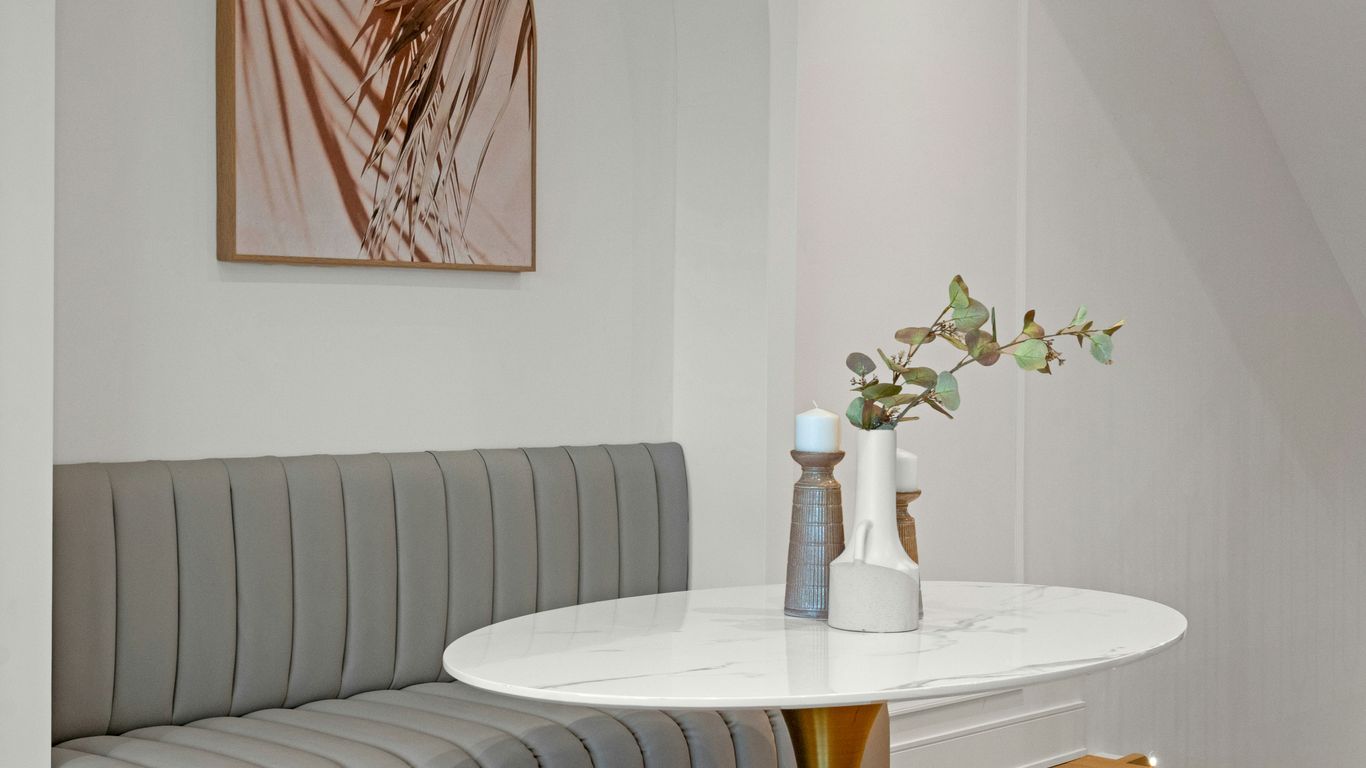
A compact oval table may be around 160–180 cm long and suit four to six people, while a table of roughly 200–240 cm can serve six to eight. Larger designs may reach 280 cm or more for extended family meals and hospitality settings. Width matters too: around 90–100 cm is comfortable for everyday place settings, while a wider top leaves more room for serving dishes and centrepieces.
For a useful starting point, compare several proportions rather than focusing only on length. A marble table size guide can help you relate table dimensions to seating, circulation and base design before you finalise a plan.
How table dimensions affect usable dining space
The table footprint is only part of the calculation. Chairs occupy space when pulled out, and a sideboard, doorway or kitchen route may need to remain usable while people are seated. The rounded ends of an oval table can make a room feel less obstructed, but they do not remove the need for a clear perimeter.
Measure from the centreline as well as the widest points of the top. This reveals whether a generous-looking table will leave enough room at both ends for people to pass without turning sideways.
Selecting a size for everyday meals and entertaining
Think about the difference between a normal dinner and a fully dressed table. Six people may fit around a table on paper, yet serving platters, water glasses and dining chairs can make the arrangement feel crowded. For daily use, prioritise comfortable arm movement and practical access to the centre.
A good rule is to choose for your regular household first, then allow modest flexibility for guests. Everyday comfort matters most because the table will be used far more often for ordinary meals than for its largest possible gathering.
When a custom-sized table is worth considering
Custom sizing becomes valuable when the room has an awkward width, a fixed pendant, a banquette or a particularly specific circulation route. It can also help when you want a large surface without the visual heaviness of a rectangular top. The drawing should show the finished dimensions, edge profile, base position and any joins or cut-outs.
With a factory-to-order maker such as Geoscenic Stone, dimensions and details are confirmed for the individual project through an approved production drawing rather than assumed from a warehouse example. That approach is useful when a table must coordinate precisely with architecture, seating or delivery constraints.
Understanding seating capacity
Seating capacity is an estimate, not a promise printed on the top. Chair width, armrests, table thickness, base position and the amount of personal space each diner prefers all affect the result. A well-planned oval table often feels generous because the curved ends soften the corners, but spacing still needs to be tested.
How many people fit around each table size
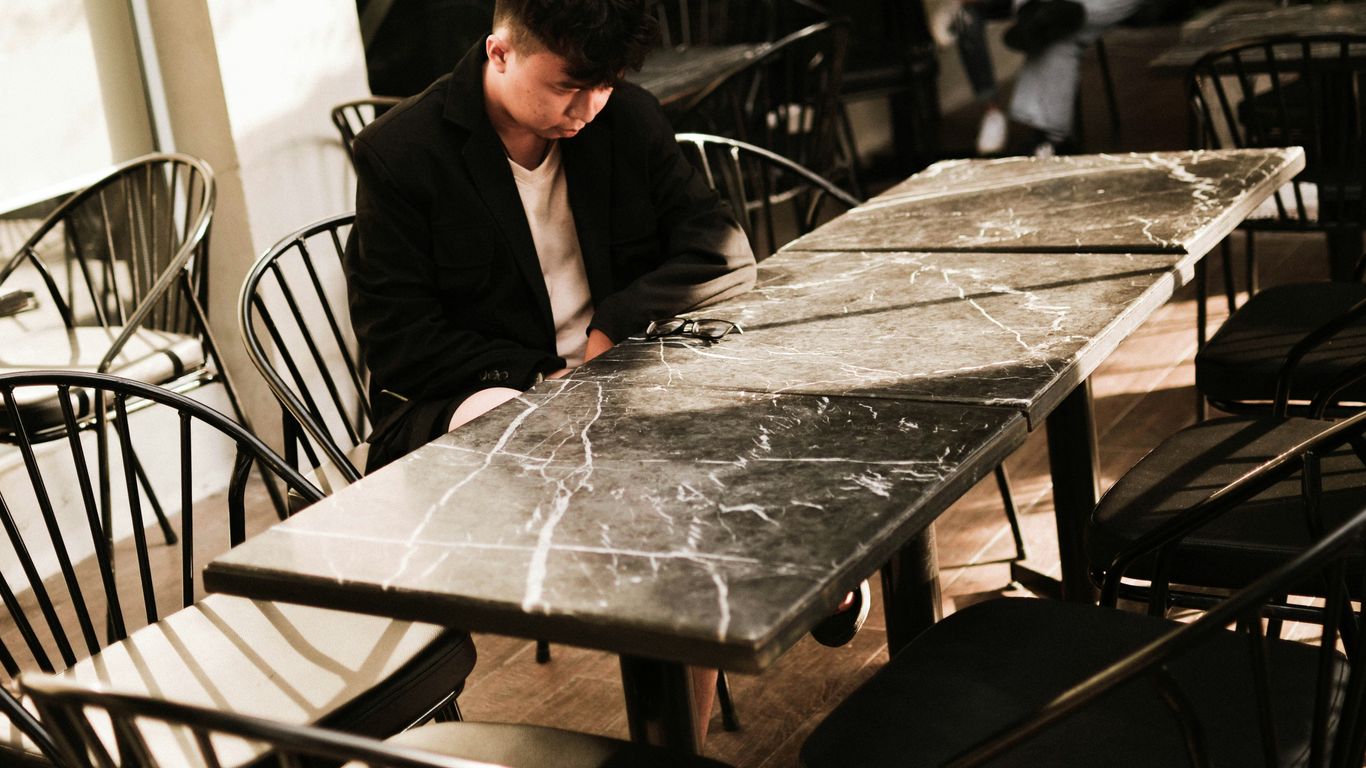
As a broad guide, a 160–180 cm oval table usually suits four to six diners, a 200–220 cm table often accommodates six to eight, and a 240–280 cm table may suit eight to ten. These ranges assume ordinary dining chairs and a reasonably practical arrangement. Chairs with arms or unusually wide backs can reduce the usable count.
Treat these figures as early planning guidance. A table intended for a restaurant, hotel or large family room should be drawn with the actual chair model and service pattern in mind.
Allowing comfortable elbow and chair space
Allow roughly 55–65 cm of table edge per diner for a relaxed arrangement, with more room where chairs are broad or meals are lengthy. A table that technically seats eight may feel much better as a six-seater if it is used for working, homework or elaborate serving.
Also check the space behind each chair. People need room to pull out their seats, stand and walk past. An oval shape helps at the ends, but the straight central sections still need sensible spacing.
Planning for occasional extra guests
If you regularly host larger gatherings, decide whether the extra places are genuinely needed or whether a separate folding table would be more sensible. Adding one person at each curved end can work for short meals, but it may compromise access to the centre and the comfort of the end diners.
For occasional flexibility, consider these practical measures before increasing the top size:
- Use narrower chairs without arms at the ends.
- Keep centrepieces low and compact.
- Leave serving dishes on a sideboard where possible.
- Confirm that spare chairs can be stored nearby.
These small decisions can make an existing table more adaptable without turning every everyday meal into an oversized arrangement.
Choosing between pedestal and leg-based designs
A central pedestal can free up legroom and make it easier to position chairs along the curve. It may also simplify sweeping and cleaning beneath the table. Leg-based designs, however, can provide a lighter visual structure and may suit interiors where the base is intended to be seen.
The key is to check where the base meets the floor and where it sits beneath the top. A pedestal that looks compact may still interfere with feet, while four legs can limit the exact position of end chairs.
Matching the table to your dining room
An oval marble dining table can soften a formal room or give an open-plan space a clear centre. Its success depends on proportion: the table should feel substantial enough to anchor the room, but not so large that circulation becomes a narrow channel. Draw the footprint before committing to a slab or base.
Measuring the room and available floor area
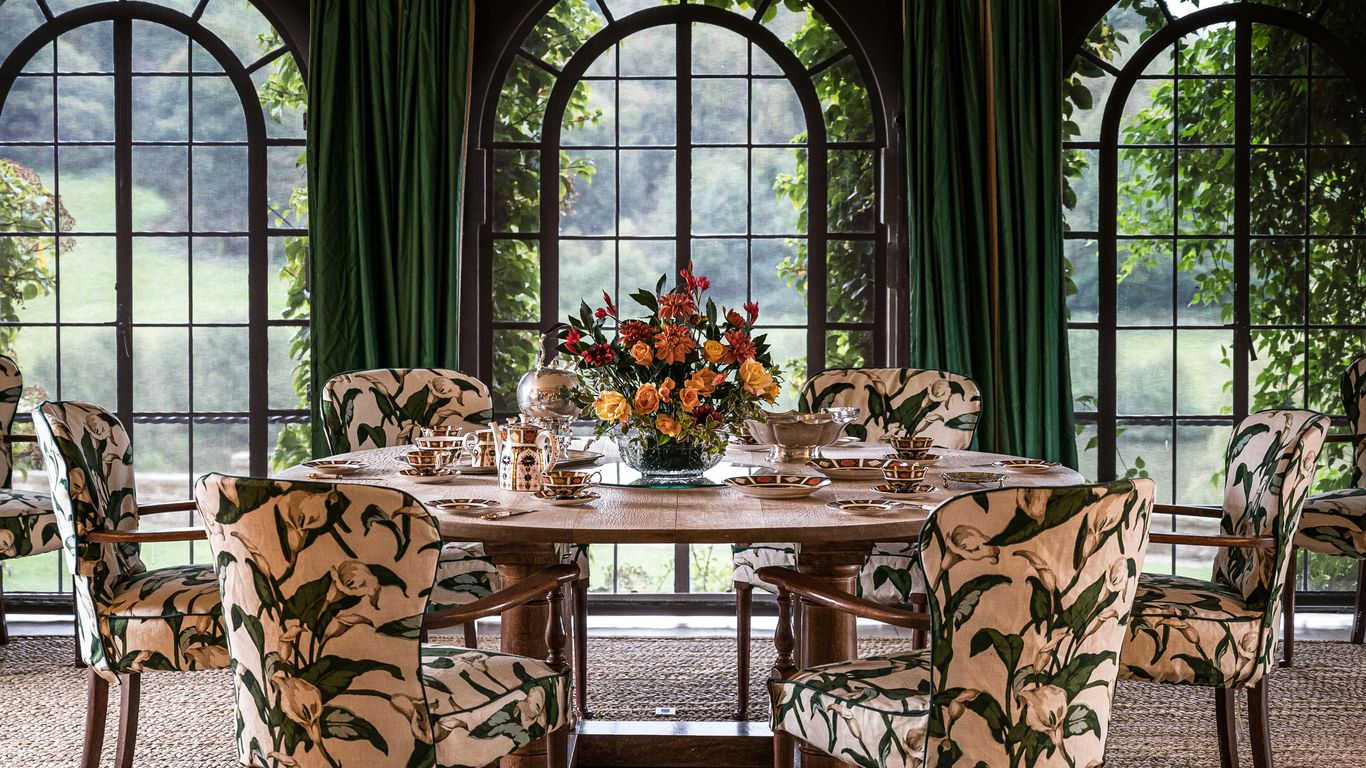
Measure the full room, then note doors, radiators, built-in cabinetry, sockets and changes in floor level. Record the table’s maximum length and width, not just the dimensions of a smaller drawing symbol. If a rug is planned, measure that separately because it can influence chair movement and the perceived scale of the dining area.
For small homes, measure the access route as carefully as the dining room itself. A top that fits the final room may still be difficult to turn through a stairwell, lift or corridor.
Allowing clearance around chairs and walkways
Around the outside of the table, aim for approximately 90 cm where chairs are used normally, and more where a busy walkway passes behind seated diners. Less space can work in a quiet dining room, but it will feel restrictive when two activities happen at once.
Mark the table and chair positions on the floor with tape or cardboard. This simple test exposes collisions with doors and cupboards much more clearly than a plan viewed on a screen.
Positioning the table with lighting and architectural features
Centre the table under a pendant only when the ceiling point and the table’s final position agree. In an open-plan room, the table can also align with a kitchen island, a window axis or a change in flooring. Avoid placing the strongest vein direction where it fights with a prominent architectural line.
If you are styling a hospitality or commercial interior, treat the table as part of the visitor route rather than an isolated object. Even unrelated planning references, such as a Lisbon guide, show how movement and destination points shape the experience of a space; the same principle applies at a smaller scale.
Making a compact room feel more spacious
The rounded ends of an oval table can reduce the visual interruption of corners, especially where circulation runs close to the dining area. A slim edge, pale stone and a visually open base may further reduce heaviness. Keep surrounding furniture simple and avoid placing a bulky sideboard directly beside the widest part of the top.
Reflective finishes can brighten a room, although too much gloss may create glare near windows or pendant lighting. The best result usually comes from balancing the marble with calm upholstery, timber or softly textured flooring.
Selecting the right marble and finish
Stone selection affects the table’s colour, movement, maintenance and overall presence. Marble is naturally variable, so a sample can indicate a palette without predicting the exact slab pattern. Ask to review the proposed material and confirm what variation is considered acceptable before production.
Comparing Carrara, Calacatta and darker marble styles
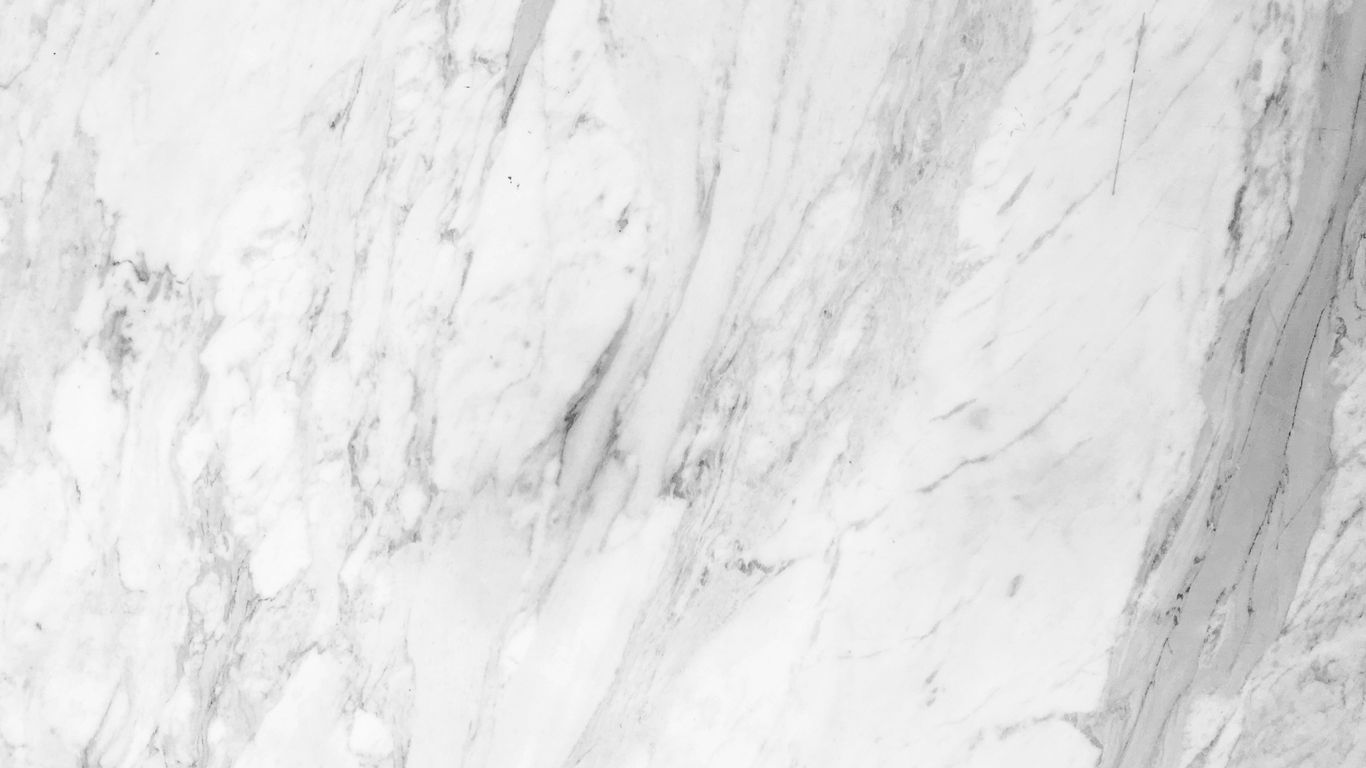
Carrara is often associated with a lighter grey-white ground and softer veining, while Calacatta can offer stronger, more pronounced movement and warmer notes. Darker marbles create a deeper focal point and can work well with pale walls, light upholstery or warm metal. These are broad visual tendencies rather than guarantees, since each quarry and slab differs.
Choose according to the room’s fixed elements as well as personal taste. If the floor, joinery and walls already have strong pattern, a quieter stone may create a calmer composition.
Understanding veining, colour variation and slabs
Veining may run across a slab, change direction or include mineral marks and areas of tonal variation. For a long oval top, inspect how the chosen slab can be laid within the outline and whether joins are necessary. Edge cuts can also change how much of a particular vein remains visible.
A bespoke stone piece should be judged from the approved slab selection and production drawing, not from a photograph of another table. This is one reason marble dining table ideas are useful for direction but cannot specify the appearance of an individual natural-stone order.
Polished, honed and leathered finishes
A polished finish reflects more light and brings out colour depth, giving the table a formal presence. Honed marble is softer in appearance, with a low-sheen surface that can suit relaxed interiors. Leathered finishes add texture and may make the surface feel more tactile, though the precise effect depends on the stone.
Compare finish samples under the lighting used in the dining room. A surface that looks subtle in a showroom may read differently beside daylight, warm lamps and glossy cabinetry.
Balancing appearance with daily practicality
Marble is porous and can be affected by staining, scratching and etching, particularly when acidic liquids remain on the surface. This does not make it unsuitable for dining; it means the material should be chosen with an honest view of how the room is used. Families, restaurants and formal dining rooms may reasonably make different choices.
A useful comparison is the marble and sintered stone guide, particularly when you are weighing natural variation against a more consistent surface. The decision should reflect both the visual character you want and the maintenance you are willing to accept.
Exploring bases and design styles
The base determines more than the table’s appearance. It affects legroom, chair placement, visual weight, stability and how the top is supported. A strong design keeps the base proportionate to the slab while leaving enough room for feet and cleaning equipment.
Pedestal bases for flexible seating
Pedestals are especially useful for oval tops because they reduce the chance of chair legs colliding with corner supports. A carefully positioned central base can let diners sit more freely around the curve. Its diameter and footprint still need to be checked against the underside of the top and the desired legroom.
Choose a pedestal that supports the material convincingly without becoming a visual obstacle. A simple base can let expressive veining lead, while a more sculptural form may become the room’s main feature.
Plinth and sculptural bases for a statement look
A plinth gives the table a grounded, architectural quality and can echo a stone floor or built-in wall. Sculptural bases create stronger shadows and may look striking from several angles, which matters in open-plan interiors. Their shape should be tested from seated height as well as from across the room.
The marble dining table buyer’s guide is a useful reference when comparing pedestal, trestle and four-leg arrangements alongside size, stability and interior coordination. Base design is not merely decorative; it changes how the table is lived with.
Metal and timber bases for contrast
Metal can introduce a fine, dark line beneath a pale top, while timber adds warmth and helps soften the coolness of stone. Both materials can work with an oval form when their scale is controlled. Consider the finish of nearby hardware, flooring and chairs so the base feels connected rather than added afterwards.
Where stone is the main visual statement, a restrained base often gives the room more balance. Conversely, a plain top may benefit from a base with stronger geometry.
Coordinating the table with chairs and interiors
Chairs should complement the table without competing with the marble’s natural movement. Upholstery can bring softness, timber can introduce warmth, and woven textures can make a formal stone top feel more approachable. Check seat height, arm height and the underside of the top before ordering a full set.
The same principle applies in hospitality spaces. A restaurant may prioritise tight circulation and durable upholstery, while a residence may give more attention to comfort and visual calm. The table should support the room’s actual use rather than an idealised photograph.
Buying, caring for and living with marble
A stone table is a substantial purchase, and the practical planning deserves as much attention as the finish. Confirm the final dimensions, weight, support structure, packing method and route into the building. Care requirements should be understood before the table arrives, not discovered after the first spill.
Checking stability, weight and delivery access
Ask how the top and base are transported, whether assembly is required and what equipment may be needed on site. Measure lift doors, stair turns, corridor widths and thresholds. A heavy top may require a different delivery plan from a complete assembled table.
For made-to-order projects, Geoscenic Stone accounts for the individual piece, weight, packing, destination, site access and any installation requirements in its quotation. Confirm which elements are included in your specific quotation, since delivery, duties and installation are project-dependent.
Sealing marble and protecting it from stains
Sealing can reduce the risk of liquid penetration, but it does not make marble impervious. Use coasters, placemats and protective pads where appropriate, particularly beneath hot serving dishes or objects that may scratch. Re-sealing intervals depend on the stone, finish and use, so follow the fabricator’s guidance.
Keep cosmetics, acidic foods and strongly coloured liquids from sitting on the surface. Prevention is easier than trying to reverse a mark after it has penetrated the stone.
Cleaning spills, heat marks and everyday mess
Wipe spills promptly with a soft cloth and a pH-neutral stone cleaner. Avoid abrasive powders, harsh chemicals, rough scourers and excessive moisture around joins or the base. Never assume that a product suitable for glass, timber or ceramic is suitable for marble.
For a practical care routine, keep these habits simple:
- Blot spills rather than rubbing them across the surface.
- Use coasters under glasses and pads under hot objects.
- Clean with a soft cloth and pH-neutral stone cleaner.
- Ask a stone professional about persistent stains or etching.
These measures will not prevent every change in a natural material, but they reduce avoidable damage while allowing the surface to develop its own character.
Weighing maintenance against long-term durability
Marble rewards people who value natural variation and are comfortable with some visible signs of use. It is not a maintenance-free surface, yet careful daily habits can make it a durable and deeply personal part of a home, restaurant or project. The right choice depends on whether the material’s character matters more to you than perfect uniformity.
Before approving the order, compare the complete specification rather than the top alone: stone, thickness, edge, finish, base, packing, access and care. For broader natural-stone context, a stone dining table comparison can help frame the differences between marble and other materials.
Conclusion
Choosing an oval marble dining table is a matter of proportion, material judgement and practical preparation. Measure the room, test the seating, review the stone and confirm the production details before committing; when the table is made for its setting, its beauty is much easier to live with. If you are ready to discuss a made-to-order piece, request a quotation with your preferred dimensions, stone, finish and delivery information.
Frequently Asked Questions
What size oval marble dining table seats six people?
A table around 160–200 cm long may seat six, depending on its width, chair dimensions, base design and desired elbow room. Treat this as a planning range rather than a fixed capacity.
How much clearance should there be around a dining table?
Around 90 cm is a useful starting point for chair movement, with more space needed behind chairs on busy walkways. Doors, sideboards and kitchen routes may require additional clearance.
Is an oval table better than a rectangular table in a small room?
An oval table can feel easier to move around because it has no sharp corners, particularly at the ends. It still needs a suitable footprint and will not solve a room that is simply too small for the required seating.
Which marble finish is easiest to live with?
Honed finishes tend to have a softer, lower-sheen appearance, while polished surfaces are more reflective and leathered finishes are more textured. None removes the need for prompt cleaning and sensible protection.
Does marble need to be sealed?
Many marble dining surfaces benefit from sealing to help reduce liquid absorption, although sealing does not make the stone stain-proof. The suitable product and maintenance interval depend on the specific marble and finish.
Can a marble dining table be made to a custom size?
Yes, a table can be specified around a room, seating plan or architectural constraint, subject to the stone slab, support structure and fabrication requirements. Final dimensions and details should be confirmed in an approved drawing.
How should marble be cleaned after a spill?
Blot the spill promptly, then clean the area with a soft cloth and a pH-neutral stone cleaner. Avoid acidic, abrasive or harsh chemical products, and seek specialist advice for persistent marks.