
Key Takeaways
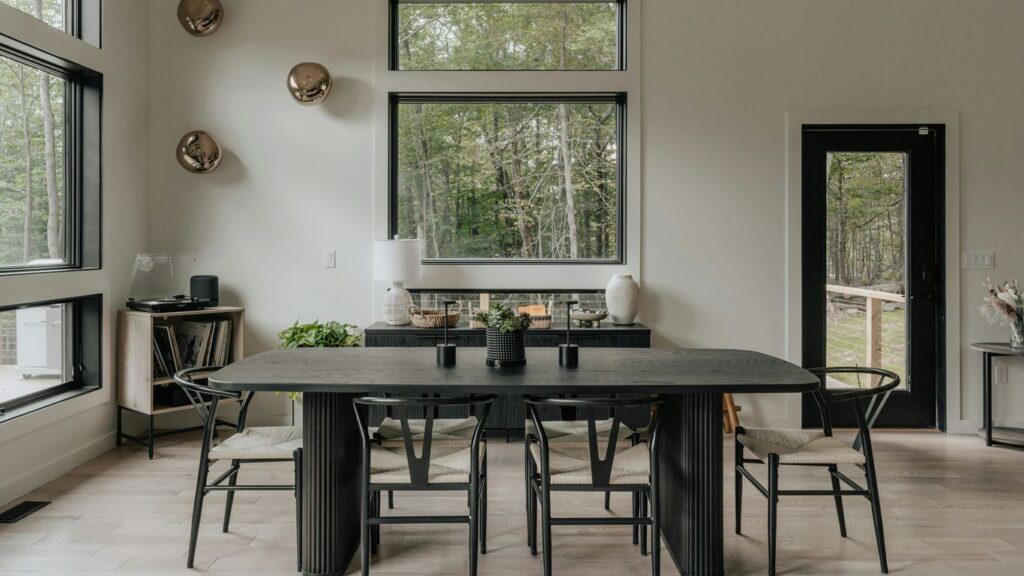
Natural stone variation is part of the material’s identity, not an irregularity to be corrected. Understanding how stone forms, how slabs are selected and how fabrication influences the view makes the final piece easier to specify with confidence.
- Veining and colour shifts are created by minerals, pressure, heat and geological movement.
- The same stone name can describe slabs with noticeably different backgrounds and patterns.
- Full-slab viewing gives a more reliable impression than a small sample.
- Table proportions, edge details, lighting and fabrication all affect the finished appearance.
- A clear approval process helps distinguish natural character from genuine damage or defects.
What causes natural stone variation?
Natural stone begins as geological material rather than a manufactured sheet with a repeated print. Its appearance records the conditions under which it formed, moved and crystallised. That is why two pieces from the same quarry can share a general character without matching exactly. The origins of natural stone help explain why colour, shade and veining are so difficult to standardise.
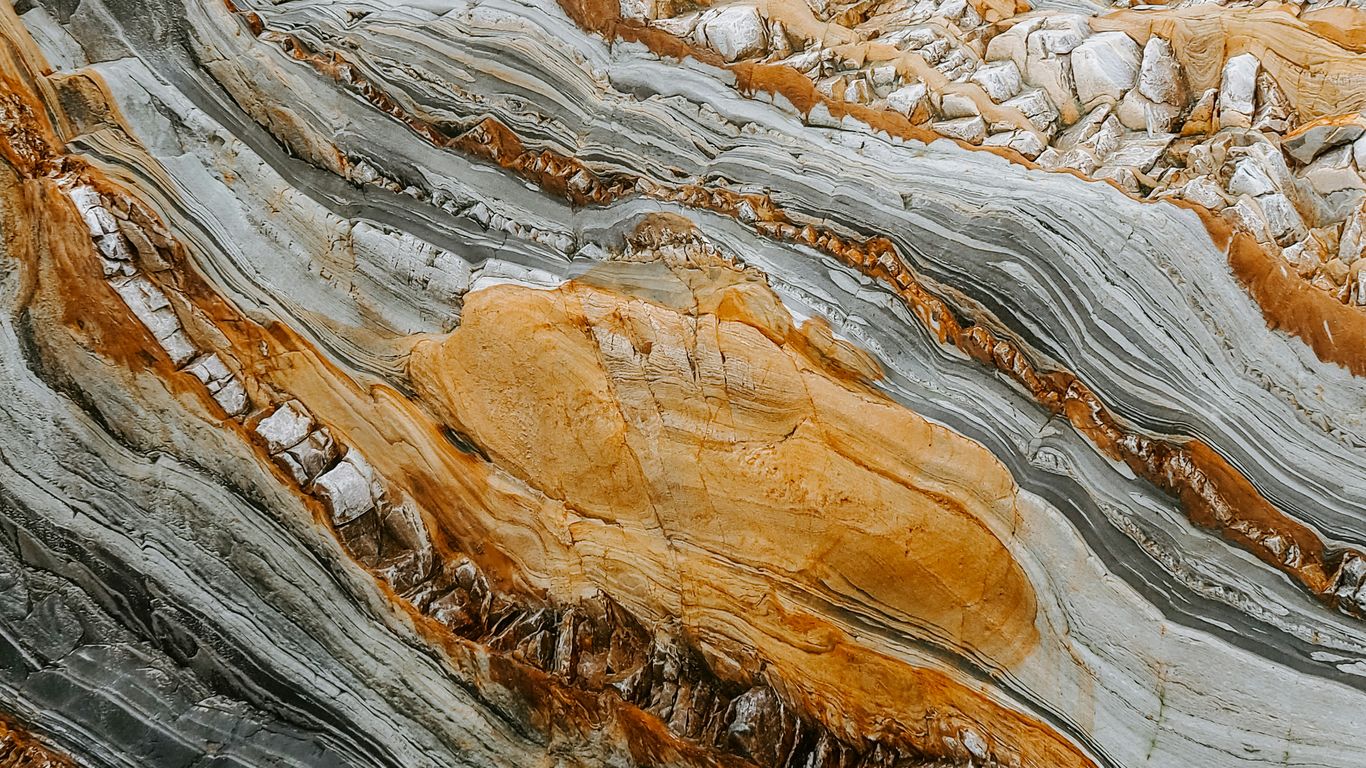
How geological formation creates unique patterns
Rock develops over long periods as minerals gather, melt, cool, compress or alter within the earth. Sedimentary deposits may accumulate in layers, while other stones form through heat and pressure that change an earlier rock. Later movement can fracture, fold or reposition those layers. The visible result is a surface with a geological history rather than a perfectly repeated motif.
Even within one quarried block, the direction of that history may change. A cut through one area can reveal a calm field, while another exposes a stronger line or a concentrated mineral pocket. The differences are not applied afterwards; they are part of the material being brought to the surface.
The role of minerals, pressure and heat
Mineral composition is one of the clearest influences on colour and pattern. Small amounts of different minerals can introduce grey, gold, green, rust or blue notes, while pressure and heat can stretch those minerals into lines or diffuse them through the stone. Changes in temperature and compression also affect crystal size and the way light is reflected.
This is why a slab can appear quiet from a distance but reveal fine flecks, cloudy transitions or hairline movement when viewed closely. The material carries evidence of its formation, and those details often become more apparent after cutting and polishing.
Why colour can vary within a single slab
A single slab may contain several related tones rather than one flat background colour. A pale field can move towards warmer cream near one edge, or a grey stone can deepen around a mineral concentration. Natural pores, fossils, crystal clusters and subtle changes in density can add further variation.
Light also changes how those tones are read. A polished surface reflects more of its surroundings, while a honed surface tends to show colour in a softer, more even way. Neither finish removes the underlying variation; each presents it differently.
The difference between natural variation and defects
Variation normally describes differences in tone, figuring, mineral marks and movement that belong to the stone. Damage is different: it may include a crack that affects integrity, an unsuitable repair, a chipped edge or a fabrication fault. The distinction should be considered with the fabricator, because the location and intended use matter as much as the appearance.
A responsible approval process records what is expected before production. Photographs, samples and drawings can clarify the stone’s general character, but they cannot promise that every part of a natural slab will look alike.
Understanding veining in natural stone
Veining is often the first feature people notice, but it is only one part of natural stone variation. Lines may be delicate and web-like, broad and clouded, or strong enough to define the entire composition. Their scale becomes especially significant when a slab is converted into a large table top. A small sample can suggest a stone’s direction without showing how its movement will develop across the finished surface.
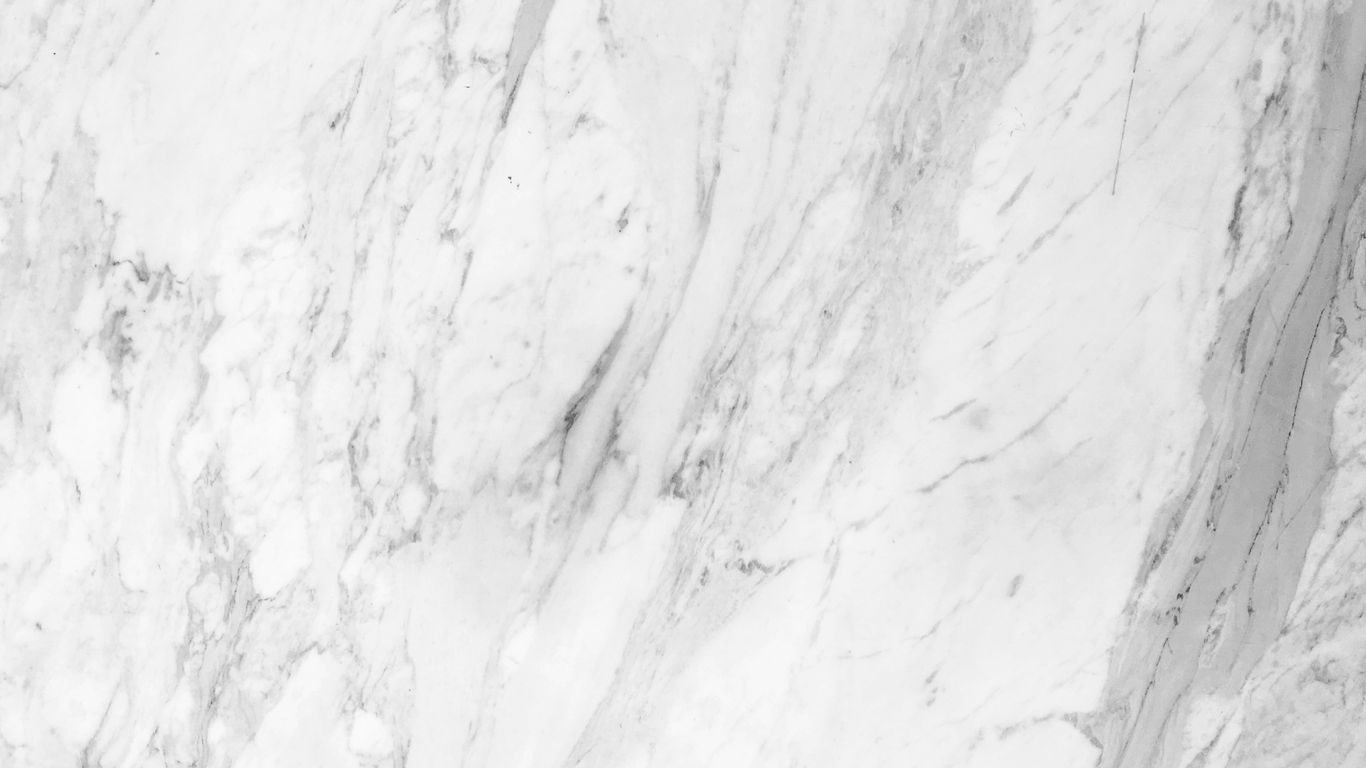
Straight, flowing and branching vein patterns
Some veins travel in relatively straight paths, creating a quiet sense of direction. Others sweep across the slab in soft arcs, while branching patterns divide into smaller lines like the structure of a leaf or river. A vein may fade gradually, reappear further away or change width as it crosses the surface.
The cut of the stone can influence what is visible. A particular orientation may emphasise lengthwise movement, whereas another can expose more cross-sectional pattern. This is one reason the intended table shape should be considered alongside the slab rather than afterwards.
Subtle veining compared with high-contrast movement
Subtle veining sits close to the background tone, giving the surface depth without dominating the room. High-contrast movement creates a stronger visual centre and may suit a formal dining setting, a hospitality feature or a room with otherwise restrained materials. Neither approach is inherently better; they create different levels of emphasis.
For a project team, it helps to describe the preference in practical terms: quiet or expressive, fine or broad, warm or cool, continuous or irregular. Those descriptions are often more useful than relying only on a stone name.
How veining changes across a slab
A slab should be read as a complete composition. One end may contain the most dramatic movement, while the centre settles into a calmer field. Veins can also become more visible where the surface is wider, because the eye has enough distance to follow their direction.
The following simple comparison can help when reviewing a slab for a table top:
| Feature to review | What it may show | Why it matters |
|---|---|---|
| Background tone | Overall base colour and warmth | Sets the relationship with flooring and furniture |
| Vein direction | Straight, sweeping or branching movement | Influences orientation and visual balance |
| Contrast | Difference between veins and field | Determines how prominent the table will feel |
| Mineral features | Flecks, clouds, crystals or deposits | Adds detail and may affect preferred placement |
Reading these features together gives a more realistic sense of the finished piece. It also makes a later discussion about cutting and placement more precise.
When veining becomes the main design feature
A strongly veined table can act almost like artwork, particularly when the base and surrounding finishes are quiet. In that situation, the most important decision may be where the strongest movement sits in relation to the room, seating and sightlines. A dramatic area placed centrally can create a focal point; placed towards an edge, it may feel more restrained.
The design should still allow the table to function comfortably. A visually powerful top needs appropriate proportions, stable support and enough circulation around it. Pattern is part of the specification, but it is not a substitute for good furniture planning.
How different stones vary in appearance
Every stone family has its own visual language, although individual slabs can still differ widely. Marble is often associated with flowing veins, granite with granular mineral structure, and stones such as travertine with pores or layered openings. These are useful starting points, not guarantees. The marble and travertine comparison offers a wider way to think about how formation and use affect a piece’s character.
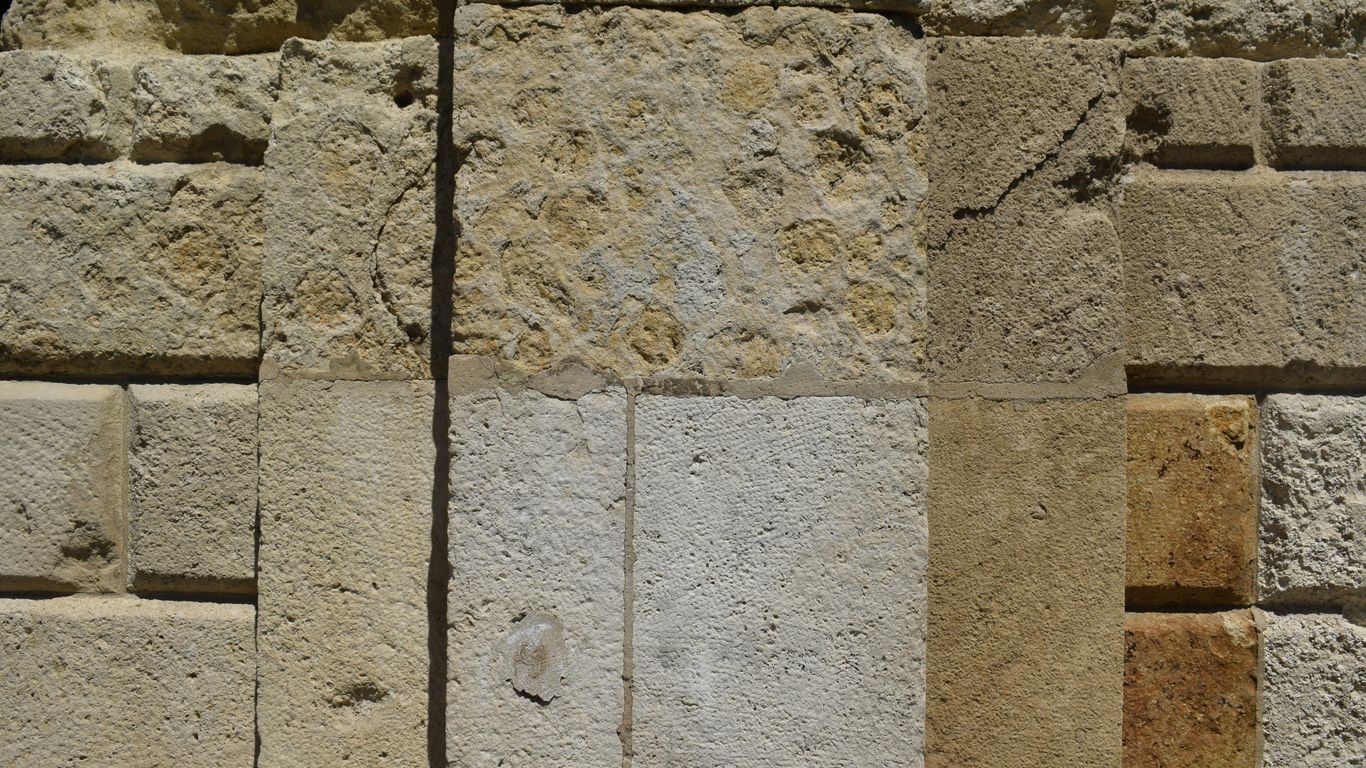
Marble and its distinctive veining
Marble can range from almost quiet surfaces to bold, sweeping movement with pronounced contrast. Its veining may be linear, feathery, cloudy or branching, depending on the variety and the particular slab. Backgrounds can also shift from cool white and grey to warmer cream, beige or more unusual tones.
That breadth is part of marble’s appeal, but it means that a named variety should be treated as a family resemblance rather than a fixed graphic. SurfacesGalore, for example, presents several marble and travertine materials with very different visual directions, which is a useful reminder that material selection needs to be specific.
Granite and its granular mineral patterns
Granite commonly shows a more granular or crystalline appearance, with mineral particles distributed through the background. Some slabs are relatively even, while others have clusters, speckles, clouds or larger areas of movement. The contrast can be restrained or quite lively, depending on the mineral mix.
Rather than looking only for a single vein, review the rhythm of the whole surface. Repeated grains may give a table a consistent texture, while larger mineral groupings can create a more varied composition. Edge treatment and lighting can make those differences more or less noticeable.
Quartzite, limestone and travertine variation
Quartzite can show strong linear movement, layered effects or crystalline depth, while limestone often has a quieter field with fossils, shells or gentle tonal shifts. Travertine may include pores, filled areas, bands and warm changes in colour. The finish and whether openings are filled can materially change the impression.
These stones are not interchangeable simply because they can all be used for furniture. A calm limestone may suit a soft interior, while a banded travertine can bring a more architectural presence. The intended use, maintenance expectations and fabrication details should be considered alongside appearance.
Why stone names do not guarantee an identical appearance
Trade names and variety names help organise a selection, but they cannot describe every slab from every extraction point. Quarry location, layer, block, cut and available stock all influence what is offered at a particular time. Even slabs selected from the same block may not align as identical panels.
For that reason, approval should focus on the actual material proposed for the piece. A sample can establish a broad direction; a slab image or in-person review gives a more useful view of tone, movement and distinctive areas.
Choosing a natural stone table top
Choosing a table top is partly an aesthetic decision and partly an exercise in managing proportion, use and expectation. The stone should relate to the room, but it also needs to work at the required size and with the chosen base. A useful marble table buying guide can help frame questions about finishes, edge profiles, dimensions and maintenance before a final selection is made.
Reviewing full slabs rather than small samples
Small samples are convenient for comparing broad colour families, but they cannot show the scale or direction of a slab’s movement. A full view reveals whether the background is consistent, where the strongest veins sit and how the pattern may interact with a round, oval, rectangular or irregular outline.
If an in-person review is not possible, detailed slab images can still support a more informed conversation. The image should be read as a guide to the proposed material, not as a promise that every part of the finished table will reproduce it exactly.
Identifying the background colour and dominant movement
Start by separating the stone into two questions: what is the overall field, and what is the strongest movement across it? The field determines how the table sits with walls, flooring and upholstery. The movement determines where the eye travels and whether the top feels quiet, directional or dramatic.
It can help to record a few practical preferences before comparing options:
- The preferred background temperature, such as cool grey, warm cream or earthy beige.
- The acceptable level of contrast between veins and the main field.
- Whether visible mineral marks and tonal shifts are welcome.
- Which areas of the slab should be avoided or featured in the finished outline.
This makes selection less dependent on a quick first impression. It also gives the fabricator a clearer basis for discussing orientation and yield.
Considering the table size, shape and edge profile
A large rectangular top can display a long sweep of movement, while a round top may gather veins towards a central composition. An oval can soften directional lines, and a smaller coffee table may benefit from one concentrated feature rather than a broad field. The edge profile affects the way the surface meets the room and can either sharpen or soften the overall design.
Dimensions also influence how much of the slab is required and whether joins or changes in direction become relevant. A production drawing should confirm the top size, thickness, edge details and any required drillings before fabrication begins.
Deciding whether a dramatic or understated pattern suits the room
A dramatic stone can anchor a quiet room, but it may compete with patterned upholstery, artwork or strong architectural finishes. An understated top can be easier to live with in a layered interior and may allow the base or surrounding materials to take a larger role. The right choice depends on how the room is used and what should remain visually prominent over time.
Material decisions sometimes benefit from the same clear record used for other design specifications. For example, Xcan It is built around central management of QR codes; that unrelated example still illustrates the broader value of keeping changing project information organised rather than scattered across messages. For a stone table, the relevant record is the approved material, drawing and finish—not a generic product image.
How fabrication and installation affect the final look
The final appearance is shaped not only by the slab but by what happens after selection. Cutting, edge finishing, polishing, inspection, packing and installation all influence how the material is experienced in the room. A carefully selected stone can still look unbalanced if its strongest areas are placed without considering the furniture’s proportions. Clear drawings and review points reduce that risk.
Positioning the most distinctive areas of the slab
The most noticeable part of a slab does not always belong at the centre of a table. It may work better along a long edge, around a curve or in a position that aligns with the room’s main view. Placement should consider seating, walking routes and whether the table is intended to be a focal point or a quieter layer in the interior.
For a made-to-order piece, the discussion can include the proposed outline over the slab image. This does not remove natural uncertainty, but it makes the intended composition more transparent before cutting.
Planning joins, cut-outs and bookmatching
Large pieces may require joins, while architectural details can introduce cut-outs, sockets or other openings. Their locations should be considered alongside the veins so that they do not interrupt an important feature unnecessarily. Where two pieces are arranged as a visual pair, bookmatching can create a mirrored relationship, although the result depends on the actual slab and cut.
These decisions are especially relevant to hospitality, retail and residential projects with several related pieces. The production drawing should show dimensions, edge conditions and openings clearly, with the material arrangement reviewed before work proceeds.
How polishing and finishing change colour perception
Polishing increases reflection and can make colour appear deeper or movement more pronounced. Honing produces a softer, low-sheen appearance that may make tonal transitions feel more even. Brushed or textured finishes alter the way light catches the surface and can draw attention to the stone’s tactile qualities.
The finish should therefore be assessed on a comparable sample or, where possible, on the proposed material. A colour that looks cool under a diffuse showroom light may read warmer or more reflective once installed beside timber, metal or painted surfaces.
Why lighting and viewing angle affect the appearance
Stone is not viewed from one fixed position. Standing height, seating height and the direction of daylight can all change which veins are most visible. Artificial lighting may highlight a polished surface or cast shadows across texture, while a low evening light can reveal relief that was barely apparent earlier.
This is why a slab image should not be treated as the only reference. If the table is for a specific room, consider the principal sightlines and lighting conditions as part of the design review. A related example of careful material and furniture planning can be found in Sabi Sabi Earth Lodge, where environmental design is integrated with the surrounding landscape rather than considered separately.
Setting realistic expectations for natural stone tables
Natural stone furniture is commissioned for its individual character, so the aim is not to eliminate every difference. The aim is to understand which differences are expected, which are desirable and which should be discussed before production. This approach supports a more honest relationship between the approved drawing, the selected material and the finished table. The natural stone variation guide also explains why full-slab review and dry layout thinking are valuable when appearance matters.
Why no two natural stone tables are truly identical
Even tables made to the same dimensions may differ when they use different slabs. Veining, tone, mineral deposits, porosity and figuring can change from one piece to the next. The base, finish and room will also influence the way each table is perceived.
A factory-to-order process is therefore about making a specific piece for a specific project, not reproducing a warehouse item interchangeably. At Geoscenic Stone, dimensions, stone, finishes, edges and drillings are confirmed through an approved production drawing for each order.
Distinguishing acceptable variation from damage
Before approval, ask which marks and shifts are characteristic of the selected material and which conditions would require review. A vein, fossil, pore or tonal change may be entirely natural, while a structural crack, chipped edge or poorly executed repair is a different matter. The answer may depend on the location and the intended use of the table.
A useful project file can include the agreed slab reference, drawing, finish, edge profile and any specific areas discussed during selection. This creates a shared point of reference for the client, designer, fabricator and installer.
How natural patina develops over time
A natural stone table may change subtly as it is used. Reflection can soften through everyday contact, minor marks may become part of the surface story and the surrounding room may change how the stone reads. The pace and character of that change depend on the stone, finish, care routine and intensity of use.
Patina should not be confused with neglect or damage. It is a gradual visual history, whereas avoidable staining, impact or unsuitable cleaning may need separate attention. The best expectation is a material that remains individual rather than permanently frozen at the moment of installation.
Why variation can add character and long-term value
Variation gives a table a sense of place and prevents it from feeling like a repeated graphic. It can connect a piece to the wider architecture, introduce movement into a quiet room or make a restrained material palette feel more layered. That individuality is often the reason clients choose natural stone in the first place.
Clear specification also protects that value. Even unrelated project processes, such as the structured feedback offered by Premier Consultancy, show why information is more useful when it is gathered and reviewed consistently. In stone furniture, the equivalent is an open record of material selection, drawings, finish and agreed expectations. The practical care involved in specifying a stone piece is rather different from choosing garage doors in Kingston, but both decisions benefit from accurate dimensions and a clear understanding of the finished installation.
Plan Your Stone Piece
If you are considering a natural stone table or another made-to-order piece, speak with Geoscenic Stone about the intended dimensions, stone, finish, edge details and project requirements. A clear brief allows the material’s natural variation to be considered as part of the design rather than treated as an unexpected result. You can also start your enquiry with the room, use and preferred visual character in mind.
Conclusion
Every natural stone table looks different because it is shaped by a geological process that cannot be repeated exactly. Veining, colour, mineral marks, fabrication choices and changing light all contribute to the final view. When those factors are reviewed through full-slab selection and an approved drawing, variation becomes something to understand and compose—not something to promise away.
Frequently Asked Questions
Why does natural stone vary from slab to slab?
Each slab reflects a different section of geological material, with its own mineral composition, pressure history, heat exposure and extraction location. Even slabs with the same name can therefore differ in tone, movement and figuring.
Is veining in stone considered a defect?
Veining is normally a natural feature rather than a defect. A defect may involve structural damage, an unsuitable repair or fabrication damage, so the difference should be assessed according to the material and its intended use.
Can a small sample show the final appearance of a table?
A small sample can indicate a general colour and material family, but it cannot show the full scale or direction of a slab’s movement. Reviewing the actual slab or detailed slab images provides a more realistic reference.
Does the finish change the colour of natural stone?
The underlying colour remains, but the finish changes how light reflects from the surface. Polished finishes can increase depth and reflection, while honed and textured finishes usually create a softer visual effect.
How should a strongly veined slab be positioned?
Positioning depends on the table shape, room sightlines and the desired focal point. The strongest area may be centred, aligned with the length of the table or placed more quietly towards an edge.
Will two tables made from the same stone look identical?
Not necessarily. The slabs, outlines, cuts, finishes and surrounding light may differ, even when the named stone and dimensions are similar. Natural stone should be specified as an individual material rather than a perfectly repeatable pattern.
Can natural stone develop a patina?
Yes. Use, light, cleaning and contact can gradually alter how the surface reflects and how small marks are perceived. This developing character is distinct from damage caused by impact, unsuitable products or poor handling.