
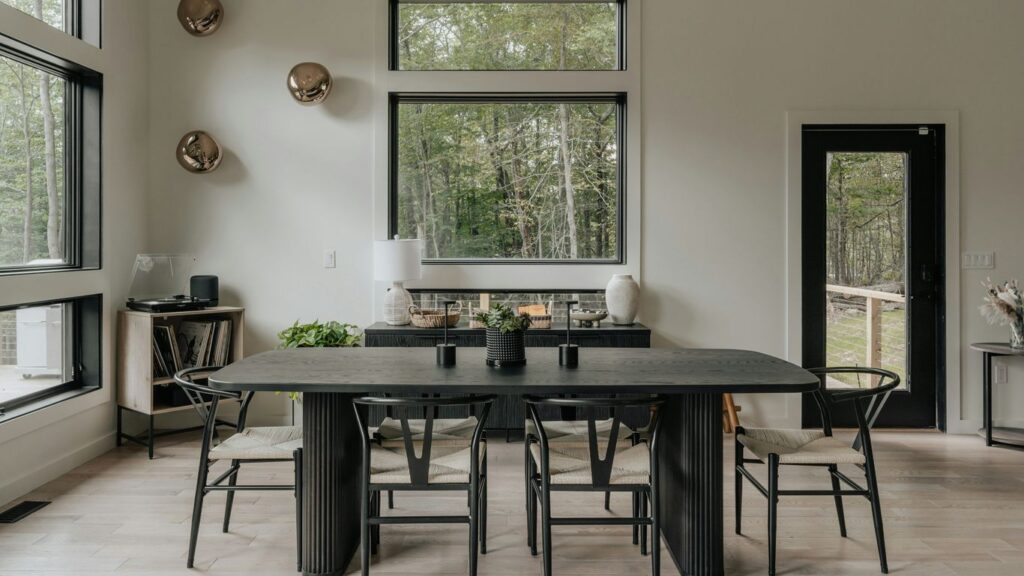
Key Takeaways
A travertine dining table brings natural warmth and visible geological character to a dining room, but it needs thoughtful specification and care. The right choice depends on the stone, finish, proportions, base, intended use and practical realities of delivery.
- Travertine is a porous limestone with natural variation in tone, veining, texture and small cavities.
- Finish, filling and sealing affect both the appearance and everyday maintenance of the table.
- Size, shape and base design should be chosen around circulation, seating and floor protection.
- Made-to-order stone furniture requires approved drawings, careful packing and clear delivery planning.
- Regular cleaning, prompt spill response and protective accessories help preserve the surface.
What is a travertine dining table?
A travertine dining table has a tabletop made from travertine, usually supported by a stone, timber or metal base. The material has an earthy appearance that can feel quieter than highly patterned marble while still giving the room a substantial natural focal point. Its pores, mineral marks and tonal shifts are part of the material rather than signs of uniform manufacture. For a broader introduction to the material and its furniture applications, see this guide to travertine furniture.
How travertine is formed and quarried
Travertine is a form of limestone deposited by mineral-rich water, often around springs and other flowing water systems. Over time, layers build up and harden, leaving the cavities and directional markings associated with the stone. Quarries extract blocks, which are then sawn into slabs or pieces for fabrication. The block and the position of a cut within it influence the final colour, pore pattern and veining.
Natural colour, veining and surface variation
Travertine commonly ranges from ivory and cream through beige, taupe, brown and warmer honey tones. Some slabs show linear movement, while others have softer clouds, open pores or contrasting mineral deposits. Two tables made from the same general selection may therefore differ in tone and detail. Natural variation is part of the specification, so the approved sample or slab selection should be discussed rather than relying only on a styled photograph.
Solid travertine, veneer and composite alternatives
Solid travertine gives the most direct expression of the stone, but it can be very heavy and needs suitable structural support. A veneer uses a thinner stone layer over a manufactured or structural substrate, reducing weight while retaining a natural surface. Composite and stone-look alternatives may offer more consistent colour or different performance characteristics, although they will not have exactly the same geological depth and variation. Ask what the top is made from, how thick the stone is, and how the edge has been constructed.
How travertine compares with marble and other stones
Marble often has stronger veining and a more formal, polished appearance, whereas travertine tends to read as warmer, softer and more organic. Both are natural stones and both can be affected by staining, scratching and acidic substances, depending on their finish and use. Sintered stone, porcelain and engineered materials may offer more predictable patterning or different maintenance requirements. The useful comparison is not simply which material is “best”, but which surface suits the room, habits and tolerance for change; this marble versus travertine guide provides a useful parallel.
The benefits of choosing travertine
Travertine works particularly well when a dining room needs texture without visual noise. It can anchor a large room, add softness to a contemporary interior or reinforce a more relaxed architectural palette. The surface also changes subtly with daylight, so it can feel different in the morning and evening. A considered natural stone table can become a lasting architectural element rather than a disposable accent.
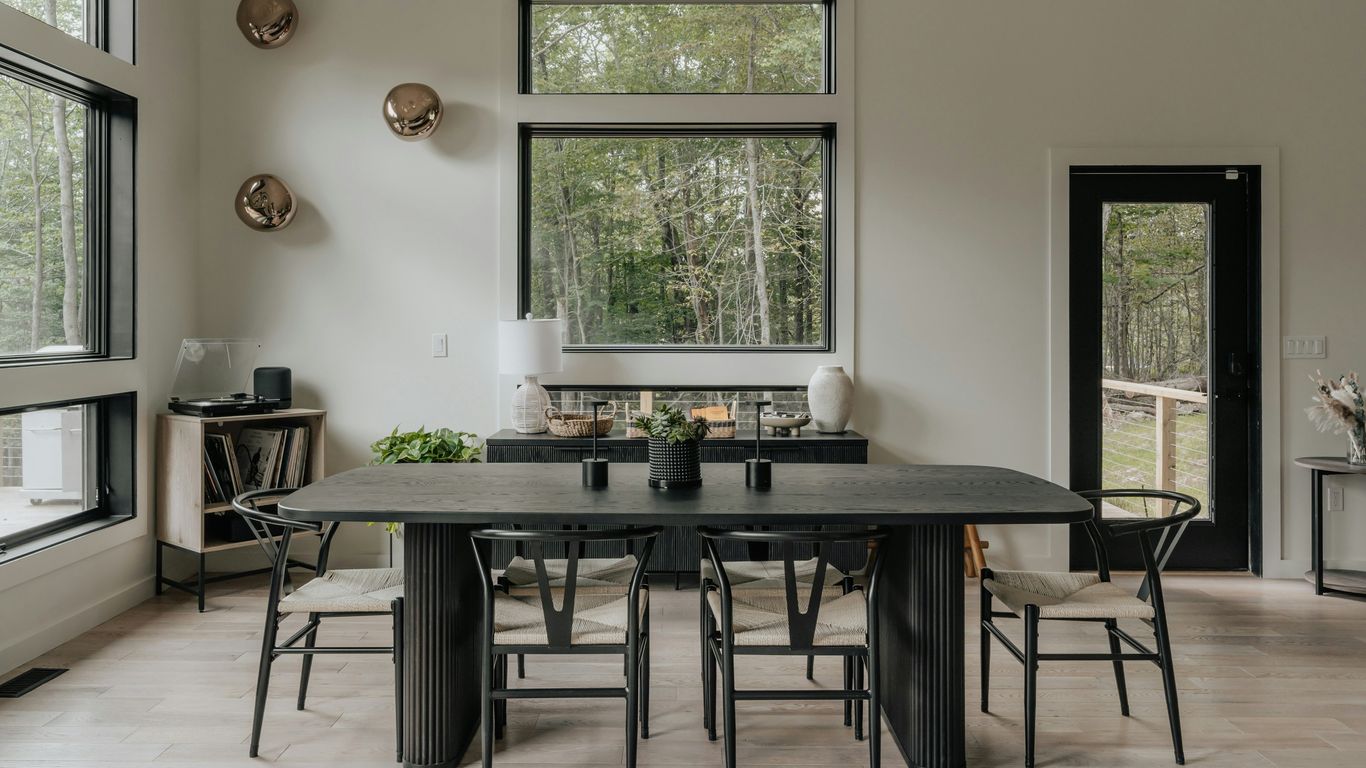
Warm, natural character for dining spaces
The muted colours of travertine sit comfortably alongside timber, linen, plaster, leather and painted surfaces. Unlike a uniformly printed finish, the stone carries small shifts that make a room feel layered. A honed surface is especially useful when you want the tabletop to absorb light rather than reflect it sharply. That quiet quality can make a dining area feel grounded without becoming visually heavy.
Strength, stability and long-term durability
Travertine is a durable building stone and can serve well as a dining surface when it is correctly selected, fabricated and supported. Durability does not mean indestructibility: the top still needs protection from impact, acidic foods and abrasive cleaning. A stable base and appropriate slab thickness matter as much as the stone itself. For a commissioned piece, the structural details should be confirmed in the production drawing before fabrication.
Versatility across interior design styles
A simple travertine top can suit contemporary, Mediterranean, minimalist, rustic and transitional interiors. The overall effect depends on the edge, thickness, base and surrounding materials. A rounded pedestal creates a sculptural centre, while a slim rectangular top with restrained legs feels more architectural. The same stone can therefore support very different schemes without losing its identity.
Why each table has a unique appearance
Variation gives the table a sense of place and makes the surface specific to that piece. Veins may continue across a top, stop at a cut edge or change direction between slabs. Pores can be filled, partly filled or left visible, depending on the desired finish. The principle explored in this discussion of unique natural stone is useful here: selection should focus on whether the variation is suitable, not whether it can be eliminated.
The drawbacks to consider before buying
Travertine rewards realistic expectations. It is not a maintenance-free printed surface, and a busy household may notice small marks sooner than a household that uses the table occasionally. Weight can affect access, floor protection and installation planning, especially for large tops or sculptural bases. Before committing to a travertine dining table, balance its visual appeal with the way the room is actually used.
Porosity, staining and liquid absorption
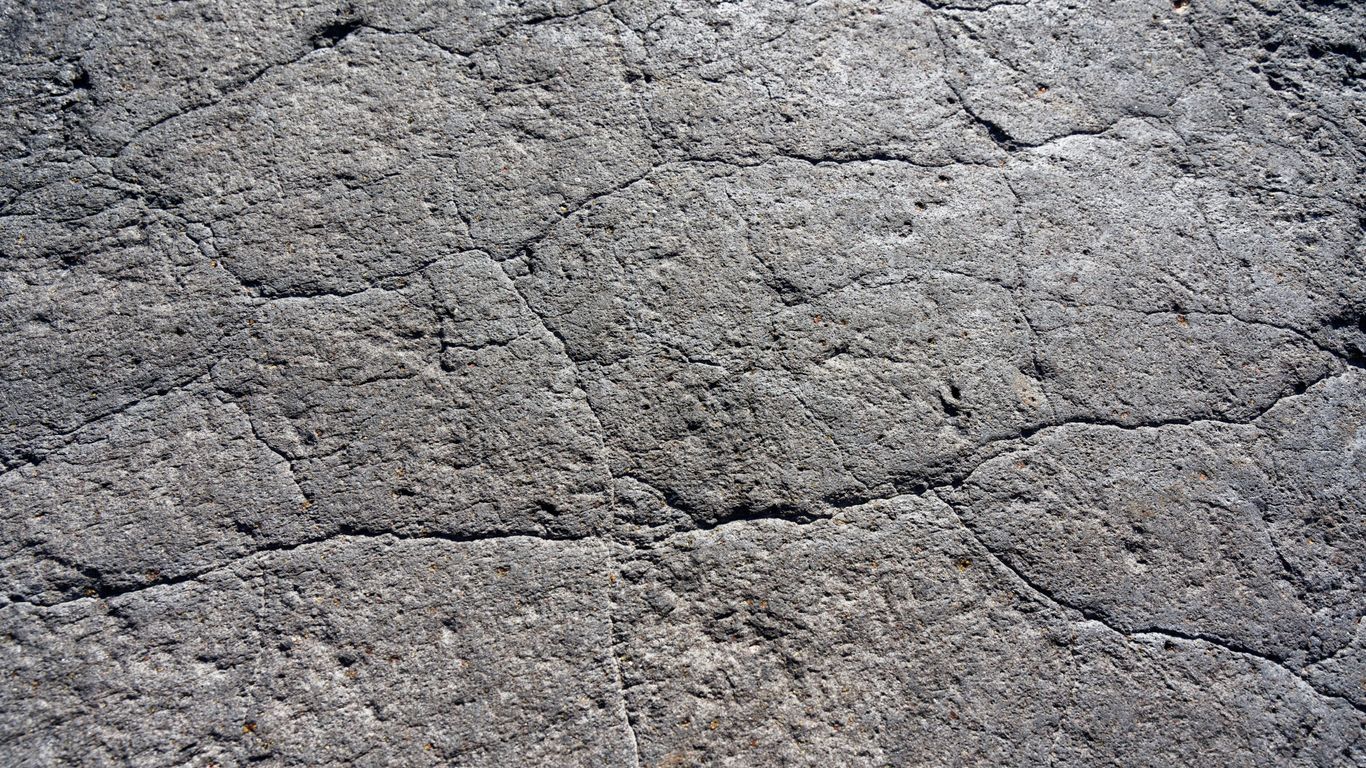
Travertine is porous, particularly where the surface contains open cavities or where the filling is incomplete. Unattended wine, coffee, oil or coloured sauces may penetrate the surface and leave a mark. Sealing can reduce absorption but does not make the stone impervious. Spills should still be blotted promptly, and the supplier should explain what the proposed sealer can and cannot protect against.
Scratches, etching and everyday wear
Grit can scratch a tabletop, while acidic ingredients such as citrus, vinegar and some cleaning products can etch calcium-based stone. Etching is a change to the surface finish rather than an ordinary dirt mark, and it may appear as a dull patch on a polished area. Honed surfaces can make minor changes less conspicuous, but they do not prevent them. If the household wants a surface that never changes, travertine may not be the most comfortable choice.
Weight, delivery and floor-load considerations
A solid stone top can be difficult to manoeuvre through lifts, stairwells, doorways and tight corridors. The base may need to arrive separately, and the completed assembly must be stable once positioned. Check floor protection, route dimensions and whether the building has access or loading restrictions. A quotation may account for the individual piece, its weight, packing, destination, site access and installation requirements, but those inclusions should be confirmed in writing.
Cost and ongoing maintenance requirements
Price reflects more than the slab. Size, thickness, stone selection, edge treatment, base construction, packing, delivery and installation can all affect the final figure. Ongoing care is usually straightforward, but it includes suitable cleaning products, periodic inspection of the sealer and sensible protection during meals. A lower initial price may be less attractive if it leaves the material, construction or delivery scope unclear.
Travertine finishes and edge details explained
Finish changes how travertine feels under the hand and how it responds to light. Edge work also has a practical role: a sharp arris may feel formal, while a softened edge is more comfortable around a family dining table. Filling decisions, thickness and the relationship between the top and base should be reviewed together. They are not decorative afterthoughts; they define much of the table’s character.
Honed, polished, brushed and tumbled finishes
Honed travertine has a low-sheen, smooth surface and is often chosen for a calm, contemporary appearance. Polished stone reflects more light and can intensify colour, though marks and etching may be more visible. Brushed finishes introduce tactile texture, while tumbled treatments create a more aged, irregular expression. The names can vary between suppliers, so request a physical sample or clear finish description before approval.
Filled versus unfilled travertine surfaces
Filled travertine has cavities filled with a compatible material and then finished to create a more even surface. Unfilled stone leaves some pores open, giving a more visibly geological texture. Neither choice is automatically superior. Filling can make everyday use and wiping easier, while an unfilled surface may better suit a rustic or strongly natural brief.
How finish affects colour, texture and upkeep
A polished finish can make a beige stone appear deeper and more reflective; honing usually softens that effect. Brushing brings out texture but can require more careful cleaning because dust may settle into the relief. Open pores and textured finishes may also need different advice about sealing. Compare samples in the actual room’s lighting, not only beneath a showroom spotlight.
Choosing an edge profile and table base
Edge profiles range from a simple eased edge to a rounded, bevelled or more substantial shaped treatment. The choice should relate to the top thickness, the scale of the room and how closely people sit to the table. Bases need to distribute weight evenly without obstructing feet or chairs. For bespoke work, custom stone furniture can be developed around a specific drawing, material palette and access route rather than adapted from an unrelated standard size.
How to choose the right travertine dining table
Begin with the room rather than the photograph. Measure the dining zone, allow space for pulled-out chairs and consider the path between the table, kitchen and other furniture. Then decide how much visual presence the stone should have. A made-to-order table can be resolved around these constraints, but only once dimensions, stone, finish, edge and base are clearly documented.
Selecting the size for your room and seating needs
Allow enough room for diners to sit comfortably and for serving dishes to pass without constant contact with the walls or nearby furniture. A table’s nominal length is only one part of the calculation; chair depth, circulation and the base footprint matter too. Consider whether the table will usually seat four people or regularly expand to larger gatherings. Measure lift interiors, doorways and turning points as well as the dining room itself.
Comparing round, oval, rectangular and square shapes
Round tables encourage conversation and avoid sharp corners, while oval tables retain some length but soften the ends. Rectangular tables are efficient for larger groups and can align with an architectural room, whereas square tables suit a balanced, compact layout. Shape also affects where the base can sit and how chairs approach it. The best form is the one that supports both movement and the social pattern of the household.
Choosing pedestal, trestle and four-leg bases
A pedestal can provide generous legroom around the perimeter, although its footprint and weight still need checking. Trestle bases create a strong horizontal expression but may affect where end chairs are placed. Four-leg bases are familiar and can feel visually lighter, provided the legs do not interfere with knees. The connection between top and base should be engineered for the stone’s weight rather than selected only for appearance.
Matching the table to your flooring and lighting
Travertine can blend with timber flooring, terrazzo, concrete, rugs and painted floors, but tone matters. Warm cream stone may sit comfortably with oak, while a cooler grey-beige selection may need warmer lighting or textiles around it. Pendant lights should illuminate the tabletop without producing uncomfortable glare. A rug can define the dining zone, provided it is large enough for chairs to remain on it when pulled back.
Deciding whether indoor or outdoor use is suitable
Indoor dining is generally the more predictable setting because the table is protected from weather and rapid temperature changes. Outdoor use requires a stone, finish, base and sealing approach suitable for the local environment, along with an understanding that exposure can accelerate surface change. Confirm the intended setting before fabrication rather than assuming an indoor specification will transfer outside. Weather protection, drainage and seasonal covering may also be necessary.
Travertine dining table design ideas
Good styling lets the stone remain the focus without making the room feel precious. Start with the table’s proportions, then build contrast through chairs, lighting, flooring and small objects. Natural variation is easier to appreciate when the surrounding scheme is edited rather than crowded. A useful reference point is this collection of modern marble dining ideas, especially its approach to proportion and warmer supporting materials.
Creating a modern look with simple silhouettes
A clean-edged top, restrained pedestal and limited palette can give travertine a modern presence. Keep the surrounding furniture uncomplicated so the stone’s pores and movement are visible. Linear lighting, plain curtains and a carefully chosen rug can add structure without competing with the surface. Modern does not have to mean stark; a warm wall colour can keep the composition welcoming.
Pairing travertine with wood for warmth
Timber introduces grain and a softer visual temperature beside the mineral surface. Oak, walnut and darker stained woods can each work, but the undertones should be compared in daylight. Use wood in the base, chairs, flooring or sideboard rather than repeating it everywhere. The contrast is strongest when the stone and timber are allowed to remain distinct.
Using upholstered chairs to soften the stone
Upholstered seating offsets the hardness of the tabletop and makes longer meals more comfortable. Bouclé, linen-look fabric, leather and textured wool can all support the stone, depending on the room’s level of formality. Choose chair arms carefully so they fit beneath the table and do not mark the edge. A small tonal variation between upholstery and travertine often looks more considered than a perfect match.
Building a Mediterranean or rustic dining scheme
For a Mediterranean direction, combine warm travertine with limewashed walls, woven textures, aged timber and simple ceramics. A rustic room can use a more open-pored finish, robust timber and irregular handmade pieces. Keep the palette restrained so the table does not become a themed prop. The aim is a natural sense of age and material continuity rather than artificial distressing.
Adding contrast with black, metal and bold accessories
Black dining chairs, dark metal lighting or a deep-toned base can sharpen pale travertine. Brushed metal adds a quieter contrast than a highly reflective chrome, while coloured glass and artwork can bring controlled energy. Keep hot serving dishes and abrasive objects away from the tabletop even when they are being used as styling elements. Decoration should remain practical enough for the table to function every day.
How to care for and maintain travertine
Care begins with knowing the exact surface specification. A filled, honed top will not need precisely the same treatment as an unfilled, brushed one, and the sealer’s performance depends on the stone and use. Ask for written care guidance and test any cleaner on an inconspicuous area first. For related planning, a simple stone care checklist can help teams record finishes, tolerances and intended use.
Sealing the surface and knowing when to reseal
Sealer reduces absorption but gradually wears with cleaning and use. There is no universal resealing interval because it depends on the product, traffic, finish and exposure. A fabricator or stone-care professional should specify the sealer and explain how to test whether protection remains effective. Resealing should not be treated as permission to leave spills unattended.
Cleaning spills without damaging the stone
Blot liquids with a soft, absorbent cloth rather than spreading them across the surface. Use a pH-neutral stone cleaner or mild soap recommended for the particular finish, then wipe away residue and dry the top. Avoid vinegar, lemon-based cleaners, abrasive powders and strongly alkaline products unless a specialist has approved them. A gentle routine is usually safer than occasional aggressive cleaning.
Preventing stains, heat marks and scratches
Use coasters, placemats and trivets during meals, especially beneath oils, coloured drinks and hot serving dishes. Lift objects rather than dragging them, and keep grit away from the tabletop. Decorative metal, ceramics and unglazed pottery can scratch or transfer residue if they are moved repeatedly. Prevention is less disruptive than trying to blend a mark after it has formed.
Handling etching, chips and minor surface damage
Small dull patches may be etching rather than staining, and the remedy depends on the finish. Minor chips or damaged filler should be assessed before attempting a home repair, since an incompatible product can make the area more visible. A stone specialist may be able to hone, refill or refinish a local area. Significant impact damage should be documented with photographs and referred to the fabricator.
Using placemats, coasters and protective pads
Simple accessories provide a useful buffer without hiding the material completely. Place mats beneath plates and cutlery, coasters under drinks, and felt or suitable pads beneath objects that remain on the table. Check pads periodically for trapped grit or moisture. These small habits preserve the surface while allowing the travertine’s texture and variation to remain part of daily life.
What to check before purchasing
Before placing an order, turn the design into a clear written specification. It should identify the stone selection, top construction, dimensions, finish, filling, edge, base, intended location and care requirements. For a made-to-order piece, the approved production drawing is the reference point for fabrication and later checks. Clear documentation also makes quotations easier to compare.
Assessing colour consistency and natural imperfections
Decide what range of tone, veining, pores and mineral marks is acceptable before the slab is cut. A sample can indicate the general direction but cannot show every detail of a finished table. Ask whether material selection will be made from a particular slab or from a broader stone category. The goal is not artificial uniformity; it is an informed agreement about the character of the piece.
Checking construction quality and base stability
Ask how the top is supported, how loads transfer into the base and whether the finished table has been checked for rocking. Review joints, fixings and the relationship between the stone thickness and edge profile. A visually impressive pedestal still needs a stable footprint and appropriate weight distribution. If children or high daily use are involved, mention that during specification.
Confirming dimensions, delivery access and assembly
Record finished length, width, height, top thickness, base dimensions and the number of pieces for delivery. Measure corridors, lift doors, stair turns and the final room access route. Confirm whether assembly, positioning, floor protection or installation is included in the quotation. A delivery access plan is a small step that can prevent expensive surprises on installation day.
Comparing prices, warranties and return policies
Compare like with like: stone grade or selection, finish, filling, edge, base, packing, destination, delivery, taxes and installation can all differ between quotations. Read the warranty for exclusions relating to natural variation, misuse, staining and surface change. A return policy may not apply in the same way to a piece made to an approved drawing. Ask for each assumption to be written down.
Questions to ask about sealing and care requirements
Ask which sealer has been used, whether it is applied before delivery and what maintenance it requires. Clarify which cleaning products are suitable and whether the care advice changes for filled, unfilled, honed or textured surfaces. It is also sensible to ask how repairs are handled if a chip, etch or damaged filler appears. These answers should be specific to the proposed stone and finish, not copied from a generic material sheet.
Thoughtful Stone Planning
If you are commissioning a travertine dining table, speak with Geoscenic Stone about the material, dimensions and production details that need to be resolved before approval. A clear brief and an agreed drawing make it easier to plan the finish, packing, delivery route and intended use.
Conclusion
A travertine dining table can bring warmth, texture and lasting presence to a room, provided its natural porosity, variation and weight are treated honestly. Choose the stone and finish around real habits, specify the construction carefully, and plan access before production begins. With sensible protection and regular care, the table can develop character while remaining a practical centre for everyday meals.
Frequently Asked Questions
Is travertine suitable for a dining table?
Yes, provided its porosity, finish, support and maintenance needs suit the household. It is a durable natural stone, but it can stain, scratch or etch if used without reasonable protection.
Does travertine stain easily?
Travertine can absorb liquids because it is porous. Sealing reduces absorption, but prompt spill response and suitable cleaning remain necessary, particularly for wine, coffee, oils and acidic foods.
Which travertine finish is easiest to live with?
A filled and honed finish is often a practical balance between a smooth surface and a low-reflective appearance. The best choice still depends on the desired texture, pore treatment and willingness to accept natural surface change.
Is a travertine dining table heavy?
A solid travertine table can be considerably heavy, especially with a thick top or stone pedestal. Weight affects floor protection, lifting, access, packing and installation, so these details should be planned before purchase.
Can travertine be used outdoors?
It can be suitable for some outdoor applications when the stone, finish, base and protective treatment are specified for exposure. Outdoor conditions may accelerate weathering, and the care requirements will differ from those for an indoor table.
How often should travertine be resealed?
There is no single interval for every table. Resealing depends on the sealer, finish, frequency of use and cleaning routine; follow the fabricator’s guidance and check periodically whether the surface still repels moisture as expected.
How do you clean a travertine dining table?
Blot spills promptly, use a soft cloth and choose a pH-neutral cleaner intended for natural stone. Avoid acidic products, abrasive powders and dragging gritty objects across the surface.