
Key Takeaways
A stone bathtub can become the defining feature of a bathroom, but its beauty needs to be matched by careful planning. Material, access, structure, plumbing and aftercare all belong in the specification.
- Decide between natural stone, stone resin and composite construction before comparing finishes.
- Assess the room, floor loading, access route and plumbing positions before ordering.
- Expect natural stone to vary in colour, veining, porosity and mineral detail.
- Use suitable cleaning products and follow the maintenance requirements of the chosen material.
- Request drawings, samples, technical information and a complete quotation before committing.
Understanding what a stone bathtub is
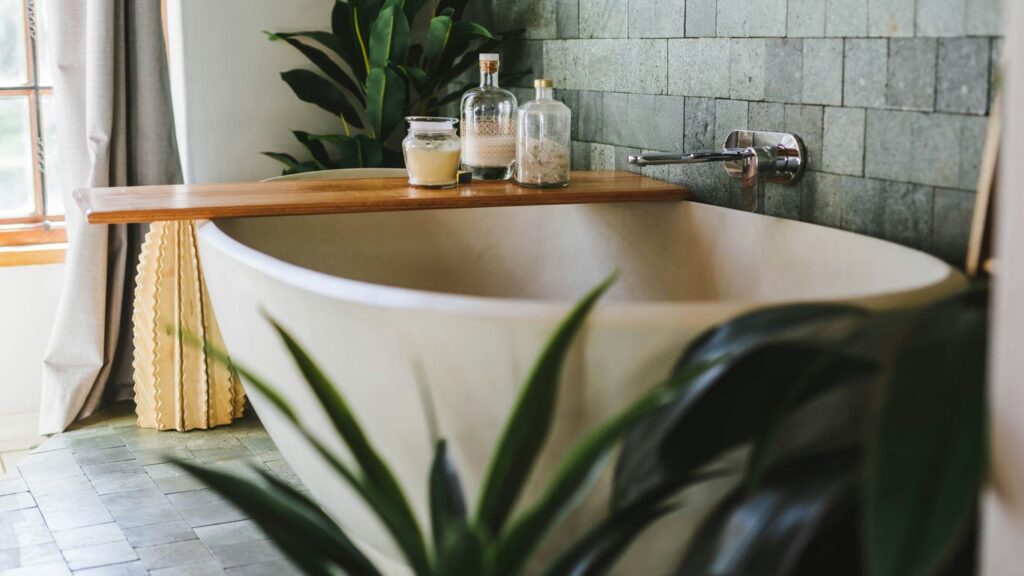
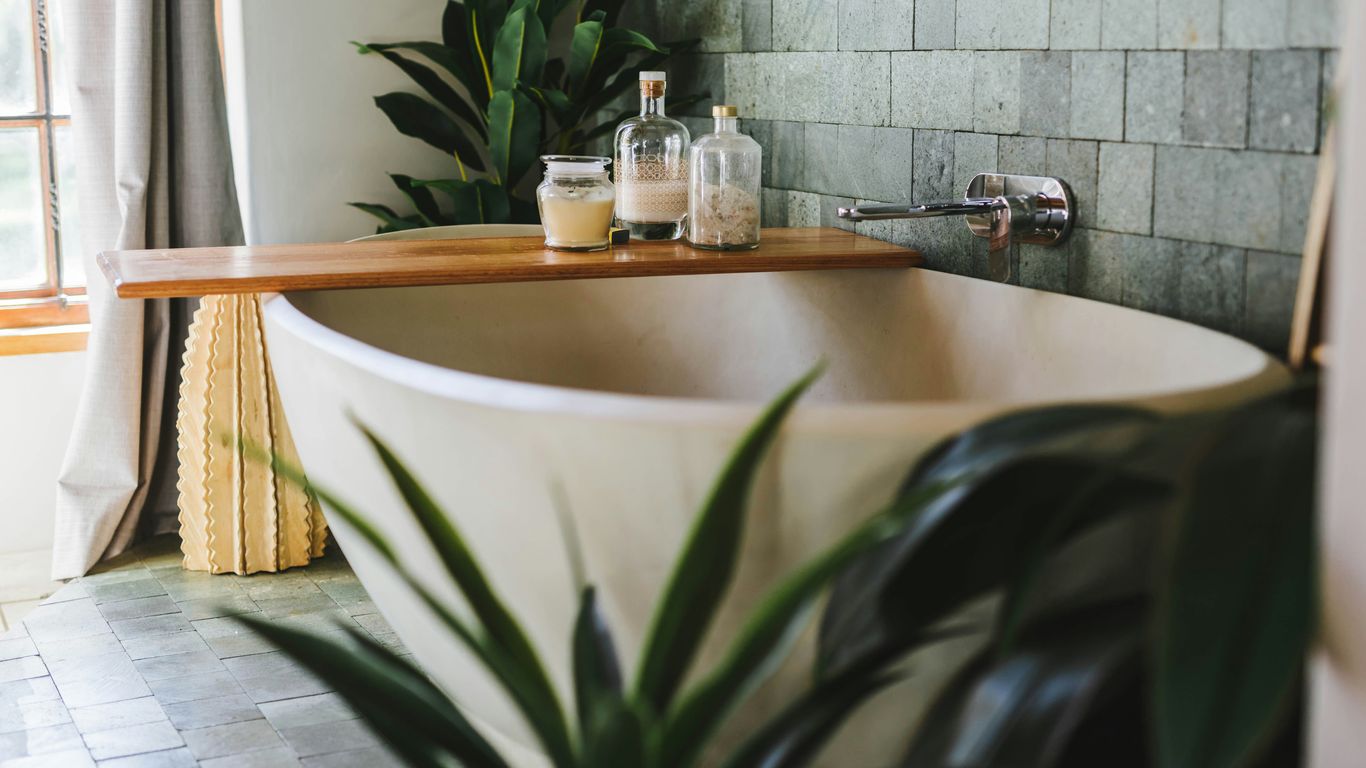
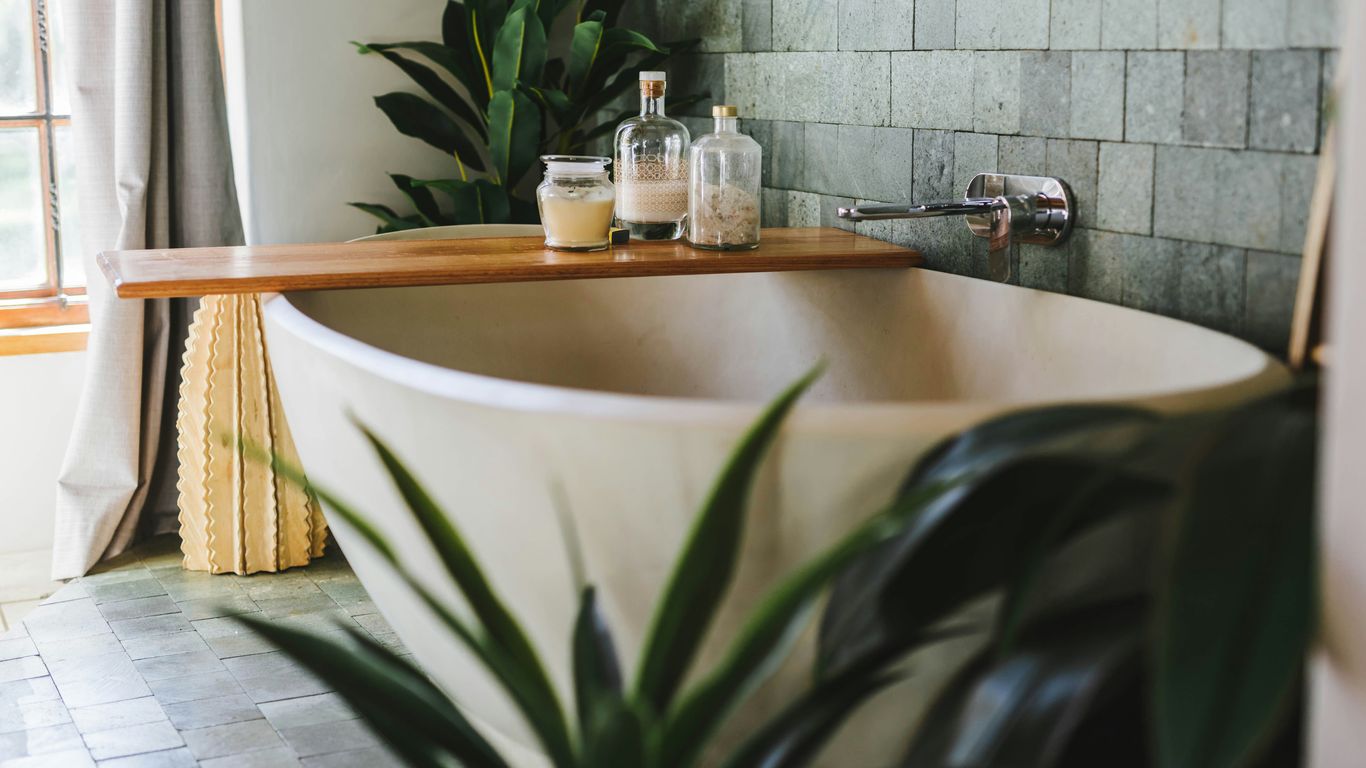
A stone bathtub is a bath made from natural stone, a mineral-based composite or a stone-resin material. It may be carved, cast, formed or assembled, depending on the material and manufacturing method. The result is usually heavier and more visually substantial than a conventional acrylic bath, so it needs to be treated as part of the building specification rather than a late decorative purchase.
The term covers several quite different products. Understanding that distinction early helps you compare appearance, weight, repairability, maintenance and cost on a like-for-like basis.
Natural stone, stone resin and composite alternatives
Natural stone baths are made from quarried material such as marble, granite, travertine or limestone. Each piece has its own colour movement, veining, pores and mineral marks, and those features will not necessarily match a photograph or a small sample exactly. A natural stone bath can be carved from a block or built from shaped sections, depending on the maker and design.
Stone resin is generally formed from mineral content combined with a resin binder. It can offer consistent shaping and a smooth, contemporary surface, while composite alternatives may use different mineral and resin formulations. Ask precisely what is in the product, how it is finished and how local damage can be repaired rather than relying on the word “stone” alone.
How stone baths are made and finished
Manufacturing may involve selecting a block, creating a model or drawing, cutting the outer form, hollowing the interior, refining the edges and applying the specified finish. Cast materials follow a different route, with a mould or former shaping the body before curing and finishing. The production method affects the bath’s wall thickness, tolerances, weight and possible repair approach.
Finishes range from highly polished to honed, brushed or more tactile surfaces. A polished finish brings out colour and movement but can show water marks; a honed surface is quieter and may be more forgiving visually. Confirm the internal and external finish separately if the design allows it.
Common stone types used for bathtubs
Marble is chosen for its veining and sense of luxury, while granite is valued for its hardness and distinctive mineral character. Travertine and limestone create softer, more architectural interiors, although their porosity and surface behaviour need particular attention. Onyx can be striking, but its suitability depends on the design, thickness and handling requirements.
A useful natural stone basin guide can help when comparing the same materials elsewhere in the bathroom. A bath, however, has different structural, ergonomic and water-exposure demands, so basin guidance should inform rather than replace the bath manufacturer’s technical advice.
Freestanding, back-to-wall and built-in designs
Freestanding baths show more of the exterior and allow the material to act as a sculptural centrepiece. Back-to-wall designs can make better use of a tighter room and may simplify the relationship with wall finishes. Built-in versions can be integrated with platforms or surrounding stonework, but they require particularly clear coordination between the bath, waterproofing and access panels.
The outline of the room should guide the shape. A dramatic oval may need generous circulation on every side, whereas a rectangular or back-to-wall bath can work in a more compact plan. Draw the bath at full external dimensions, not just the advertised internal bathing size.
Choosing the right stone for your bathroom
The best stone is not simply the most expensive or dramatic option. It should suit the room’s proportions, the intended atmosphere, the maintenance routine and the practical demands of delivery and installation. Natural variation is part of the decision, so samples should be used to understand tone and texture rather than to promise an identical finished appearance.
Consider the bath alongside the floor, wall surfaces, vanity and fittings. A material that looks calm on its own may become dominant when paired with strongly patterned slabs or dark metalwork.
Marble for distinctive veining and a luxury finish
Marble gives a stone bathtub immediate visual character through veining, tone and crystalline detail. White marble can make a room feel light, while darker or more strongly marked varieties create a deeper focal point. The surface may be polished or honed, and the choice changes both the reflection and the way everyday marks are seen.
Marble is not immune to staining, scratching or etching. A suitable sealer and sensible cleaning routine help, but they do not make the stone maintenance-free. When selecting a piece, discuss the expected variation and inspect larger material references where possible; a small sample cannot show the full movement of a bath-sized surface.
Granite for strength and visual character
Granite has a granular structure and a wide range of colours, from pale neutrals to dense, dark patterns. It is often selected where a harder-wearing visual language is preferred, although the finished bath remains a substantial object that must be handled carefully. Its appearance can change noticeably between batches and quarried blocks.
The finish still matters. Polishing can intensify depth and reflect light, while honing creates a softer appearance. Ask how the chosen granite responds to the proposed finish and whether the internal surface will feel comfortable against the skin.
Travertine and limestone for softer, organic interiors
Travertine and limestone bring warmth through muted tones, open texture and gentle variation. They suit bathrooms built around natural plaster, timber, brushed metal and other quiet materials. Their softer appearance can make a large bath feel less imposing than a highly figured dark stone.
Both materials may be porous, and travertine can contain natural voids or filled areas depending on its preparation. The specification should state the intended filling, surface treatment and maintenance expectations. A carefully considered finish preserves the material’s character without making the bath unnecessarily difficult to live with.
Choosing colour, texture and surface treatment
Choose colour in the actual lighting conditions of the bathroom, including both daylight and artificial light. Warm lighting can deepen beige and cream stones, while strong daylight may reveal undertones that are easy to miss in a showroom. Texture also affects touch, reflection and how visible droplets will be after use.
A clear finish schedule should identify the exterior, rim and interior surfaces. If the project includes matching stone elsewhere, note that “matching” means coordinating material and character rather than guaranteeing identical veining. This is especially relevant when a bath and vanity are made from separate blocks.
Weighing up the advantages and drawbacks
A stone bathtub offers mass, presence and a tactile quality that lighter products rarely replicate. It can hold attention in a large bathroom and give a restrained scheme a strong architectural anchor. Those benefits come with weight, cost, delivery complexity and a need for more deliberate care.
The right question is not whether stone is universally better. It is whether the material’s qualities suit the way the bathroom will be used and maintained.
Thermal performance and bathing comfort
A substantial bath can feel reassuringly solid and may help keep bathing water comfortable as the material warms. The experience depends on wall thickness, room temperature, water temperature and the material itself, so avoid treating thermal performance as a guaranteed number without technical evidence.
Shape matters just as much. A generous internal length, supportive back angle and comfortable rim height will influence a soak more than surface appearance alone. Sit or test a comparable form where possible, especially for a primary bathroom used every day.
Durability, repairability and expected lifespan
Stone can last for many years when correctly selected, supported and maintained. That does not mean it cannot chip, crack, stain or etch. Damage may be repairable, but the result depends on the material, location, colour and skill of the repairer.
Ask about inspection before dispatch, acceptable natural variation and the recommended response to damage. A monolithic stone bath and a cast stone-resin bath may have very different repair routes, even when both are marketed as premium products.
Weight, handling and structural requirements
Weight is the most obvious practical drawback. A stone bathtub may require a structural review, specialist lifting equipment and a delivery plan that accounts for stairs, doorways, corners and finished surfaces. The floor must support not only the empty bath but also the bathwater and occupant.
The following checks should be settled before the order is released:
- Confirm the bath’s packed and unpacked weight with the supplier.
- Have the floor and supporting structure reviewed by the appropriate professional.
- Measure every doorway, turn, lift and corridor along the delivery route.
- Protect finished floors, walls and joinery during movement and positioning.
These checks are simple, but they prevent an attractive design from becoming an installation problem. They also clarify whether temporary removal of doors, glazing or fittings is needed.
Cleaning, staining and long-term maintenance
Stone needs a cleaning routine suited to its mineral composition and finish. Acidic cleaners can etch susceptible stones, while abrasive pads may dull polished surfaces. Soap residue, cosmetics and standing water should be removed before they have time to dry and accumulate.
For a broader discussion of marble selection, sealing and care, see this marble basin maintenance guide. The same principles of product compatibility and prompt drying are useful, although the larger surface area and constant contact with water make a bath’s routine more demanding.
Planning the specification before purchase
A well-made stone bathtub still depends on a clear brief. Record dimensions, material, finish, waste position, overflow arrangement, tap drilling, access assumptions and delivery destination before asking for a final quotation. If the piece is made to order, these details should be reflected in an approved production drawing.
Geoscenic Stone produces made-to-order stone furniture and architectural pieces from approved drawings, with material selection, finishing, inspection, packing and delivery considered for each project. That factory-to-order approach is useful when a bath needs project-specific dimensions or coordinated details, but the exact scope should always be confirmed in the individual quotation.
Taking accurate measurements and checking clearances
Measure the room at finished-floor and finished-wall stage where possible. Note skirtings, boxing, radiators, doors, windows, sanitaryware and any projections that affect the bath’s external footprint. Allow space to clean around the bath and to open doors and drawers without conflict.
Do not rely on nominal length and width alone. Rim thickness, feet or plinths, tap ledges and the curve of the exterior can change the clearance required. A scaled plan and elevation will reveal conflicts earlier than a product photograph.
Confirming bath capacity and ergonomic comfort
Internal dimensions determine whether the bath feels generous or cramped. Check the internal length, usable width, back angle, seat depth and rim height against the people who will use it. A very deep bath may be comfortable for one person but difficult to enter for another.
Capacity should be stated clearly, preferably with an explanation of whether it describes total volume or practical fill level. Factor in hot-water availability and the location of the overflow. Comfort is a combination of geometry, temperature and safe access, not simply litres.
Coordinating waste, overflow and tap positions
Drain and overflow positions must be agreed before fabrication or cutting. Confirm whether the waste is supplied, where the trap will sit and how the connection can be accessed for future maintenance. Wall-mounted, deck-mounted and floor-mounted taps each create different coordination requirements.
A production drawing should show drilling centres and finished edges rather than leaving them to site interpretation. Geoscenic Stone’s made-to-order process includes dimensions, finishes, edges and drillings being confirmed in an approved drawing; that kind of written coordination reduces avoidable uncertainty on site.
Checking structural loading and access routes
Ask a structural professional to assess the finished load, including water and the maximum intended occupancy. The supplier should provide accurate bath weights and packed dimensions, while the project team should verify the route from unloading point to final position.
For an international project, delivery, packing, destination and site access may affect the quotation separately. Do not assume duties, taxes, lifting or installation are included unless the written offer says so. Plan for the actual building, not an idealised delivery route.
Installing a stone bathtub correctly
Installation should be treated as a coordinated trade activity, not simply the final act of placing a bath in a room. The floor, waterproofing, waste, taps, sealants and surrounding finishes all need to work together. A detailed method statement is particularly valuable where the bath is heavy or access is restricted.
Keep the manufacturer’s handling and support instructions available on site. Improvised lifting points or last-minute drilling can damage the bath and may affect the warranty.
Preparing the floor and supporting structure
The finished floor should be level, sound and capable of carrying the specified load. Any plinth, frame or support must be designed for the bath’s actual bearing points rather than assumed from a similar-looking model. Protect waterproofing layers and avoid creating voids where movement could develop.
Dry-fit the support arrangement before final sealing. Check the bath sits evenly, the waste aligns and the rim falls as intended. A small adjustment at this stage is much safer than trying to correct a heavy bath after adhesive or sealant has cured.
Managing delivery, lifting and positioning
Use an experienced delivery and installation team with suitable lifting equipment. Protect corners, rims, floors and adjacent finishes, and agree the route before the bath arrives. A crate may need more clearance than the finished bath, so measure the packed dimensions rather than guessing.
Move slowly and communicate clearly between the lifting team and the site manager. Once positioned, inspect the bath for transport damage before removing all protective material. Photographing the condition at delivery can also help keep the project record complete.
Connecting plumbing without damaging the bath
Plumbing connections should be made without forcing fittings against the stone or over-tightening around drilled openings. Use the specified waste and seals, and leave access for testing and future maintenance where the design allows. The bath should never be used as a substitute for a properly supported pipe run.
Test the waste, overflow and taps before closing access panels or completing adjacent finishes. Check for leaks with the bath both empty and filled to the intended operating level. Any movement or flex should be resolved before the final seal is applied.
Sealing joints and protecting surrounding finishes
Sealant should be compatible with the stone, finish and wet-room system. The joint needs to accommodate the expected movement while presenting a neat, continuous edge. Masking and careful preparation are worthwhile, particularly against pale or porous stone.
Protect the bath during the remaining works with a breathable, non-abrasive covering. Do not allow grout, plaster, solvents or metal tools to sit on the surface. Final cleaning should follow the stone and finish supplier’s instructions rather than a generic bathroom routine.
Caring for and maintaining a stone bath
Maintenance begins with knowing the material and finish. A natural marble bath, a porous travertine bath and a stone-resin bath may need different products and different responses to marks. Keep the care instructions with the project documents and make them available to anyone who cleans the bathroom.
Regular, gentle care is usually more effective than occasional aggressive treatment. The aim is to remove residue before it dries while preserving the intended surface character.
Establishing a suitable cleaning routine
Rinse away soap and bath oils after use, then dry the rim and accessible surfaces with a soft cloth. Use a pH-neutral cleaner approved for the specific material, applied with a non-abrasive cloth or sponge. Avoid leaving bottles, wet textiles or metal objects in constant contact with the stone.
Test any new product in an inconspicuous area first. A cleaner that is safe for ceramic or glass may be unsuitable for marble, limestone or travertine. If the surface becomes dull, cloudy or rough, stop using the product and seek specialist advice.
Preventing limescale, staining and etching
Hard-water deposits are easier to prevent than remove. Drying the bath after use limits mineral build-up, while trays or discreet shelves can keep toiletries away from the rim. Wipe spills promptly, especially coloured oils, cosmetics and bath products.
Do not attack limescale on susceptible stone with vinegar, lemon or other acidic remedies. Etching is a chemical change to the surface, not merely a deposit that can be scrubbed away. The correct descaling approach depends on the stone and should be confirmed before treatment.
Resealing porous natural stone surfaces
Some natural stones benefit from periodic resealing, but the interval depends on porosity, product, finish and frequency of use. Resealing does not make the bath impervious to staining or eliminate the need for cleaning. It provides an additional measure of resistance when correctly applied.
Ask whether the original treatment was a penetrating sealer, topical coating or another system. Reapply only a compatible product and follow preparation, drying and curing requirements carefully. If the surface has a changing sheen or patchy absorption, professional assessment is preferable to repeated DIY applications.
Handling chips, scratches and other damage
Minor marks should be assessed before they are polished or filled. A scratch on a honed surface may be less visible after suitable refinishing, whereas a chip on a polished edge may need colour-matched repair. Cracks, movement or recurring leaks require prompt attention rather than cosmetic treatment.
Keep spare material, finish details and the original drawings where possible. They can help a repairer understand the stone and reproduce the intended edge or surface more accurately. Never assume a household filler will bond properly or remain stable in a wet environment.
Comparing costs and selecting a supplier
The price of a stone bathtub reflects much more than the raw material. Block selection, design complexity, hollowing, wall thickness, finishing, drilling, inspection, packing and transport can all affect the final figure. A quotation should make clear what is included and which costs remain provisional.
Made-to-order work can be valuable for unusual dimensions or coordinated project details, but it requires decisions earlier than buying a standard bath. Compare specifications, not just headline prices.
Understanding material, craftsmanship and finish costs
A rare or visually consistent stone may cost more than a readily available material, while a complex shape can increase cutting and finishing time. Polished interiors, formed rims, unusual edges and multiple finish changes also add labour. Ask whether the quoted stone is selected for a particular visual character or simply described by a broad material name.
Natural stone cannot be priced as though every block were interchangeable. Tone, veining, fissures and mineral marks influence what can be achieved. Geoscenic Stone describes its pieces as factory-to-order, with dimensions, stone choice and finish confirmed for a specific project rather than supplied as interchangeable warehouse stock.
Allowing for delivery, installation and structural work
The bath price is only one part of the project budget. Add packing, delivery, unloading, specialist lifting, structural review, plumbing changes, floor preparation and installation labour where relevant. International projects may also involve destination-specific duties, taxes or handling charges.
Request these items as separate lines when possible. It makes the quotation easier to compare and highlights assumptions before work begins. A low initial figure can become misleading if access equipment or structural alterations appear only after the order is placed.
Checking samples, warranties and technical documents
Ask for material samples, finish descriptions, drawings, packed dimensions, confirmed weights, care instructions and warranty terms. Samples demonstrate a range of colour and texture; they do not guarantee that the finished bath will reproduce one small piece of stone. The drawing should show all critical dimensions and service locations.
Review what the warranty covers, who is responsible for installation and which conditions could invalidate the warranty. Also confirm how transport damage is recorded and how defects or natural characteristics are assessed. Written clarity is more useful than broad assurances.
Questions to ask a stone bathtub manufacturer
A capable supplier should be comfortable discussing both the visual result and the practical route to achieving it. Ask who approves the drawing, when the stone is selected, how the bath is inspected and how it will be packed for the destination. You should also understand the expected tolerances and which site conditions must be ready.
Useful questions include:
- What are the finished and packed dimensions and weights?
- Which stone characteristics may vary between the sample and completed bath?
- What support, access and lifting arrangements are required?
- Which waste, overflow, drilling and finish details are included?
- What cleaning, sealing, repair and warranty guidance is supplied?
The answers should allow your designer, contractor and supplier to work from the same information. If you are ready to discuss a project, you can request a quotation with the dimensions, material preference, finish and delivery destination.
A focused video can help the wider team visualise carving, finishing, packing and installation, but it should supplement rather than replace the project’s technical documents. For a second supplier perspective on monolithic natural-stone construction, this stone bathtub overview is a useful comparison point.
CTA: Discuss Your Project
Share your room dimensions, preferred material, finish and destination with Geoscenic Stone to begin a made-to-order conversation and establish the drawings, quotation and practical requirements for your bath.
Conclusion
A stone bathtub is best specified as a complete project: material, comfort, structure, access, plumbing, finish and maintenance all matter as much as the first impression. When those decisions are recorded clearly and natural variation is treated honestly, the result can be a lasting architectural centrepiece rather than a difficult afterthought.
Frequently Asked Questions
Is a stone bathtub suitable for every bathroom?
Not necessarily. The room must accommodate the bath’s external dimensions, weight, access route, plumbing and required circulation, and the supporting structure should be checked before purchase.
Which is better, natural stone or stone resin?
Neither is universally better. Natural stone offers individual variation and a strong material presence, while stone resin may provide more controlled forming and a consistent surface; compare the specific product, care requirements and installation demands.
Does a stone bath keep water warmer?
A substantial bath may help maintain a comfortable bathing temperature as its material warms, but performance depends on the material, thickness, room conditions, water temperature and bath design.
Can marble bathtubs stain or etch?
Yes. Marble can stain, scratch or etch if exposed to unsuitable products or left with spills and deposits. Appropriate sealing, prompt cleaning and pH-neutral products reduce the risk but do not remove it entirely.
How much clearance is needed around a freestanding bath?
Clearance depends on the bath shape, room layout, cleaning access, tap position and nearby doors or fittings. Draw the complete external footprint and check circulation at full scale before ordering.
Does a stone bathtub need structural reinforcement?
It may. The finished load includes the bath, water and occupant, so a qualified professional should assess the floor or supporting structure using the confirmed bath weight and site conditions.
How should a stone bathtub be cleaned?
Use a soft cloth and a pH-neutral cleaner approved for the particular stone and finish. Rinse and dry the surface regularly, avoid abrasive or acidic products, and follow the supplier’s guidance for sealing and stain treatment.