
Key Takeaways
Filled and unfilled travertine can suit very different rooms and routines. The better choice depends on the look you want, how much texture feels comfortable, and how carefully the surface can be maintained.
- Filled travertine closes the stone’s natural pits for a smoother, more even surface.
- Unfilled travertine keeps those openings visible, giving the material a more rustic character.
- Filled surfaces are generally easier to wipe clean in busy or moisture-prone areas.
- Unfilled travertine can work beautifully where texture and weathered character matter most.
- Sealing, suitable cleaning products and careful installation remain important with either finish.
What filled and unfilled travertine mean
Travertine is naturally porous, so the difference between filled and unfilled describes what happens to its small holes and voids after the stone is cut. Filling changes the surface profile, while the stone’s colour, mineral movement and broader character remain natural. It is also separate from the finishing process used to create a honed, polished or brushed surface.
How natural pores form in travertine
Travertine forms when mineral-rich water deposits calcium carbonate over time. Escaping gases, plant material and changing flows can leave small cavities and channels within the stone. Once cut into tiles or slabs, these openings become part of the visible surface, varying in size and frequency from piece to piece.
That variation is not necessarily a flaw. It is one reason two pieces from the same material can differ in tone, figuring and texture. A useful reference for how these qualities carry into larger objects is this guide to travertine furniture, which also considers the effect of filled and unfilled surfaces.
What filled travertine looks and feels like
Filled travertine has its visible pits packed with a cement-based filler, resin or another suitable material before the surface is finished. The result is usually flatter to the touch and more visually continuous, although the filler may contrast subtly with the surrounding stone. Honing can then give it a soft, matte appearance rather than a reflective one.
The surface still reads as natural stone, but it feels more settled under bare feet and is less likely to catch crumbs, dust or water in open cavities. The precise result depends on the stone, filler colour and finish selected.
What unfilled travertine looks and feels like
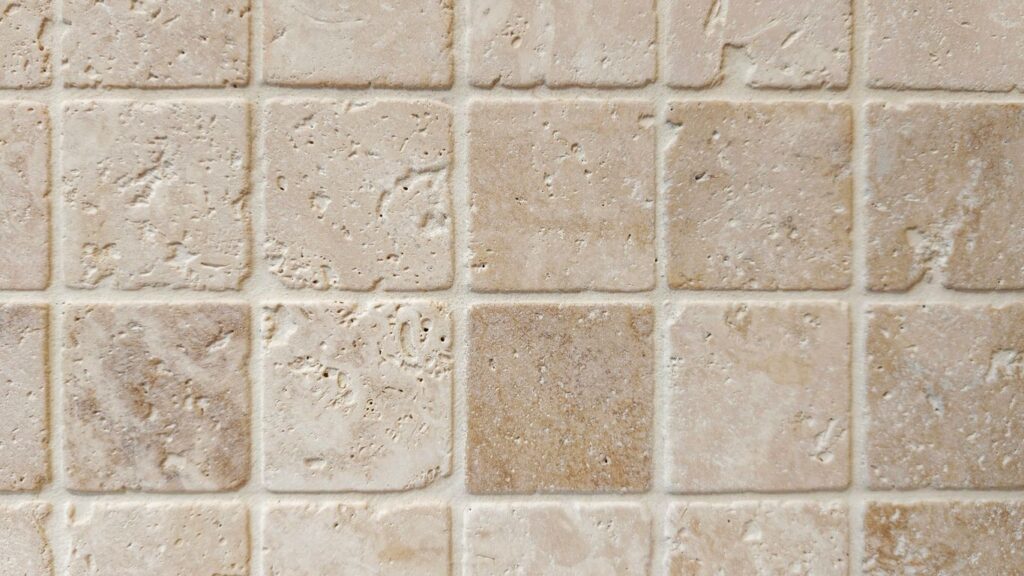
Unfilled travertine leaves the natural openings open and visible. These pits create a tactile surface with more shadow, variation and a relaxed, weathered quality. They may be shallow and delicate or more pronounced, so viewing representative material before ordering is sensible.
This finish is often chosen when the irregularity is part of the design rather than something to disguise. It can add warmth to a rustic interior or connect outdoor paving with a garden setting, but it asks more of the cleaning routine.
How filling differs from honing, polishing and brushing
Filling deals with the holes; honing, polishing and brushing deal mainly with the surface texture and sheen. Honing smooths the face to a low-sheen finish, polishing creates more reflectivity, and brushing develops a textured surface by working the stone mechanically. A tile can therefore be filled and honed, or unfilled and brushed, depending on the intended result.
Keeping these terms separate makes samples easier to compare. When reviewing a specification, ask for the stone type, whether the voids are filled, the surface finish, edge treatment and expected variation rather than relying on the word “travertine” alone.
The advantages and drawbacks of filled travertine
Filled travertine is often selected where a quieter surface and straightforward daily care matter. It does not make natural stone maintenance-free, and it does not remove variation between pieces. It does, however, change how the surface feels and how easily dirt can settle into its smallest recesses.
The balance is especially relevant in rooms with frequent foot traffic or repeated contact with water. A filled finish may look more tailored, while an unfilled finish can feel more visibly geological.
Creating a smoother, more uniform surface
Filling closes the most obvious openings, creating a continuous plane that is comfortable to walk across and easier to furnish around. It can also make grout lines and tile layout appear more deliberate because the face of each tile has fewer dark interruptions.
The word “uniform” should be understood carefully. Filled travertine may be more even in texture, but natural differences in colour, veining and mineral marks remain. A smoother surface is not identical stone.
Improving practicality in busy areas
In a hallway, kitchen or hospitality setting, a surface that does not snag cloths or hold loose debris in open pits can be more convenient. Chairs, bare feet and cleaning tools also move more easily across a filled and suitably honed face.
This is a practical advantage rather than a promise of superior performance in every situation. Tile thickness, installation quality, sealing and the nature of traffic all affect the finished result.
Reducing dirt and moisture collection
Closed voids give spills and everyday dirt fewer places to settle. Wiping can therefore be more direct, particularly around kitchen preparation areas and bathroom walls. The surface still needs prompt attention to spills and a cleaner appropriate for natural stone, since filling does not make travertine immune to staining or chemical damage.
For wet rooms, the complete specification matters: drainage, falls, grout, slip characteristics and the maintenance plan should be considered alongside the finish.
Limitations for a more rustic or natural look
Filled travertine can appear more refined than a client wants, particularly when the design depends on pronounced pits and a weathered surface. A contrasting filler may also be visible, creating a regular pattern that feels less raw.
It is worth comparing full-size samples in the intended light. Small sample pieces can understate the movement and variation that will become visible across a floor, wall or made-to-order architectural piece.
The advantages and drawbacks of unfilled travertine
Unfilled travertine keeps more of the stone’s original surface character in view. Its open pores can create depth and a pleasing irregular rhythm, but they also make the material less forgiving of neglect. The choice is therefore aesthetic and practical at the same time.
Outdoor areas, feature walls and carefully considered dry applications may benefit from that openness. Surfaces exposed to standing water, food residue or heavy daily use need a more cautious assessment.
Preserving the stone’s natural character
Leaving the voids open allows the stone to speak more clearly through its pits, tonal shifts and tactile variation. It is a strong choice when the design aims for an honest, elemental material rather than a highly controlled surface.
The same quality means that each tile may feel slightly different. For a wider discussion of selection and care, a travertine side table guide offers a useful reminder that finish, proportions and maintenance should be considered together.
Achieving a textured, weathered appearance
Unfilled surfaces can soften a new installation, giving it a timeworn quality from the outset. Brushed or tumbled treatments can emphasise this effect, especially when the edges and surface show gentle irregularity.
That look works well with natural timber, limewashed walls and outdoor planting. It can feel less at home in a sharply minimal scheme where every plane is expected to read as crisp and continuous.
The effect on comfort and everyday use
Texture is subjective. Some people enjoy the slight variation beneath bare feet; others find open pits distracting or uncomfortable, especially on a floor used frequently. Furniture legs, loose objects and cleaning cloths can also interact differently with a more open surface.
Before committing, walk across a sample or mock-up if the material will be used underfoot. A visual preference can change once the surface is encountered every day.
Cleaning and sealing considerations
Open pores can collect dust, soap residue and food particles if the routine is too casual. Regular sweeping, gentle washing and careful drying help, while harsh acidic products may etch calcium-based stone. Sealing can reduce absorption, but it does not turn open cavities into a completely closed surface.
For a project team, the following points are worth confirming before installation:
- whether the voids are intended to remain open after laying;
- which sealer is suitable for the selected finish;
- how often the surface should be cleaned and resealed;
- whether standing water or food preparation makes the finish unsuitable.
These checks keep the rustic appearance from becoming an unexpected maintenance burden. They also help distinguish an intentional unfilled specification from an unfinished or poorly prepared installation.
Choosing the right finish for each room
There is no single answer to the question of travertine filled vs unfilled across an entire property. A finish that feels right on a feature wall may be awkward on a shower floor, while outdoor paving has different demands from a kitchen worktop. Consider water, traffic, touch, cleaning access and the visual language of the room together.
The table below is a starting point rather than a substitute for reviewing the actual stone and installation details.
| Room or application | Filled travertine | Unfilled travertine |
|---|---|---|
| Bathroom wall | Smooth, calmer and easier to wipe | Textured, decorative and more open in character |
| Shower or wet floor | Often easier to maintain, subject to slip assessment | Can retain residue in open pits |
| Kitchen or hallway | Practical where frequent cleaning is expected | Best where texture outweighs cleaning convenience |
| Patio or terrace | More even underfoot | Natural, weathered and visually relaxed |
The right answer may also differ within one room. A designer might use a filled floor for comfort and a carefully sealed unfilled accent wall for contrast, provided the junctions and cleaning expectations are clear.
Bathrooms, showers and wet rooms
Bathrooms demand particular care because water, soap and minerals repeatedly meet the stone. Filled travertine is often easier to wipe across, especially on walls and backsplashes, but the selected surface still needs suitable slip characteristics where it will be walked on when wet.
Open pits on a shower floor can be difficult to keep clear, particularly where water drains slowly. Unfilled material may be more appropriate as a dry decorative element than as the default finish for a heavily used wet floor.
Kitchens, hallways and living areas
For kitchens and hallways, filled travertine can offer a calmer surface that copes more comfortably with crumbs, splashes and frequent movement. In living areas, the decision can be more personal: an unfilled finish may bring a relaxed, tactile quality that suits a softer interior.
Furniture should be considered too. A travertine table or plinth will be touched, wiped and viewed at close range, so the relationship between the finish and edge profile matters. Natural stone furniture is also discussed in this travertine table guide, including the practical implications of porosity and surface choice.
Patios, terraces and outdoor paving
Outdoor paving benefits from a finish that suits the local exposure, drainage and expected use. Unfilled travertine can give terraces and garden paths a convincingly natural appearance, while texture may offer useful traction, though slip performance should be assessed for the specific product and conditions.
Filled surfaces may provide a neater visual field, but dirt, weathering and moss can still affect the installation. The sub-base, jointing, falls and ongoing cleaning are just as important as the pores in the stone.
Walls, splashbacks and decorative features
Walls and vertical surfaces usually experience less abrasion than floors, which can make either finish viable. An unfilled surface can create expressive shadow and depth behind a basin or fireplace, while filled travertine gives a more composed backdrop in a kitchen or reception area.
At this scale, lighting changes the reading of the stone. Side lighting will emphasise pits and texture; softer, frontal light will make a filled and honed surface appear more even. A project may also include adjacent objects made to a drawing, which is where made-to-order stone pieces can help coordinate dimensions and finish decisions.
How the finish affects installation and maintenance
Finish selection should happen before final detailing, not after the tiles or slabs have arrived. The open or closed surface affects handling, grout appearance, sealing and the way edges meet. For commissioned stonework, dimensions, finish, edges and drillings should be confirmed in the approved production drawing before fabrication.
Geoscenic Stone produces made-to-order furniture and architectural pieces in natural stone, with material selection, cutting, finishing, inspection, packing and delivery handled for individual projects. That factory-to-order approach makes it particularly useful to settle the finish alongside the drawing rather than treating it as a last-minute visual choice.
Preparing and laying filled and unfilled tiles
The substrate should be stable, suitably prepared and able to support the selected stone. Tiles need to be checked for shade, calibre, surface variation and intended orientation before they are fixed. Unfilled pieces may require extra attention to voids and edges, while filled pieces should still be handled carefully to avoid chipping the filler.
Dry-laying a representative area can reveal how the natural movement works across the room. It also gives the installer and client an opportunity to agree on acceptable variation before adhesive and grout make changes difficult.
Choosing the right grout colour and joint style
Grout can either blend with the stone or create a visible grid. A close colour often supports a continuous appearance, while contrast can emphasise the individual tile format and make the layout more graphic. With unfilled travertine, the joint should be selected alongside the open pores so the two do not compete visually.
Joint width, edge shape and tile tolerance also affect the result. The smallest possible joint is not always the best answer; a consistent, workable joint can accommodate natural variation more gracefully.
Sealing travertine before and after installation
Some stone and grout systems benefit from protection before grouting, especially where porous faces may absorb colour. After installation, the final sealer should be chosen for the room, finish and expected exposure. Always follow the product instructions and allow the surface to dry properly before sealing.
Sealing reduces absorption but is not a force field against stains, etching or standing water. A maintenance schedule should state what to use, what to avoid and when the protection may need checking again.
Cleaning products and routines to avoid damage
Use a soft brush or dust mop for loose debris, then a pH-neutral cleaner suitable for natural stone when damp cleaning is needed. Wipe spills promptly and avoid abrasive pads, strong acids and untested household chemicals. If the surface changes colour or develops dull marks, identify the cause before trying a more aggressive treatment.
For broader context on comparing natural stone choices, this marble and travertine comparison can help frame differences in appearance, routine and room suitability. Product suitability should still be checked against the actual finish and installation.
Filled vs unfilled travertine: which should you choose?
The choice is best made by weighing appearance against use rather than by treating one finish as universally better. Filled travertine tends towards a smoother, more edited expression; unfilled travertine preserves more visible evidence of how the stone formed. Both can be successful when specified honestly and maintained appropriately.
For a custom project, compare physical samples, discuss the room’s routine and allow for natural variation in the approved material. Geoscenic Stone can produce made-to-order travertine furniture and architectural pieces to an approved drawing, with the individual quotation accounting for the piece, weight, packing, destination, site access and any installation requirements.
Match the finish to your preferred design style
Choose filled travertine when you want a quieter plane, a more tailored appearance and fewer visible interruptions across the surface. Choose unfilled travertine when open pores, texture and a weathered character are central to the design. The decision should support the rest of the room rather than follow a general rule about what is fashionable.
If the project includes several stone elements, assess them together. A dining surface, basin, wall panel or plinth may need a different tactile quality from the floor around it.
Consider slip resistance, texture and comfort
A finish that looks beautiful in a photograph may feel different underfoot or behave differently when wet. Consider bare-foot comfort, cleaning tools, furniture movement and the likelihood of standing water. Ask for technical information where slip resistance is a safety concern, rather than assuming that visible texture alone provides a reliable rating.
This is also where a small sample can mislead. A larger mock-up gives a better impression of texture, reflection and how the surface responds to the room’s light.
Balance appearance with maintenance requirements
Filled travertine often reduces the effort needed to clear small recesses, while unfilled travertine may reward a household or venue willing to clean more carefully. Neither option removes the need for sealing and suitable products. The most durable choice is often the one that matches the actual cleaning habits of the people using the space.
Keep the care instructions with the project information. If the stone is part of a made-to-order piece, record the finish, dimensions and maintenance requirements together so future cleaning or repair work is based on the original specification.
When a combination of both finishes can work
Using both finishes can give a project depth without forcing every surface to perform in the same way. Filled travertine might suit a frequently wiped vanity top or interior floor, while unfilled material could appear on a sheltered feature wall or low-contact decorative element.
The transition should feel intentional. Keep colour, scale and joint details connected, and make sure the maintenance expectations are clear wherever the two finishes meet. For specialist planning, you can request a quote with the intended application, dimensions and finish preferences.
CTA: Plan Your Stone Project
Discuss your material, dimensions and finish requirements with Geoscenic Stone to develop a considered quotation for a made-to-order travertine piece or architectural element.
Conclusion
Filled and unfilled travertine offer two different ways to express the same naturally varied stone: one more even and practical, the other more open and tactile. Compare samples in context, consider the room’s moisture and traffic, and confirm sealing and care before choosing the finish.
Frequently Asked Questions
Is filled travertine better than unfilled travertine?
Neither is automatically better. Filled travertine is usually easier to wipe and feels smoother, while unfilled travertine preserves more visible texture and natural character.
Can unfilled travertine be used in a bathroom?
It can be used in some bathroom applications, particularly on suitable decorative or dry areas, but open pits may collect soap and mineral residue. Wet floors require careful assessment of drainage, cleaning and slip performance.
Does filling travertine change its colour?
The filler can affect how the pits are seen and may create a subtle contrast with the surrounding stone. The stone itself can still show natural differences in tone, movement and mineral marks.
Is filled travertine easier to clean?
Generally, a filled surface gives dirt and moisture fewer open recesses to settle into. It still needs a suitable stone cleaner, prompt spill care and periodic attention to sealing.
Does unfilled travertine need sealing?
Usually, some form of appropriate protection is considered, but the correct product depends on the stone, finish and location. Sealing reduces absorption rather than closing every natural void.
Can filled and unfilled travertine be used in the same project?
Yes. Combining them can create contrast, provided the finishes are coordinated in colour, scale and detailing and each area has realistic maintenance expectations.
What should be checked before ordering travertine?
Confirm the intended finish, dimensions, thickness, edge treatment, grout approach, sealing requirements and acceptable natural variation. A representative sample or approved drawing can help align expectations before installation or fabrication.