
Key Takeaways
An onyx basin can bring unusual depth and light into a bathroom, but it rewards careful specification and measured expectations.
- Translucency, veining and colour vary considerably between pieces of onyx.
- The basin format, dimensions and support structure should be decided together.
- Moisture, acids, impact and thermal movement all influence long-term performance.
- A full slab review and approved production drawing reduce avoidable surprises.
- Gentle cleaning, sensible sealing and prompt repairs help preserve the stone.
What makes an onyx basin distinctive
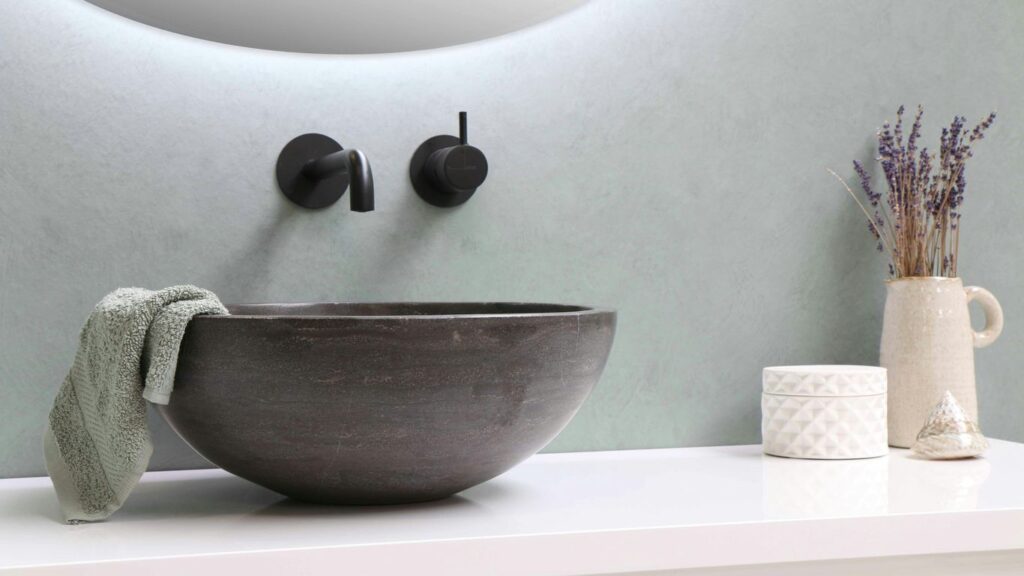
Onyx is chosen for its visual character as much as for its practical role as a washbasin. Light can pass through some areas of the stone, revealing layers, clouds and mineral movement that remain hidden in an opaque material. That quality makes each onyx basin highly individual, so the stone should be assessed as a whole rather than judged from a small sample.
How onyx forms and differs from marble
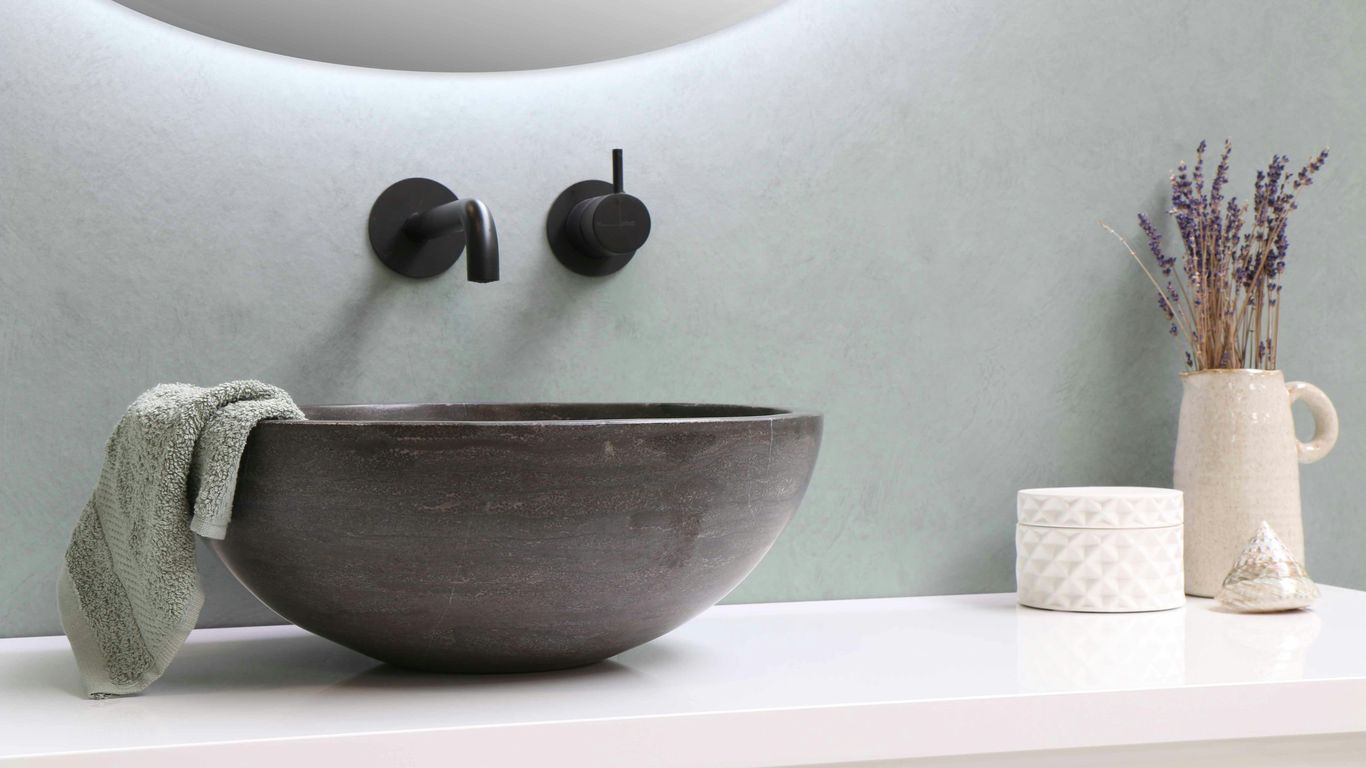
Onyx commonly forms through mineral-rich deposits that build up in bands or layers, giving it a more visibly stratified appearance than many marbles. Marble is also a natural stone with considerable variation, but its crystalline structure and veining usually read differently when viewed under light. The distinction matters less as a naming exercise than as a specification issue: the stone’s structure, thickness and proposed finish all need to suit the basin design.
For a useful comparison of natural stone basin formats and materials, see this guide to stone wash basins. It is a helpful starting point when deciding whether the visual effect of onyx is appropriate for the wider bathroom scheme.
Why translucency varies between slabs and products
Translucency is not an on-or-off property. It can change with the stone’s density, colour, mineral content, thickness and the direction of the light source. A pale, relatively clear area may glow strongly, while a denser vein or inclusion may remain almost opaque.
The fabrication method also affects the result. A carved block, a basin cut from a slab and a thinner panel intended for illumination will each present the material differently. For that reason, a finished sample or a carefully lit section of the selected stone is more informative than a generic photograph.
The effect of veining, colour and inclusions
Veins can run across the bowl, gather around the rim or become a quiet background detail, depending on the cutting layout. Warm honey, cream, green, grey and darker tones can produce very different atmospheres, even when the basin profile is identical. Small mineral marks, cloudy patches and changes in density are part of the stone’s natural character rather than evidence of a uniform manufactured surface.
When reviewing an onyx basin, ask to see the intended material and the proposed orientation. The most compelling layout is not always the one with the least variation; it is the one that gives the pattern a deliberate relationship to the room.
How lighting changes the basin’s appearance
Daylight tends to reveal the full range of colour and movement, while warm artificial light can deepen amber, rose or cream tones. A polished surface may reflect the room around it, whereas a honed surface gives a quieter, softer reading. The basin should therefore be viewed under the lighting conditions it will actually experience.
Backlighting can be particularly effective, but it should be designed rather than improvised. The light needs to be even enough to avoid bright spots, and access for future maintenance should be considered from the beginning.
Choosing the right onyx basin for a project
The best onyx basin is not necessarily the most dramatic one. It must fit the room, the users, the vanity or wall construction and the level of care that the project can realistically support. Residential powder rooms often allow more freedom than a heavily used hotel or restaurant bathroom, although a carefully specified stone piece can work in either setting when its limitations are understood.
Vessel, inset and wall-mounted basin formats
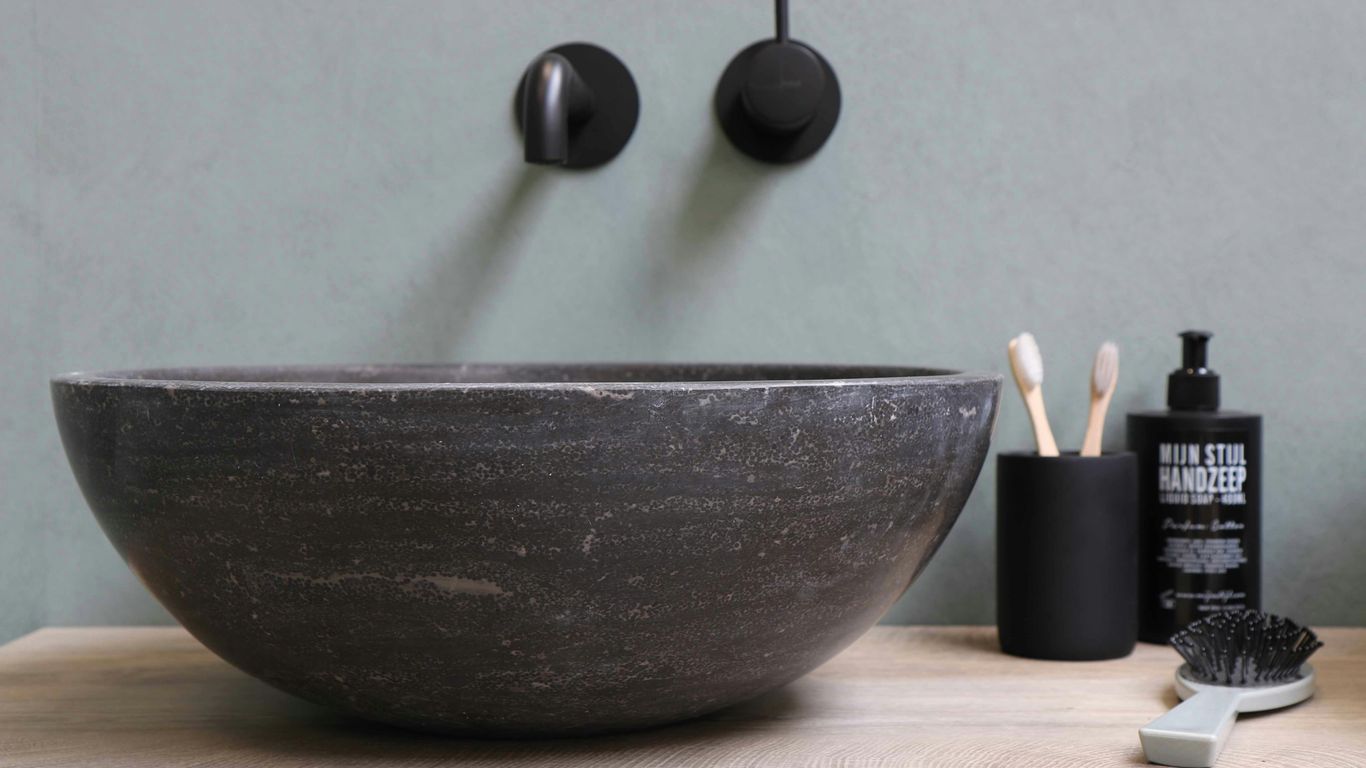
A vessel basin places the stone visibly above the counter and makes the rim and exterior part of the composition. An inset basin gives a more integrated appearance, but it requires accurate coordination between the stone, countertop and waste connection. A wall-mounted format can keep the floor visually clear, though the wall and concealed support must be designed for the basin’s load.
The choice should follow the room’s architecture, not just a preferred image. This overview of marble basin design offers a useful parallel for comparing vessel, inset and integrated arrangements, including drainage and fitting coordination.
Matching basin dimensions to the room and users
Width, depth and height should be tested against the vanity, tap position, mirror and circulation space. A basin that looks generous in a drawing may feel cramped if the tap projects too far into the bowl, while a deep bowl may be awkward for children or users with limited reach. Confirm the usable internal dimensions as well as the overall external size.
For made-to-measure work, the production drawing should show the rim, bowl, waste opening, tap drilling and all critical reference points. This is where aesthetic intent becomes a buildable object.
Selecting a colour palette for residential and hospitality interiors
In a private bathroom, the stone can echo timber, plaster, metal or painted joinery without needing to match every surface. In hospitality interiors, repetition and lighting deserve closer attention: a distinctive basin may be used as a focal point, while quieter pieces may be preferable across multiple rooms. Colour should be assessed under the actual finish and light level rather than selected from a screen.
A restrained surrounding palette often allows the onyx to carry the visual interest. Conversely, a strongly veined basin may need calmer wall and floor materials so that the room does not become visually restless.
Balancing sculptural impact with everyday practicality
Sculptural form is valuable when it still permits comfortable hand washing, sensible splash control and straightforward cleaning. Highly undercut rims, very shallow bowls and delicate projections can make a piece harder to use or repair. Practical detailing protects the design intent by allowing the basin to remain attractive after regular use.
Before approval, consider the following questions:
- Can the user reach the tap and waste comfortably?
- Will water drain without collecting around the rim or wall?
- Is the supporting surface designed for the finished weight?
- Can the basin be cleaned without harsh chemicals?
These checks do not remove the expressive quality of onyx. They simply make sure the object belongs to the room as a working fixture, not only as a photographed feature.
Understanding onyx performance in a bathroom
Onyx can perform well in a bathroom when the design, finish and care routine are aligned with the material. It is not an indestructible surface, and its sensitivity to moisture, acids and impact should be discussed before ordering. The right question is not whether onyx has limitations, but whether those limitations are acceptable for the intended use.
Porosity, staining and exposure to moisture
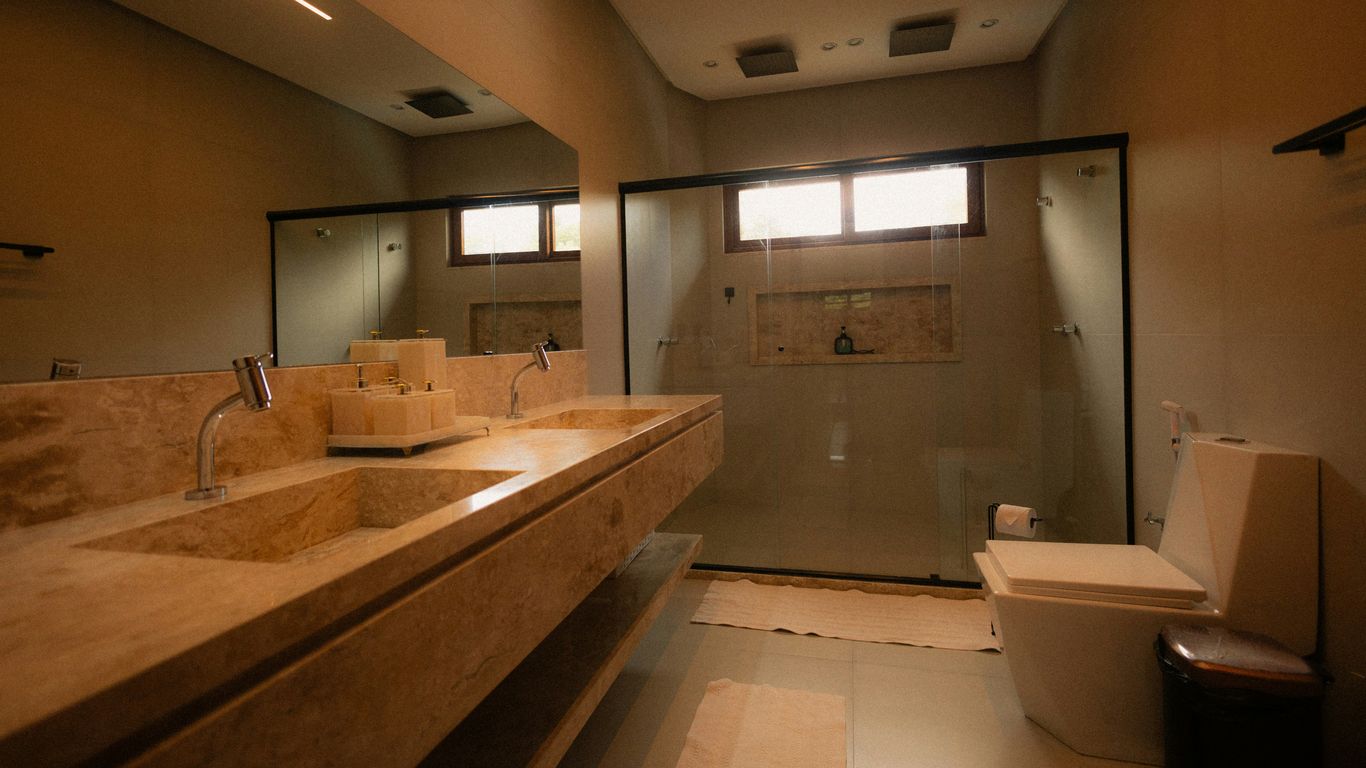
Natural stone can absorb liquids to varying degrees, particularly where the surface is porous or the finish is matt. Standing water, cosmetics, coloured toiletries and cleaning products may leave marks if they are allowed to remain. Good falls to the waste, a sensible rim detail and regular drying all reduce exposure.
Sealing may help slow absorption, but it does not make the stone impervious. The chosen sealer should be compatible with the finish and renewed according to the fabricator’s advice rather than an arbitrary calendar.
Resistance to scratching, impact and thermal shock
An onyx basin can be scratched by abrasive particles and damaged by a hard object dropped onto a thin edge. Sudden temperature changes may also place stress on stone, especially where there are existing fissures, narrow projections or changes in thickness. Avoid abrasive pads, strong acids and placing very hot objects directly on the surface.
The risk is usually manageable in a carefully supervised residential bathroom. It deserves more scrutiny in spaces where luggage, cleaning equipment or frequent refurbishment may increase the chance of impact.
How basin shape and thickness affect durability
A broad, well-supported rim generally gives more tolerance than a fine projecting edge. Curved transitions can reduce abrupt stress points, while generous material around a waste opening may be preferable to a highly cut-away detail. Thickness should be considered alongside span, support, bowl depth and the stone’s natural character.
There is no single ideal thickness for every onyx basin. The fabricator should review the selected material, geometry and support arrangement together, with any reinforcement or concealed structure shown clearly in the drawings.
When onyx may be unsuitable for high-traffic settings
A busy public washroom may demand a surface that tolerates rougher cleaning, repeated impacts and less controlled use. Onyx may still be suitable for a feature washroom, private suite or carefully managed hospitality setting, but it should not be selected solely because it looks luxurious.
Project teams should compare the expected use with the maintenance resources available. For broader context on stone selection, limitations and humid bathroom conditions, see this guide to stone basins in Singapore.
Specifying the stone and fabrication details
A successful onyx basin begins before cutting starts. The brief should describe the stone, dimensions, finish, edges, drainage, tap holes, support and inspection points clearly enough for several parties to work from the same information. This is especially important for made-to-order pieces, where the selected material is prepared for one project rather than taken from interchangeable stock.
Questions to ask about the onyx slab or block
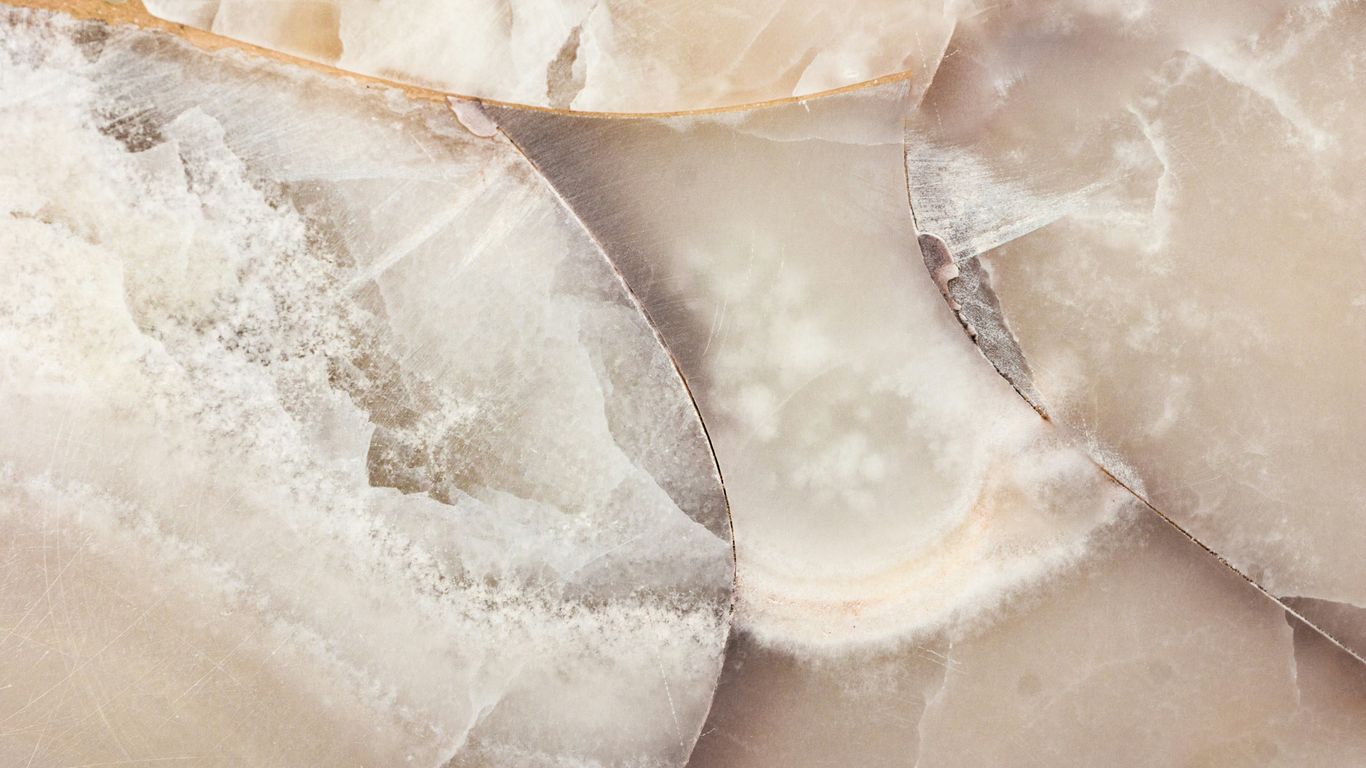
Ask where the stone will be selected, whether the full slab or block can be reviewed, and how its veining will be oriented in the finished basin. Confirm the usable dimensions after trimming, as well as visible fissures, mineral marks, repaired areas and changes in density. If translucency is central to the concept, request a test under a comparable light source.
The review should include the areas that will actually be visible, not only the most attractive part of the raw material. A clear record of the approved stone helps prevent confusion later.
Checking consistency across samples and finished pieces
A small sample can establish a general colour family but cannot represent the exact movement of a natural stone. If several basins are required, confirm whether they will come from the same slab or from separate material selected to sit within an agreed palette. Some variation should be expected; the objective is visual coherence, not artificial uniformity.
Geoscenic Stone describes a factory-to-order process in which natural stone is selected for its character before cutting, shaping, finishing, inspection and packing. That sequence is useful to keep in mind when reviewing approvals and delivery expectations for a bespoke basin.
Reviewing edges, drainage and overflow requirements
The drawing should identify the edge profile, visible thickness, internal bowl transitions, waste outlet and any overflow arrangement. Drainage depends on the fall, outlet position and compatibility with the selected waste fitting, so it should be coordinated rather than left to site improvisation.
A practical checklist might include:
- Finished overall dimensions and tolerances
- Bowl depth, waste position and drainage falls
- Edge profile, radius and visible thickness
- Tap holes, overflow details and access requirements
Once these items are confirmed, the drawing becomes a useful reference for fabrication, installation and inspection. It also makes any later change easier to identify and cost.
Coordinating supports, taps and waste fittings
The basin, vanity, brackets and plumbing need to be treated as one assembly. Tap reach, wall build-up, concealed pipework and access panels can all affect the final position. A wall-mounted basin may need a support frame that is hidden after installation but still accessible during construction.
The same principle applies to delivery. Weight, packing, site access, lift capacity and handling routes should be considered before the piece leaves the factory. These practical details are part of the specification, not an afterthought.
Planning lighting and installation
Lighting and installation determine whether the finished basin feels calm and intentional or difficult to maintain. The stone may have been selected months earlier, but its final appearance depends on the room’s light, surrounding surfaces and the accuracy of the installation. Coordination between designer, fabricator, plumber, electrician and installer is therefore essential.
Using backlighting to enhance translucency
Backlighting works best when the stone has enough variation to transmit light and the source can be distributed evenly behind it. Hot spots, visible wiring and uneven gaps can distract from the natural pattern. A mock-up or sample test is worthwhile where illumination is a central part of the design.
The light should also be serviceable. Drivers, transformers and access points need to be located where they can be inspected without dismantling the basin or damaging finished surfaces.
Allowing for access, ventilation and electrical safety
Any concealed electrical component near a wet area must be specified and installed in accordance with applicable regulations. Ventilation matters too: persistent condensation and trapped moisture can affect both the room and the supporting cabinetry. Leave enough access for plumbing connections, cleaning and future inspection.
Do not rely on the stone to conceal unresolved services. A beautiful rim cannot compensate for an inaccessible waste connection or an electrical component placed where maintenance becomes unsafe.
Supporting the basin and managing its weight
Natural stone is heavy, and a basin’s load is concentrated through its supports and connections. Wall construction, brackets, cabinetry and countertop substrates should be checked before fabrication. A professional installer should confirm how the piece will be lifted, positioned and protected during the final stages.
This is one area where a freestanding stone basin guide can offer useful design context, particularly around height, proportions, support and specialist installation, even when the chosen basin is not freestanding.
Confirming tolerances before fabrication and delivery
Dimensions should be checked against the finished wall, floor, vanity and service positions, not only the design intent. Allow for tile build-up, plaster, sealant joints and reasonable fabrication tolerances. Delivery packaging should protect corners, rims and polished surfaces while still allowing the piece to be unpacked safely on site.
The final inspection should compare the delivered basin with the approved drawing and the agreed material character. Natural variation is expected, but dimensional or fabrication issues should be identified before installation proceeds.
Caring for an onyx basin over time
An onyx basin is easiest to live with when care is simple, consistent and proportionate to the material. Daily habits usually matter more than occasional intensive treatment. Wipe away standing water and spills, use a soft cloth, and treat the surface as natural stone rather than as a chemically impervious ceramic fixture.
Choosing suitable cleaners and maintenance products
Use a pH-neutral cleaner intended for natural stone, following the product directions and the fabricator’s advice. Avoid abrasive powders, scouring pads, bleach-heavy products and acidic cleaners unless a stone-care professional has specifically approved them. Test any unfamiliar product in an inconspicuous area first.
The finish matters. A polished surface, honed surface and textured detail may respond differently to cleaning and local wear, so the care instructions should relate to the actual basin rather than a generic label.
Removing water marks, soap residue and spills
Fresh spills are generally easier to remove than dried deposits. Blot rather than rub when dealing with coloured liquids, then clean gently and dry the area. Soap residue can often be reduced through regular wiping, while persistent mineral deposits may require specialist advice because acidic descalers can etch vulnerable stone.
Do not scrape deposits with metal tools. If a mark remains after gentle cleaning, identify whether it is residue, staining, etching or a change in the surface before choosing a treatment.
Sealing requirements and realistic maintenance schedules
A sealer can provide additional time to wipe away moisture, but it does not prevent all staining or replace ordinary care. The suitable interval depends on the stone, finish, use and product applied. Rather than promising a fixed schedule, arrange periodic checks and renew the treatment when the surface shows reduced resistance to absorption.
Maintenance should be explained to everyone who uses or cleans the bathroom. A short written care note can prevent well-intentioned damage caused by an unsuitable descaler or abrasive cloth.
Repairing etching, chips and surface damage responsibly
Minor etching may be improved by refinishing, while chips or damaged edges may require a stone specialist to fill, reshape and polish the affected area. Repairs can reduce the visibility of damage, but they may not recreate the original pattern perfectly. The repair method should respect the stone’s structure and the finish around it.
If a basin develops a crack, movement or a loose support, stop using it until the cause has been assessed. Cosmetic treatment should never be used to conceal a structural concern.
Conclusion
An onyx basin is best understood as a carefully coordinated piece of natural stone rather than a standard bathroom fitting: its translucency and variation create the appeal, while its dimensions, support, lighting, fabrication and care determine whether that appeal lasts. Review the material in context, approve the drawing in detail and plan installation before production begins; when the specification is ready, request a quotation for a project-specific discussion.
Frequently Asked Questions
Is an onyx basin suitable for everyday use?
It can be suitable for everyday use when the design, finish, installation and cleaning routine match the room’s demands. It is less forgiving than an entirely impervious, mass-produced surface, so expectations should be agreed before specification.
Does every onyx basin transmit light?
No. Translucency varies with colour, density, mineral content, thickness and cutting direction. Some areas may glow clearly while others remain largely opaque.
Can an onyx basin be backlit?
Some onyx can be backlit, provided the stone and basin construction allow light transmission. The lighting system should be tested for evenness, heat, access and electrical safety before installation.
What cleaners should be avoided?
Avoid acidic products, abrasive powders, scouring pads and unapproved harsh chemicals. A pH-neutral natural-stone cleaner is usually a safer starting point, subject to the fabricator’s recommendations.
Does an onyx basin need sealing?
Sealing may help reduce absorption, but it does not make the stone stain-proof. The need and frequency depend on the stone, finish and use, so the treatment should be selected and reviewed specifically for the basin.
How should the basin dimensions be confirmed?
Confirm overall size, bowl dimensions, waste position, tap drilling, overflow details, edge profile and support points in an approved production drawing. Also check the finished wall, vanity and service locations before fabrication.
What should be done if the basin chips or cracks?
Stop using it if the damage may be structural, then ask a qualified stone specialist to assess the cause. Cosmetic repairs can sometimes improve chips or etching, but they should not conceal movement, inadequate support or a developing crack.