
Key Takeaways
Marble and onyx can both bring natural character to an interior, but they behave differently and are not interchangeable in every setting.
- Marble is generally the more versatile choice for floors, walls and many made-to-measure pieces.
- Onyx is valued for translucent colour, layered pattern and strong visual presence.
- Both materials can scratch, stain or react to unsuitable cleaning products, so use matters as much as appearance.
- Slab selection, finish, support and fabrication details influence the finished result significantly.
- A clear production drawing and an honest discussion of variation help prevent surprises.
What marble and onyx are
Marble and onyx are natural stones, yet the names cover materials with different geological histories and practical characteristics. Marble is familiar for its crystalline surface and directional veining, while decorative onyx is often selected for its bands, colour and ability to transmit light. The comparison is most useful when it considers the actual slab being proposed, rather than relying on a trade name alone.
Geological origins and mineral composition
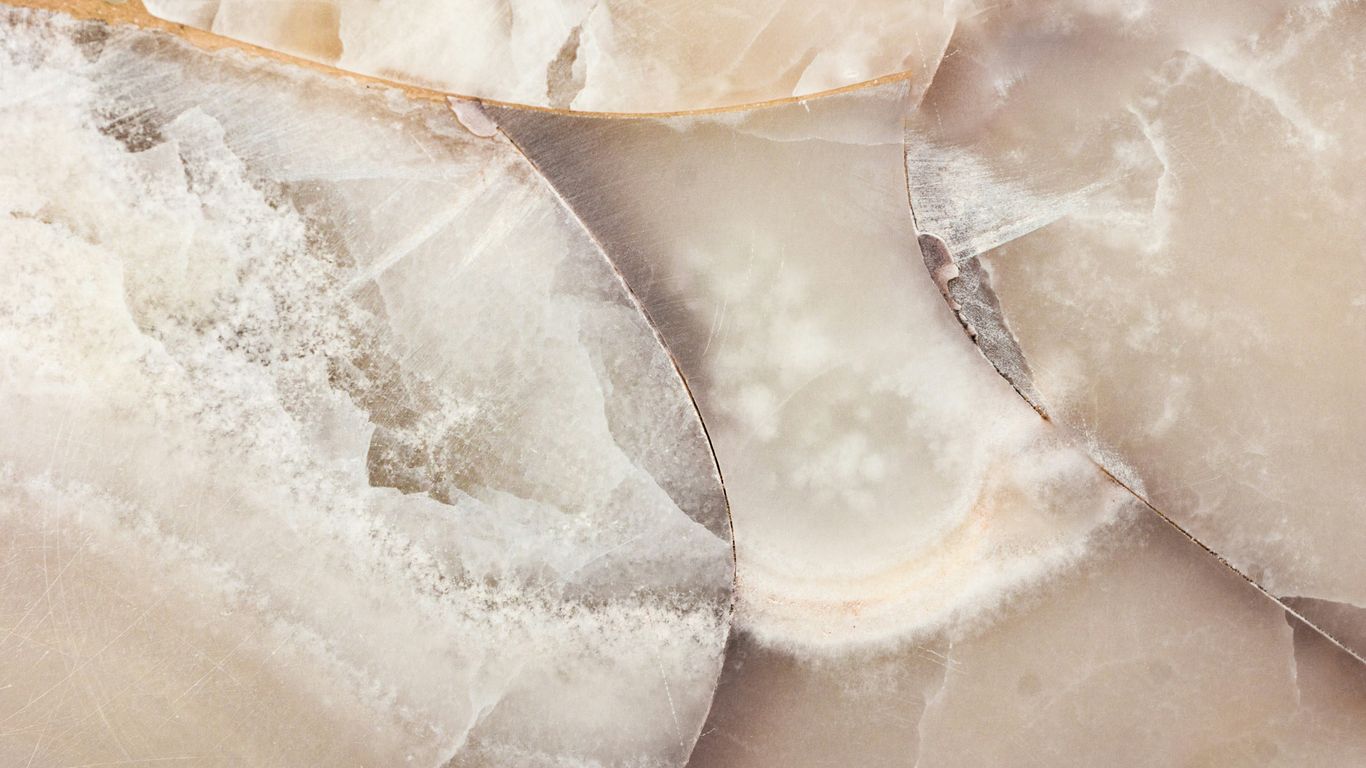
Marble forms when limestone is altered by heat, pressure and geological movement. Its principal mineral is usually calcite, although other minerals can influence its colour and pattern. Decorative material sold as onyx marble is commonly a calcite-rich, banded stone, whereas true onyx in the mineralogical sense is a form of banded chalcedony, a variety of quartz. These distinctions matter because composition affects hardness, acid sensitivity, porosity and suitable applications.
The term onyx is also used broadly in interiors for translucent calcite stone. That material can be beautiful and perfectly appropriate for a feature panel, vanity or carefully considered furniture piece, but it should be assessed on its own technical information rather than assumed to behave like quartz.
How natural veining and banding develop
Marble veining records changes in the original limestone and the fluids, minerals and pressure it encountered during metamorphism. Some slabs have fine linear threads; others contain clouds, sweeping movement or strong contrasting veins. Cutting direction can reveal the structure in different ways, so two pieces from one block may look related without being identical.
Banded onyx develops through successive mineral deposition, creating layers that may appear parallel, wavy or softly irregular. Iron and other trace minerals can introduce amber, honey, green, cream, pink or brown tones. This is why a slab should be viewed as a composition in its own right, especially when the design depends on a particular section of the pattern.
Why “onyx marble” can be a misleading term
“Onyx marble” is a long-established trade expression, but it can blur the distinction between marble, true onyx and translucent banded calcite. The label alone does not tell you the stone’s mineral composition, hardness or recommended use. A useful stone terminology guide can help clarify why these materials are often grouped together commercially despite their different geological identities.
Ask for the quarry or supplier description, technical data where available, and the proposed application. A responsible specification should identify the material clearly and explain any limitations rather than using an impressive name as a substitute for information.
How to assess a slab’s authenticity and quality
Begin with the slab itself. Look for a consistent material description, visible variation, filled fissures, open cavities, repairs and areas that may require reinforcement. Natural mineral marks are not automatically defects, but their position can affect cutting, edge details and long-term suitability.
For a made-to-order piece, the slab should be selected with the approved dimensions and layout in mind. A small sample can establish colour and finish, but it cannot represent every vein or mark in a full slab. Geoscenic Stone works from an approved production drawing, making it sensible to confirm stone selection, orientation, cut-outs and edge treatment before fabrication begins.
Marble vs onyx appearance
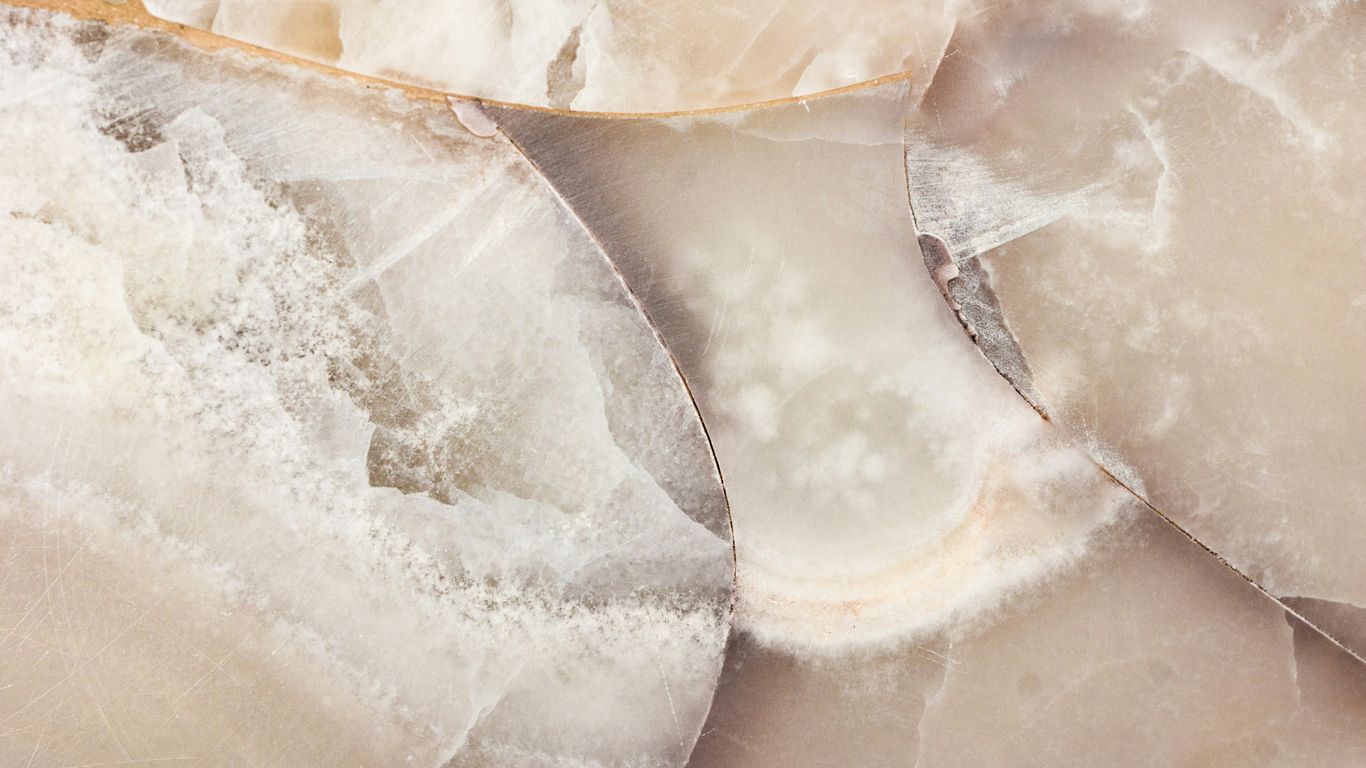
The visual difference between marble and onyx is often the first reason a client compares them. Marble tends to offer depth through veining across an opaque or softly reflective background, while onyx can combine colour, banding and translucency. Neither has one fixed appearance: varieties, finishes, thickness and lighting all change the result.
A slab viewed in a showroom may also look different once it is vertical, surrounded by joinery or lit from behind. For that reason, the design should consider the whole installation, not just a small polished sample.
Colour, veining and translucency
Marble ranges from restrained whites and greys to deep greens, blacks, reds and warm creams. Its movement may be delicate enough to sit quietly in a room or strong enough to become the main architectural gesture. Onyx is often chosen for richer bands and luminous colours, with a layered appearance that can feel almost painterly.
Translucency is the key visual distinction. Many decorative onyx slabs allow some light through, particularly when they are thinner or backlit. Marble is generally less translucent, although thin sections and particular varieties can still show subtle light effects at edges.
How lighting changes the look of each stone
Daylight reveals the broad relationship between stone, walls and furniture, while directional artificial light can exaggerate relief, polish and colour contrast. Backlighting may make onyx bands appear brighter and deeper, but it can also reveal reinforcement, adhesive lines or differences in thickness if the construction is not carefully planned.
Marble usually responds more through reflection and shadow than transmission. A polished surface can sharpen the contrast between background and veins; a honed surface softens glare and gives the stone a quieter presence. Lighting should therefore be tested at the intended distance and colour temperature, not judged only under showroom lamps.
Matching slabs for book-matched and continuous patterns
Book-matching places adjacent slabs as a mirrored pair, allowing a vein or band to open across a wall, island or panel. The effect depends on compatible slabs, the direction of the cut and the position of seams. Bookmatched marble layouts are a useful reference when deciding whether the pattern should frame a view, centre on a feature or remain deliberately asymmetrical.
Onyx can be particularly dramatic when its bands are carried across adjoining panels. However, matching is not the same as making the stone uniform. Small changes in tone, thickness and mineral movement remain part of the natural material and should be included in the design expectation.
Choosing between subtle movement and dramatic visual impact
A quiet marble may suit a dining table, reception desk or bathroom where the surrounding architecture already has several focal points. Strongly veined marble and banded onyx can work better when the rest of the palette is restrained. The choice is partly about scale: a pattern that looks busy on a small sample may become balanced across a large wall, while a gentle sample may lose its character after cutting.
Consider the view from the entrance, seated eye level and normal circulation routes. The most successful selection is not always the most dramatic slab; it is the one whose movement supports the room and remains convincing after fabrication.
Comparing durability and everyday performance
Neither marble nor decorative onyx should be treated as indestructible. Both are natural stones with variations in hardness, porosity and internal structure, and both can be affected by impact, abrasion or inappropriate chemicals. The right comparison depends on whether the surface will be walked on, used for food preparation, exposed to water or installed mainly as a visual feature.
Hardness, scratching and resistance to impact
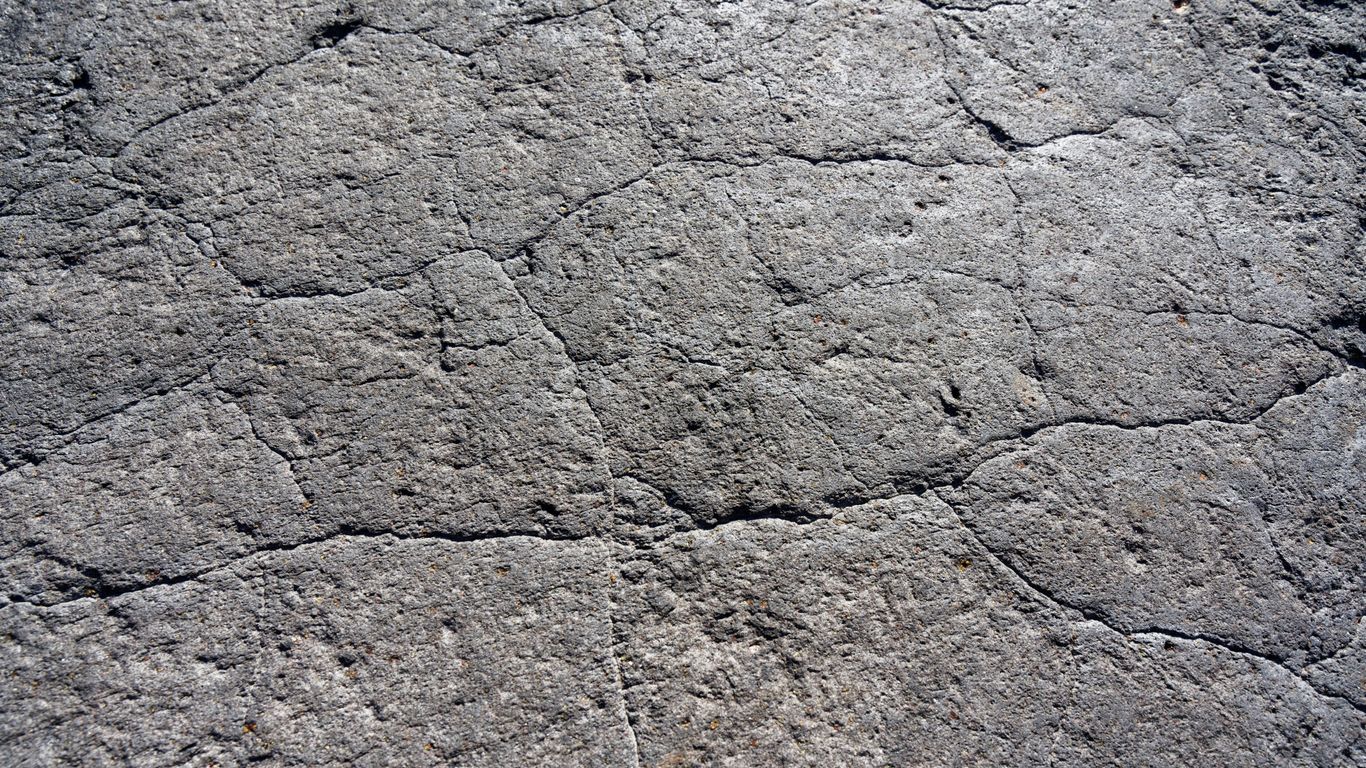
Marble is relatively soft compared with many silicate stones, so sand, grit and sharp objects can scratch a polished surface. Edges and corners are more vulnerable to impact than broad supported areas. Decorative calcite onyx is often softer still, which makes exposed corners, thin projections and unsupported cut-outs worthy of particular attention.
A honed finish can make fine marks less conspicuous, but it does not make the stone harder. Protection comes from suitable detailing, sensible use, careful handling and good support. For a table or counter, felt pads, serving boards and an edge profile with some resistance to chipping are practical choices.
Porosity, staining and moisture exposure
Porosity varies by stone and within a single slab. A sealer may reduce the rate at which a liquid penetrates, but it does not make the surface stain-proof or eliminate the need to wipe spills. Oils, pigments and standing water deserve particular caution around pale stones and porous areas.
Wet rooms require especially careful detailing at joints, falls, penetrations and interfaces with other materials. The stone is only one part of the water-management system. Drainage, waterproofing and ventilation must be resolved by the project team rather than left to the sealer.
Heat, acids and common household substances
Marble and calcite-rich onyx can react with acids. Lemon juice, vinegar, some bathroom products and acidic foods may leave dull marks known as etching; this is a change to the surface, not simply a stain that can be wiped away. Heat tolerance also depends on the object, duration and support, so trivets remain sensible even where the stone itself is not immediately damaged by a warm vessel.
A simple comparison helps set expectations before specifying a surface:
| Consideration | Marble | Decorative onyx | Practical implication |
|---|---|---|---|
| Visual character | Veining and mineral movement | Layered bands and possible translucency | Select from the actual slab where pattern matters |
| Acid sensitivity | Common in calcite-rich varieties | Common in calcite-rich varieties | Keep acidic products away and clean spills promptly |
| Impact risk | Edges and corners can chip | Often higher for softer or thin sections | Use suitable profiles, support and handling |
| Lighting response | Reflection, colour and polish | May transmit light when detailed for it | Test the finished lighting arrangement |
The table is a guide, not a substitute for the supplier’s information about a particular stone. Testing a sample with the intended finish and cleaning routine can be worthwhile when the surface will receive demanding use.
How surface finish affects practical performance
Polished stone reflects more light and can make colour and veining appear stronger, but marks, etching and fingerprints may be more apparent. Honed finishes have a softer, matt quality and can be more forgiving visually, although they remain vulnerable to staining and chemical damage. Textured or leathered finishes introduce another tactile option, with their own cleaning considerations.
The choice should follow the use of the piece as well as the desired mood. A discussion of honed and polished marble can be helpful when comparing glare, perceived wear and care requirements for furniture and other frequently handled surfaces.
Best applications for marble and onyx
The best application is determined by a combination of appearance, exposure, support and maintenance rather than by the stone’s prestige. Marble is often easier to use across a wider range of architectural and furniture contexts, while onyx is frequently reserved for places where its visual qualities can be protected and appreciated. A made-to-measure design should account for access, weight, seams and the finished edge from the beginning.
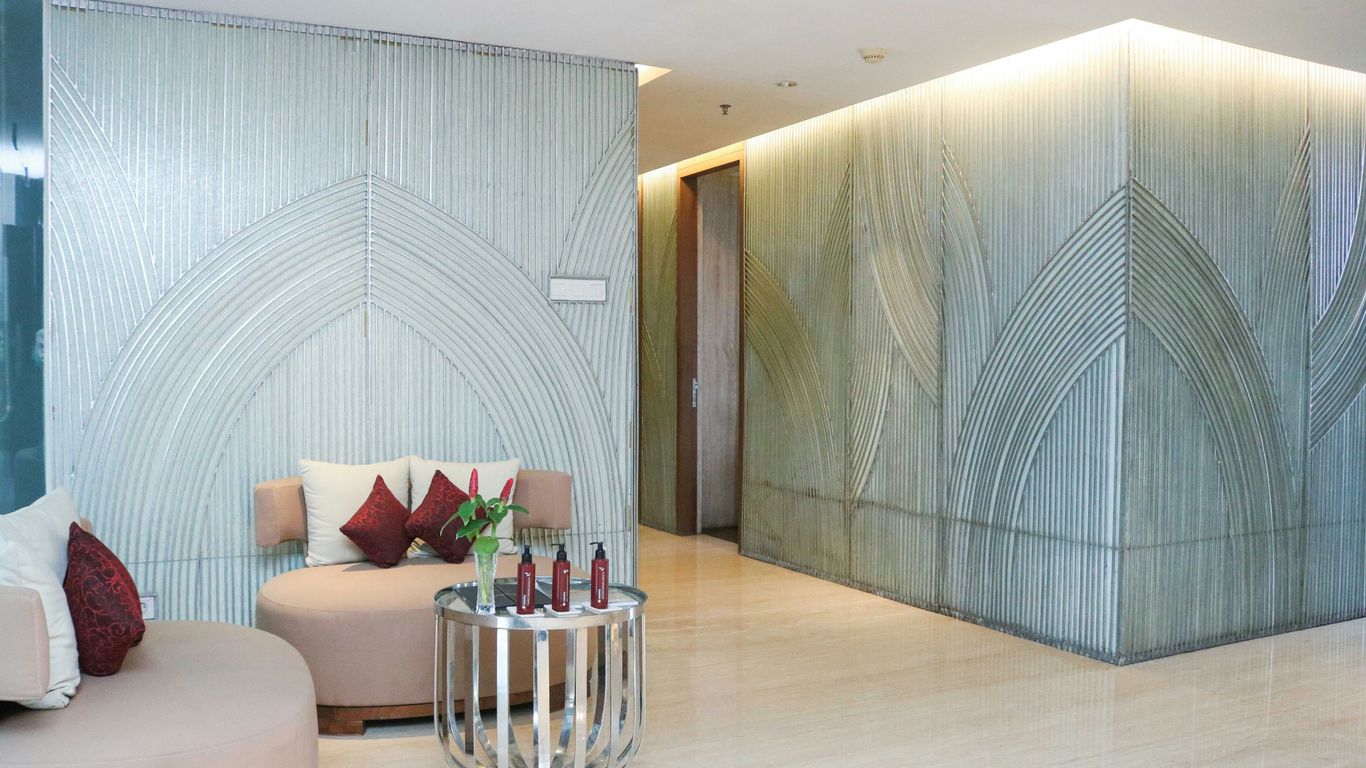
Flooring, walls and fireplace surrounds
Marble can be effective on floors, stair elements, wall cladding and fireplace surrounds when the finish, slip characteristics and maintenance plan are appropriate. Floors need protection from grit and careful consideration of traffic, while walls offer more freedom to use a striking vein with less direct abrasion.
Onyx is usually more compelling as a wall, panel or surround than as a heavily trafficked floor. Its pattern can become a room’s centre of gravity, but exposed edges and impact points should be protected through detailing and placement.
Worktops, vanities and splashbacks
A marble worktop or vanity can be beautiful and durable enough for many interiors when the user accepts patina and follows a suitable care routine. It is less forgiving of acids, abrasive cleaning and standing spills than some engineered alternatives. Basins, taps and drainage details also need to be coordinated with the slab’s thickness and internal condition.
Onyx can be used for vanities and splashbacks where the design prioritises appearance and the exposure is controlled. It is less suited to a careless, high-impact work surface. For a useful example of the issues around stone basins, see this guide to marble basins.
Showers and wet-room installations
A shower places stone in constant contact with water, soap, cosmetics and cleaning products. Marble and calcite-rich onyx may be suitable in some carefully specified installations, but waterproofing, ventilation, joint design and maintenance are critical. The stone does not replace the underlying tanking system, and a sealer cannot correct poor construction.
Before choosing either material, confirm the cleaning regime and resealing expectations with the fabricator and installer. The practical concerns are set out clearly in this comparison of natural marble and cultured marble showers, although the final decision should still follow the actual stone and project details.
Feature walls, bars and backlit panels
Feature walls, reception desks, bar fronts and backlit panels are natural settings for onyx because the stone’s banding and translucency can be made central to the design. Marble can also create a powerful feature when its veining is composed across large panels or book-matched faces.
Backlighting requires careful control of light distribution, heat, access and panel support. The design should show where drivers, frames, seams and service openings will sit. A sample viewed with the proposed lighting is much more informative than a daylight photograph.
Maintenance and care requirements
Natural stone care is mostly about using compatible products consistently and responding quickly to spills. Marble and onyx need a similar degree of care where both are calcite-rich, though the softer or more translucent stone may require additional protection from impact and heat. Maintenance should be agreed before installation, especially in hospitality or shared residential settings.
Cleaning products and methods to use
Use a pH-neutral cleaner intended for natural stone, clean water and a soft cloth or mop. Blot spills rather than spreading them, and remove grit before wiping a polished surface. Avoid abrasive pads, acidic products, bleach mixtures and household cleaners whose ingredients are not clearly suitable for the stone.
A concise marble cleaning guide explains why lemon juice and vinegar are risky on calcium-carbonate surfaces. The same caution is relevant to many decorative onyx slabs, but the supplier’s recommendation should take precedence where the composition is uncertain.
Sealing schedules and what sealers can and cannot prevent
Sealing is intended to reduce absorption, not to create an invisible plastic coating. It cannot stop etching, prevent scratches, repair chips or make a poorly supported piece structurally sound. The useful interval depends on the stone, finish, location, product and intensity of use, so a fixed calendar should not be treated as universal.
Ask the installer what sealer was used, when it should be checked and which signs indicate renewal. A small water test may offer an indication, but it should not be performed casually on a valuable finished surface without professional advice.
Dealing with etching, stains, chips and scratches
Stains may sometimes be drawn out or treated with a suitable poultice, while etching usually requires refinishing. Fine scratches can sometimes be honed away, but deep damage, chips and cracks may need specialist repair or replacement of the affected component. Scrubbing harder is rarely the right response.
Keep records of the stone name, finish and fabrication details. Those details help a conservator or fabricator match the repair approach, particularly when the original slab has distinctive movement.
Extra care for illuminated or highly polished onyx
Illuminated onyx needs access for lamps, drivers and future servicing, along with even support across the panel. Heat, concentrated light and visible adhesive or backing differences can affect the appearance. A highly polished surface also benefits from careful handling during installation because fingerprints and fine marks show readily.
Agree the maintenance access before the panel is closed in. The most beautiful lighting effect is not practical if a failed component requires dismantling finished joinery or stonework.
Cost, installation and practical considerations
The material price is only one part of a stone project. Slab selection, yield, pattern matching, cutting, edge work, reinforcement, packing, shipping and site access can all influence the quotation. This is particularly true for made-to-order furniture and architectural pieces, where the finished dimensions are developed for one project rather than taken from warehouse stock.
Material pricing and availability
Marble is available in a broad range of varieties and price levels, but a particular block, colour or vein may be limited. Onyx can command a premium when the slab has strong translucency, rare colour or a pattern suitable for a large continuous installation. Availability may change between the initial design and the final order.
Request images or video of the proposed slab, while recognising that screens and lighting alter colour. If the design depends on an exact section, reserve the material only after confirming dimensions, yield and acceptable natural variation.
Fabrication, edge details and installation complexity
Curved edges, mitred returns, book-matched panels, sink cut-outs and concealed joints add fabrication decisions and inspection points. Onyx may require especially careful cutting and handling where it is thin, fissured or intended to be illuminated. Marble also needs considered seam placement, particularly when veining is directional.
A factory-to-order process should show these decisions in an approved drawing. Geoscenic Stone describes its work around material selection, cutting, finishing, inspection, packing and delivery for a specific project, so the drawing is the place to confirm the stone, dimensions, finish, edges and drillings.
Project coordination matters as much as the workshop. Renovation teams may need to plan access, dust, noise, allowances and changes; this broader renovation planning advice is useful when stone fabrication is one part of a larger programme. If a project involves substrate preparation, a separate masonry primer guide may also be relevant to the surrounding construction, although it does not replace the stone specification.
Slab thickness, reinforcement and support requirements
Thickness should be selected with span, cut-outs, weight, edge treatment and support structure in mind. A visually thick edge may be a built-up detail rather than a solid slab of that depth. Large tables, cantilevered shelves and thin wall panels may require reinforcement or a concealed frame.
The support must be designed for the actual piece and destination, including handling routes and installation tolerances. A useful reference on marble tabletop thickness shows why a nominal 20 mm or 30 mm dimension is not, by itself, a complete structural decision.
Waste, repairs and long-term replacement considerations
Natural stone yield is affected by the slab’s size, defects, vein direction and the layout of the finished piece. Allowing for waste is not the same as treating variation as a defect; it is part of planning a cut that respects the material. Replacement years later may be difficult if the original block is no longer available.
Before approval, confirm what happens if a slab contains an unsuitable fissure, if a piece is damaged in transit, or if a later repair needs matching stone. Keep spare material where practical, particularly for high-value or highly patterned installations.
How to choose between marble and onyx
The decision between marble and onyx becomes clearer when the brief starts with use, exposure and scale rather than colour alone. Marble may offer a wider practical range, while onyx can create a singular focal point when its limitations are planned into the design. Both deserve a proper review of the actual slab, finish, support and maintenance expectations.
When marble is the more practical choice
Choose marble when you want natural veining across floors, walls, furniture or bathroom elements and can accept periodic care and gradual signs of use. It is often the easier material to source in different formats and finishes, and its appearance can suit both restrained and highly expressive interiors.
That does not make marble maintenance-free. A polished white slab beside a busy kitchen, for example, needs a different conversation from a honed marble console in a quiet entrance. The practical answer comes from matching the stone to the room rather than assuming that one variety represents all marble.
When onyx is worth choosing for visual impact
Onyx can be worth the additional planning when translucency, banding or luminous colour is central to the scheme. It is especially effective where the piece can be protected from hard impacts and acidic substances, such as a feature wall, bar front, reception panel or carefully designed vanity.
The strongest results are usually selective rather than widespread. One well-composed onyx installation can give a room its identity without asking every surface to compete for attention.
Matching the stone to the room’s use and traffic
Consider who will use the room, how often the surface will be touched, whether food or cosmetics are present, and how quickly spills can be removed. A formal reception area may tolerate a more delicate material than a family kitchen. A private powder room may permit a bolder stone than a high-traffic commercial washroom.
Use this practical sequence before approving a slab:
- Describe the daily activities and likely sources of impact or staining.
- Choose a finish that suits the desired appearance and tolerance for visible wear.
- Confirm lighting, slab orientation, seams, supports and access for maintenance.
- Review the cleaning, sealing and repair expectations with the responsible team.
This sequence keeps the discussion grounded in the room’s actual rhythm. It also leaves space for patina, which may be an acceptable part of a natural stone piece rather than evidence that the material has failed.
Questions to ask suppliers and fabricators before buying
Ask what the material is called technically, where the proposed slab will be sourced, and whether the quoted piece is based on an actual reserved slab or a representative image. Confirm the finished dimensions, tolerances, edge profile, finish, drillings, reinforcement, packing method and delivery assumptions.
Also ask how natural variation will be reviewed and documented, how seams will be positioned, what installation support is required and what is excluded from the quotation. Geoscenic Stone produces pieces to an approved drawing, so clients can use that drawing review to settle design and fabrication details before work begins. For wider project coordination, teams may also need a reliable business phone service and clear communication between designers, fabricators and installers; that is a project-management consideration rather than a stone characteristic.
Conclusion
Marble and onyx both reward careful selection, but they answer different design and practical needs: marble is often the more adaptable material, while onyx is chosen for its layered colour and luminous visual effect. The right decision comes from the actual slab, the room’s use, the finish, the support and the care routine, with natural variation treated as part of the material rather than an error. For a made-to-order piece, you can request a quotation and discuss the drawing, stone selection, dimensions, finish, packing and destination requirements before committing.
Frequently Asked Questions
Is onyx more durable than marble?
It depends on which material is being called onyx. Decorative calcite onyx can be relatively soft and sensitive to acids, while true quartz-based onyx has different properties. Compare the actual stone’s composition and technical information rather than relying on the name alone.
Can marble and onyx be used for kitchen worktops?
They can be used in some kitchens, but both require realistic expectations about staining, etching, scratching and impact. Marble is commonly selected for worktops when the owner accepts care and patina; decorative onyx is usually better reserved for lower-impact areas or carefully managed surfaces.
Can onyx be backlit?
Many decorative onyx slabs can transmit light, particularly when their thickness and backing are designed for that purpose. The result depends on translucency, slab variation, light distribution, heat management and access for maintenance.
Does sealing prevent marble from staining?
No. Sealing can reduce absorption and provide more time to clean a spill, but it does not make marble stain-proof. It also does not prevent etching, scratches or impact damage.
Is honed marble easier to maintain than polished marble?
Honed marble often disguises glare, fine scratches and some everyday marks better than polished marble. It remains porous and acid-sensitive, however, so its practical care requirements do not disappear with the change of finish.
What is book-matched stone?
Book-matching places adjacent slabs as a mirrored pair so that their veins or bands open across a joint. It requires compatible slabs, careful orientation and early planning of seams, supports and cut-outs.
How should I choose between marble and onyx?
Start with the room’s use, traffic, moisture, cleaning routine and lighting. Then compare the actual slabs, finish, support and fabrication details, and choose the material whose appearance and limitations make sense for the way the space will be used.