

Key Takeaways
The right marble table thickness depends on more than appearance. Size, support, stone character, edge treatment and installation all need to be considered together.
- A 20 mm top can suit smaller, well-supported tables with modest overhangs.
- A 30 mm or thicker slab often gives larger tables a calmer, more substantial presence.
- The base, unsupported span and cut-outs may matter as much as the nominal thickness.
- Edge profiles can make a thinner slab look lighter or a thicker one feel more architectural.
- Confirm dimensions, access, handling, finish and care requirements before production begins.
Understanding standard marble tabletop thicknesses
Marble tabletops are commonly discussed in millimetres, with 20 mm and 30 mm being familiar reference points. Neither is automatically right for every design: the size of the top, its support and the intended use all change the decision. Thickness also affects how the edge reads from across the room, so it belongs in the design conversation from the beginning.

Typical thicknesses for dining, coffee and console tables
A 20 mm slab is relatively restrained and can look elegant on a compact coffee table, side table or console. A 30 mm top has more visual weight and is often considered for dining tables, larger occasional tables and pieces with longer unsupported spans. Tops thicker than 30 mm may be chosen for a strongly architectural appearance, although additional material also means more weight and more demanding handling.
The useful question is not simply “What is the standard?” but “What thickness works with this design?” A marble dining table design guide can help place thickness alongside shape, base, room dimensions and the visual scale of the surrounding furniture.
When a 20 mm marble slab is suitable
A 20 mm top may be suitable when the table is modest in size, the support is well positioned and the overhang is controlled. It can give a floating, contemporary appearance, particularly with a slim edge and a visually quiet base. It is less forgiving of poor support or rough handling, so the approved drawing should show how the slab is carried beneath its surface.
For a small table, the lower weight can also make delivery and positioning more manageable. That does not remove the need for professional handling; marble remains heavy and naturally variable, even at a reduced thickness.
When a 30 mm or thicker top is preferable
A 30 mm slab is often preferable for a generous dining top, a broad conference table or a design with a more substantial edge. It can provide a grounded look and may offer greater tolerance around exposed edges, though thickness alone does not prevent cracking caused by poor support, impact or an existing weakness in the stone. Tops above 30 mm should be considered when their proportions, edge treatment and structure genuinely call for additional visual mass.
The decision should be made with the selected stone and fabrication method, rather than added late as a cosmetic upgrade. For made-to-order work, the material, dimensions, edge and support arrangement should be resolved together in the production drawing.
How thickness differs from the visible edge height
The slab may be 20 mm or 30 mm thick while the visible edge appears taller because of a laminated build-up or a shaped profile. Conversely, a thick slab with a bevel or eased edge can appear lighter than its full measurement suggests. Always distinguish the actual stone thickness from the finished edge height shown in elevations and details.
That distinction matters for seating clearance, adjoining furniture and the visual relationship between the top and base. The edge is part of the proportion, not merely a finishing detail.
Choosing marble table thickness by table type
Different table types place different demands on a stone top. A dining table needs to accommodate daily contact, chairs and sometimes a broad span, while a console may be judged more by its delicate proportions. Shape also changes how weight is distributed and how much of the edge is exposed.
Dining tables and larger rectangular tops
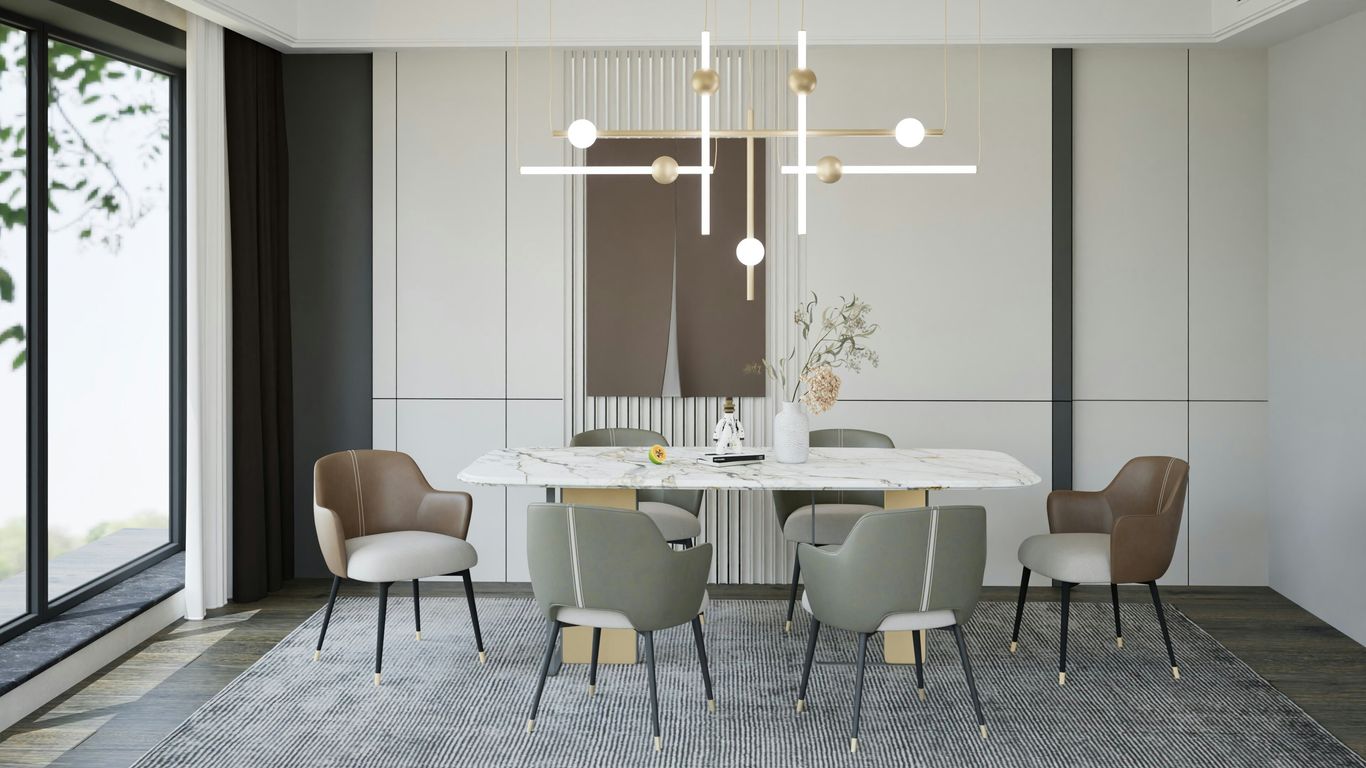
Large rectangular dining tables usually benefit from careful attention to span, base position and overhang. A 30 mm top may feel more proportionate than 20 mm on a long table, but the base still needs to carry the load without creating concentrated pressure points. Consider chair clearance and circulation at the same time; a thick top is not useful if it makes the room feel cramped.
For a detailed comparison of dimensions, support and access, see this guide to marble dining table sizes. It is also sensible to review the selected slab for veining, mineral marks and any natural weakness before finalising the cut.
Coffee tables and compact occasional tables
Coffee tables often allow more freedom. A 20 mm slab can suit a low, refined design, while 30 mm may work better where the table has a chunky base, a long rectangular plan or a deliberately sculptural character. The finished height matters as much as the stone thickness because a heavy-looking top can dominate a small seating area.
A marble coffee table buying guide is useful when balancing top size, base material, edge profile and circulation around sofas. Leave enough clearance for movement, and avoid treating the reduced scale as permission for careless handling.
Console, side and bedside tables
Console, side and bedside tables are commonly smaller, so 20 mm can be a sensible starting point where the support is close to the corners or centre. A narrow console with a significant overhang may need a stronger structural solution than its small footprint suggests. Bedside tables also need attention to exposed corners, drawer clearances and the likelihood of everyday knocks.
The best thickness is the one that supports the intended use without making the piece look overbuilt. A slim top paired with a light base can work beautifully, but only when the design remains stable and the stone is properly supported.
Round, oval and irregularly shaped tabletops
Round and oval tops distribute their visual weight differently from rectangular ones, while irregular outlines may create projecting points or areas of changing width. A pedestal can support the centre efficiently, but its connection and footprint must be designed for the full diameter and for people leaning at the perimeter. An irregular top may need a more conservative thickness where the outline creates narrow sections.
Before choosing, consider how the shape affects seating, circulation and edge exposure. For compact rooms, a small round marble dining table can make the layout feel open, but the base and slab still need to be assessed as one structure.
Factors that affect the ideal marble table thickness
Thickness is only one part of a stone specification. Marble is a natural material, so two slabs with the same nominal measurement can differ in veining, mineral inclusions, porosity and structural character. The intended location, edge detail and method of support should therefore be recorded before fabrication rather than assumed from a catalogue image.
Tabletop size and unsupported span
As the unsupported span increases, the slab carries more of its own weight between supports. A broad overhang can also create leverage when someone leans on the edge. This does not produce a universal thickness formula, because the result depends on the stone, geometry and support design, but it does make a larger top a more involved engineering and fabrication decision.
Ask for the support positions to be shown clearly. A top can be thick yet poorly supported, while a slimmer one can perform appropriately when its load path is properly planned.
Marble type, grain and natural weaknesses
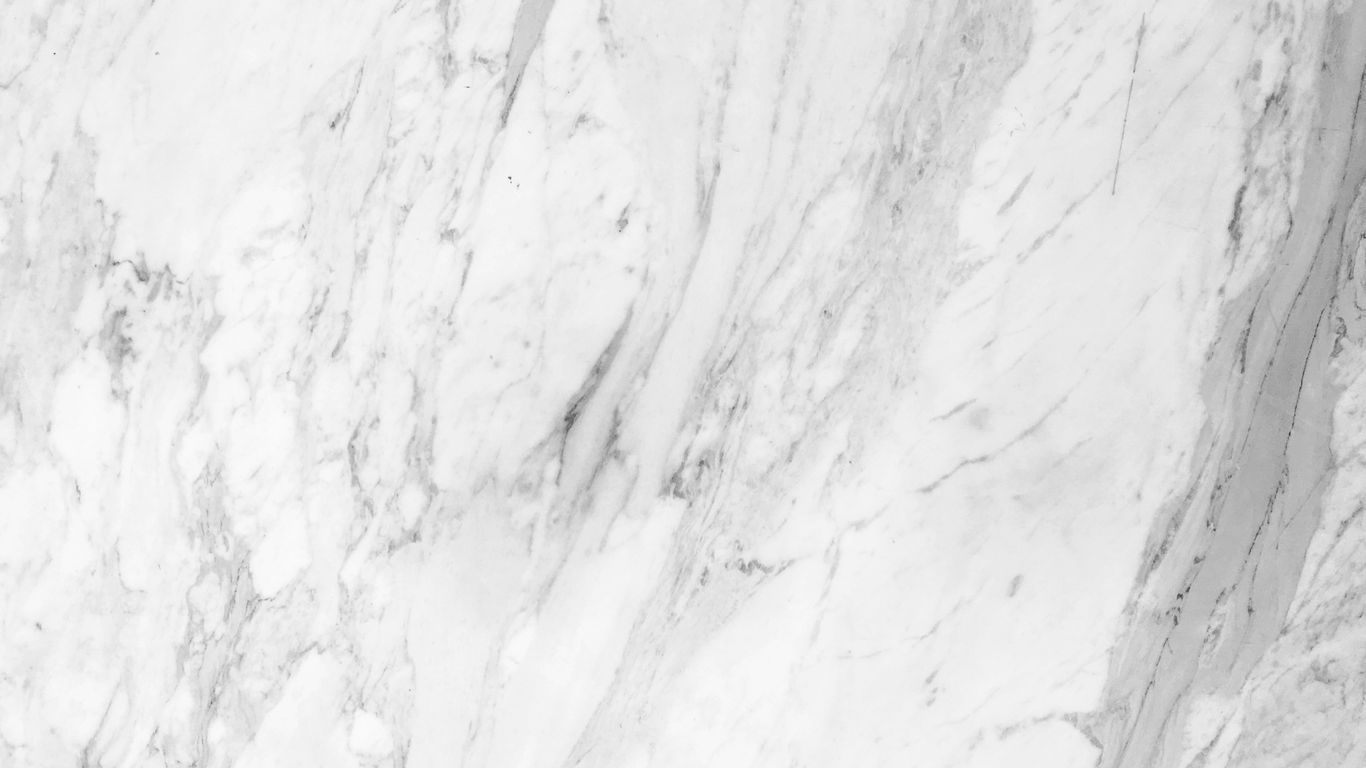
Marble varies in grain, veining and mineral composition. Some areas may contain fissures, pits or other natural features that influence how the slab should be cut and supported. Selection should include a review of the actual material intended for the order, not just a general colour name.
For custom furniture, selecting a marble slab involves checking usable dimensions, natural variation, proposed edges, cut-outs and the way lighting will affect the finished surface. These checks help determine whether the planned thickness remains appropriate for the chosen piece.
Overhangs, cut-outs and edge detailing
Sink-like cut-outs are not usually relevant to a dining table, but cable openings, lazy Susan details, inset accessories and other penetrations can interrupt the slab. Long overhangs and narrow returns may also create vulnerable areas. The more the top is shaped or relieved, the more carefully its thickness and reinforcement need to be coordinated.
Keep the following questions together in the design review rather than treating them as separate finish decisions:
- Where are the primary supports, and how wide are their contact areas?
- Which edges or corners are most exposed to impact?
- Do any drillings, recesses or cut-outs reduce the uninterrupted stone?
- Does the selected finish suit the expected use and maintenance routine?
The answers help the fabricator decide whether a simple 20 mm or 30 mm slab is suitable, or whether the drawing needs a different construction.
Indoor versus outdoor use
Outdoor tables face moisture, temperature changes, wind and more variable cleaning conditions. Thickness does not by itself make marble suitable for every exterior setting, and the base must be stable enough to resist movement or tipping. Drainage, finish, fixings and the local climate deserve attention alongside the stone measurement.
For hospitality or exposed areas, establish the maintenance expectations and replacement implications before selecting the material. A practical specification is more valuable than choosing the thickest available slab.
How the base and support structure affect thickness
The base determines how the load travels from the tabletop to the floor. A central pedestal, four legs, a trestle and a concealed frame each create different support patterns and different visual proportions. The top should never be specified in isolation from that structure.
Matching the slab to a pedestal or four-leg base
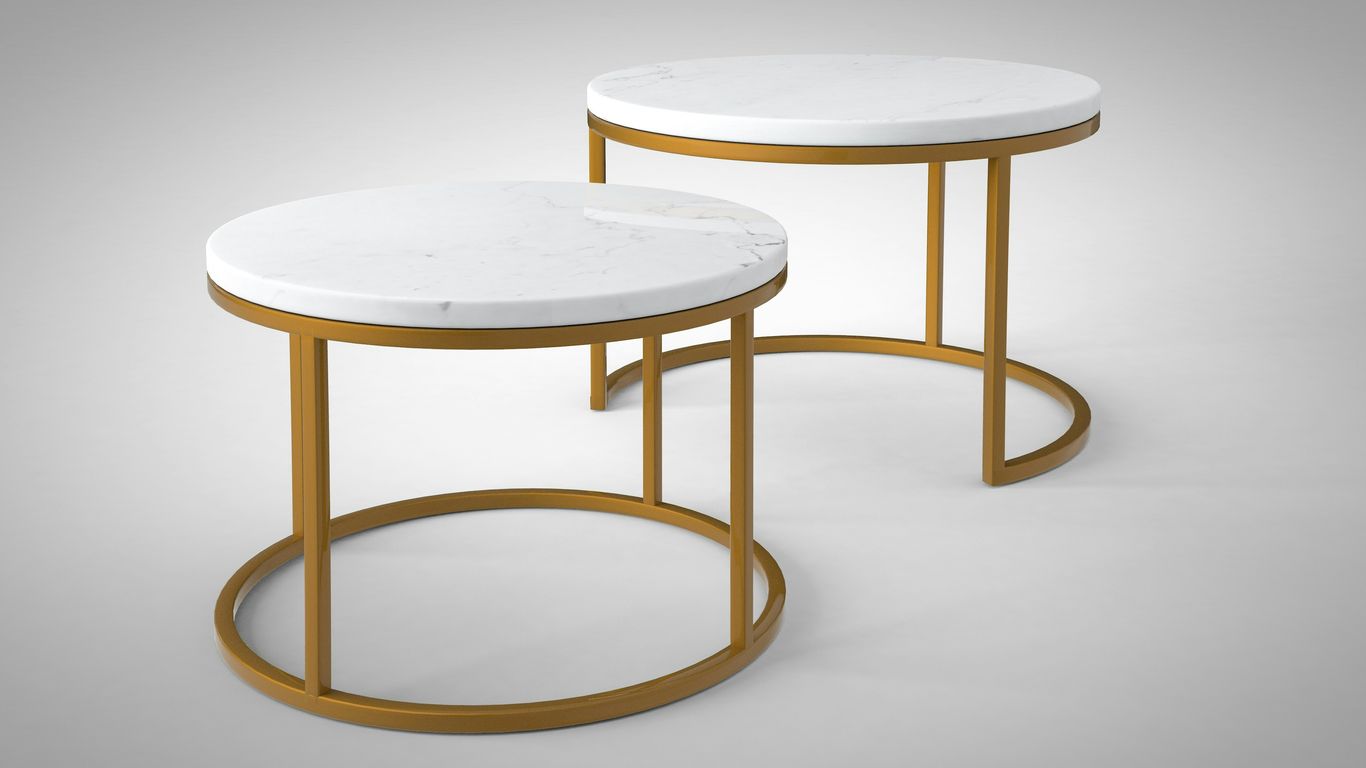
A pedestal can leave the perimeter visually clear, but it must be stable and broad enough to resist tipping when pressure is applied away from the centre. Four legs may offer distributed support, provided they are positioned to suit the slab and do not leave excessive unsupported corners. The right thickness depends on the relationship between the base footprint, top size and intended overhang.
Draw the base and top together in plan and elevation. This reveals whether the apparent delicacy of a 20 mm top is intentional or whether a 30 mm edge would better balance the structure.
Positioning supports beneath large marble tops
Supports should generally follow the areas where the slab needs to transfer load, while avoiding point contact that concentrates pressure. A broad frame, rails or concealed substructure may be used where appropriate, but its exact form depends on the design and material. Pads and fixings should also be detailed so the top is held securely without being forced into an unsuitable position.
A large top should be reviewed for lifting routes as well as for its final support. The most elegant base is not practical if the assembled piece cannot be brought safely into the room.
Preventing flexing, cracking and tipping
Cracking risk is reduced by a coordinated design, careful material selection and proper handling, not by thickness alone. The top must be kept supported during transport, lifted correctly and protected from concentrated impact. The base must be level, stable and sized for the table’s centre of gravity.
A useful principle is simple: support follows the load. If the slab, frame and floor interface are considered as one system, the design team can address flexing and tipping before the stone is cut.
Coordinating the base with the tabletop proportions
A thick top over a light, narrow base may look top-heavy, while a delicate slab over a very massive pedestal can lose its intended lightness. Compare the visible edge height, base width, leg spacing and room scale in the same drawing. The visual balance should survive both a close view and the broader perspective of the room.
The final choice may be 20 mm, 30 mm or another build-up, but it should be an intentional proportion rather than a default measurement. Made-to-order furniture is particularly suited to this kind of adjustment because the drawing can resolve the relationship before production.
Marble edge profiles and their effect on appearance
The edge is where thickness becomes most visible. Its profile changes how light moves across the stone, how comfortable the table feels to touch and how substantial the piece appears. A suitable profile can make a practical slab feel refined without pretending that its actual thickness is different.
Straight, eased and bevelled edges
A straight edge shows the slab’s full thickness and gives a crisp, architectural line. An eased edge softens the corner slightly, which can be helpful on furniture used frequently. A bevel removes material from one face and can make the top appear lighter, though the detail must be proportionate to the slab and carefully finished.
These profiles suit different interiors, but none should be selected without considering the stone’s veining and the way the edge will be seen from standing and seated positions.
Bullnose and rounded edge profiles
A bullnose or rounded edge introduces a softer transition and can make a substantial top feel more approachable. It may also reduce the sharpness of a corner, although it does not make the marble impact-proof. The radius needs to be coordinated with the actual thickness; a large curve on a thin slab may look forced, while a tiny radius on a thick top may not be legible.
Ask for a profile drawing or sample when the edge is central to the design. Small changes in radius can alter the character of the whole table.
Laminated edges for a thicker visual effect
A laminated edge combines layers or an edge build-up to create the appearance of a thicker slab while using a different underlying construction. This can provide a substantial profile without specifying one solid piece at the full visible height, but the joint, grain direction and finish need to be considered closely. The result should be documented clearly so that the finished edge is not mistaken for a solid thickness.
This approach can be useful when the design calls for weight at the perimeter but the overall construction, weight or material yield suggests another solution. It is a fabrication decision, not merely a styling trick.
Balancing edge weight with room scale
In a compact room, a heavy edge may make the table feel crowded even when the footprint is correct. In a large dining room, a very fine edge can disappear against generous architecture and furniture. Look at the table with its chairs, rug, lighting and surrounding circulation rather than judging the profile on a close-up alone.
The edge should reinforce the intended mood: quiet and light, or grounded and sculptural. Both can work when the proportions are deliberate.
Practical installation and handling considerations
A marble top can be perfectly specified and still encounter problems if access and handling are left until delivery day. Weight, rigidity and the risk of edge damage affect the route from fabrication to the final room. These details should be confirmed alongside the drawing and quotation.
Measuring access routes before ordering
Measure doors, lifts, stair turns, corridors and the clear height at difficult corners. Include packaging, carrying angles and the possibility that the top must be moved vertically rather than flat. A large slab may fit through a doorway on paper but fail at the turn into the room.
Share these measurements before production is approved. They can influence the maximum practical size, the packing method, the installation sequence and whether a base should be assembled on site.
Transporting and lifting a marble tabletop safely
Marble should be lifted with suitable equipment and enough people, following a planned method rather than improvised carrying. Keep the slab supported in the orientation recommended for transport, protect corners and avoid placing pressure on a narrow edge. Do not drag the top across the floor or use the finished surface as a workbench.
For a made-to-order piece, packing and destination handling should be considered in the quotation. Geoscenic Stone produces pieces to an approved drawing and includes packing and delivery considerations for the specific project, rather than treating every order as an interchangeable warehouse item.
Allowing for wall clearance and overhangs
A console or dining table needs enough clearance for cleaning, chairs, curtains and nearby doors. Overhangs should be measured from the finished support, not guessed from the overall top dimensions. Wall irregularities and skirting boards can also affect how a piece sits in its intended position.
A full-size template or taped floor outline can reveal circulation problems before the stone arrives. It is a simple step, but it often prevents an expensive change later.
Securing the top without restricting natural movement
Fixings should hold the marble safely while allowing the construction to accommodate small changes in adjoining materials where the design requires it. Excessively rigid restraint can transfer stress into the stone or base. The exact fixing method depends on the support, the top and the installation conditions, so it should be detailed rather than assumed.
Check that the finished table is level, stable and protected during final positioning. Cleaning and sealing should follow the selected finish and the fabricator’s instructions.
Cost, durability and long-term maintenance
A thicker top usually uses more material and may require more labour, stronger packing and more demanding delivery. That does not make it automatically better value. The sensible comparison considers the whole piece: stone selection, usable slab dimensions, fabrication, edge work, support, packing, destination and installation requirements.
How thickness influences material and fabrication costs
Moving from 20 mm to 30 mm can affect the slab price, cutting time, edge finishing, weight and handling. Complex profiles, mitred build-ups, drillings and unusually large dimensions can add more cost than thickness alone. Natural variation and yield also matter because the selected slab may not produce the same amount of usable material as another slab of similar colour.
Request a quotation based on the approved dimensions and details. For a factory-to-order maker such as Geoscenic Stone, the individual piece, material selection, packing, destination and site conditions are part of the project calculation.
Comparing solid marble with laminated and porcelain options
Solid marble offers natural variation and depth, but it is heavy and can etch, stain or chip. A laminated edge may change the visual and structural build-up, while porcelain or other alternatives may offer different maintenance and fabrication characteristics. These materials should not be treated as direct substitutes without checking the intended use, edge detail, weight and repair route.
A comparison of marble and sintered stone can help frame the choice, particularly when a project team is weighing natural veining against more consistent manufactured appearance. The final material should reflect the room, use pattern and tolerance for natural change.
Repairability and the risk of chips or cracks
Marble can sometimes be repaired or refinished, but the result depends on the damage, location, finish and availability of a suitable matching material. Chips at corners may be more visible than marks on a broad surface, and a crack can raise structural as well as cosmetic questions. Prevention through sound support, careful lifting and sensible daily use remains preferable.
Before approval, ask how the selected finish will be maintained and what the practical repair process would involve. This makes the ownership decision more realistic.
Cleaning, sealing and protecting the finished tabletop
Use a cleaning routine suited to the stone and finish, and wipe spills promptly where staining or etching is a concern. Avoid assuming that a seal makes marble immune to acids, scratching or heat. Coasters, placemats and sensible handling can reduce everyday wear, while periodic review helps identify changes before they become difficult to address.
The marble care guide covers cleaning, sealing and stain prevention in more detail. If the table is commissioned for a hotel, restaurant or other busy setting, agree the maintenance routine with the operator before selecting the finish.
Commission a Considered Table
For a made-to-order marble tabletop, discuss the stone, dimensions, support, edge, finish, access and delivery requirements with Geoscenic Stone before approving the production drawing. You can also request a quotation for a piece developed around your project.
Conclusion
The ideal marble table thickness is a relationship between the slab, its support, its edge and the room around it. Use 20 mm or 30 mm as starting points, then assess the actual stone, span, overhang, handling route and intended use. A carefully coordinated drawing will usually produce a better result than choosing the thickest top by default.
Frequently Asked Questions
Is 20 mm thick enough for a marble table?
It can be suitable for a smaller, well-supported table with controlled overhangs, but the final decision depends on the stone, span, base and intended use.
Is 30 mm marble better for a dining table?
A 30 mm top often gives a larger dining table a more substantial appearance and may provide a more forgiving edge, but it is not a substitute for proper support and handling.
Does a thicker marble top prevent cracking?
No. Cracking can result from poor support, concentrated pressure, impact, natural weaknesses or incorrect handling, so thickness must be considered as part of the complete construction.
What thickness is best for a marble coffee table?
Many compact coffee tables can work with 20 mm, while 30 mm may suit a longer top, a heavier base or a more architectural design.
Can a thin marble top look thicker?
Yes. A laminated edge or carefully shaped profile can increase the visible edge height, although it should not be confused with a solid slab of the same measurement.
How should a marble tabletop be supported?
Supports should be positioned to carry the load without creating damaging point pressure, with the base, overhang and fixing method designed together.
Does marble need sealing and special cleaning?
Marble benefits from care suited to its finish, including prompt attention to spills and appropriate cleaning products; sealing may help in some applications but does not make the stone stain- or etch-proof.