
Key Takeaways
A natural stone bathroom can feel calm, substantial and deeply individual when the material is selected with both appearance and use in mind.
- Marble brings expressive veining and a refined, formal character, but needs thoughtful care.
- Travertine offers warmth and texture, with filled and unfilled finishes suited to different routines.
- Onyx is best used selectively where translucency and veining can become a feature.
- Floors, shower walls, vanity tops and bath surrounds each place different demands on stone.
- Good drawings, specialist installation and a realistic maintenance plan matter as much as the stone itself.
Understanding natural stone in the bathroom
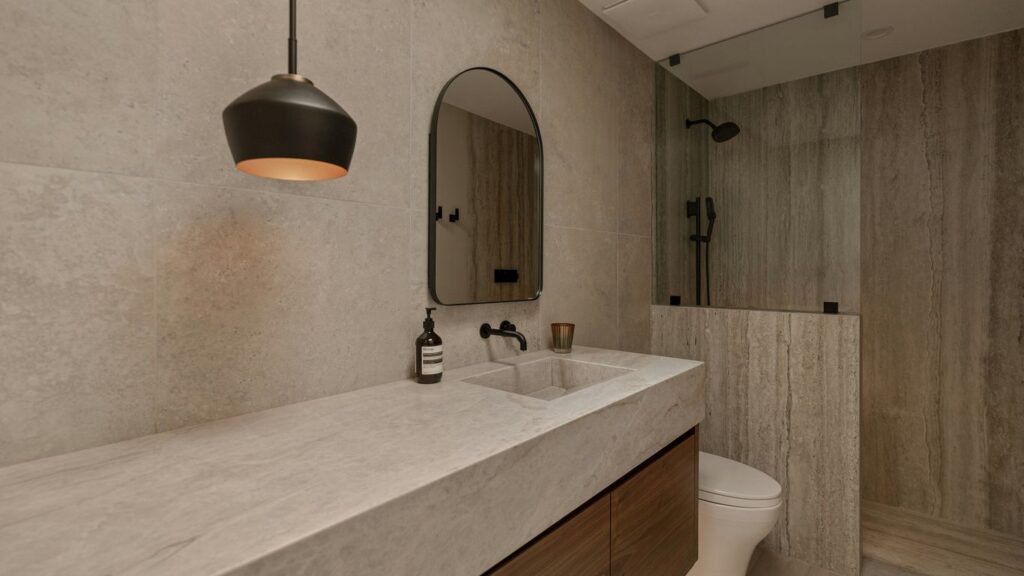
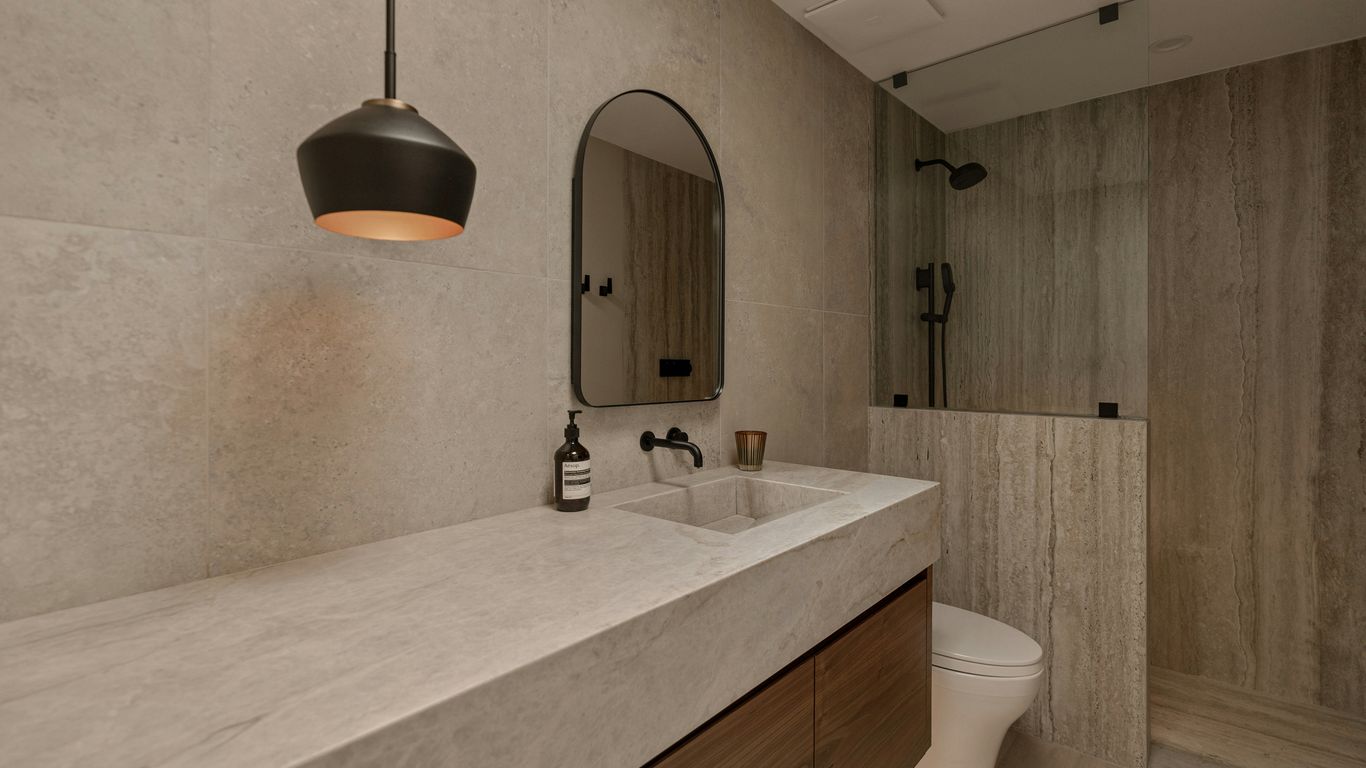
Natural stone changes the atmosphere of a bathroom in a way that printed or manufactured surfaces cannot quite reproduce. Tone, mineral movement, small pores and variations in texture give the room a visual depth that develops from the geology of the material. A well-planned natural stone bathroom should therefore be considered as a composition of individual pieces, not a perfectly repeated pattern.
What makes natural stone different from ceramic and porcelain tiles
Ceramic and porcelain tiles are manufactured for consistency, while natural stone is quarried and then cut into usable formats. That distinction affects colour matching, veining, thickness and the way surfaces respond to finishing. Stone can feel more tactile and substantial, but it also asks for closer attention to sealing, joints and cleaning.
Manufactured tiles may offer a more predictable installation, particularly where many identical pieces are needed. Natural stone instead rewards careful selection and considered setting out. It is worth ordering samples or viewing slabs in person where possible, because a small sample cannot always show the full movement of a larger piece.
How variation, veining and surface character affect the design
Variation is not a flaw to be corrected; it is part of the material’s identity. Two slabs from the same quarry can differ in background tone, veining and mineral marks, so the design should allow those differences to contribute to the finished room. A quiet stone can support a minimal scheme, while a strongly figured slab may need calmer sanitaryware and joinery around it.
The finish changes the reading of the stone as much as its colour does. Polished surfaces increase reflection and visual depth, honed finishes soften glare, and textured finishes bring a more tactile, informal quality. These choices should be made alongside lighting and grout colour rather than as a final afterthought.
Where natural stone works best in a bathroom
Stone can be used across floors, walls, shower enclosures, vanity tops, splashbacks and bath surrounds. The best location depends on how much water, abrasion, impact and cleaning each surface will receive. A dramatic material may be entirely suitable for a dry feature wall but less practical across a busy shower floor.
For broader inspiration, a guide to natural stone bathroom floors is useful when comparing colour, texture and the visual difference between contemporary and traditional schemes. The same principles apply to walls: allow the stone’s scale and movement to remain legible rather than cutting it into unnecessarily small pieces.
The practical trade-offs of using natural materials
Natural stone is durable, but durability does not mean immunity from marks or damage. Acidic products can affect some stones, polished surfaces can be slippery when wet, and porous materials need appropriate protection. Weight, access and the condition of the substrate also become more important as the size of the stone increases.
The most successful schemes accept these implications at the beginning. The result is not a bathroom that demands constant anxiety, but one where the chosen finish, drainage, ventilation and cleaning routine are suited to everyday use.
Choosing marble for a bathroom
Marble is often chosen for its clarity of veining and its ability to make a bathroom feel composed and architectural. White and pale varieties can increase the sense of light, while darker stones create a more enveloping mood. The right choice depends on whether the room should feel crisp and restrained or layered and expressive.
The main marble types, colours and finishes
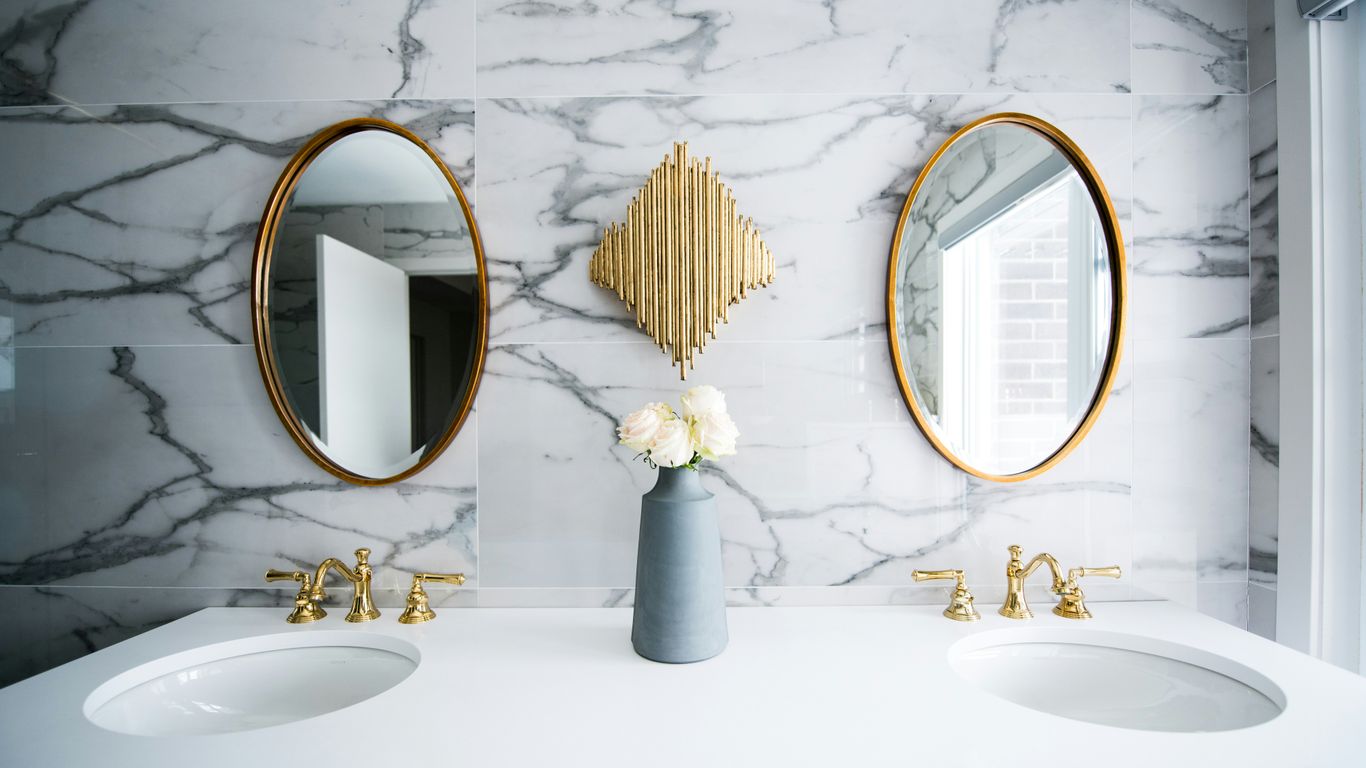
Marble ranges from almost plain white through grey, beige, green, brown and near-black tones. Carrara-type stones are often associated with soft grey movement, while more dramatic varieties can carry bold veins and contrasting mineral patterns. Names alone are not enough to specify the final appearance; the actual slab, finish and cut all influence the result.
Polished marble reflects light and makes veining appear sharper. Honed marble has a quieter, softer surface and can be more forgiving of glare, although it remains vulnerable to staining and etching. Brushed or textured treatments may add grip and character, but they can also hold more residue and require more careful cleaning.
Where marble performs well, from walls to floors
Marble is particularly effective on feature walls, vanity fronts, splashbacks and bath surrounds, where the slab can be read as a continuous piece. It can also work on floors when the finish, format and slip considerations are properly resolved. Large-format panels reduce visual interruptions, but they increase handling and installation requirements.
A marble basin can make a strong focal point without covering every surface in the room. When specifying one, consider the basin’s overall footprint, tap position, waste detail and supporting vanity rather than looking only at the bowl. Those practical points are explored further in this guide to marble basin dimensions.
Managing etching, staining and scratching
Marble contains minerals that can react with acidic substances, leaving a dull patch known as etching. Cosmetics, hair products, harsh limescale removers and some household cleaners can create problems if left on the surface. Fine scratches are also more visible on dark or highly polished finishes.
Sealing helps reduce absorption, but it does not make marble stain-proof or acid-proof. Wipe spills promptly, use a neutral stone cleaner and keep abrasive pads away from the surface. In a shower, good ventilation and a simple squeegee routine can reduce the accumulation of mineral deposits.
When marble is worth the additional maintenance
Marble is worth considering when its particular veining, light response and sense of permanence are central to the design. It may be less suitable for a bathroom where nobody wants to think about product choice or regular wiping. That is not a criticism of the stone; it is a question of matching material character to the household’s habits.
For a sculptural centrepiece, a freestanding marble bath can make the maintenance feel proportionate to the visual reward. Its dimensions, floor loading and installation route should be checked early, as explained in this freestanding marble bathtub guide.
Choosing travertine for a warm, relaxed look
Travertine has a softer, earthier presence than many pale marbles. Its natural cavities, layered tones and gently weathered character can make a bathroom feel relaxed rather than formal. It suits schemes that use timber, brushed metal, plaster finishes and warm lighting, although it can also be used in a clean contemporary setting.
Travertine colours, textures and filled or unfilled surfaces
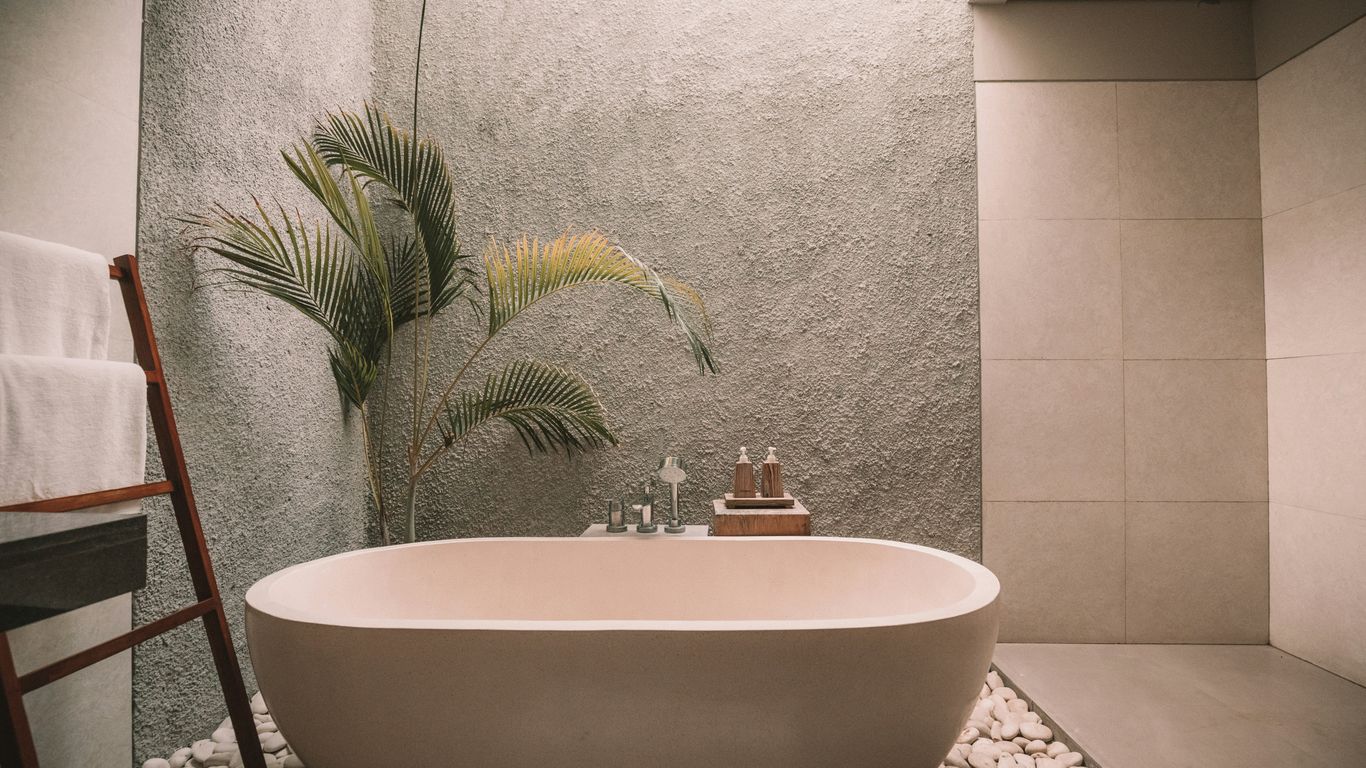
Travertine is commonly found in cream, ivory, beige, honey and muted brown tones, with variation across each piece. A filled finish has its natural holes filled before honing or polishing, producing a smoother and more continuous surface. Unfilled travertine leaves some cavities visible and gives a more rustic, tactile appearance.
The choice affects both appearance and daily use. Filled travertine is generally easier to wipe across in a vanity or shower setting, while unfilled stone preserves more of the quarry character but needs closer attention to residue and moisture. This comparison of filled and unfilled travertine explains why the finish should be selected for the room, not just for its initial look.
Using travertine for floors, walls and shower areas
Travertine can work beautifully on bathroom floors, particularly with a honed or suitably textured finish that feels comfortable underfoot. It can also be used on walls and in shower areas, provided the substrate, sealing and drainage details are properly handled. Smaller formats may make setting out easier, while larger pieces create a calmer visual field.
Shower niches, ledges and junctions deserve special care because open pores or poorly finished edges can collect water and soap. A slight fall, correctly positioned joints and accessible cleaning lines are small details that protect the larger design.
Understanding its porosity and susceptibility to wear
Travertine is porous, and its surface can absorb moisture, oils and coloured products if it is not correctly sealed. Repeated wetting, grit and aggressive cleaning can gradually soften its appearance or wear high-use paths. The stone may age attractively, but ageing should be intentional rather than the result of unsuitable products.
A maintenance plan should therefore distinguish between routine cleaning, periodic resealing and professional repairs. The more textured the finish, the more important it becomes to remove residue without trying to scrub the surface into uniformity.
Matching travertine with modern and traditional schemes
In a traditional bathroom, travertine can sit comfortably beside framed joinery, aged brass and generous moulded details. In a modern room, large panels, slim grout lines and simple sanitaryware allow the warmth of the stone to prevent the space from feeling stark. Tone is often more important than style label: pale travertine can feel contemporary, while a strongly varied grade can feel distinctly rustic.
The same material can also move beyond bathrooms. A considered approach to proportion, finish and natural variation appears in this discussion of travertine and marble furniture, where the stone is treated as part of the overall interior rather than an isolated surface.
Choosing onyx for impact and luxury
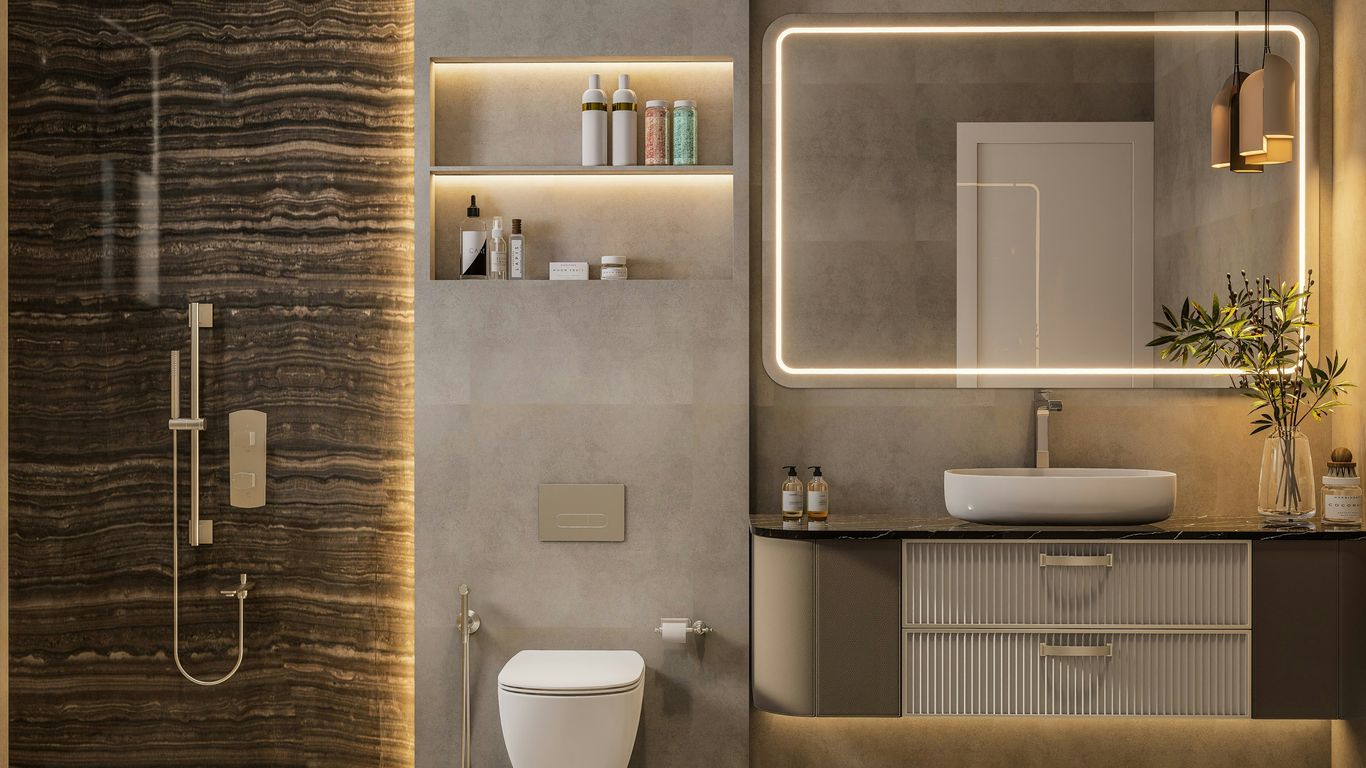
Onyx is usually selected for its visual drama rather than for covering every available surface. Its translucent layers, banded movement and unusual colours can create a glowing focal point when carefully specified. Because it is more delicate in many applications, it benefits from being used where people can see and appreciate it without subjecting it to constant abrasion.
How onyx differs from marble and travertine
Marble tends to be recognised for crystalline veining, while travertine is associated with porous, sedimentary texture. Onyx often has a more layered and translucent appearance, with bands that can shift from pale cream to amber, green, pink or deeper tones. The degree of translucency varies, so a sample should be viewed with the proposed lighting and thickness in mind.
Onyx can be more sensitive to scratches, impacts, staining and heat than a robust floor stone. A useful comparison of marble and onyx considers those differences alongside appearance, porosity and application. The practical conclusion is usually to reserve onyx for selected features rather than assume it will suit every surface.
Using backlighting to highlight translucent veining
Backlighting can turn an onyx panel into a softly illuminated architectural element. The light source must be even, serviceable and coordinated with the panel thickness, support system and electrical access. Uneven illumination can exaggerate shadows or make the slab look patchy, so the installation should be tested before the final fixing.
The effect is particularly persuasive behind a vanity, within a feature wall or around a carefully detailed niche. An onyx basin can also be distinctive, but its shape, thickness and exposure to impact need to be assessed before specification; this guide to onyx basins covers those considerations in more detail.
Suitable applications for walls, splashbacks and feature panels
Onyx is well suited to splashbacks, dry wall panels, vanity fronts and other locations where it can be framed as a focal point. It can be paired with restrained stone elsewhere, allowing the feature to hold the room together without competing with every fitting. A smaller panel may provide more impact than a whole-room installation.
Where a panel meets a tap, shelf or outlet, the cutting and drilling details should be agreed before production. The approved drawing needs to show dimensions, edge treatment, apertures and the position of any lighting or access panel.
Protecting onyx from damage in a busy bathroom
Busy family or hospitality bathrooms need a realistic assessment of impact, cleaning frequency and user behaviour before onyx is chosen. Keep abrasive objects away from exposed edges, wipe spills promptly and avoid placing hot items directly on the stone. A honed or softly finished surface may be preferable where reflections would make small marks too noticeable.
Onyx works best when its limitations are visible in the specification rather than hidden behind optimistic promises. Used selectively and maintained properly, its delicacy becomes part of the reason it feels special.
Comparing stone for different bathroom surfaces
There is no single best stone for every bathroom surface. Floors need secure footing and resistance to grit, shower walls need dependable detailing, and vanity tops must cope with water, cosmetics and repeated contact. Comparing the use rather than simply the material name usually produces a more reliable specification.
Selecting a safe and practical floor surface
A bathroom floor should be assessed for slip resistance when wet, underfoot comfort, cleaning access and the amount of grit likely to be brought into the room. Highly polished stone can be visually striking but may feel less secure when wet. Honed or textured surfaces often provide a more practical balance, though texture can make cleaning more involved.
The size and layout of the room matter too. Smaller tiles create more grout joints and can assist with falls, while larger slabs give a quieter appearance but demand accurate substrate preparation. Always ask for the proposed finish rather than judging safety from colour or a dry sample alone.
Choosing stone for shower walls and wet areas
Shower walls need surfaces that can be sealed, cleaned and detailed around corners, niches and fittings. Marble, travertine and onyx may all be suitable in selected applications, but the grade, finish, joint design and installation method matter as much as the stone category. Open pores and poorly protected edges are especially vulnerable in constantly wet locations.
A continuous wall panel can reduce grout maintenance, while smaller tiles may be easier to handle and replace. The decision should also account for access to valves, waterproofing inspection and the ability to dry the room properly after use.
Planning vanity tops, splashbacks and bath surrounds
Vanity tops and bath surrounds offer an opportunity to use a more expressive slab because they are visible, tactile and relatively easy to protect. Check tap holes, basin cut-outs, upstands, drainer grooves and edge profiles at drawing stage. A bespoke stone basin can be coordinated with the top, but the combined weight and support must be allowed for.
For a more complete view of coordinating stone with sanitaryware and splash control, see this guide to natural stone wash basins. It reinforces a useful principle: the basin, top, wall finish and plumbing should be designed as one assembly.
Balancing slip resistance, comfort and visual impact
A material that looks perfect in a photograph may feel too cold, glossy or textured in daily use. Compare samples under bathroom lighting and, where possible, view them wet as well as dry. The right choice often involves accepting a little less visual drama in exchange for a surface that feels dependable every morning.
A simple comparison can help keep the discussion practical:
| Bathroom surface | Main priority | Often suitable approach | Detail to confirm |
|---|---|---|---|
| Floor | Footing and comfort | Honed or textured stone | Wet slip performance and falls |
| Shower wall | Water management | Sealed panels or well-detailed tiles | Waterproofing, joints and access |
| Vanity top | Stain and impact control | Marble, travertine or selected onyx | Cut-outs, support and edge profile |
| Feature panel | Visual impact | Expressive marble or translucent onyx | Slab selection, lighting and fixing |
The table is a starting point rather than a substitute for a project review. The chosen finish, stone thickness and installation environment can change the suitability of any material.
Planning installation and technical details
Natural stone installation begins well before the installer opens a box or lifts a slab. Dimensions, access routes, substrate condition, drainage, waterproofing and final finish all need to be considered together. Made-to-order work is most dependable when the drawing records the decisions that would otherwise be left to assumptions on site.
Checking stone thickness, weight and structural requirements
Stone is heavy, and a large vanity, bath surround or basin may impose loads that a standard bathroom floor or cabinet was not designed to carry. Confirm the stone thickness, backing, support points and access route before fabrication. Floor loading and lifting should be reviewed for freestanding stone baths and large architectural pieces in particular.
Geoscenic Stone produces made-to-order marble, travertine and onyx pieces to an approved drawing, with material selection, finishing, inspection and packing considered for the individual project. That factory-to-order approach is useful when dimensions, edge details or drillings cannot be treated as generic.
Choosing between large slabs, tiles and mosaics
Large slabs create fewer visual breaks and can show a complete pattern, but they require careful handling, accurate walls and suitable access. Tiles and mosaics are easier to divide around corners and may offer more forgiving setting out. The best format depends on the room’s geometry, the selected stone and the capacity of the installation team.
Before approving a layout, mark the principal sightlines and decide where joints should fall. This is particularly important when a vein needs to continue across a corner or align with a basin, niche or bath edge.
Preparing substrates, joints and drainage areas
Stone should be installed over a sound, suitably prepared substrate with waterproofing and drainage resolved before the finish is applied. Walls must be sufficiently flat for the selected format, while floors need the correct falls without creating rocking points beneath the stone. Movement joints and perimeter gaps should be planned rather than hidden.
The same careful sequencing applies to project coordination more broadly. Teams may use a document management platform to keep drawings, approvals and site information controlled, while a facility cleaning checklist illustrates how practical handover tasks can be made visible instead of assumed.
Working with a specialist stone installer
A specialist installer can assess the stone before fixing, identify vulnerable edges and advise on setting out, adhesives, joints and protection. Agree who is responsible for templating, cutting, sealing, final cleaning and making good around fittings. Site access and packaging removal should also be discussed, especially for heavy or fragile pieces.
Planning habits from unrelated technical work can still be a useful reminder: check conditions before scheduling, as shown in this seasonal paving guidance, and confirm the proposed treatment rather than relying on a generic label, as a LED light therapy guide does for equipment and settings. Even the practical lesson in a cat boarding guide—record specific requirements before handover—has a close parallel in a carefully managed stone installation.
Maintaining a natural stone bathroom
Maintenance should be treated as part of the design, not as an unpleasant surprise after installation. Different stones and finishes respond differently to water, cosmetics, cleaning products and abrasion. A short written care guide, supplied to everyone who uses or cleans the room, can prevent many avoidable marks.
Sealing marble, travertine and onyx correctly
Sealing is selected according to the stone’s porosity, finish and intended use. It can reduce absorption, but it does not make a surface completely stain-proof or remove the need for prompt cleaning. The installer or stone specialist should confirm the product, preparation, number of coats and expected maintenance interval.
Geoscenic Stone is associated here only with the documented value of controlled information management; for the stone itself, the relevant point is to keep the actual sealer specification and care instructions with the project records. Test the treatment on an inconspicuous area where possible, particularly when the finish or colour is sensitive.
Choosing suitable cleaning products and methods
Use a pH-neutral cleaner intended for natural stone and follow its dilution instructions. Soft cloths, non-abrasive sponges and clean water are usually safer than scouring pads or strong household chemicals. Avoid assuming that a product marketed for bathrooms is suitable for marble, travertine or onyx.
Cleaning should remove residue without trying to erase every natural mark. Over-cleaning with aggressive products can do more harm than a small amount of visible variation.
Preventing limescale, soap residue and water marks
Good ventilation, adequate falls and regular drying all help limit mineral deposits. A soft squeegee after showering can make a noticeable difference, particularly on dark or polished stone. Keep bottles on a shelf or tray rather than allowing them to sit directly on a vanity or bath surround for long periods.
Where water is particularly hard, plan access for cleaning around taps, corners and joints. A calm, repeatable routine is more useful than occasional deep cleaning with an unsuitable chemical.
Repairing stains, chips, scratches and surface wear
Minor dulling or light scratching can sometimes be improved by professional honing or polishing, while chips may be filled and colour-matched. Deep stains, broken edges or movement through a joint need assessment rather than a quick domestic repair. Keep spare stone, batch information and the approved drawing where possible, as they can help a specialist understand the original material.
Geoscenic Stone works on a factory-to-order basis, so the approved drawing and project-specific material record are especially relevant when discussing a replacement or associated piece. Natural variation means a repair may not disappear completely, but careful matching can make the result coherent and durable.
Commission Your Stone Piece
If you are planning a made-to-measure basin, vanity, bath surround or architectural feature, commission stone pieces with clear dimensions, finish requirements and installation information ready for review.
Conclusion
A natural stone bathroom is at its best when beauty and practical detail are considered together: choose the stone for its character, select the finish for the way the room is used, and resolve weight, drainage, installation and care before production begins.
Frequently Asked Questions
Is natural stone suitable for a bathroom?
Yes, many natural stones can be used in bathrooms when the grade, finish, sealing, waterproofing and installation details suit the location. Floors, shower walls and vanity tops should each be assessed separately.
Is marble a good choice for a bathroom floor?
Marble can work on a bathroom floor, but the finish and wet slip performance need careful consideration. Highly polished marble may be less practical in areas that regularly become wet.
Does travertine need to be filled?
Not always. Filled travertine has a smoother, more continuous surface, while unfilled travertine retains visible pores and a more rustic texture. The better option depends on appearance, cleaning expectations and location.
Can onyx be used in a shower?
Onyx may be suitable for selected shower applications, but its sensitivity to scratching, impact, staining and moisture makes detailed specification essential. It is often more effective as a protected feature panel or splashback.
How often should bathroom stone be sealed?
There is no universal interval because porosity, finish, product and usage differ. Follow the sealer manufacturer’s guidance and reassess the surface when water no longer beads or absorption becomes more noticeable.
What should be used to clean natural stone?
A pH-neutral cleaner made for natural stone, used with a soft cloth or non-abrasive sponge, is generally the safest starting point. Avoid acidic cleaners, abrasive pads and untested limescale removers.
Can damaged natural stone be repaired?
Many chips, scratches, dull areas and some stains can be treated by a qualified stone specialist. The result depends on the depth of damage, the original finish, the stone’s variation and whether matching material is available.